Prep Tools
Swizzle Stick
A slender stirring rod, often with star-shaped prongs, used to chill and froth drinks.
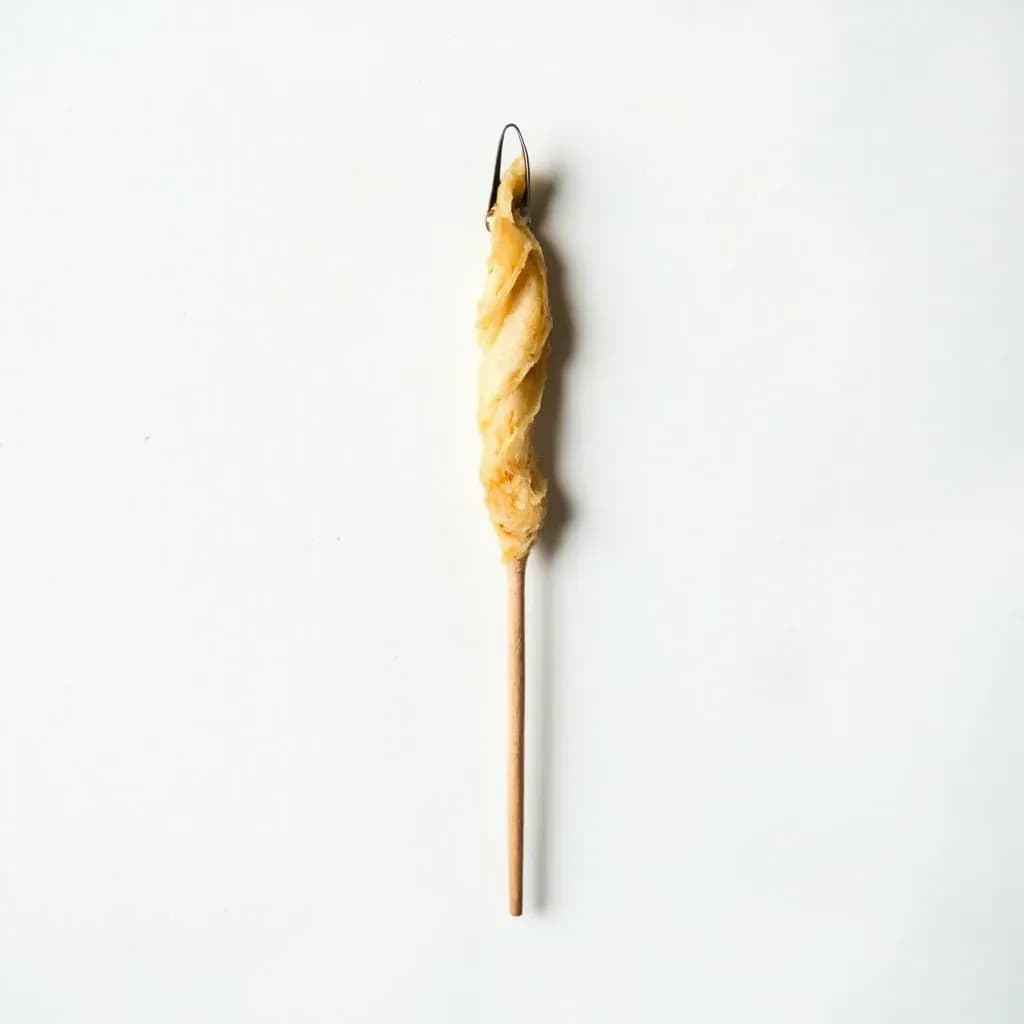
A swizzle stick is a thin stirring rod, traditionally cut from the swizzle tree (called a lélé in the Caribbean) and notched with small prongs at one end. The cook rolls it rapidly between the palms inside a glass to whip up froth and rapidly chill cocktails and punches over crushed ice. Beyond bartending, it is also used to stir and aerate sauces and dressings in small vessels.
A swizzle stick is the slender rod used to perform the swizzle — a Caribbean mixing technique in which the implement is held vertically between both palms and spun back and forth, driving crushed ice and liquid through its prongs to chill, dilute, and aerate a drink in one motion. In its original form the stick is a trimmed branch of Quararibea turbinata, the so-called Swizzlestick Tree, whose lateral twigs grow in natural whorls that fan out into a small star of soft prongs. That geometry is the whole point: the prongs create just enough resistance against crushed ice to pull it through the drink while folding in a thin layer of air, producing a drink that is colder than a stirred cocktail, less cloudy than a shaken one, and topped with a delicate, lasting froth.
A swizzle is neither a stir nor a shake. Stirring with a bar spoon moves liquid in a smooth circle and barely touches the ice; shaking punishes the drink with violent dilution and a foamy cap. Swizzling sits between them, which is why the cocktail family called the Swizzles — Rum Swizzle, Bermuda Swizzle, and the canonical Queen's Park Swizzle — exists as its own category rather than as a variation on the highball. The technique requires crushed or finely cracked ice; a single large cube simply sits there while the stick rotates uselessly in the liquid around it.
Modern versions are usually molded plastic or stainless-steel rods with three to five radiating prongs that mimic the tree's natural whorl. They work, but bartenders serious about the form still reach for the wooden original — partly for tradition and partly because the slightly rough, springy wooden prongs grip crushed ice in a way hard plastic does not. The tool has had a quiet revival since the early 2000s as Caribbean and tiki cocktail programs have reconnected with pre-shaker bar technique.
Alternatives
Types & varieties
A trimmed branch of Quararibea turbinata with its natural whorled twigs intact; the gold standard for authentic swizzling and the only form that gives the right resistance against crushed ice
Plastic or stainless-steel rod with a molded star of 3–5 prongs; the form most people picture today and the practical choice for home bars
Solid-glass rod, often with a faceted or bulb end; chosen for visual effect in craft cocktails rather than true mixing performance
Plastic rods molded into shapes like mustaches or flamingos; functional as stirrers, gimmicky as swizzles
The Swizzle Motion
The motion is the technique. Hold the stick vertically inside the glass, pinched lightly between both palms. Press your palms together so the stick is trapped, then rub them briskly back and forth — the way you might warm your hands on a cold morning — so the stick spins between them. Do not stir in a circle; that is the bar-spoon motion and it will simply push the ice aside without aerating. Keep the stick's prongs in the ice, lift it a centimeter or two between rotations so the prongs re-engage the crushed ice, and continue until the outside of the glass frosts. For a Queen's Park Swizzle that is your visual cue to stop; for a lighter highball, swizzle for ten to fifteen seconds and taste.
- Vertical orientation, never angled like a spoon.
- Back-and-forth palm motion, never a circular stir.
- Prongs should stay engaged with the ice, not spinning in a cleared pocket of liquid.
- Stop when the glass frosts on the outside — the drink is then properly chilled and aerated.
Ice Matters More Than the Stick
A swizzle stick is only as good as the ice it works against. Crushed or finely cracked ice is essential because the prongs need something granular to pull through; a single large cube or even a few medium cubes simply rotate inside the liquid and the drink never chills or dilutes properly. If your freezer only produces cubes, pulse them briefly in a canvas bag with a mallet or in a blender on the pulse setting. Conversely, do not use snow-fine blended ice — it compacts and chokes the prongs before they can fold air through it.
- Use crushed or finely cracked ice; never a single large cube.
- Pack the glass generously — the ice level should sit above the liquid line.
- Aim for pebble-sized pieces, roughly 5–10 mm, not powder.
- If ice compacts at the bottom, you've gone too fine; stop and rebuild with coarser ice.
Caring for a Wooden Swizzle
A real Quararibea branch will outlast a dozen plastic sticks if treated well. New sticks benefit from a short soak in cool water before first use to swell the grain and discourage splinters. After each use, rinse under running water — never the dishwasher, whose detergents and heat will crack the wood — and stand the stick upright in a dry glass to drain. Replace a wooden swizzle when the prong tips soften, fray, or splinter; cracked prongs can shed wood into a drink and old grain harbors residue that washing cannot reach.
- Soak a new wooden stick for 10–15 minutes in cool water before first use.
- Hand-wash only; never put wooden swizzles in a dishwasher.
- Dry upright in a glass so water drains from the prong cluster.
- Replace when prongs soften, crack, or splinter.
Common uses
Tips & pitfalls
- Soak a new wooden swizzle in cool water for 10–15 minutes before first use to swell the grain and prevent splinters in the drink.
- Hold the stick vertically between both palms and rub back and forth — a circular stir is the wrong motion and defeats the purpose.
- Build the drink over crushed or finely cracked ice, not a single large cube; without small ice the swizzle cannot chill or aerate.
- Watch for frost on the outside of the glass; that is the reliable cue that a Queen's Park Swizzle is properly mixed, not a timed guess.
- Lift the stick slightly between rotations so the prongs re-engage the ice rather than spinning in a cleared pocket of liquid.
- Avoid the dishwasher for natural-wood swizzles; the detergent and heat will crack the prongs within a few cycles.
- Replace wooden swizzles when the prong tips soften or splinter — cracked wood sheds fragments and old grain traps flavor residue that rinsing cannot remove.
- Avoid swizzling carbonated drinks; the back-and-forth motion releases CO₂ aggressively and the drink will lose its lift.
Good to know
- Origin
- Caribbean (West Indies); the traditional stick is cut from the Swizzlestick Tree
- Traditional Material
- Branches of Quararibea turbinata, whose naturally whorled lateral twigs form a star of small prongs
- Modern Materials
- Stainless steel, food-grade plastic, glass; occasionally acrylic or bamboo
- Typical Length
- Roughly 20–30 cm (8–12 in), long enough to reach the bottom of a tall highball or Collins glass
- Prong Count
- Modern bar swizzles usually have 3–5 radiating prongs; the natural wooden version can have more from the tree's whorled twigs
- Function
- Stirs, chills, and lightly aerates drinks without the harshness of shaking or the dullness of a bar spoon
- Canonical Cocktail
- Queen's Park Swizzle, first recorded at Queen's Park Hotel, Barbados, in the early 1900s
- Cleaning
- Wooden versions are hand-washed and air-dried upright; modern plastic and metal versions are dishwasher-safe
Also called
Lélé · Bois Lélé · Cocktail Stirrer
Related

Peeler
Swift blade for stripping skin off fruit and vegetables

Grater
Sharp-toothed surface for shredding cheese and vegetables

Microplane
Ultra-fine rasp for citrus zest, garlic, and hard cheese

Mixing Bowl
All-purpose bowl for combining, whisking, and tossing

Whisk
Looped wires that beat air into eggs, cream, and sauces

Spatula
Flat blade for flipping, lifting, and scraping

Slotted Spoon
Pierced spoon that lifts solids and drains the liquid behind

Wooden Spoon
Gentle, heat-friendly spoon for stirring anything