Prep Tools
Syrup Pump
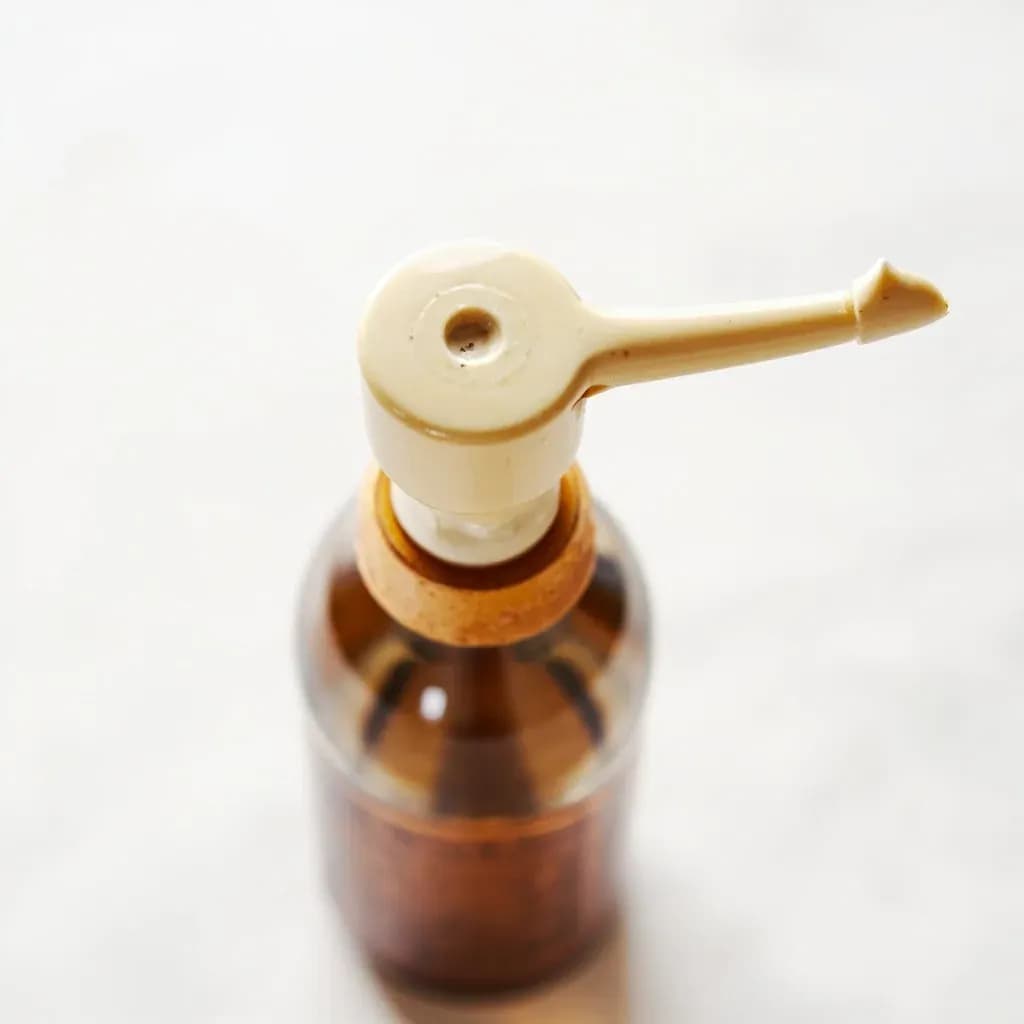
Screw-on dispensing pump that delivers measured shots of flavored syrup into drinks.
A pump that fits onto a syrup bottle to dispense a consistent measured dose of flavoring with one press. Cafes and home baristas use it to add precise amounts of vanilla, caramel, or fruit syrup to coffee, sodas, and cocktails. The measured shot keeps drinks consistent and avoids over-sweetening.
A syrup pump is a manual piston-action dispenser that screws onto the neck of a bottle and delivers a measured stroke of viscous liquid — usually somewhere between 1/4 oz and 1 oz — with a single push of the handle. Inside the polypropylene head, a return spring lifts the piston back up after each stroke, creating a vacuum that pulls liquid up through a dip tube; on the downstroke, a ball valve seals and the liquid is forced out the spout. It is the de facto portion-control tool of the coffee bar, ice cream parlor, and breakfast buffet, where speed and repeatable doses matter more than laboratory precision.
The reason syrup pumps exist at all is that flavor syrups are too thick to pour accurately and too sticky to free-pour quickly during a rush. A barista making a dozen lattes an hour cannot reliably count to a quarter-ounce from a 750 mL bottle, but a pump stroke delivers the same dose every time. That repeatability is what the tool is really selling, and it is why the design has barely changed since it was adapted from commercial tabletop sauce pumps and standardized for the U.S. specialty-coffee market in the late 20th century.
One caveat worth stating up front: a syrup pump is not a true measuring device in the regulatory sense. Stroke volume drifts with pump age, tube integrity, and syrup viscosity, and independent calibration work routinely shows 5–10% variation. For baking, formula work, or any application where exact grams matter, use a jigger or scale instead. For drinks, sauces, and ice cream toppings — where the goal is consistent flavor across hundreds of servings — the pump is exactly the right tool.
Alternatives
Types & varieties
The coffee-shop workhorse; delivers roughly 7.4 mL, the typical syrup dose in a 12–16 oz latte.
Double dose for larger drinks, milkshakes, and cocktail applications.
Heavier pour used for dessert toppings, pancake syrup, and thicker sauces.
Fits Monin 1 L glass bottles and select 1.5 L jugs.
Extended dip tube for gallon jugs or unusually deep 1 L+ bottles.
Twist-lock collar keeps the piston seated during transport or overnight storage.
Heavier-duty option for front-of-house and bar use; more durable than all-plastic.
Pump plus spare gaskets and tubes sold together for high-volume cafés.
Choosing the right fit
Almost every problem cooks have with syrup pumps comes down to a mismatched neck finish. The U.S. flavor-syrup industry standardized on the 28mm-400 thread, so any pump labeled for Torani, Monin, DaVinci, or Ghirardelli 750 mL bottles will share that fit. A pump that does not seat fully will either refuse to draw or leak syrup around the threads; forcing it only cracks the collar. Before buying, check the bottle's neck diameter with a ruler or by reading the spec sheet — and remember that the same brand often ships the same syrup in 750 mL plastic (28mm) and 1 L glass (33mm), which are not interchangeable.
Calibration and care
A pump that worked perfectly on day one will drift over months of use, especially with high-sugar syrups that leave residue on the ball valve. A simple routine keeps doses honest:
- Wipe the spout and threads after every refill to prevent sticky buildup that attracts flies and grime.
- Soak the pump head in warm (not boiling) water for 15 minutes once a month to dissolve residual sugar films.
- Run a few pumps of clean water through the pump after soaking to flush loosened residue before reinstalling.
- Recalibrate after any deep clean, tube swap, or change in syrup brand — viscosity varies more than labels suggest.
Common uses
Tips & pitfalls
- Prime a new pump by pumping several times into a cup until the line runs bubble-free; the first strokes draw only air from the dry tube.
- Match the neck finish to the bottle — 28mm-400 for 750 mL plastic syrup bottles is the U.S. industry standard, but 1 L glass bottles typically take a 33mm pump.
- Lock the twist collar whenever the bottle will sit overnight or travel; an unlocked piston can creep up and drip syrup onto the counter.
- Run hot water through the pump weekly to dissolve sugar crystals before they harden inside the ball valve and clog it.
- Never switch one pump between sweet syrups and salty or acidic sauces without a full disassembly wash; salt and acid residue accelerate corrosion of the spring and valve.
- Do not pump thick, particulate-laden liquids like jam or chunky salsa — they jam the ball valve; strain them first or use a wide-bore sauce pump instead.
- When swapping flavors, rinse the dip tube and pump head before reinstalling; even one drop of hazelnut will taint a vanilla bottle noticeably.
- Calibrate by pumping ten strokes into a shot glass and dividing — a quick check every few weeks catches drift before it shows up as over- or under-sweetened drinks.
- Replace the dip tube if it turns cloudy, stiff, or cracked; an air leak in the tube is the most common cause of inconsistent portions.
Good to know
- Tool type
- Manual piston-action dispensing pump for viscous liquids
- Standard neck fit
- 28mm-400 finish, matching most 750 mL commercial flavor syrup bottles (Torani, Monin, DaVinci, Ghirardelli)
- Other neck fits
- 33mm and specialty sizes for 1 L+ glass bottles and tabletop sauce jugs
- Typical dose per stroke
- 1/4 oz (7.4 mL), 1/3 oz (10 mL), 1/2 oz (15 mL), or 1 oz (30 mL)
- Construction
- Polypropylene body, polyethylene or silicone dip tube, stainless steel or ceramic ball valve and return spring
- Dip tube length
- About 9–10 in (23–25 cm), reaching the bottom of a standard 750 mL bottle
- Locking collar
- Most have a twist-lock collar that holds the piston down to prevent drips and accidental dispensing
- Cleaning
- Top-rack dishwasher safe on most models; a weekly hot-water flush prevents sugar crystallization in the valve
Also called
Syrup Dispenser Pump · Flavor Pump
Related

Peeler
Swift blade for stripping skin off fruit and vegetables

Grater
Sharp-toothed surface for shredding cheese and vegetables

Microplane
Ultra-fine rasp for citrus zest, garlic, and hard cheese

Mixing Bowl
All-purpose bowl for combining, whisking, and tossing

Whisk
Looped wires that beat air into eggs, cream, and sauces

Spatula
Flat blade for flipping, lifting, and scraping

Slotted Spoon
Pierced spoon that lifts solids and drains the liquid behind

Wooden Spoon
Gentle, heat-friendly spoon for stirring anything