Prep Tools
Tamis (Drum Sieve)
Drum-shaped fine sieve for sifting flour and pushing purees to silky smoothness.
A tamis is a flat, drum-shaped sieve with a fine mesh screen stretched in a round wooden or metal frame. Cooks press cooked vegetables, custards, and pastry creams through it for an ultra-smooth, lump-free texture, and use it to sift flour very finely. The wide flat surface makes it efficient for working larger quantities than a cone strainer.
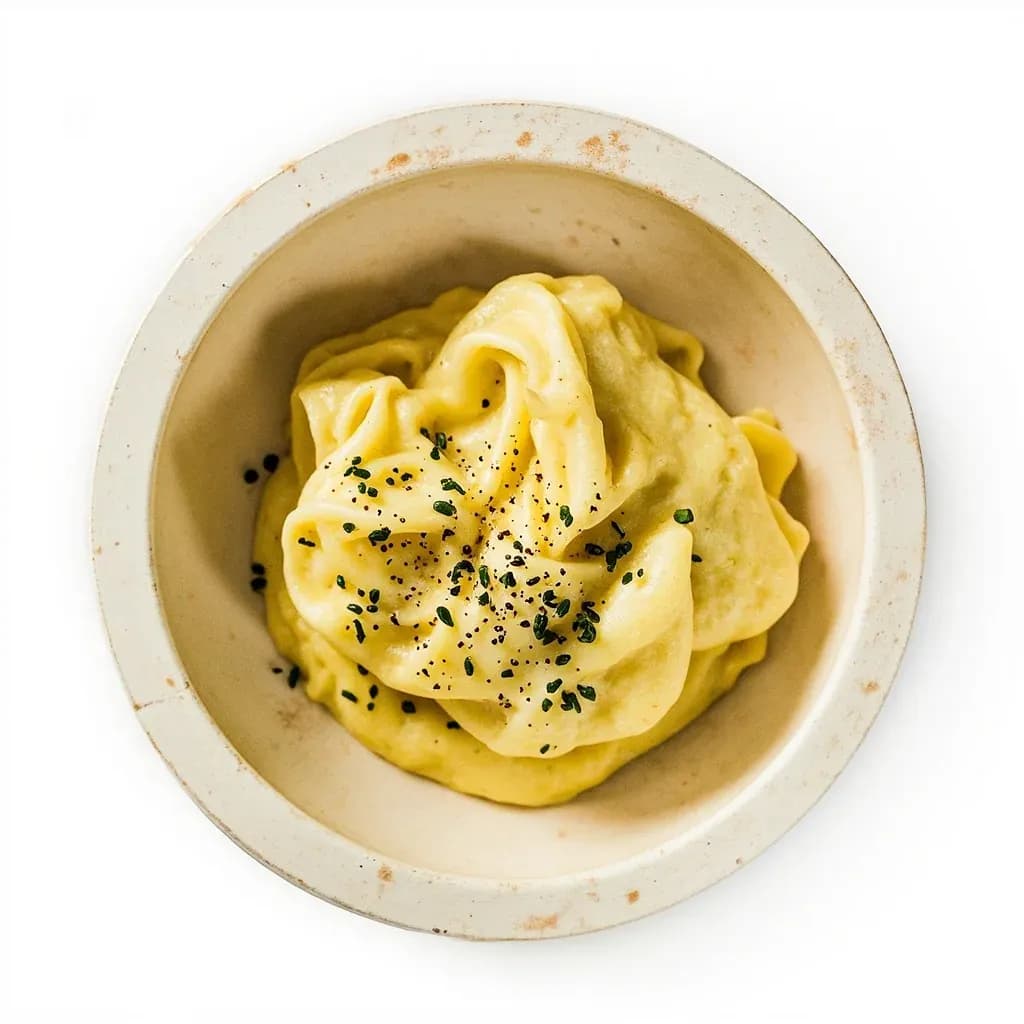
A tamis is a cylindrical drum sieve — a hoop frame open at one end with a fine mesh stretched across the other — used in French kitchens for both sifting dry ingredients and pressing soft foods into a satin-smooth puree. You hold it mesh-side down over a bowl, load product into the drum from above, and push it through with a wooden pestle called a bois or the curved back of a spoon. That orientation is the point: gravity pulls ingredients down onto the screen while you apply even pressure from above, which is far faster than stirring through a bowl-shaped sieve and far gentler than blending. The result is flour that is genuinely aerated and lump-free, or a potato puree with no trace of fiber or grain.
The tamis is often confused with a chinois (conical and finer, used for refining sauces, soups, and purees) and with a standard fine-mesh sieve (bowl-shaped and slow when you have a quart of berries or potatoes to push through). In professional pastry stations it is considered as essential as the stand mixer, and the French verb "tamiser" — to pass through a tamis — describes a step that shows up in recipes for everything from génoise to pommes purée. Most serious cooks keep two: a medium mesh for sifting dry goods and a fine or extra-fine mesh for pureeing.
Alternatives
Types & varieties
Classic French patisserie style; silk gives the finest sift and is traditional for confectioners' sugar and cocoa, but it is delicate and increasingly rare.
Oldest traditional form; very fine and very fragile, mostly encountered in historical kitchens and specialty suppliers.
Modern professional standard; durable frame with replaceable stainless mesh discs and longer service life.
Common mid-priced option; flexible nylon is gentler on ingredients than metal mesh and works well for wet purees.
Tightest weave available; intended for pressing potato puree, fruit coulis, and consommé rather than sifting dry goods.
Working the tool
The tamis rewards a specific motion. Load product into the open end with the mesh facing down over a bowl, then press with the flat back of a wooden spoon or the traditional bois using slow, even circles rather than stabbing or scraping. For dry sifting, you can also hold the tamis at a slight angle and tap the frame's outer edge with the heel of your hand, which shakes fine flour through without packing the mesh. Wet purees want steady pressure and small batches; overfilling causes spillage and risks tearing the screen.
- Mesh-down, load from the top: lets gravity assist pressure and keeps product from spilling sideways.
- Circular pressure with a wooden bois or the back of a spoon — never poke with the tip of a metal utensil.
- Tap the frame for dry sifting; press steadily for wet purees.
- Small batches beat speed: a half-filled tamis processes faster and more cleanly than an overloaded one.
Care and longevity
A wooden-frame tamis with silk or horsehair mesh is essentially a hand-wash-only heirloom. Cool water, a soft brush, and a flat drying surface are all it asks. Modern stainless and nylon versions tolerate warm water and a brush but should never go through a dishwasher, which warps wooden rings and slowly degrades nylon weave. The mesh itself is the consumable: stretched, torn, or sagging screens pass lumps and defeat the tool's purpose, so look for models with replaceable discs.
- Rinse from the underside first so residue is not driven back into the weave.
- Dry wooden frames thoroughly before storing to prevent splitting and mildew on silk or nylon screens.
- Store flat or hung by a hook — never let the mesh rest against other objects that can stretch or puncture it.
- Keep silk-mesh tamis away from water whenever possible; silk stains and weakens with repeated washing.
- Replace a stretched or torn mesh disc promptly; a saggy screen will let lumps pass and ruin the point of using the tool.
Common uses
Tips & pitfalls
- Hold the tamis mesh-side down over a bowl, load product into the drum, and press with a wooden bois or the curved back of a spoon in slow circles — never stab with the tip of a metal utensil, which cuts nylon and snags weaves.
- For dry sifting, hold the frame at a slight angle and tap the outer edge with the heel of your hand to drive flour through without packing the mesh.
- Work in small batches; overfilling causes spillage and risks tearing the screen when you press.
- For restaurant-smooth potato puree, warm the potatoes, pass them twice through a fine mesh, and avoid overworking between passes.
- Rinse the mesh from the underside first so food residue is not driven back into the weave; finish with warm water and a soft brush.
- Dry wooden frames completely before storing to prevent splitting and mildew on the screen.
- Chill fruit purees briefly before passing; cold puree moves through the mesh more cleanly and yields a glossier finish.
- A stretched or torn mesh lets lumps pass and defeats the tool's purpose — replace discs on stainless models rather than the whole frame.
Good to know
- Origin
- French; 'tamis' simply means sieve, and the cylindrical drum form has long been standard in patisserie and cuisine.
- Form
- Cylindrical hoop open at one end with a flat mesh stretched across the opposite end, resembling a snare drum with a screen.
- Traditional materials
- Wooden frame with woven silk or horsehair mesh; modern versions use stainless steel rings with stainless or nylon mesh.
- Mesh grades
- Sold in fine, medium, and extra-fine; the finest (sometimes labeled 'chinois grade') is for pureeing, medium for sifting.
- Companion tool
- Used with a wooden pestle called a 'bois' or 'pilon', or the back of a flexible spatula, to push product through the mesh.
- Sizes
- Most commonly 6 to 10 inches (15–25 cm) in diameter; many pastry kitchens keep two or three sizes.
- Cleaning
- Hand-wash only; dishwashers warp wooden frames and degrade nylon mesh over time.
- Skill level
- Beginner-friendly in principle — hold, load, press — but mastering steady, even pressure takes a few uses.
Also called
Drum Sieve · Fine-Mesh Tamis · Fine Mesh Tamis
Related

Peeler
Swift blade for stripping skin off fruit and vegetables

Grater
Sharp-toothed surface for shredding cheese and vegetables

Microplane
Ultra-fine rasp for citrus zest, garlic, and hard cheese

Mixing Bowl
All-purpose bowl for combining, whisking, and tossing

Whisk
Looped wires that beat air into eggs, cream, and sauces

Spatula
Flat blade for flipping, lifting, and scraping

Slotted Spoon
Pierced spoon that lifts solids and drains the liquid behind

Wooden Spoon
Gentle, heat-friendly spoon for stirring anything