Prep Tools
Tamping Mat
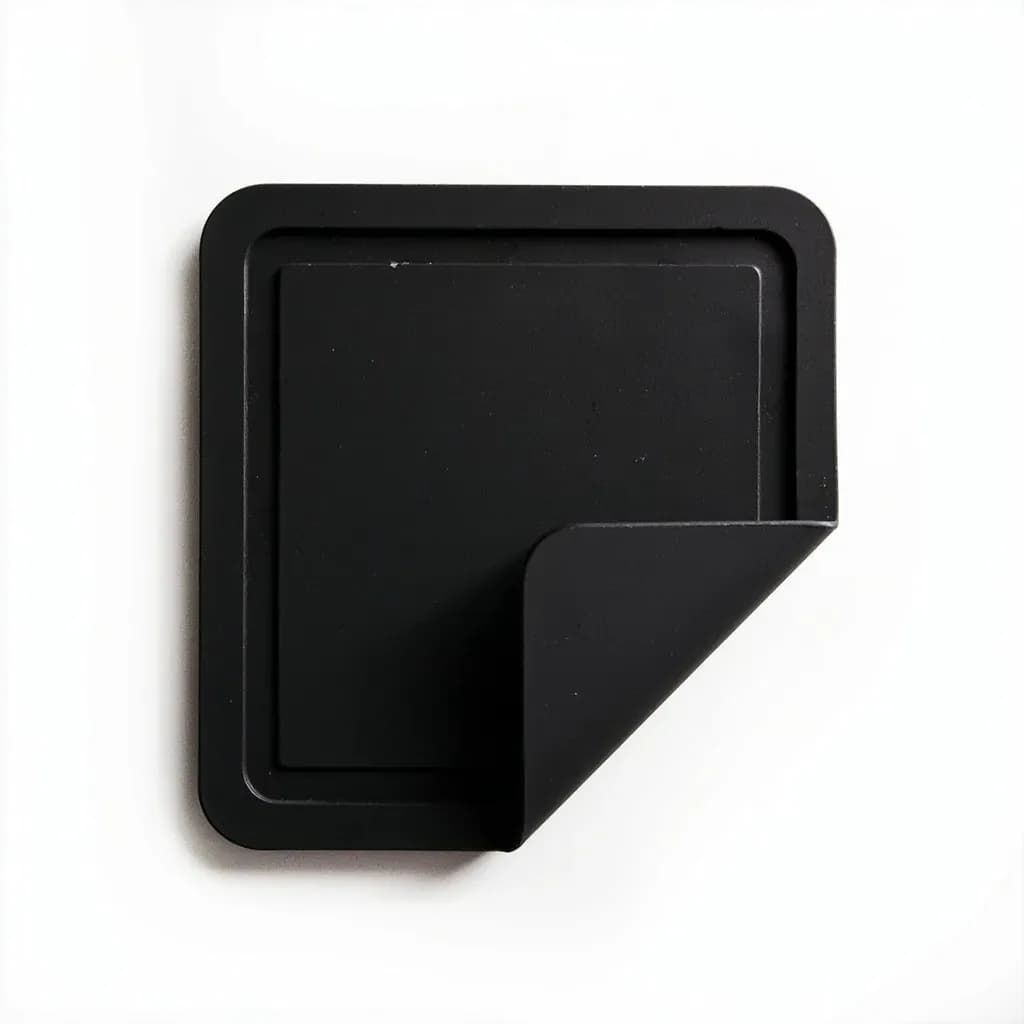
A grippy rubber mat with a corner ledge for tamping espresso without scratching counters.
A tamping mat is a thick rubber or silicone pad, often with a raised corner edge, that gives a barista a non-slip, surface-protecting place to tamp espresso grounds in the portafilter. Resting the portafilter spout against the ledge lets the barista press straight down with even pressure. It keeps counters and machine spouts from getting scratched.
The tamping mat is a small, flexible rubber or silicone pad with one defining design detail: a 90° notch cut out of one corner. That notch hooks over a counter edge, the lip of a knock box, or the base of an espresso machine, where it cradles the portafilter spouts and holds the basket in a fixed position while you press down with a tamper. Without the ledge, the portafilter skates across the counter the moment you apply force, and the puck comes out lopsided. With it, you can lean into a 30-pound tamp and the basket stays put.
Beyond the ledge, the mat is simply a soft, grippy work surface. That gives it two real payoffs: it dampens the impact of the tamper so the counter, scale, or drip tray underneath doesn't take a beating, and it contains the inevitable mess of grinding, dosing, and tamping. Loose fines, stray drips, and the halo of grounds that escape the portafilter rim all stay on the mat instead of migrating into the seams around the machine.
It is worth being clear about what a tamping mat does and does not do. It does not, by itself, make espresso taste better — puck preparation (distribution, WDT, dosing) and a flat, well-calibrated tamper matter far more. What the mat offers is ergonomics and housekeeping: a defined, repeatable home for the portafilter, and a tidy zone to do the surrounding work. For most home baristas, that is enough to make it a default part of the bench.
Alternatives
Types & varieties
The classic form: a flat silicone sheet with a 90° notch that hooks over a counter edge. Made popular by Crema Products.
Dense natural rubber on the bottom for grip and a smoother silicone surface on top; resists sliding on polished stone better than pure silicone.
Molded dimple or cradle in the surface for parking the tamper between shots.
Built-in ridges, funnels, or dosing rings molded into the surface to help distribute and contain grounds before tamping.
Maker-specific versions from espresso accessory brands; materials, sizes, and corner geometry vary, often with embossed logos.
Wider silicone or rubber mats used as drip zones at an espresso bar. They lack the corner notch and are not ideal as primary tamping mats.
Less common designs that use an embedded steel plate or heavy base in place of, or alongside, the rubber grip.
Tamping Mat vs. Tamping Station
The two terms get used interchangeably, but they describe different tools with different feels. A tamping mat is a soft, flexible pad — silicone or rubber, with the corner notch as its anchor. A tamping station is a rigid block, usually molded plastic, wood, or dense rubber, with a shaped recess sized to a specific portafilter. The station gives a more solid, café-like tamp because the portafilter sits in a fixed cradle rather than resting on a cushion. The flexible mat wins on portability, price, and being easy to throw in the dishwasher, and it doubles as a catch-all for grounds. Many home baristas end up with both: the mat for general prep and the station for the daily-driver portafilter.
- Mat: soft, portable, dishwasher safe, also catches spills during dosing and distribution.
- Station: rigid, sized to a specific portafilter, gives a more solid feel under the tamper.
- Most cafés standardize on a station; most home setups standardize on a mat.
- A rubber-base mat is the closest you can get to a station's feel while keeping the flexibility of a mat.
Care and Lifespan
A tamping mat has a short expected life — typically one to three years in regular home use — and it shortens quickly if the rubber cracks, gets cut by a portafilter edge, or starts to hold a sour, oxidized smell. Coffee oils soak into the surface within a few months of daily use, and once they go rancid they will taint every puck that comes off the mat. Routine wiping and weekly washing are the main defenses; replacement is the eventual one.
- Wipe with a dry or slightly damp cloth between shots to pick up fines and oils.
- Wash weekly with mild soap and warm water, or run on the top rack of the dishwasher.
- Avoid abrasive scrubbers; they scour silicone and create pockets that hold residue.
- Store flat, not tightly rolled — prolonged rolling can deform the corner notch.
- Keep away from direct sunlight and heat sources to slow rubber degradation.
- Replace if the mat develops deep cuts, stays permanently compressed, or holds a sour smell.
Common uses
Tips & pitfalls
- Always engage the corner notch against a true edge — a counter corner, the lip of a knock box, or the base of the machine. Tamping on a flat mat without the ledge engaged lets the portafilter slide and produces uneven pucks.
- Use a firmer mat, or layer a thin mat over a rigid tamping station, if you prefer a heavier, more solid feel; very soft mats absorb force and make consistent ~30 lb tamps harder to judge by feel.
- Keep the mat clean. Coffee oils build up fast and go rancid; wipe between shots and wash with mild soap or run through the dishwasher at least once a week.
- Replace the mat if it develops deep cuts, becomes permanently compressed, or starts to smell sour or oxidized — trapped grounds and oils in a degraded mat will taint puck flavor shot after shot.
- Do your distribution work (WDT, dosing funnel, or distributor) on the mat before tamping so the workspace contains the mess instead of your drip tray.
- Store flat rather than tightly rolled. A bent corner ledge loses its hook and the mat stops doing its main job.
- Skip abrasive scrubbers on silicone — they scour the surface and create more nooks for coffee residue to hide in.
- If the mat slides on a polished stone counter, lightly dampen the underside or switch to a rubber-base model; silicone-on-stone is the slickest combination.
Good to know
- Type
- Espresso preparation accessory
- Primary materials
- Food-grade silicone, natural rubber, or a silicone-over-rubber combination
- Defining feature
- A 90° cutout or notched corner that hooks over a counter edge, machine base, or knock-box rim
- Typical footprint
- Roughly 6 x 8 in to 8 x 10 in (15 x 20 cm to 20 x 25 cm)
- Thickness
- Usually 6 to 15 mm; thicker mats dampen impact more but absorb more tamping force
- Heat tolerance
- Silicone mats rated to roughly 220–260 °C / 425–500 °F
- Care
- Most silicone and rubber versions are top-rack dishwasher safe
- Origin of the modern form
- The corner-ledge mat is widely credited to Crema Products in the late 2000s, which popularized the design among home baristas
Also called
espresso tamping mat · barista mat
Related

Peeler
Swift blade for stripping skin off fruit and vegetables

Grater
Sharp-toothed surface for shredding cheese and vegetables

Microplane
Ultra-fine rasp for citrus zest, garlic, and hard cheese

Mixing Bowl
All-purpose bowl for combining, whisking, and tossing

Whisk
Looped wires that beat air into eggs, cream, and sauces

Spatula
Flat blade for flipping, lifting, and scraping

Slotted Spoon
Pierced spoon that lifts solids and drains the liquid behind

Wooden Spoon
Gentle, heat-friendly spoon for stirring anything