Prep Tools
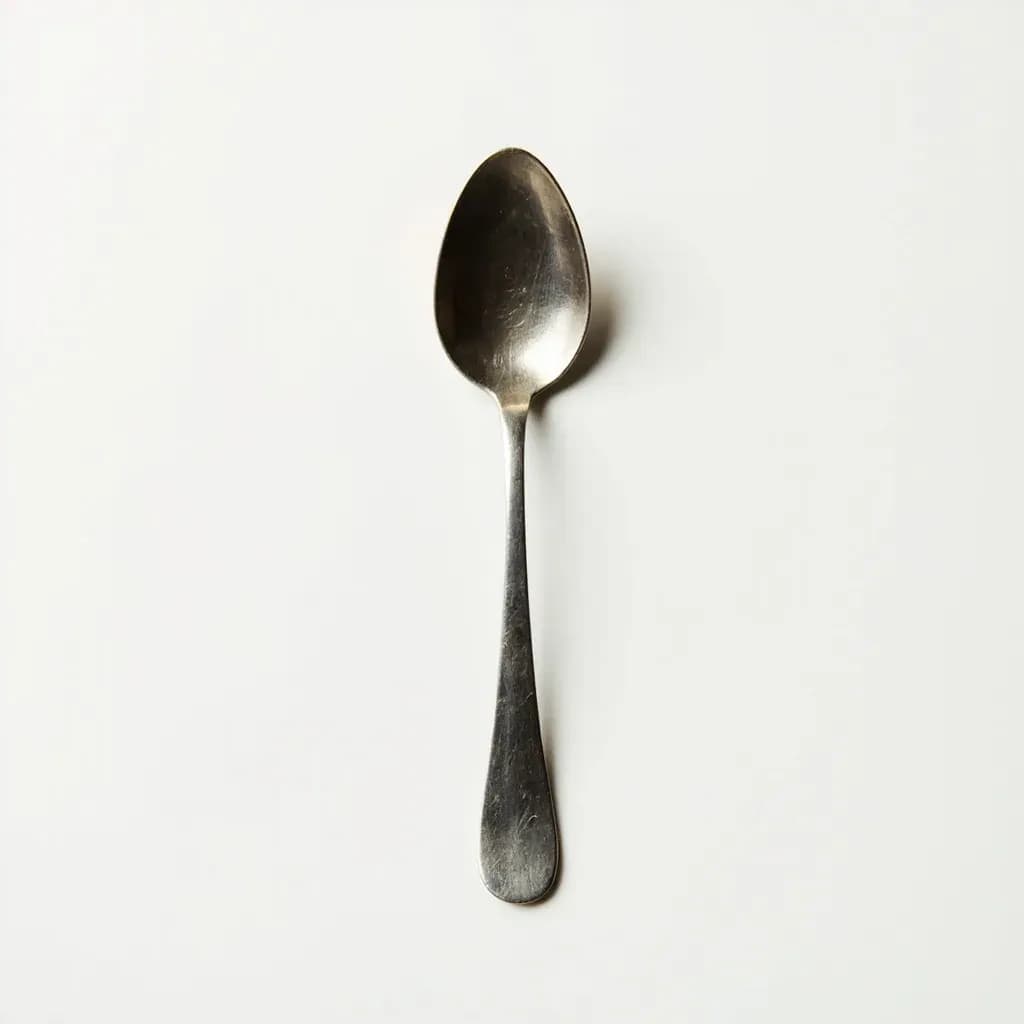
Tasting Spoon
Small spoon kept for tasting dishes mid-cook to check seasoning and balance.
A small spoon used to sample food during cooking so the cook can adjust seasoning, acidity, and salt before serving. Many chefs keep a dedicated tasting spoon and a clean-spoon habit to avoid double-dipping into the pot. Long-handled versions reach into deep pots without burning the hand.
A tasting spoon is a small, dedicated utensil kept at the stove for sampling dishes as they cook. Its job is to support the most fundamental discipline in cooking: taste, adjust, taste again. In a professional brigade, tasting spoons live in a crock beside the range and are treated as part of the mise en place — a cook reaches for one the same way they reach for a bench scraper or tongs, and never dips a guest spoon into the pot.
The design is deliberate. The bowl holds only about 1–2 teaspoons of liquid, small enough that sampling does not meaningfully reduce the volume of a reducing sauce or finished braise, and shallow enough that the spoonful cools quickly in the mouth — a hot sample burns the palate and masks the true seasoning of the dish. The handle is usually plain and unadorned because the spoon is meant to be invisible: present, hygienic, and ready, but never confused with a serving piece at the table.
For home cooks, owning even one dedicated tasting spoon is a quietly transformative upgrade. It removes the friction of grabbing a teaspoon from the drawer, fishing a spoon out of the silverware basket, or — worse — using the same spoon twice without washing. Once tasting becomes a low-effort reflex rather than a chore, seasoning gets dialed in earlier and a cook's instincts sharpen across every category of dish, from vinaigrette to stew.
Alternatives
Types & varieties
The everyday standard — stainless steel, 5–6 inches, kept in a crock by the stove. The default in most home and pro kitchens.
8–12 inches for reaching the bottom of deep stockpots, braisers, or jam pans without bringing the hand over the heat.
Traditional European service spoon, often monogrammed and passed down. Reactive with acidic or salty foods over time, so usually reserved for tasting finished or near-finished sauces.
Disposable or reusable plastic — the right choice when tasting raw-meat dishes, allergen-sensitive batches, or any context where cross-contamination is a real risk.
Has small slots or a perforated bowl; useful for tasting broth or braising liquid while holding back solids, and for skimming while sampling foam.
Won't scratch enameled cast iron or nonstick and won't conduct heat through the handle. Traditional in rustic and farmhouse kitchens, with a slightly more porous surface than metal.
Tasting technique at the stove
How a cook uses the spoon matters as much as the spoon itself. A few habits separate disciplined tasting from random dipping.
- Dip, don't ladle — fill the bowl only; a heaping spoonful is hot, wasteful, and harder to read.
- Touch the spoon to the rim of the pot or the inside of a small ramekin to shed a few degrees before bringing it to the mouth, especially with reducing sauces and syrups.
- Slurp gently from the spoon and let the liquid spread across the whole palate rather than pooling on the front of the tongue, where only sweetness registers.
- Pause between samples and let the flavor clear; tasting too rapidly is one of the most common reasons home cooks over-salt.
- When testing a reduction, taste both early and late — early to read the seasoning of the base, late to read whether it has concentrated correctly.
Choosing a material
Material is mostly about context, not status. Match the spoon to the job and most other questions answer themselves.
- Stainless steel is the right answer most of the time: cheap, inert, dishwasher-safe, and tough enough for daily abuse.
- Silver-plated and sterling spoons are handsome and traditional but react with long simmers of tomato, wine, vinegar, and citrus — keep them for tasting finished sauces or for the table, not for a two-hour braise.
- Wood won't scratch enameled cast iron or nonstick, and the handle stays cool, but it absorbs oils and aromas and is best kept to a specific cuisine rather than rotated through every dish.
- Plastic disposable spoons are not a sign of laziness — they are the correct tool for tasting raw sausage, ground meat, or any allergen-sensitive batch where the spoon must never go back in.
Common uses
Tips & pitfalls
- Keep a dedicated crock of tasting spoons by the stove and never put them in the table drawer with guest flatware — that crossover is both unsanitary and a hospitality faux pas.
- Use a fresh, clean spoon for each dip into a shared dish; double-dipping with a used spoon is a common cause of cross-contamination in home kitchens.
- Switch to a disposable plastic spoon when tasting raw meat, poultry, or seafood so the metal spoon never goes back into the batch after contact with undercooked product.
- Tap or shake the spoon against the pot rim before tasting to drop the temperature a few degrees and keep the sample from burning your tongue.
- Avoid silver-plated or sterling spoons for long simmers of acidic sauces — acid strips the plating and can leave a faint metallic note in the dish.
- A slotted tasting spoon lets you taste broth or poaching liquid without lifting out vegetables or meat, which is useful when you want to evaluate seasoning without disturbing the cook.
- In a professional brigade, leave each tasting spoon in or beside the pot it belongs to so a cook never has to ask which spoon is for which dish.
- Rinse between quick checks when seasoning is still building; for a single sample near the end of cooking, one clean dip is enough.
Good to know
- Typical total length
- 5–6 inches (13–15 cm); long-handled versions run 8–12 inches (20–30 cm) for reaching into stockpots and deep saucepans.
- Bowl capacity
- Roughly 1–2 teaspoons (5–10 ml) per scoop — small enough to sample without losing meaningful volume from the pot.
- Common materials
- Stainless steel (workhorse), silver plate or sterling (traditional), plastic (food-safety uses), and occasionally wood (gentle on cookware, no heat conduction).
- Bowl shape
- Shallow, narrow oval or rounded; noticeably smaller and flatter than a standard teaspoon so the sample cools fast on the tongue.
- Handle style
- Usually plain or simply finished; some have a small loop or hook at the end so they can hang on a pot rim or rack.
- Origin
- No single inventor; the small tasting spoon evolved alongside the professional brigade kitchen in the 19th and 20th centuries as cooks formalized the practice of repeated seasoning and tasting during service.
- Category
- Prep and quality-control tool, used throughout cooking rather than at the table.
- Storage
- Kept in a dedicated crock, jar, or cup near the stove, separate from guest flatware.
- Dishwasher safe
- Stainless and plastic yes; silver-plated or sterling hand-wash only to prevent tarnishing and plate wear.
Also called
Chef's Tasting Spoon · Sampling Spoon
Related

Peeler
Swift blade for stripping skin off fruit and vegetables

Grater
Sharp-toothed surface for shredding cheese and vegetables

Microplane
Ultra-fine rasp for citrus zest, garlic, and hard cheese

Mixing Bowl
All-purpose bowl for combining, whisking, and tossing

Whisk
Looped wires that beat air into eggs, cream, and sauces

Spatula
Flat blade for flipping, lifting, and scraping

Slotted Spoon
Pierced spoon that lifts solids and drains the liquid behind

Wooden Spoon
Gentle, heat-friendly spoon for stirring anything