Prep Tools
Tea Strainer
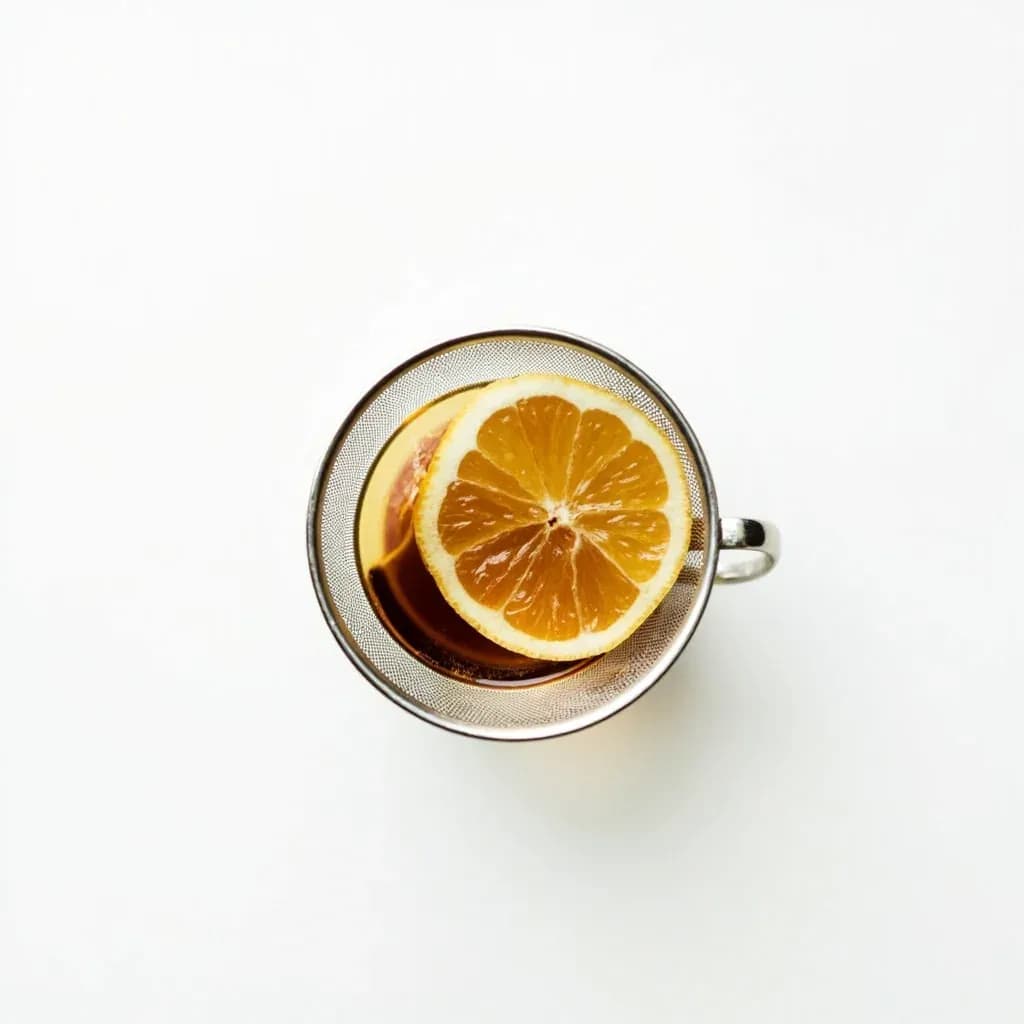
A small fine-mesh strainer that catches loose leaves when pouring brewed tea.
A tea strainer is a small handheld sieve, usually fine wire mesh or cloth, held over a cup to catch loose tea leaves as brewed tea is poured. It is essential for steeping loose-leaf teas and for masala chai or Hong Kong-style milk tea brewed with leaves loose in the pot. Cloth versions, like the sock filter used in cha chaan teng, also smooth the tea's texture.
A tea strainer is a small fine-mesh sieve that intercepts loose tea leaves at the moment of pouring from pot to cup. It allows tea to steep freely in the pot — leaves unfurling in hot water rather than being crammed into a cage — and still arrive in the cup clean. Physically it is a shallow bowl of woven or perforated metal (or, in more decorative versions, porcelain, glass, or silver) with a rim or handle that lets it perch over a cup or be held mid-pour.
What separates a strainer from an infuser is timing. An infuser holds the leaves during steeping and the liquor is poured clear from the start; a strainer works at pour time, after steeping is complete, catching leaves that have swum freely in the pot. The distinction matters because unrestricted extraction is fuller and more even, and the strainer is the small price of that freedom.
Cup-top mesh strainers became standard in Western tea service in the late 19th and early 20th centuries, alongside the spread of Indian, Ceylon, and Chinese loose-leaf teas. They remain the default in homes, cafés, and tearooms that pour from a teapot, though built-in dripper filters and integrated fine-mesh spouts are increasingly common in modern setups. The tool is small, inexpensive, and quietly indispensable to anyone steeping loose leaf.
Alternatives
Types & varieties
The classic 'tea strainer' — a shallow bowl of fine mesh with a rim that rests on the cup edge as you pour from a teapot.
Cone-shaped mesh that sits over the cup and collects leaves inside; used in some Japanese and single-pour Western setups.
Small fine-mesh strainer with a handle, held in the free hand between pot and cup; the standard in cafés and busy kitchens.
Two fine-mesh discs joined by a clip that grips the cup wall; leaves collect between the discs.
Spoon-shaped infuser with a perforated bowl that clips onto the cup rim; held in place while tea is poured from above.
Traditional formal tea-service piece; silver is said to soften tannins and polishes to a warm patina.
Single-use paper cone or pouch placed in a holder; common in East Asian tea preparation and in some Japanese drippers.
Cotton or hemp pouch used much like a paper filter; common in Japanese sencha service and gongfu setups, where it is often said to let more of the liquor pass through than paper.
A perforated sphere on a chain — technically an infuser, not a strainer, but routinely shelved beside them and worth knowing the difference.
Strainer vs. infuser: a small distinction with real consequences
The two tools look similar in a drawer and are often sold in the same section, but they sit at opposite ends of the brewing process. An infuser goes into the pot or cup before steeping, holding the leaves in a small cage while water circulates around them. A strainer goes in only at the moment of pouring, catching leaves that have already steeped freely in the pot.
Free steeping almost always gives a more even, complete extraction, especially for whole-leaf teas that need room to unfurl. The trade-off is that you must filter the liquor at the end — which is what the strainer is for. In cafés and serious tea service, the strainer-plus-pot combination is preferred for any tea with large, intact leaves; infusers are reserved for broken, dusty, or single-cup portions.
- Strainer = filter at pour time, after free steeping in the pot.
- Infuser = cage during steeping; tea is poured clear from the start.
- Use a strainer for whole-leaf teas that need room to expand.
- Use an infuser for small-leaf or broken teas, or for single-cup brewing in the cup itself.
Choosing the right mesh
Mesh is the single decision that determines how a strainer behaves. Coarser weaves (around 40 mesh) pour fast and clean easily but let fannings and dust slip through into the cup. Finer weaves (60–80 mesh) catch even the smallest particles but pour slowly and clog more readily when the leaf is broken or the brew is strong.
A useful rule of thumb: match mesh to leaf size. Large, wiry leaves like rolled oolong or big broken Assam can tolerate a coarser weave. Dusty teas — CTC blacks, sencha fannings, broken Kenyan — reward a fine weave or a double-strain through a small chinois.
- 40–50 mesh: fast flow, best for large whole leaves.
- 60–80 mesh: catches dust and fannings, pours more slowly.
- Below 40 mesh: too coarse for most loose-leaf service.
- When in doubt, double-strain: tea strainer first, then a small fine chinois.
Care and maintenance
A tea strainer lives or dies by its mesh. Tannins from brewed tea stain steel quickly, and once dried onto fine wire they are stubborn to remove. The two habits that keep a strainer serviceable for years are an immediate rinse after use and a thorough dry before storage. The two habits that ruin one are letting wet leaves sit and tossing it damp into a drawer.
- Rinse under hot running water the moment you finish pouring — back-flush by pushing water through from inside out.
- For tannin stains, work a paste of baking soda and water into the mesh with a soft brush, then rinse.
- A denture tablet dropped into a bowl of warm water with the strainer will lift discoloration in 15–30 minutes.
- Dry the strainer completely on a cloth or rack; trapped moisture rusts even 'stainless' steel over time.
- Never twist or crumple the mesh to dislodge leaves — it stretches and warps the weave.
Common uses
Tips & pitfalls
- Rinse the strainer with hot water before pouring so it doesn't flash-cool the tea as it passes through.
- Choose a finer mesh (60–80) for broken or dusty teas like CTC black; coarser mesh is fine for large whole leaves and rolled oolongs.
- Tilt the strainer as you pour so leaves collect on one side, leaving the other half clear for a fast, unimpeded flow — a full strainer pours slowly and overflows.
- Tap the strainer gently against the rim of the pot at the end of the pour to bounce clinging leaves back into the pot for a second steep, rather than dumping them into the cup.
- Rinse the strainer immediately after use; tannin stains that dry onto fine mesh are much harder to remove than fresh residue.
- Don't press or squeeze the wet leaves in the strainer — that expresses bitter tannins and small particles straight into the cup.
- For very fine fannings, double-strain: through the tea strainer first, then through a small fine chinois or a dedicated tea filter.
- Avoid setting a hot strainer down on a cold stone or marble counter; the thermal shock can warp a delicate rim or crack a porcelain strainer.
Good to know
- Type
- Fine-mesh kitchen strainer used to catch loose tea leaves at the moment of pouring
- Also called
- Tea sieve, tea dripper, cup-top strainer, tea filter
- Distinguished from
- A tea infuser holds leaves during steeping; a strainer catches them at pour time
- Common materials
- Stainless steel mesh, silver-plated mesh, porcelain, ceramic, glass, silicone
- Typical mesh size
- Roughly 40–80 mesh; finer weaves slow the pour but trap fannings and dust
- Typical diameter
- 5–9 cm (2–3.5 in) for cup-top models; handheld strainers 6–8 cm across the bowl
- Cleaning
- Rinse immediately after use; soak in baking soda paste to lift tannin staining
- Cost range
- Around $5–$40 for utilitarian mesh; $30–$150+ for silver-plated or designer pieces
Also called
Salkhana · Tea Strainer (Channi) · Channi · Sock Filter
Related

Peeler
Swift blade for stripping skin off fruit and vegetables

Grater
Sharp-toothed surface for shredding cheese and vegetables

Microplane
Ultra-fine rasp for citrus zest, garlic, and hard cheese

Mixing Bowl
All-purpose bowl for combining, whisking, and tossing

Whisk
Looped wires that beat air into eggs, cream, and sauces

Spatula
Flat blade for flipping, lifting, and scraping

Slotted Spoon
Pierced spoon that lifts solids and drains the liquid behind

Wooden Spoon
Gentle, heat-friendly spoon for stirring anything