Prep Tools
Tea Tongs (Cha Jia)
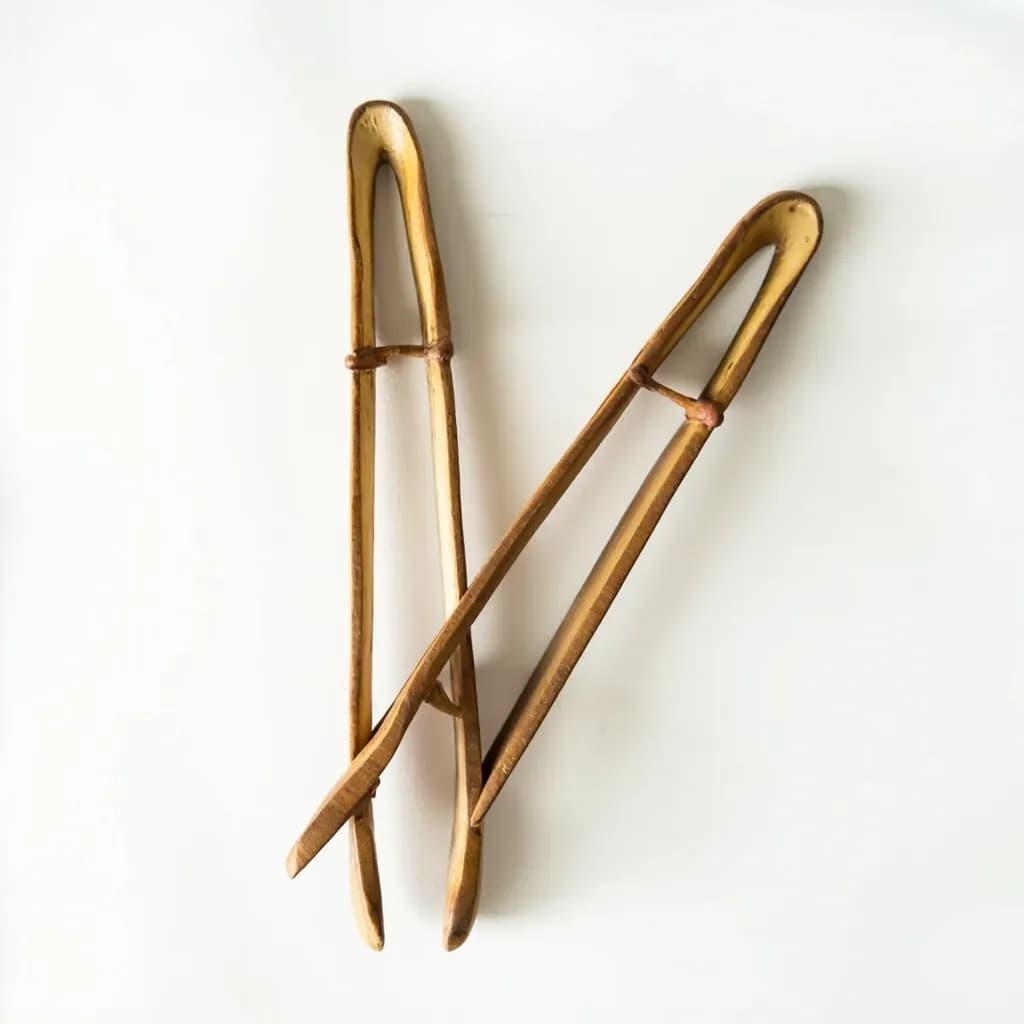
Small bamboo or metal tongs for handling hot teacups in a gongfu tea service.
Small tongs, known as cha jia in Chinese tea practice, used to pick up and rinse hot, small teacups during gongfu-style brewing. They keep fingers off cups that have been scalded with boiling water and help present cups hygienically to guests. Often paired with the rest of a tea-tool set in carved bamboo.
Tea tongs, or chajia (茶夹), are small spring-loaded pincers — essentially a single-joint scissor — designed for one specific job in a gongfu cha service: lifting and moving porcelain teacups without the server's fingers ever touching the cup or the hot liquid inside. They typically measure 15–18 cm (6–7 inches) long and grip the cup by its rim, not its body, so heat transfers only through a narrow contact point that the server's hand never feels. This matters in gongfu because the cups are deliberately small (often 30–50 ml), the water is at full boil, and the server repeats the lift-and-pour motion dozens of times in a single sitting.
The tool's behavior is shaped almost entirely by its material. Bamboo, the traditional default, is light, slow to conduct heat, and gentle on glazed porcelain, but it absorbs moisture and must be kept scrupulously dry. Stainless steel and brass versions are more durable and easier to sanitize, yet they conduct heat noticeably faster — a consideration when gripping a cup that was just rinsed with boiling water. Hardwood tongs (rosewood, sandalwood) sit in the middle: heavier than bamboo, more decorative, and sometimes faintly aromatic. A good pair of chajia feels like an extension of the hand, tensioned just firmly enough to hold a thin porcelain cup steady when lifted over a chahai.
Tea tongs are not kitchen tongs repurposed for tea. They are part of a coordinated gongfu set — gaiwan, chahai, tea boat, tea cloth — and their presence signals a formal service rather than a casual Western pour. In Taiwanese and Wuyi rock tea ceremonies they are considered essential; in Chengdu teahouse style, the server often forgoes them and uses a three-finger pinch (sa zhang) instead. Knowing when to reach for tongs and when a finger grip is appropriate is part of reading the room.
Alternatives
Types & varieties
The classic form; lightweight, slow to conduct heat, develops a patina with use, must be kept dry to avoid cracking or mildew
Modern, durable, easy to sanitize; conducts heat faster than bamboo, so gripping a freshly rinsed cup is briefly warm to the touch
Heavier and decorative; often lacquered or plated; traditional in some southern Chinese tea sets
Rosewood, sandalwood, or similar dense woods; prized for grain and aesthetics, more expensive, occasionally faintly scented
Reach 20+ cm; used for deeper fairness pitchers, tall aroma cups, or reaching into wide gaiwan lids
How to hold and use chajia
The correct grip is the single biggest variable between looking like a tea server and fumbling the pour. The tongs are pinched in the dominant hand with thumb and middle finger, index finger extended along the back as a stabilizer. The cup is gripped at the rim only — never the body wall — and lifted with a small wrist turn so the cup's mouth tilts slightly toward the receiving vessel.
- Approach the cup from above and clamp lightly on the rim, not the side wall
- Use only enough squeeze to hold the cup's weight; over-pressing cracks thin porcelain
- Lift straight up, then tilt the wrist to pour — never twist the tongs on the rim
- Release by relaxing the fingers; the spring opens the jaws automatically
Material choice and when it matters
Most beginners should start with bamboo: it is forgiving, inexpensive, and will not scorch fingers on a cup just rinsed with boiling water. Metal is appropriate in busy tea shops where tools are washed and reused constantly, or for servers who want a more deliberate, weighted feel. Hardwood sits in the collector's category — beautiful, slow to wear, and worth choosing once you already know how the tongs behave in your hand.
Regional style and the tongs-or-fingers question
The choice between chajia and the three-finger pinch (sa zhang) is regional and partly aesthetic. Tongs dominate in Taiwanese gongfu and in Wuyi rock tea ceremonies, where thin porcelain cups and formal hosting make finger contact inappropriate. A finger pinch is acceptable — and faster — in Chengdu teahouse style and for very thin tasting cups where even a gentle tong grip risks chipping. Match the tool to the cup and the setting, not the other way around.
Common uses
Tips & pitfalls
- Grip the rim only — never clamp the cup wall, which can chip thin porcelain and leave a visible crack that worsens with heat cycling
- Squeeze gently: too much force crushes eggshell-thin tasting cups and can shatter a gaiwan lid
- Wipe bamboo tongs dry and air them upright after every session; trapped moisture causes mildew and splits the grain within weeks
- Avoid metal tongs on cups that have just been rinsed with boiling water — metal conducts heat to the server's fingers faster than bamboo does
- If the tongs slip, the cup is either too heavy for the tong's tension or the rim is wet; dry the rim with a chajin before retrying
- Reserve tea tongs exclusively for tea service — food oils will taint bamboo and create off-flavors that transfer to cups
- Soak new bamboo tongs briefly in cooled tea infusion (cha shui) before first use to mellow raw bamboo taste and condition the wood
- Inspect the inner jaws before buying: sharp teeth, burrs, or rough seams will score glazed cup rims over time
Good to know
- Chinese name
- 茶夹 (chá jiā); sometimes transliterated 'chajia' or 'chachia'
- Origin
- Chinese gongfu cha tradition, rooted in Fujian and Chaoshan (Chaozhou) tea culture
- Primary materials
- Bamboo (traditional); also stainless steel, brass, copper, and hardwoods such as rosewood and sandalwood
- Typical length
- Approximately 15–18 cm (6–7 inches); long-handled versions reach 20+ cm
- Grip style
- Spring-loaded scissor/pincers; compress with a squeeze, open on release
- Primary function
- Holds the rim of small teacups during rinsing, warming, and serving so the server never touches hot porcelain
- Designed for
- Gongfu teacups (typically 30–50 ml), aroma cups (wenhai bei), and small fairness pitchers
- Related tools
- Gaiwan, yixing teapot, chahai, chaban, chabu (tea cloth), chajin (tea towel)
Also called
Cha Jia · Tea Pincers · Gongfu Tea Tongs
Related

Peeler
Swift blade for stripping skin off fruit and vegetables

Grater
Sharp-toothed surface for shredding cheese and vegetables

Microplane
Ultra-fine rasp for citrus zest, garlic, and hard cheese

Mixing Bowl
All-purpose bowl for combining, whisking, and tossing

Whisk
Looped wires that beat air into eggs, cream, and sauces

Spatula
Flat blade for flipping, lifting, and scraping

Slotted Spoon
Pierced spoon that lifts solids and drains the liquid behind

Wooden Spoon
Gentle, heat-friendly spoon for stirring anything