Prep Tools
Trussing Needle
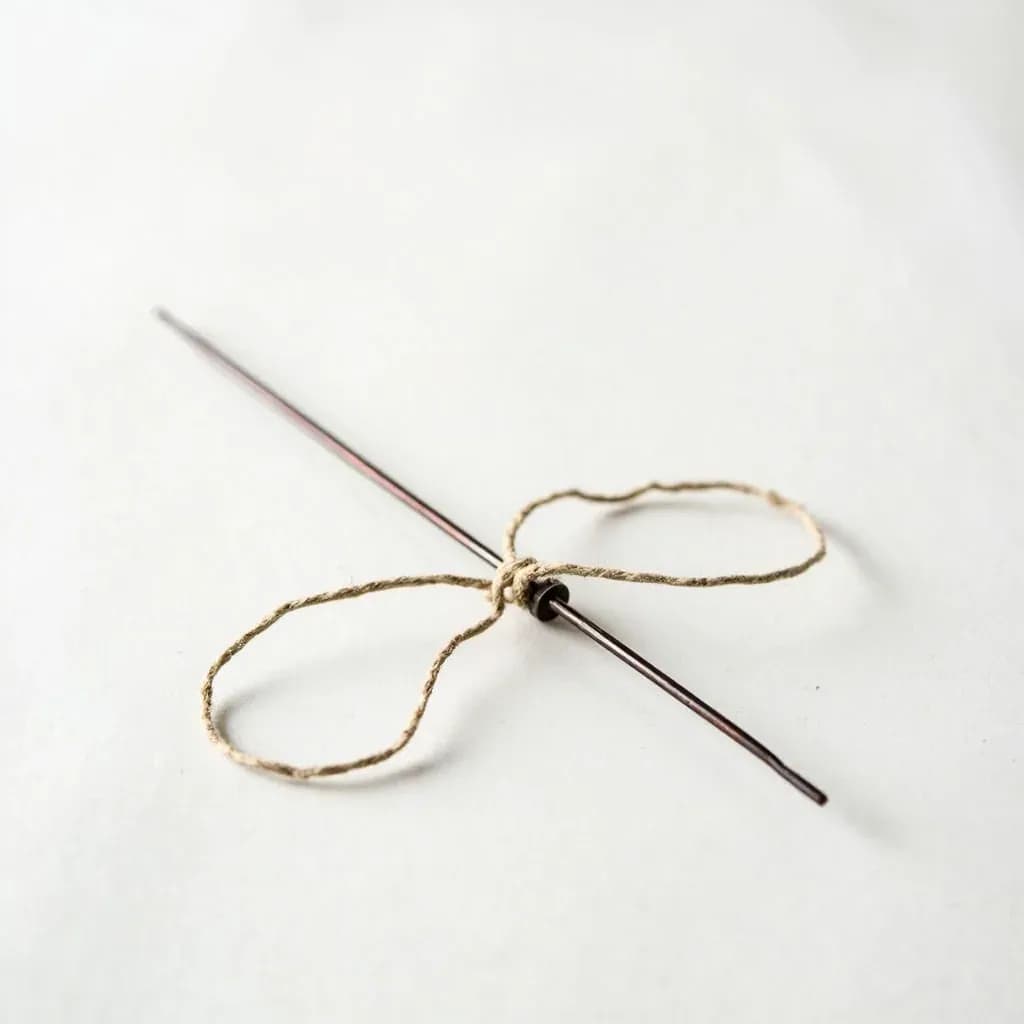
A long needle used to stitch and tie poultry or roasts into a compact shape for even cooking.
A trussing needle is a long, stiff steel needle with an eye for kitchen twine, used to sew up a stuffed bird or draw legs and wings tight against the body. Trussing gives poultry a neat, compact form so it cooks evenly and browns attractively. The same needle helps secure rolled roasts and stuffed meats before roasting.
A trussing needle is the working end of a system most home cooks underestimate. It is a long, heavy-gauge stainless needle with an oversized eye, built to draw butcher's twine through flesh, skin, and joints so a whole bird or boned roast can be pulled into a compact shape before cooking. That compactness is what actually matters in the oven: a trussed bird cooks more evenly than a splayed one, the legs and wings stay tucked against the body where they cannot scorch at the tips, and a rolled roast holds its cylinder so it slices cleanly at the table. The needle itself does not tie anything — it simply creates the channel through which the twine travels. The real skill lies in choosing entry and exit points that pass through bone, joint, or thick muscle rather than through skin, which would tear and let juices escape.
A serviceable needle is stainless, slightly longer than the job requires, and has an eye big enough to take 12–18 ply cotton without fraying it. Most cooks are well served by a 15–18 cm straight needle; once turkeys, geese, or large rolled roasts enter the picture, a 22–25 cm handled version earns its drawer space. Trussing as a technique is far older than the tool itself, with pre-Roman butchery roots, but the dedicated metal needle is a relatively modern refinement that replaced the awls and sailmaker's needles once borrowed from other trades.
Alternatives
Types & varieties
Looks like an oversized darning needle; the everyday choice for chickens, ducks, and small roasts.
A flat hook instead of an eye, designed to catch and pull twine through pre-pierced holes for lacing paupiettes, ballotines, and galantines.
A gentle arc that reaches awkward angles under skin and around joints without tearing.
A turned wood or stainless handle at one end for better grip and leverage on tough cuts and whole birds.
Several fixed prongs that draw several stitches at once; used in professional charcuterie and butchery.
A long thin rod with a flattened or looped end, used more for threading and tying than true sewing.
Modern alternatives and when they are worth using
A needle and twine still produce the most compact, evenly shaped result and the crispest skin, with the minimum of constriction around the bird. That said, several modern shortcuts have earned a place in working kitchens.
- Silicone truss bands stretch over the body of a chicken or small turkey and clip in seconds; ideal for weeknight roasting where presentation is not the priority.
- Metal truss frames and adjustable clips hold legs and wings in place without piercing the skin at all, and they double as a handle for lifting the bird.
- Butcher's skewers can substitute for a needle on small birds if you thread the twine through the eye of the skewer first, though the angle is less precise.
- For duck and goose, where very crisp skin is the goal, many cooks truss only loosely or skip trussing entirely in favour of scoring the skin and resting the bird on a rack — the needle still earns its keep for tying the legs.
Choosing the right length and weight
Length is the single most useful buying decision. A needle that is too short forces multiple partial passes, which is when skin tears and stitches wander.
- 15–18 cm: chickens, guinea fowl, ducks, small rolled roasts, stuffed pockets.
- 20–22 cm: large chickens, small turkeys, bone-in leg roasts, porchetta-style pork belly.
- 25 cm and longer: whole turkeys, geese, bone-in rib roasts, and any job where the needle must travel the full width of the bird in one pass.
- Heavier-gauge shafts resist bending on tough hide and skin, but a needle that is too thick will tear rather than pierce — match the gauge to the job.
Common uses
Tips & pitfalls
- Use only food-safe, untreated cotton butcher's twine; never synthetic or dyed string, which can melt or leach colour into the meat.
- Wet the twine before threading; damp cotton is less prone to fraying and grips the meat better when tied.
- Pierce the skin with the point first, then push through with a slight twist to keep the hole small and prevent juices escaping.
- Always work from the thickest part of the bird toward the thinnest so the twine does not saw through delicate skin on the way out.
- For whole birds, pass the needle through one drumstick, across the cavity, and out the other drumstick in one motion, then tie the legs together and tuck the wings under the body.
- Pull the twine snug but not tight enough to cut into the flesh — tension should hold the shape, not compress it.
- If a needle feels too sharp, file the very tip on a stone to blunt it slightly — it pierces cleanly without shredding the skin.
- For lacing, pierce a grid of small holes with a skewer first, then weave the twine through with a hooked needle for a tidy, even pattern.
- Clean the eye with a stiff bristle or pipe cleaner after every use; trapped fibres and fat are the most common cause of rust spots.
- Keep a spare needle in the drawer — bent or blunted points are the usual reason a needle is replaced, not wear along the shaft.
- Common mistake: trussing too tightly, which prevents the dark meat from reaching temperature and leaves the breast overcooked and dry.
- Common mistake: using a regular sewing needle, which is too short, too thin, and rarely stainless — it can snap or rust inside the meat.
Good to know
- Type
- Long, heavy-duty needle used with kitchen twine to sew meat into a compact shape
- Typical length
- 15–25 cm (6–10 in); longer needles exist for whole turkeys and large roasts
- Material
- Stainless steel is standard; some have wooden or turned-metal handles
- Tip style
- Usually sharp; some versions are blunted to reduce tearing of skin and muscle
- Eye
- Oversized to accept thick cotton butcher's twine (typically 12–18 ply)
- Also called
- Meat needle, roasting needle; the hooked lacing version is sometimes sold as a larding needle, though a true larding needle (for inserting strips of fat) is a separate tool
- Care
- Hand-wash and dry immediately; the eye traps moisture and is the first place rust forms
- Skill level
- Beginner-friendly; the harder skill is the tying pattern, not the needle work
Also called
poultry needle · trussing pin
Related

Peeler
Swift blade for stripping skin off fruit and vegetables

Grater
Sharp-toothed surface for shredding cheese and vegetables

Microplane
Ultra-fine rasp for citrus zest, garlic, and hard cheese

Mixing Bowl
All-purpose bowl for combining, whisking, and tossing

Whisk
Looped wires that beat air into eggs, cream, and sauces

Spatula
Flat blade for flipping, lifting, and scraping

Slotted Spoon
Pierced spoon that lifts solids and drains the liquid behind

Wooden Spoon
Gentle, heat-friendly spoon for stirring anything