Prep Tools
Uncapping Tank
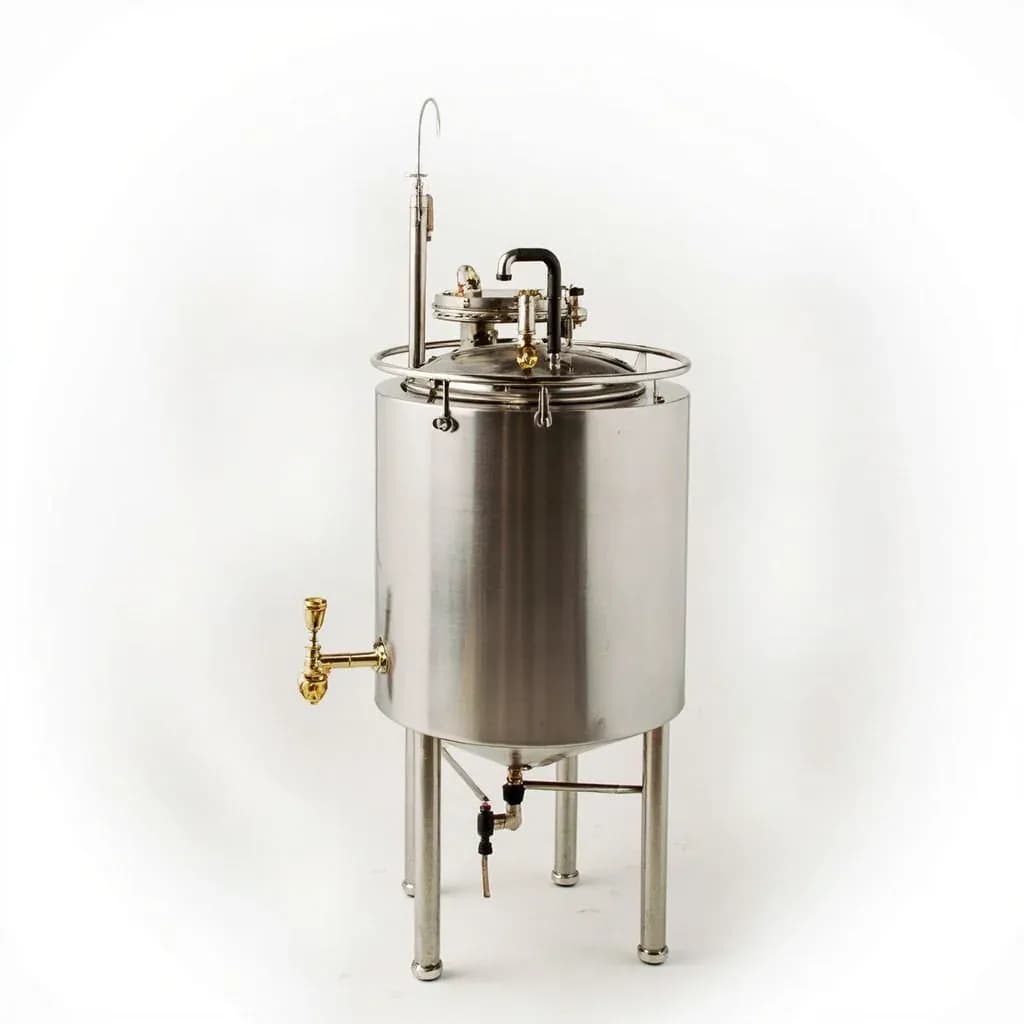
Catch tank with a rail for slicing wax caps off honeycomb before extraction.
An uncapping tank is a stainless or food-grade vessel with a support bar across the top where a beekeeper rests a frame and shaves off the wax cappings with an uncapping knife. The tank catches falling wax and dripping honey, often draining the honey through a strainer at the base. It is a honey-harvesting tool used just before frames go into the extractor.
The uncapping tank is the messy, sticky workstation at the heart of any honey house — the basin that catches wax cappings as they are sliced off honeycomb frames before the combs go into the extractor. A raised crossbar or saddle sits across the rim so a frame can rest top-bar-down while the beekeeper runs an uncapping knife across the cells; the cappings, along with a surprising amount of still-trapped honey, fall into the tub below. A bottom-mounted gate valve lets that honey drain out for recovery, and in better units a perforated inner basket holds the wax so it can drip-dry before rendering.
It is not the same thing as a settling tank. The uncapping tank is where the active, sticky work happens; the settling tank is the quiet downstream vessel where honey clarifies before bottling. Materials range from heavy-duty food-safe plastic (fine for backyard hobbyists with a handful of hives) to welded stainless steel (the professional standard, because honey's natural acidity reacts with reactive metals like galvanized or plain steel). Capacities scale from five-gallon hobby tubs to thirty-gallon-plus commercial benches with lids, baffles, and even integrated heated uncapping chains.
Position it on a sturdy, level surface between your stack of supers and the extractor, and you can uncap dozens of frames an hour without crossing the honey house more than once. Loaded with frames, cappings, and honey, a mid-size tank can easily weigh 60–150 lb, so plan the floor accordingly.
Alternatives
Types & varieties
Open plastic or stainless basin with a single cross-rail and bottom honey gate; the entry-level option for hobbyists with one to a few hives
Welded stainless tub with a perforated inner basket that lifts out; cappings stay in the basket while honey drains through to the gate
Mid-size stainless unit (often 20–30 gallons) with hinged or slide lid, drain gate, and often a removable cappings screen — the workhorse for 20–200 colonies
Large stainless system that integrates a heated uncapping chain or rotating knives; honey and wax are conveyed out automatically
Combination unit where a steam table or heated knife sits over the tank; heat keeps the knife clean and the honey fluid throughout the run
Built to orient frames to match radial extractor loading; reduces bending and speeds the line in high-volume operations
Material and Metal Safety
Honey is mildly acidic — typically pH 3.5 to 5.5 depending on the floral source — and that acidity will leach ions out of reactive metals over the course of a long extraction day. Welded food-grade stainless steel is the professional default for exactly this reason: it is non-reactive, takes hot water and caustic cleaners, and survives a hot knife resting on its rim. Plastic tanks, typically heavy-duty food-safe HDPE, are perfectly fine for a backyard operation with a handful of hives, but they cannot tolerate a heated knife on the rim, and the surfaces scratch over time, which makes thorough sanitizing harder. Avoid galvanized tubs, plain steel, or any secondhand container you cannot verify is food-grade; the off-flavors and contamination are not always obvious in honey, but they will show up in the finished jar.
Workflow and Layout
The uncapping tank belongs on the honey line between the stack of incoming supers and the extractor, on a sturdy, level surface that can handle 60–150 lb once the tank is full. A typical layout: supers on a cart to the left, tank directly in front of the operator, extractor to the right, with a settling tank or food-grade bucket beneath the gate. Frame flow should always move one direction — uncappers slice, slide the frame right into the extractor, never back across the floor. A lid on the tank, or at minimum a folded towel between batches, keeps robbing bees out and keeps the workspace clean during a long run.
Common uses
Tips & pitfalls
- Position the tank between the supers and the extractor so you only carry frames one way — the back-saving effect on a 60-frame day is enormous
- Always drain honey from the tank before it cools; below about 60°F (15°C) it thickens and becomes almost impossible to push through the gate
- Let cappings drip-drain in the basket for 24–48 hours before rendering — you will recover noticeably more honey than if you process them wet
- Set the gate valve over a food-grade bucket fitted with a filter cone or nylon strainer; honey coming out of an uncapping tank still carries fine wax particles
- Keep a wooden dowel or plastic scraper handy to nudge cappings off the tank walls into the basket so no honey is wasted
- Cover the tank between batches; bees find exposed honey within minutes and descend in numbers, especially during a late-summer dearth
- Never use a galvanized, plain steel, or other non-food-grade container — honey's natural acidity will react with the metal and taint the crop
- Don't rest a heated uncapping knife on the rim of a plastic tank; the rim will melt or warp permanently
- If the manufacturer allows it, slope the tank slightly toward the gate so residual honey pools and drains instead of sitting under the basket
- Clean the gate valve the same day you extract — crystallized honey in a stuck gate is the single most common extraction-day failure
Good to know
- Also called
- Uncapping tub, capping tank, cappings tank, or uncapping basin
- Primary function
- Catches wax cappings sliced off frames and drains the honey still clinging to them before extraction
- Typical materials
- Food-grade stainless steel (commercial standard) or heavy-duty food-safe plastic (hobby and small-scale use)
- Standard rail height
- Raised crossbar or saddle sits roughly 4–6 inches below the rim so a deep or medium frame rests with its top bar below the user's hand line
- Common capacities
- Hobby units 5–10 gallons; sideliner and commercial 15–30+ gallons; largest hold multiple frames in sequence
- Drainage
- Bottom-mounted honey gate, typically 1.5" or 2"; better models include a perforated inner basket that holds cappings while honey passes through
- Compatibility
- Sized to standard Langstroth, top-bar, and shallow or super frames; oversized hobby tanks usually accept 9⅝" deep frames standing upright
- Lid feature
- Most sideliner and commercial units include a hinged or sliding lid to deter robbing bees and keep the workspace sanitary
- Origin
- Evolved alongside Langstroth frame extraction in the late 19th century; welded stainless tanks became standard in commercial honey houses mid-20th century
Also called
honey uncapping tank · uncapping bin
Related

Peeler
Swift blade for stripping skin off fruit and vegetables

Grater
Sharp-toothed surface for shredding cheese and vegetables

Microplane
Ultra-fine rasp for citrus zest, garlic, and hard cheese

Mixing Bowl
All-purpose bowl for combining, whisking, and tossing

Whisk
Looped wires that beat air into eggs, cream, and sauces

Spatula
Flat blade for flipping, lifting, and scraping

Slotted Spoon
Pierced spoon that lifts solids and drains the liquid behind

Wooden Spoon
Gentle, heat-friendly spoon for stirring anything