Prep Tools
Vegetable Corer
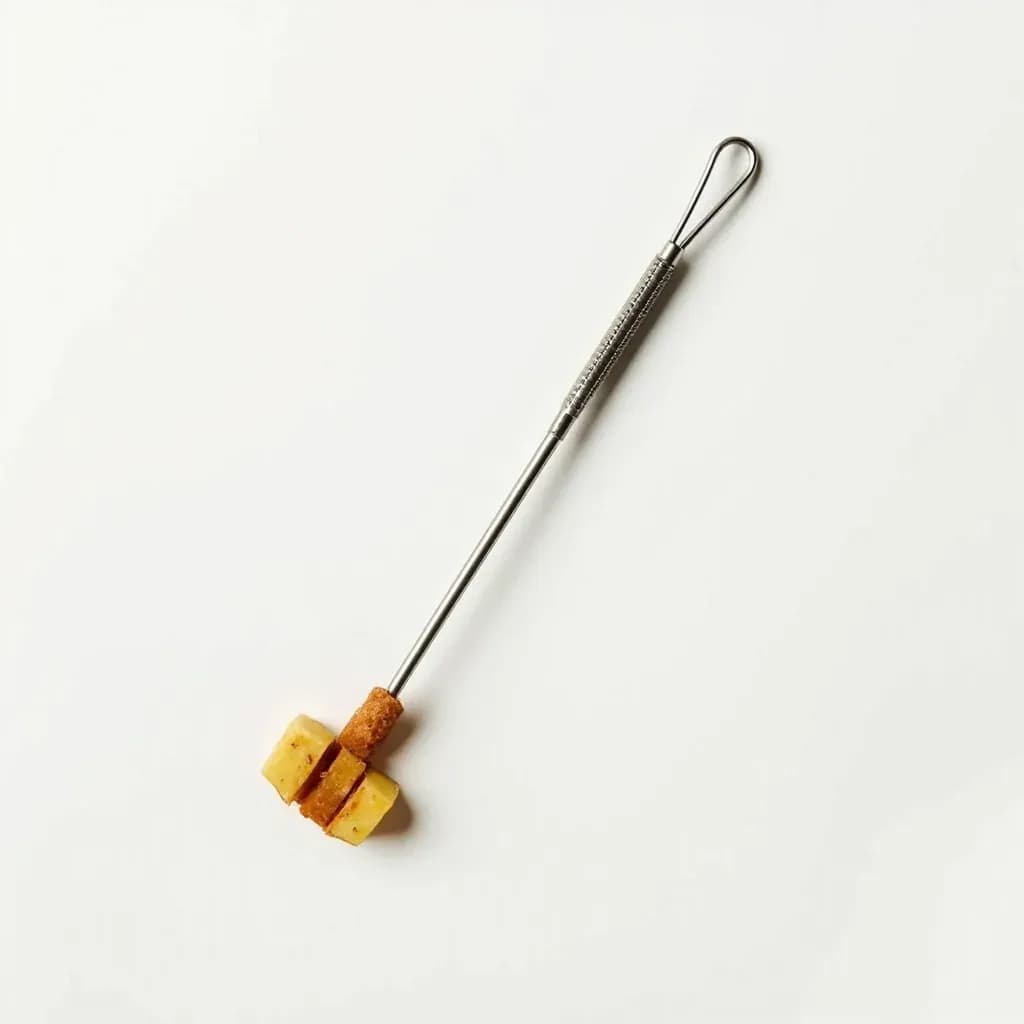
A narrow tool that hollows out cores or pulp from vegetables for stuffing or cleaning.
A vegetable corer is a long, narrow, often curved blade or scoop used to bore out the centers of vegetables so they can be stuffed. Cooks use it to hollow zucchini, eggplant, and squash for dishes like Middle Eastern mahshi, and related choppers shred leafy greens like molokhia. The thin reach removes pulp cleanly without splitting the vegetable's walls.
A vegetable corer is one of the most task-specific tools in a cook's drawer: a short-handled cylindrical tube, usually serrated at the cutting edge, designed to punch a clean plug of core, seeds, or pith out of fruits and vegetables in a single push. The standard design — a ring of stainless steel roughly 15–20 mm across with a small handle or cap on top — has changed very little since the 19th century, because the geometry simply works. Center the tube over the core, press straight down, and withdraw a tidy cylinder of waste, leaving the surrounding flesh intact and ready for slicing, baking, or stuffing.
Where a paring knife demands a careful spiral cut to clear a pepper's seed mass or an apple's core, a corer does it in one motion. The tool shines on firm, round produce — apples, pears, quinces, bell peppers, tomatoes, zucchini — where the core sits at the geometric center and the flesh is firm enough to resist crushing. It is less useful on soft fruits like ripe peaches or very ripe pears, where the surrounding flesh collapses under pressure, and on tapered vegetables like carrots, which have no real core to remove.
For most home cooks, a single medium stainless tube corer handles the majority of jobs. Specialty versions — narrower for chilies, shallower for tomatoes, spring-loaded for sticky cores — earn their place only in kitchens that prep those ingredients often. The tool sits naturally in a drawer beside the peeler, paring knife, and grapefruit spoon as part of a basic fruit-prep set.
Alternatives
Types & varieties
A simple cylindrical ring, often serrated, with a short handle — the standard, inexpensive design for apples and pears.
Spring-loaded or push-rod plunger ejects the core after the cut, keeping fingers away from sticky or pungent plugs.
Circular tool with radiating blades that quarters or eighths the apple while removing the core in one press; popular for snacks and lunchboxes.
Small serrated cutter designed to lift out the stem plug and seed cluster from tomatoes without crushing the flesh.
Slightly longer, narrow serrated tube sized to clear the seed mass and white ribs of bell peppers.
Very narrow tool — sometimes a hollow needle-like rod — for removing seeds from small chilies with minimal flesh loss.
Not strictly a corer, but the curved half-spoon blade performs a similar scooping function for hollowing zucchini, cucumber boats, or apples for decoration.
Countertop or handheld electric device that peels, cores, and sometimes slices in one pass; common in orchards and high-volume kitchens.
Sizing the tool to the produce
Tube diameter is the single most important choice. A corer that is too small leaves seeds and core fragments behind; one that is too large wastes edible flesh and can split delicate items like tomatoes. A medium apple corer in the 16–18 mm range handles most apples, pears, quinces, and bell peppers. Keep a separate narrow corer (around 10 mm) on hand only if you regularly seed chilies or tiny tomatoes.
- Standard apple/pear: 15–20 mm tube, serrated edge
- Bell pepper: 16–20 mm tube, slightly longer reach
- Tomato: 10–14 mm shallow serrated cutter
- Chili: 8–10 mm tube or needle-style seeder
When to reach for a knife instead
A corer is a specialist. A paring knife is the better tool in several common situations, and recognizing them saves frustration and bruised produce.
- Soft or overripe fruit (ripe pears, peaches, plums) — the flesh collapses before the tube can cut.
- Asymmetric produce where the core is off-center — a knife lets you follow the actual shape.
- Large heirloom tomatoes with deep shoulders — a knife trims the core without crushing the walls.
- Tapered or elongated vegetables (carrots, parsnips, eggplant) — there is no central core to remove.
Common uses
Tips & pitfalls
- Press straight down with even pressure rather than twisting — twisting crushes the surrounding flesh, especially in soft fruits.
- Always work over a wooden or plastic cutting board; pressing directly onto stone, glass, or metal counters damages both the blade and the surface.
- Match tube diameter to the produce: too small leaves seeds and core fragments, too large wastes edible flesh.
- For bell peppers, core from the blossom end after slicing off the top — the seed cluster comes out as one clean plug instead of scattering.
- For tomatoes, hold the fruit in the palm and use a gentle sawing motion with a serrated tomato corer to avoid bruising.
- For chilies, use a narrow chili corer or even a chopstick; pulling seeds with a knife damages the cap and releases capsaicin into the air.
- Plunger-style corers reduce waste and keep hands away from sticky or pungent cores (chilies, overripe fruit, anything seedy).
- If the core does not release on a tube corer, tap the handle gently against the board — do not pry it sideways, which bends the ring.
Good to know
- Also known as
- Apple corer, pepper corer, tomato corer, chili corer (size- and task-specific versions)
- Primary purpose
- Removes cores, seeds, ribs, and pulp from fruits and vegetables in a single push
- Typical material
- Stainless steel (most common); also plastic bodies with metal rings, occasionally wood-handled
- Common blade style
- Serrated or smooth cylindrical tube; zigzag/flower-edge models cut wedges while coring
- Tube diameter
- About 15–20 mm (0.6–0.8 in) for standard apple corers; around 10 mm for chili and tomato corers
- Approximate cost
- Basic models $3–$10; ergonomic or plunger models $10–$25
- Cleaning
- Hand wash recommended for wood-handled models; all-stainless versions are generally dishwasher safe
- Skill level
- Beginner-friendly; minimal technique required
Also called
Manaara · Molokhia Chopper (Makhrata) · Vegetable/Herb Chopper · Vegetable Chopper · Zucchini Corer
Related

Peeler
Swift blade for stripping skin off fruit and vegetables

Grater
Sharp-toothed surface for shredding cheese and vegetables

Microplane
Ultra-fine rasp for citrus zest, garlic, and hard cheese

Mixing Bowl
All-purpose bowl for combining, whisking, and tossing

Whisk
Looped wires that beat air into eggs, cream, and sauces

Spatula
Flat blade for flipping, lifting, and scraping

Slotted Spoon
Pierced spoon that lifts solids and drains the liquid behind

Wooden Spoon
Gentle, heat-friendly spoon for stirring anything