Prep Tools
Sherry Venencia
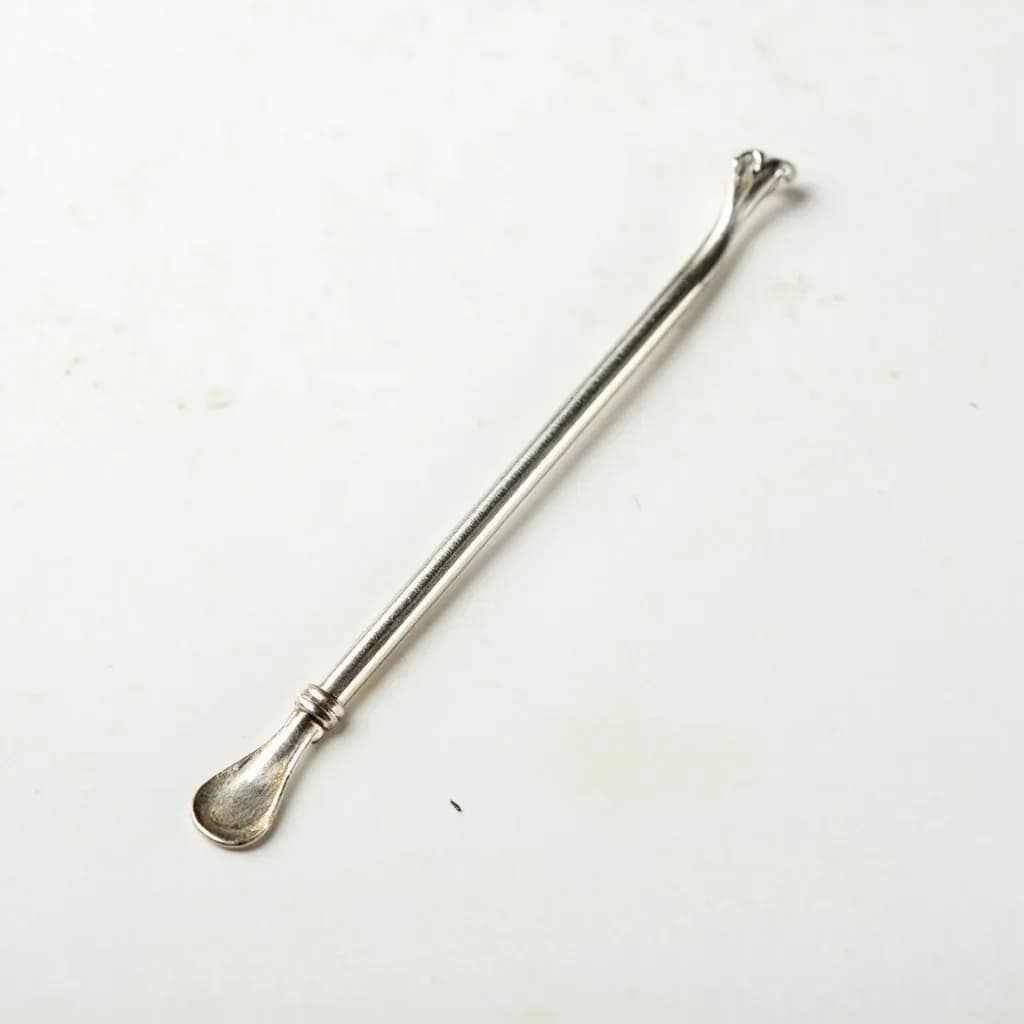
A long-handled cup tool for drawing sherry from the barrel through the flor.
A venencia is a traditional Andalusian tool with a small cylindrical cup on the end of a long flexible whalebone or cane handle, used to draw a sample of sherry from the cask without disturbing the floating flor yeast. The venenciador pours the wine in a long aerating arc into the glass. It is both a practical sampling tool and a theatrical serving ritual.
The venencia is the capataz's sampling tool in the bodegas of the Marco de Jerez — a shallow, shovel-shaped cup (cuchara) fixed to a long, springy handle (mango) used to draw sherry directly from a butt. Its purpose is narrow and specific: to lift a single small mouthful of wine out of a cask for tasting and inspection without disturbing it more than necessary. In the production cellars of Jerez de la Frontera, El Puerto de Santa María, and Sanlúcar de Barrameda it is the working end of daily cellar routine, and the sight of an arm extended, wrist flicking wine in a clean arc into a copita held in the other hand, is one of the most recognisable images of the trade.
What makes the tool distinctive is how its geometry suits the wine. The flat, shallow cup slides sideways under the surface film of a butt rather than plunging through it; the long handle (typically 40–60 cm) lets the capataz reach wine in the middle of a stacked solera without climbing, and flexes enough to store wrist energy for the flick that throws the sample cleanly. In Fino and Manzanilla, where a living veil of flor protects the wine from oxygen, this matters a great deal: a clumsy dip punches a hole in the yeast layer and exposes the wine to air. The venencia is not, despite frequent confusion, a pouring vessel for the table; it is a precision sampler whose design is dictated by the solera y criaderas system it serves.
Modern working venencias pair a silver or stainless cup with a high-density polymer handle; traditionalists and collectors prize the older form of a sterling cup on a baleen (whalebone) shaft, valued for a suppleness no plastic quite matches. The tool should not be confused with a wine thief or glass pipette used elsewhere in the wine trade: the venencia is purpose-built for sherry, and the copita (catavinos) it pours into is the official narrow-tulip tasting glass of the region.
Alternatives
Types & varieties
Sterling cup on whalebone handle; the classic form, now mostly in collections and auction
Sterling or silver-plated cup on a flexible HDPE/nylon handle; the everyday working tool
Common in production bodegas; durable, easy to sanitise, less ceremonial
Older decorative examples and small tasting versions sold for home sherry sessions
Extra-long handle up to ~80 cm for sampling butts on the upper tiers of a solera stack
Short handle and small cup; popular for home use, trade tastings, and classroom demonstrations
The venencia in the solera workflow
The venencia exists because the solera y criaderas system does. Wine is matured in a tiered stack of American-oak butts (500–600 L): the oldest fraction sits at the bottom (the solera proper), with progressively younger criaderas above. On a regular cycle the capataz draws a fraction of wine from each butt in the solera for bottling and tops it up with wine drawn from the criadera above, which is in turn topped from the one above that, and so on up the stack. The venencia is the instrument for the small-scale, butt-by-butt judgement calls in this transfer: tasting clarity, colour, and aroma at each level, checking the depth of wine, and verifying that the flor is healthy. A larger volume would mean opening the bung and rigging a siphon or pump; the venencia lets the capataz do it all through the bunghole, quickly, repeatedly, and without exposing the wine.
History and cultural status
Silver-and-baleen venencias from firms such as La Veneciana and from Jerez silversmiths turn up at auction and in bodega museums; early 20th-century examples with carved or engraved handles are particularly sought after. The craft of wielding one — the dip, the lift, the latigazo flick into the copita — is taught informally in the bodegas and is still demonstrated to visitors at many houses in Jerez and Sanlúcar. New whalebone handles are essentially unobtainable, and the working standard has settled on silver cups with polymer shafts, which approximate the flex and survive daily contact with alcohol and cellar humidity.
Venencia vs. wine thief
A wine thief (or pipette) is a glass or stainless tube with a thumb-operated valve, used by brewers and winemakers worldwide to pull a barrel sample. The venencia is a regional, sherry-specific tool: it carries no valve, holds the wine in a flat cup rather than a column, and is designed to be flicked, not poured. For Fino and Manzanilla the cup-and-flick design is the whole point — it lets the capataz take a sample under, rather than through, the flor.
Common uses
Tips & pitfalls
- Hold the handle near the top and let the cup swing freely; a death-grip stiffens the wrist and splashes the sample before it leaves the butt
- Lower the cup vertically and slide the flat bottom sideways under the surface film; never plunge, which punches a hole in the flor in Fino and Manzanilla
- Practise the latigazo (wrist flick) over a sink with water before performing it for clients — the transfer is meant to be one clean motion from butt to copita, not a pour
- Keep the cup bone-dry and odour-free; any residual water, dust, or detergent is immediately obvious in a Fino
- Inspect the handle and the cup-to-handle joint before every use; a perished baleen or fatigued polymer shaft can snap and drop metal into a butt
- If a new polymer-handle venencia feels too stiff, flex it gently by hand once or twice before the first dip — many arrive too rigid to dip cleanly
- Aim the flick into a dry, room-temperature catavinos; a chilled glass dulls the aromatics and a wet glass dilutes the first sample
- Never use a venencia as a general pourer at the table — it is a sampling tool, and the volume, the flick, and the ceremony all assume a butt and a copita, not a dinner glass
Good to know
- Origin
- Marco de Jerez (Jerez de la Frontera, El Puerto de Santa María, Sanlúcar de Barrameda), Andalusia, Spain; a bodega tool for centuries
- Components
- A flat, shovel-shaped cup (cuchara) fixed to a long flexible handle (mango)
- Traditional handle
- Baleen (whalebone), chosen for its combination of stiffness and spring
- Modern handle
- High-density polyethylene, nylon, or other food-grade polymers
- Cup material
- Sterling silver historically; modern production uses stainless steel, tin-plated copper, or pewter
- Typical length
- 40–60 cm (16–24 in) standard; up to ~80 cm for upper-criadera sampling
- Cup capacity
- Roughly 60–100 ml for working models; smaller tasting cups of ~30 ml exist
- Paired glass
- The drawn sample is flicked into a catavinos (copita), the narrow-tulip sherry tasting glass
- Special role
- Skims a sample with minimal disturbance of the flor veil in Fino and Manzanilla
Also called
venenciador tool · sherry sampler
Related

Peeler
Swift blade for stripping skin off fruit and vegetables

Grater
Sharp-toothed surface for shredding cheese and vegetables

Microplane
Ultra-fine rasp for citrus zest, garlic, and hard cheese

Mixing Bowl
All-purpose bowl for combining, whisking, and tossing

Whisk
Looped wires that beat air into eggs, cream, and sauces

Spatula
Flat blade for flipping, lifting, and scraping

Slotted Spoon
Pierced spoon that lifts solids and drains the liquid behind

Wooden Spoon
Gentle, heat-friendly spoon for stirring anything