Prep Tools
Water Bucket
A sturdy pail for carrying, soaking, and holding water during cooking and cleanup.
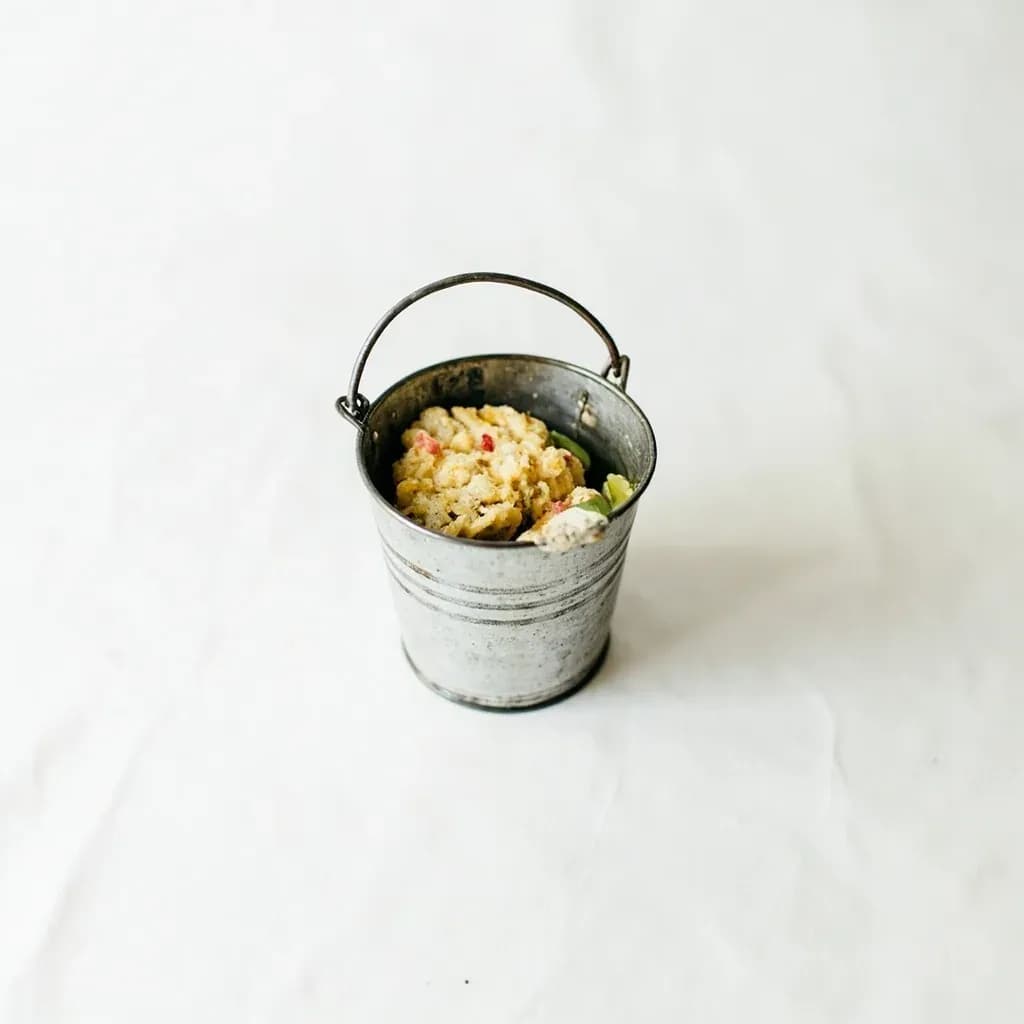
A water bucket is a deep handled pail, usually plastic or metal, used to fetch and hold water for soaking, brining, rinsing, and cleanup in the kitchen. Cooks use it to soak dried beans and grains overnight, hold live shellfish, ice down beverages, or haul water where plumbing is limited. Its handle and depth make it easy to carry and pour large volumes.
The water bucket is the unsung workhorse of volume cooking — the vessel no other pan wants to be. It brines a Thanksgiving turkey overnight, soaks several pounds of chickpeas before the long cook, holds crushed ice around a tower of oysters, and catches boiling water when a canning kettle needs dumping. Where a stockpot or mixing bowl is built for the stove and the counter, the bucket is built for the floor, the fridge, and the bail handle. It earns its place the moment a cook moves beyond weeknight dinners to project cooking, and it remains a fixture of every butcher shop, seafood counter, and prep line in the business.
What separates a useful bucket from a problematic one is material. Food-grade plastic and stainless steel can hold anything a cook might reasonably put in them — brine, fermenting cabbage, ice, hot wash water — while a hardware-store galvanized or unknown-plastic bucket is restricted to water and cleanup. The chemistry matters: galvanized coatings react with acid (citrus, vinegar, tomatoes, wine) and can leach zinc, while recycled or non-food-grade plastics may carry residues that migrate into food. The rule is simple: if the bucket touches anything edible, it must be labeled food-safe.
Beyond material, the bucket's design is worth understanding. Capacity, handle style, lid fit, and nesting capability all shape how it actually gets used. A 5-gallon food-grade plastic bucket with a tight lid covers most home kitchen needs — brining, fermenting, seafood on ice, soaking beans. A stainless pail is the upgrade that lasts a lifetime. Anything else is decoration.
Alternatives
Types & varieties
Classic farm and barn-style; cheap and rugged, but reactive — only for water, ice, and non-acidic uses.
Preferred in commercial kitchens; non-reactive, dishwasher-safe, tolerates hot liquids.
Lightweight, inexpensive, food-safe when rated; the workhorse of butcher shops and seafood operations.
Large (often 5–6 gallon) food-grade plastic or stainless bucket sold specifically for wet-brining poultry and roasts; many come with lid and handle.
Heavy-duty plastic with lid and aeration holes or slots, designed to hold live shellfish on ice or in seawater.
Historical form; still used decoratively and for some traditional fermentations, though rare in modern kitchens.
Steel core coated with porcelain enamel; non-reactive for most ingredients but chips expose bare metal.
Space-saving modern variant; food-safe silicone, suitable for washing produce and small soaking jobs.
Food-Grade vs. Hardware-Grade: The Distinction That Matters
The single most important distinction in choosing a bucket is whether it is rated food-safe. Food-grade plastic (typically HDPE marked with a #2 recycling symbol and an explicit food-safe designation) and stainless steel can contact any ingredient without leaching or reacting. Hardware-store utility buckets, even when visually identical, are often made from recycled or mixed plastics that are not rated for food contact — they may contain plasticizers, UV inhibitors, or residues from prior contents that migrate into food, especially when salted or heated. A bucket that once held paint, cleaning chemicals, or unknown contents should never be repurposed for food without clear food-grade certification.
- Look for a 'food-grade' or 'NSF/ANSI 2' label on the bucket or its packaging
- HDPE (#2 recycling code) is the safest and most common food-grade plastic for kitchen use
- Stainless steel buckets (18/8 or 18/10) are the safest upgrade for hot or acidic work
- Recycled plastic buckets, even new, may carry food-contact warnings — read the fine print
- When in doubt, line a non-food bucket with a clean food-grade plastic bag as a workaround, not a substitute
Matching Material to Use
Each bucket material has a clear range of safe uses, and a cook who knows the boundaries can deploy the right bucket for every job without thinking twice.
- Galvanized steel: water, ice, dry goods, and non-acidic cleanup only — never with citrus, vinegar, tomatoes, or wine
- Food-grade HDPE plastic: brines, fermentations, cold and room-temperature foods, and seafood on ice — not for boiling water on the stove
- Stainless steel: hot liquids, brines, fermentations, dishwasher-safe — the most versatile option but heavier and pricier
- Enameled steel: most foods, but chips expose bare metal underneath, so retire the bucket as soon as the coating breaks
- Wooden buckets: traditional fermentations and decoration only; not practical for everyday kitchen work
Common uses
Tips & pitfalls
- Reserve separate buckets for distinct jobs — one for food, one for trash and drippings, one for cleaning — and color-code them to prevent cross-contamination.
- Never put a regular plastic bucket directly on a burner or open flame; even food-grade HDPE will soften and deform well below boiling.
- Label brining buckets with the date, contents, and destination (fridge, cooler, counter) — an unlidded turkey brine on the floor is a common kitchen accident.
- If a galvanized bucket is all you have, line it with a large food-grade plastic bag before brining to keep the zinc coating away from salt and acid.
- After seafood use, scrub with hot soapy water and then sanitize with a dilute bleach solution (1 tbsp per gallon) or a white vinegar rinse; odors linger in porous plastic.
- Don't use the same bucket that held raw poultry for produce without a full wash-and-sanitize cycle in between — pathogens transfer readily in residual moisture.
- For overnight bean soaks, use at least three times the volume of water per volume of beans — they swell dramatically and a too-small bucket will overflow onto the floor.
- Check that the bail handle's rivets are tight before lifting a full bucket — a failing rivet drops five gallons of brine on your feet faster than you can react.
- In commercial settings, retire any plastic bucket that has become deeply scratched or cloudy; the micro-scratches harbor bacteria that sanitizing cannot fully reach.
Good to know
- Also called
- Pail, tub, brine bucket; wooden form historically called a firkin
- Typical capacity
- 2 to 14 gallons (8–55 L); most kitchen uses fall between 2 and 5 gallons
- Common materials
- Food-grade HDPE plastic, stainless steel, galvanized steel, occasionally wood or enameled metal
- Food-safe rule
- Only food-grade plastic or stainless steel should contact food; galvanized and unknown plastics are restricted to water-only and cleanup uses
- Galvanized safety
- Galvanized (zinc-coated) buckets must not be used with acidic ingredients — citrus, vinegar, tomatoes, wine — because the coating reacts and can leach
- Temperature range (plastic)
- Standard HDPE buckets are rated roughly 0°F to 180°F (–18°C to 82°C); not suitable for boiling water on the stove
- Stainless rating
- 18/8 or 18/10 stainless buckets tolerate hot water, brine, and stovetop contact when labeled accordingly
- Handle style
- Bail handle (swiveling wire) on metal buckets; molded or rope handles on plastic
- Historical form
- Wooden stave buckets with iron hoops date back to at least the medieval period and remained standard until galvanized and plastic took over in the 20th century
- Commercial kitchen code
- NSF/ANSI 2 certified food-equipment rating is required in many jurisdictions for buckets used to hold ingredients on prep lines
Also called
bucket · Pail · Water Pail
Related

Peeler
Swift blade for stripping skin off fruit and vegetables

Grater
Sharp-toothed surface for shredding cheese and vegetables

Microplane
Ultra-fine rasp for citrus zest, garlic, and hard cheese

Mixing Bowl
All-purpose bowl for combining, whisking, and tossing

Whisk
Looped wires that beat air into eggs, cream, and sauces

Spatula
Flat blade for flipping, lifting, and scraping

Slotted Spoon
Pierced spoon that lifts solids and drains the liquid behind

Wooden Spoon
Gentle, heat-friendly spoon for stirring anything