Prep Tools
Plastic Water Jug (Jagi)
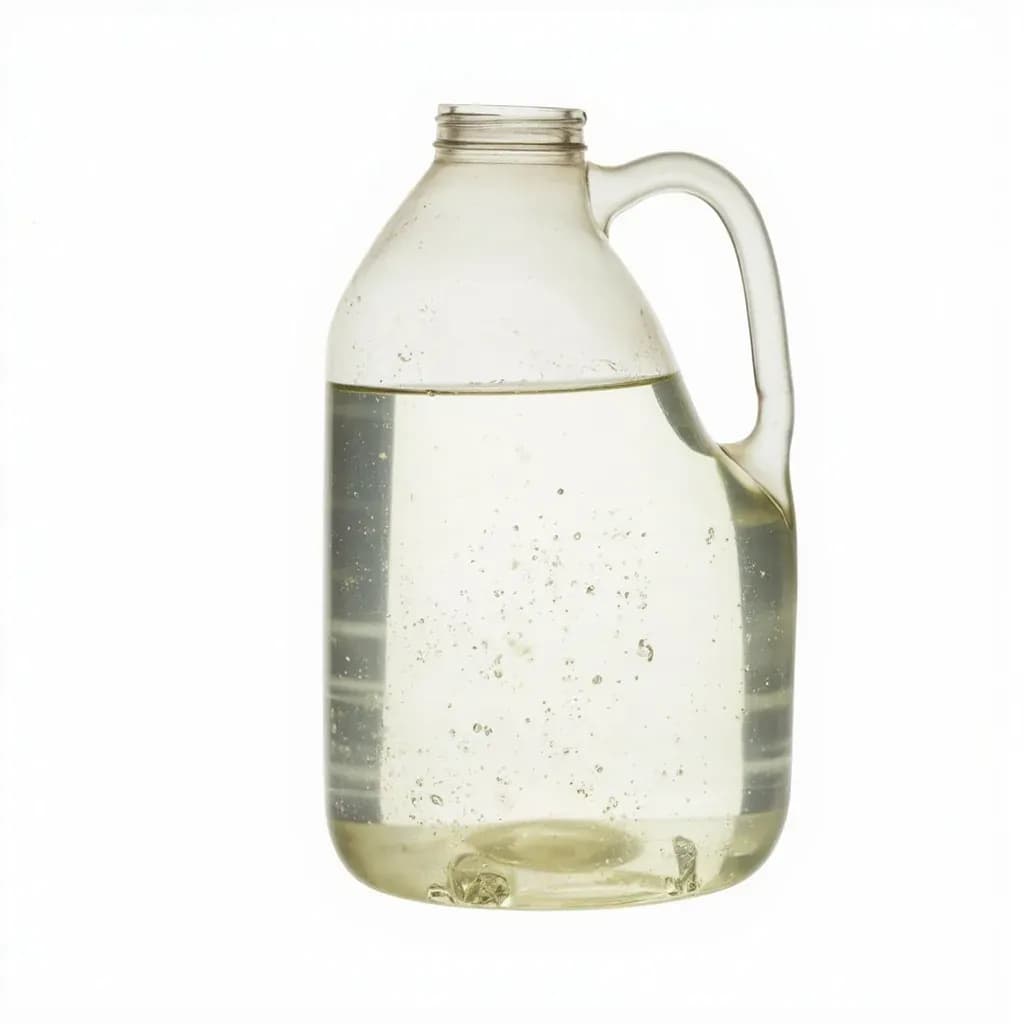
A simple plastic jug for pouring, measuring, and carrying water during cooking.
A plastic water jug, known as a jagi in Korean kitchens, is a lightweight handled vessel used to pour and carry water for cooking, rinsing rice, and mixing. Its durability and clear or marked sides make it handy for rough measuring. It is a humble everyday tool found on countertops and beside sinks.
The jagi (자기) is the everyday plastic water jug of the Korean kitchen — a one-piece molded pitcher with a side handle, short pouring lip, and usually a 1 L capacity. It replaced ceramic and metal water pitchers during the 1980s as 정수기 (water dispensers) became standard in Korean apartments, and today it sits in nearly every home as a working tool rather than a serving piece. Cooks grab it to move water from the dispenser to the pot, to measure liquids into a recipe, and to mix brines and sauces that call for generous volumes.
What makes the jagi genuinely useful is the combination of a comfortable grip, a controlled pour, and a body you can read at a glance. Most are clear or translucent polypropylene or polyethylene, light enough to swing one-handed, and shaped so the spout cuts a clean stream without splashing. Higher-end versions are printed with volume lines so the same jug doubles as a measuring cup, and the same vessel will quietly make several dozen trips between counter, sink, and stove in the course of a single meal.
In Korean home cooking, 'jagi' has also drifted into the language as a colloquial unit of volume. A recipe that calls for '물 1자기' — one jagi of water — generally means whatever your own jug holds, usually somewhere between roughly 900 mL and 1.2 L. That imprecision is part of its charm: the jug is meant for the forgiving, splashy, rinse-and-pour work of daily cooking, not for the gram-precise work of pastry.
Alternatives
Types & varieties
The workhorse size; what most Korean kitchens reach for first
For stock pots, kimchi brine, and soaking big batches of grains or vegetables
Printed or embossed mL and cup lines on the side, so the same jug functions as a measuring cup
Snap-on or screw-on plastic lid; doubles as a fridge pitcher for cold drinking water
Roughly 500 mL; useful at the table, for soy or vinegar service, or for small sauce pours
Made of higher-rated plastic or Tritan; safe for hot liquids and simple blanching work
The jagi as a measure
A recipe that says '물 한 자기' does not specify milliliters — it specifies the cook's own jug. Across Korean households, that lands somewhere between roughly 900 mL and 1.2 L, with most people hovering near 1 L. For everyday soup, stew, and rice work, that loose standard is fine. For baking, candy, or any recipe where hydration changes the outcome, measure in grams or use a real 계량컵 (measuring cup) instead.
- Korean cookbooks and home recipes routinely write '물 1자기' or '물 2자기' in place of a milliliter count
- The convention works because most households own essentially the same 1 L jug, so the variation is small in practice
- The 큰 국자 (large ladle) is a related ad-hoc measure; one ladle is roughly a quarter to a third of a jagi
- Treat jagi measurements as approximate, not precise — the tool is for splashy, everyday work, not baking
Care, heat, and when to retire it
Standard polypropylene and polyethylene jagi are rated for room-temperature and warm water, not boiling. Pouring freshly boiled water into a regular jagi can warp the spout, cloud the plastic, and shorten the jug's life. Heat-resistant versions, often made of Tritan or higher-rated polypropylene, are labeled for hot liquids and are worth owning if you regularly move boiling water from a kettle to a mixing bowl or need a vessel for quick blanching. Replace the jug the moment the interior goes cloudy, develops fine cracks, or holds onto odors after washing — scratched plastic traps bacteria and absorbs the smell of kimchi brine, soy sauce, and vinegar.
- Boiling water is the most common cause of a warped spout or hazy body on a standard jagi
- A heat-rated jagi is also useful for quick blanching of greens when you don't want to pull out a pot
- Cloudiness, fine cracks, and lingering odors are the three reliable signs it's time to replace the jug
- Store the jug upside down on the counter or in a cabinet so it drains and dries fully between uses
Common uses
Tips & pitfalls
- Use only food-grade plastic; a kitchen-marked jagi is safer than a repurposed disposable water bottle
- If you measure with it, choose a model with clear mL and cup lines molded into the side
- Replace the jug when it goes cloudy, cracks, or develops a scratchy interior — these trap odors and bacteria
- Standard plastic jagi are not rated for boiling water; pour hot liquid only into a heat-resistant version
- Keep a dedicated jagi for food; never use a kitchen jagi for bleach, vinegar cleaning solutions, or other chemicals
- Wash the handle joint and the inside of the spout lip thoroughly and store the jug upside down so it drains dry
- When reading volume from side markings, set the jug on a flat counter and read at eye level for a true line
- If your household disagrees about how much 'one jagi' is, pick one jug and use it for measuring consistently
Good to know
- Korean name
- 자기 (jagi)
- Material
- Food-grade plastic, usually polypropylene or polyethylene; acrylic and Tritan versions exist
- Common capacities
- 1 L, 1.5 L, and 2 L are the standard sizes; a smaller ~500 mL mini version is also made. 1 L is the most common household size
- Construction
- One-piece molded body, side handle, short pouring lip; often with volume markings
- Function in recipes
- Acts as an informal volume measure — '물 1자기' means one jug-full of water
- Typical price
- Inexpensive; a few dollars or less at Korean market stalls, Daiso, or online retailers
- Historical shift
- Largely replaced ceramic and metal pitchers from the 1980s onward as water dispensers spread in Korean apartments
Also called
plastic-jug · Jagi · water pitcher
Related

Peeler
Swift blade for stripping skin off fruit and vegetables

Grater
Sharp-toothed surface for shredding cheese and vegetables

Microplane
Ultra-fine rasp for citrus zest, garlic, and hard cheese

Mixing Bowl
All-purpose bowl for combining, whisking, and tossing

Whisk
Looped wires that beat air into eggs, cream, and sauces

Spatula
Flat blade for flipping, lifting, and scraping

Slotted Spoon
Pierced spoon that lifts solids and drains the liquid behind

Wooden Spoon
Gentle, heat-friendly spoon for stirring anything