Prep Tools
Wide-Mouth Canning Funnel
A broad-spouted funnel that fits canning jars for spill-free filling of preserves.
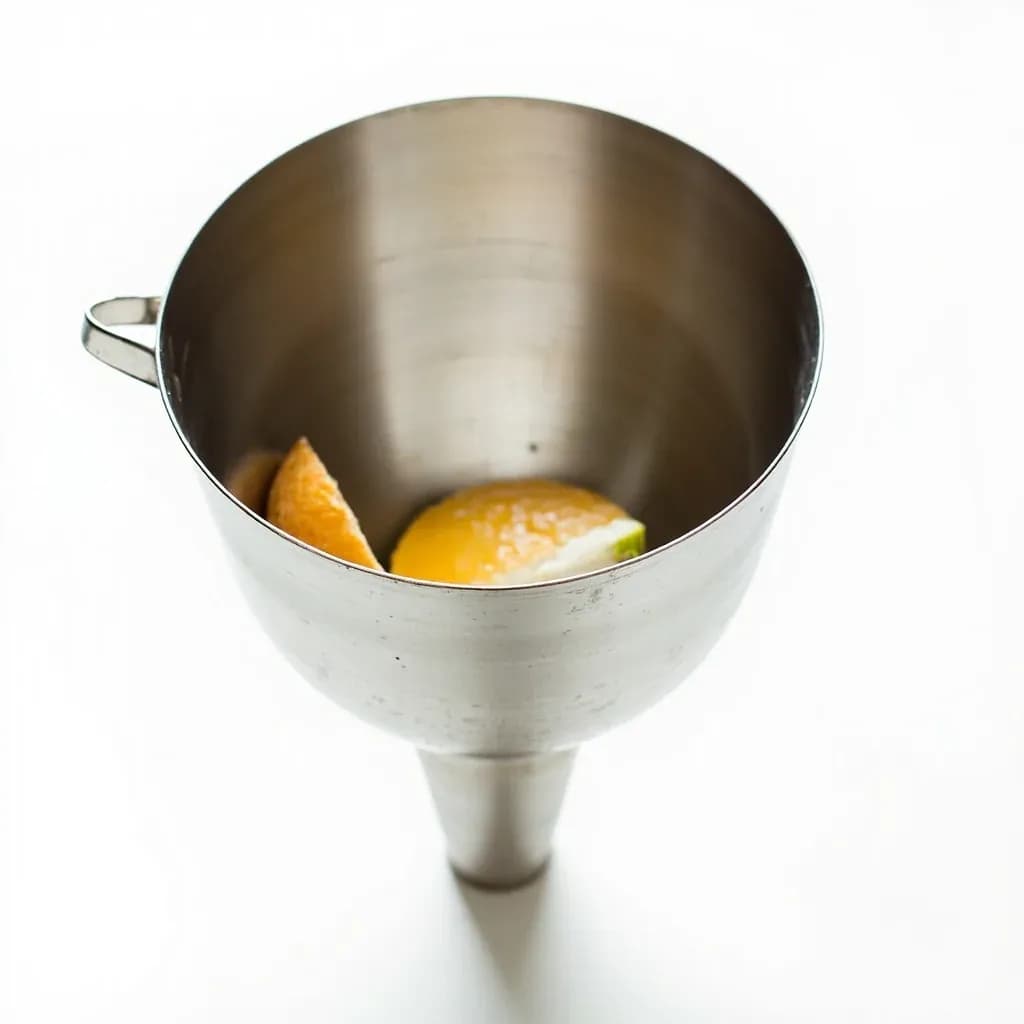
A wide-mouth canning funnel is a funnel with a large opening and a short, wide spout sized to drop neatly inside standard and wide-mouth jars. It channels jams, pickles, sauces, and dry goods into jars without smearing the rims, which helps seals form correctly. Many models have a shoulder ledge or fill-line marks to guide proper headspace.
A wide-mouth canning funnel is a shallow, broad-spouted funnel with a flat outer flange designed to sit across the top of a wide-mouth canning jar rather than dropping into it. The flange is the whole point: it bridges the opening, holds the funnel in place hands-free, and channels contents into the jar while keeping the rim and threads untouched. Without one, you balance a regular kitchen funnel inside a hot, slippery jar, or pour preserves directly across threads that must stay spotless for the lid to seal.
The funnel matters less for neatness than for seal integrity. A single smear of jam, syrup, or fat across a jar rim is the most common reason a two-piece canning lid fails to draw down and vacuum-seal, whether you are running a boiling-water bath or a pressure canner. The wide throat and internal ribs (or stepped profile) let air escape as contents flow in, reducing trapped bubbles and helping you hit consistent headspace. Most are translucent food-grade plastic that tolerates boiling-water temperatures and lets you watch the level rise; stainless versions trade a little visibility for longer life.
Wide-mouth and regular-mouth funnels are not interchangeable. The two openings differ by roughly half an inch, and the funnel has to seat squarely on the rim, so serious home canners typically own both, or look for a stepped model that fits both sizes.
Alternatives
Types & varieties
The most common, inexpensive style; translucent so you can watch the level rise; tolerates hot liquids; will stain with turmeric, berry, or beet pigments over time.
More durable, dishwasher safe, won't stain, and stands up to anything a pressure canner can throw at it; conducts heat, so let hot contents cool a moment before handling the rim.
Same shape, sized to standard (narrow) canning jar openings; sold separately because the two sizes are not interchangeable.
Stepped or telescoping models that fit both regular- and wide-mouth jars; convenient but generally less stable than a dedicated size.
A single tab on the rim that gives a grip for placement and lift-off, useful when working with a full, heavy jar.
Why a clean rim is non-negotiable
The two-piece lid system used for home canning depends on a soft sealing compound on the underside of the flat lid bonding to perfectly clean glass. Any residue — sugar from jam, oil from a sauce, salt from a brine, even a fingerprint — creates a channel that breaks the vacuum as the jar cools. A canning funnel prevents most of the mess, but it does not eliminate it: a single drop that runs down the outside of the spout onto the rim is enough to compromise a jar. Wipe every rim with a clean, damp cloth before positioning the lid, and treat the funnel as a rim-protection tool first and a pouring aid second.
Choosing between plastic and stainless
- Plastic is lighter, cheaper, and lets you watch the headspace as you fill — useful when you are learning to gauge the 1/4-inch or 1/2-inch gap required by most recipes.
- Stainless is heavier, more stable in the jar, and shrugs off staining from deeply colored preserves like blueberry or tomato.
- Stainless conducts heat; the rim can be uncomfortable to touch for a few seconds after filling with boiling jam. Hold the flange by its edges or use a handle-equipped model.
- Both are dishwasher safe; plastic is top-rack only and can warp if it contacts the heating element.
Common uses
Tips & pitfalls
- Match the funnel to the jar size: a wide-mouth funnel will not seat on a regular-mouth jar, and a regular-mouth funnel drops straight into a wide-mouth opening and spills over the edge.
- Do not substitute a standard kitchen funnel — it slips down inside the jar instead of bridging the rim, defeating the entire purpose and frequently falling into the jar.
- Pour down the inside wall of the funnel rather than dropping contents from height; this reduces splashing, foam, and trapped air bubbles that throw off your headspace.
- For very thick mixtures (marmalade, chutney, fruit butter), guide the stream with a ladle or a spoon rather than pouring straight from the pot.
- Wipe the jar rim with a clean damp cloth before applying lids, even when using a funnel — the funnel catches most drips, not all of them.
- Wash the internal ribs or stepped throat thoroughly with a bottle brush; sticky residue hiding in the grooves can harbor bacteria that contaminate the next batch.
- Sterilize the funnel alongside the jars and lids at the start of a canning session, and keep it in the hot water bath between jars so it is ready for the next fill.
- Let boiling liquids cool for a minute before pouring into a plastic funnel; repeated thermal shock shortens the life of the plastic and can eventually cause warping.
Good to know
- Also called
- Canning funnel, jam funnel, jar funnel
- Typical materials
- Food-grade translucent plastic or stainless steel
- Standard sizes
- Regular mouth (≈2.5 in / 6.4 cm) and wide mouth (≈3 in / 7.6 cm) — not interchangeable
- Design feature
- Flat outer flange that rests on the jar rim, with internal ribs or a stepped throat that vents air as contents flow in
- Heat tolerance
- Plastic tolerates boiling-water-bath temperatures; stainless steel tolerates any canning temperature
- Cleaning
- Dishwasher safe (top rack for plastic); internal ribs need brushing to clear sticky residue
- Key function
- Holds itself on the jar so both hands stay free and keeps the sealing rim clean for a reliable vacuum seal
- Packaging
- Sold singly, or as regular/wide-mouth pairs
Also called
Canning Funnel · Jar Funnel · Preserving Funnel
Related

Peeler
Swift blade for stripping skin off fruit and vegetables

Grater
Sharp-toothed surface for shredding cheese and vegetables

Microplane
Ultra-fine rasp for citrus zest, garlic, and hard cheese

Mixing Bowl
All-purpose bowl for combining, whisking, and tossing

Whisk
Looped wires that beat air into eggs, cream, and sauces

Spatula
Flat blade for flipping, lifting, and scraping

Slotted Spoon
Pierced spoon that lifts solids and drains the liquid behind

Wooden Spoon
Gentle, heat-friendly spoon for stirring anything