Prep Tools
Wine Aroma Reference Kit
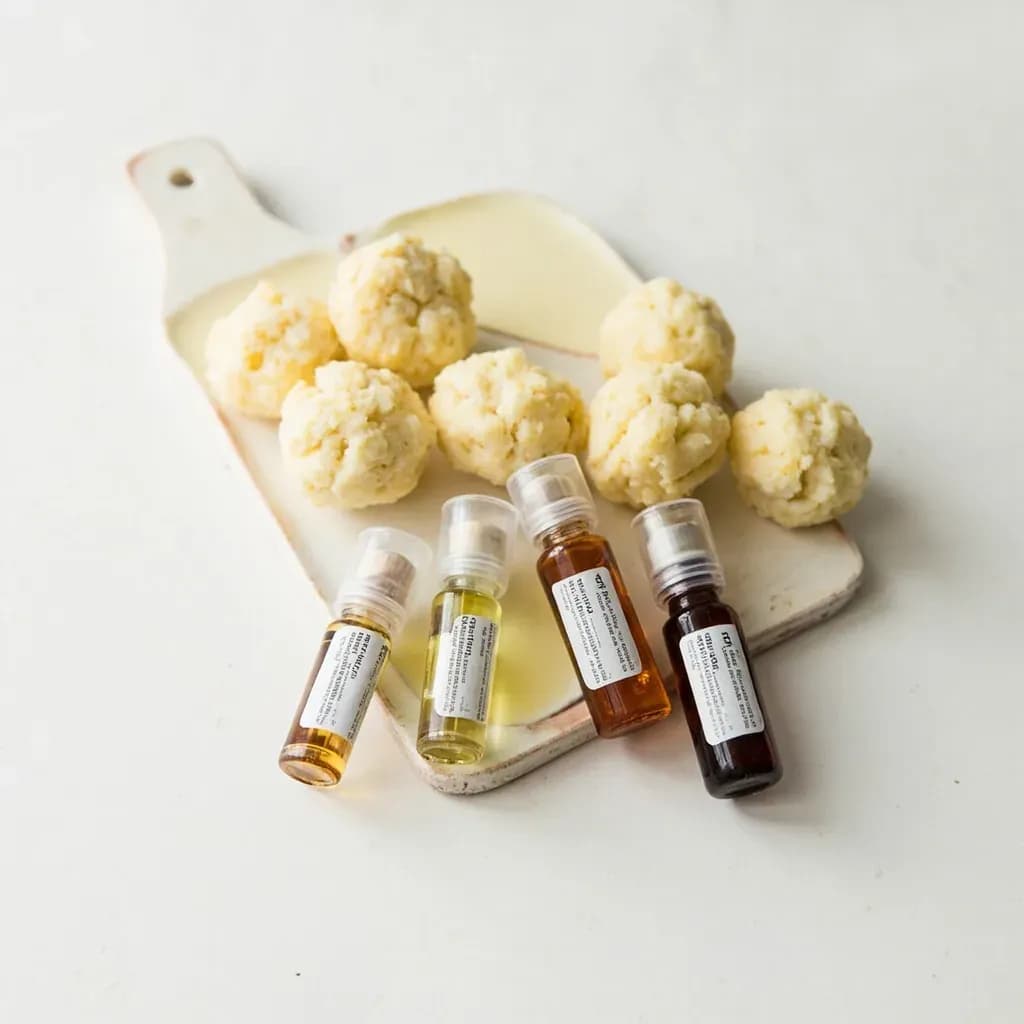
Set of standardized scent samples for training the nose to identify wine aromas.
A wine aroma reference kit contains small vials of isolated, standardized scents such as cherry, vanilla, leather or green pepper that occur in wine. Students and sommeliers sniff them to build a sensory vocabulary and calibrate their palate. It is a tasting-education tool used in study rather than during cooking or service.
A wine aroma reference kit is a curated set of small, sealed vials containing the actual aromatic compounds found in wine — fruit esters, spice molecules, oak-derived lactones, and the off-notes of Brettanomyces and TCA — so a taster can smell each one in isolation and build a working vocabulary for what is, in the glass, a swirling, overlapping mess. The two foundational references are Jean Lenoir's Le Nez du Vin (first published in Burgundy in 1981) and Ann C. Noble's UC Davis Wine Aroma Wheel (1984); between them they defined the modern language of wine description and still anchor most sommelier training programs. Used as a study aid rather than a flavoring tool, the kit trains the olfactory memory the way flashcards train vocabulary: you sniff, name, and repeat until recognition becomes automatic in a real glass. For a cook or sommelier, this is one of the most efficient ways to move beyond vague words like "fruity" and "oaky" toward precise, communicable notes like "cassis," "clove," "toast," or "wet leather."
Alternatives
Types & varieties
The original French kit by Jean Lenoir, developed with sommelier Max Léglise; classic 54-aroma edition, plus smaller and expanded versions. The reference standard.
Companion kit of 36 coffee aromas in the same vial format, useful for baristas and pastry cooks.
36-aroma kit covering compounds found across black, green, oolong, and pu-erh teas.
55 aromas covering malt, grain, peat, sherry-cask, and Bourbon-cask notes; the whisky-world sibling of Le Nez du Vin.
55 aromas covering neutral and flavored spirits.
Wheel-format taxonomy of roughly 130 descriptors in concentric rings; revised with the American Chemical Society. Complements vial kits with a written vocabulary chart.
Sets vetted for the Wine & Spirit Education Trust's Level 3 and Diploma curricula, typically 30–54 vials plus a printed reference book.
Aroma references recommended for candidates preparing for Certified, Advanced, and Master exams.
Retail-friendly sets introducing the major families: red fruit, black fruit, floral, spice, earth, oak, and one or two common faults.
Small sets focused only on wine faults — TCA, Brettanomyces, oxidation, volatile acidity, reduction, ethyl acetate — the highest-value purchase for working cellar and bar staff.
How to use one effectively
Treat a session like a language drill, not a tasting flight. Pick no more than 8–10 vials per sitting, work them in a fixed order at roughly the same room temperature, and close the printed key so you must name each aroma before checking. Move a hand over the open vial and sniff the diluted plume rather than shoving your nose into the opening; the gentle inhalation mimics glass-tasting conditions and slows nose fatigue. Between closely related notes — blackcurrant versus blackberry, cinnamon versus clove — wait 10–15 minutes or switch to a contrasting family to let the receptors reset.
Choosing a kit
For serious students, the original French Le Nez du Vin remains the benchmark because its molecules and concentrations were selected by enologists to match what is actually present in wine, not idealized single notes. Cheaper clones tend to use simplified synthetic aromas that read as cartoonish when you encounter the real compound in a glass. A printed UC Davis Aroma Wheel is a useful complement to any vial kit — the wheel gives taxonomy and vocabulary, the vials give olfactory memory — and most professional schools teach them as paired tools. For cooks and front-of-house staff who rarely sit formal exams, a fault-only mini kit is the highest-leverage purchase: it pays for itself the first time a cork-tainted or oxidized bottle is caught before service.
Caring for the vials
Keep the case closed and stored upright in a cool, dark cupboard away from the kitchen. Spices, garlic, frying oils, perfume, and cleaning products will migrate into the vials and into your nose, contaminating every session. Wipe vial rims with a soft, lint-free cloth before returning them to the case, and never leave a vial open between sniffs any longer than necessary. If a scent smells faint, flat, or off, retire it — the kit is only as honest as its weakest vial.
Common uses
Tips & pitfalls
- Sniff in short, gentle puffs rather than long, deep inhalations — deep breaths numb the olfactory bulb quickly.
- Limit each practice session to 8–10 aromas; the nose tires faster than you'd expect and you start naming things wrong.
- Wait 10–15 minutes between very similar aromas (blackcurrant versus blackberry, clove versus cinnamon) so receptors can reset.
- Store vials upright in the dark; light and heat accelerate the breakdown of volatile compounds and dull the scents.
- Replace vials every 3–5 years with regular use, or sooner if a scent smells faint or off — a tired kit teaches bad habits.
- Wave a hand over the open vial and sniff the diluted plume rather than shoving your nose into the opening; this mimics glass-tasting and slows fatigue.
- Practice with the same kit at the same temperature each time so your memory anchors stay consistent across sessions.
- Pair fault-aroma practice with real bottles of deliberately flawed wine to anchor the synthetic note to its real-world intensity and context.
- Close the printed key and identify each vial blind — reading the label while sniffing builds recognition of the word, not the smell.
- Keep the kit well away from the kitchen: spices, garlic, frying oil, and perfume will contaminate both the vials and your nose, and ruin a session in minutes.
Good to know
- Concept origin
- Standardized aroma training tools, popularized by Jean Lenoir's Le Nez du Vin (1981) and Ann Noble's UC Davis Wine Aroma Wheel (1984).
- Typical format
- Boxed set of small tinted-glass vials (or ampoules) containing essential oils, natural extracts, or synthesized aromatic molecules for short, repeated sniffs.
- Common size
- Most professional kits hold 36–54 vials; beginner sets usually 12–24. The classic Le Nez du Vin contains 54 aromas.
- Vial material
- Tinted glass vials with sealed caps, housed in a fitted wooden or molded case to protect from light and heat.
- Aroma categories
- Fruit (citrus, tree fruit, berry, tropical), floral, spice, vegetal/herbaceous, earthy/forest, woody/roasted, and fault aromas (TCA, Brett, oxidation, volatile acidity).
- Training bodies
- Standard equipment in WSET, Court of Master Sommeliers, Institute of Masters of Wine, and UC Davis Department of Viticulture & Enology curricula.
- Storage
- Cool, dark, room-temperature storage; refrigeration is generally avoided because condensation damages labels.
- Lifespan
- Aromas fade over time; manufacturers recommend refreshing vials every 3–5 years with regular use.
Also called
wine aroma kit · aroma reference set · Le Nez du Vin
Related

Peeler
Swift blade for stripping skin off fruit and vegetables

Grater
Sharp-toothed surface for shredding cheese and vegetables

Microplane
Ultra-fine rasp for citrus zest, garlic, and hard cheese

Mixing Bowl
All-purpose bowl for combining, whisking, and tossing

Whisk
Looped wires that beat air into eggs, cream, and sauces

Spatula
Flat blade for flipping, lifting, and scraping

Slotted Spoon
Pierced spoon that lifts solids and drains the liquid behind

Wooden Spoon
Gentle, heat-friendly spoon for stirring anything