Prep Tools
Wine Cooler Sleeve
Insulated gel-filled sleeve that slips over a bottle to keep wine chilled.
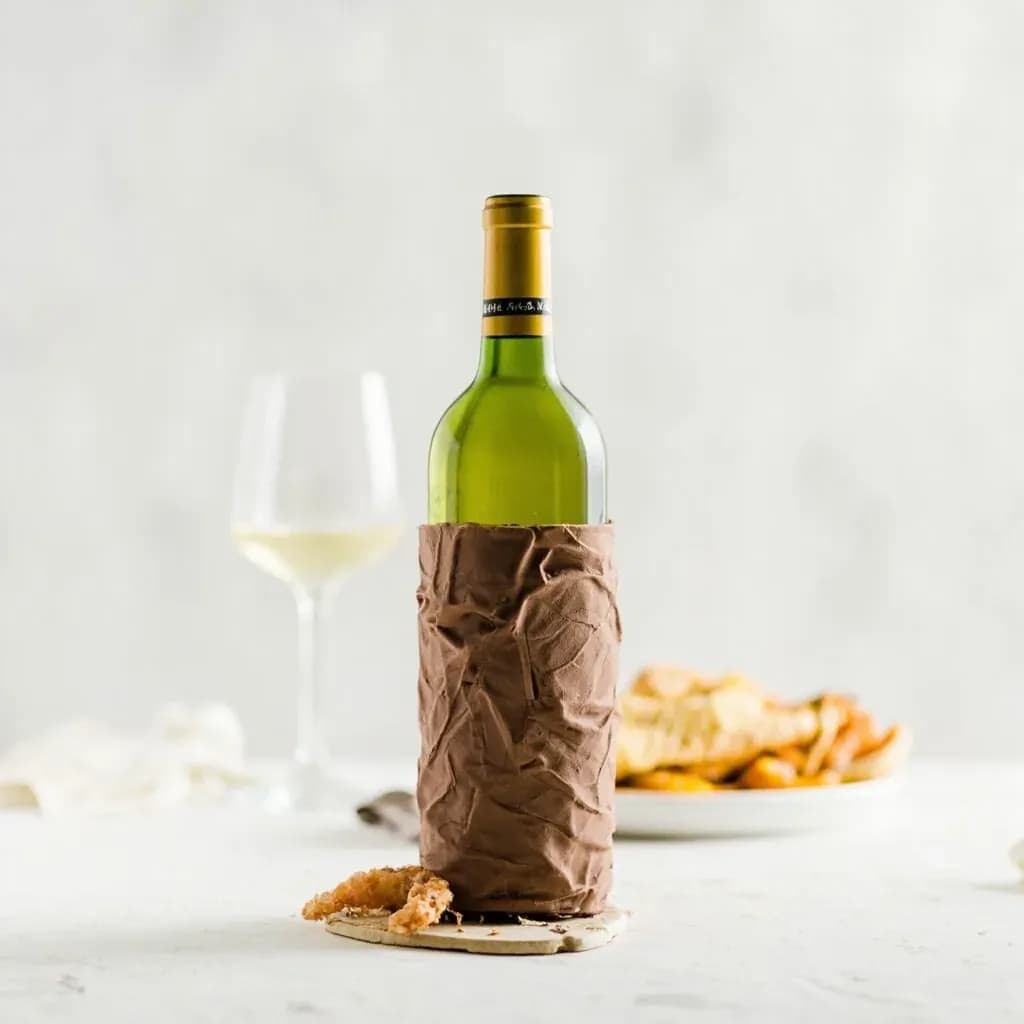
A wine cooler sleeve is a flexible jacket containing a freezable gel that you store in the freezer and wrap around a bottle when needed. It keeps white, rosé and sparkling wines cold at the table or on a picnic without an ice bucket. The slim, reusable design is convenient for serving but holds less chilling power than a full ice bath.
A wine cooler sleeve is a flexible, gel-filled jacket that slips over a standard 750 ml bottle to hold it at serving temperature through a meal. Most are a thin PVC or neoprene shell containing a phase-change gel that stays pliable when frozen, so the bottle slides in easily and the sleeve hugs the glass. Once in place, the frozen gel absorbs heat by conduction and keeps the wine in a 12–18 °C / 54–64 °F window — cool enough for whites and rosés, gentle on lighter reds.
The sleeve's appeal is practical rather than dramatic. It replaces the ice bucket on the table, leaves no condensation ring on wood or linen, and travels in a tote bag without loose ice. Where an ice bucket can over-chill wine close to freezing and needs constant draining and refilling, a sleeve is a passive buffer: it slows warming, it does not chill. That makes it the right tool for maintaining a pre-chilled bottle through a long lunch, and the wrong tool for rescuing one that has been sitting on the counter.
The format was commercialized in the mid-1980s by the Dutch housewares maker Vacu Vin, whose Active Wine Cooler established the category and is still the most-recognized design. Modern alternatives split into two camps — soft gel sleeves (cheap, packable, gift-friendly) and rigid stainless vacuum cylinders (no pre-freezing, longer hold, but bulkier and pricier). For most hosts, the gel sleeve is the better everyday answer.
Alternatives
Types & varieties
The archetype: a thin PVC bladder filled with flexible gel, zip closure, pre-freeze then slip on. Cheap, light, packable.
Stretchy fabric-style 'jacket' with sewn-in gel packs; often pull-on with no zipper. Looks softer on the table and gifts well.
Rigid vacuum-insulated stainless cylinder; no pre-freezing required, but bottle must be pre-chilled. Longest hold time, bulkiest form.
Smaller, lighter gel sleeve aimed at outdoor and travel use; shorter hold time but rolls flat in a bag.
Wraps only the bottle body or fastens with a magnet; a niche variant for casual outdoor service.
Wider and taller version sized for 1.5 L bottles; worth having if you entertain with larger formats.
Working with the thermal buffer
The single most useful thing to understand about a wine cooler sleeve is that it maintains temperature rather than creates it. Treat it like a thermos for a hot drink: it slows change, it does not reverse it. That changes both how you prepare and what you should expect from the sleeve over the course of a meal.
- If the wine arrives at the table too cold (under 8 °C), remove the sleeve for 10–15 minutes — it warms much faster unjacketed than wrapped.
- The gel's thermal mass is roughly 30–50% of a fully-loaded ice bucket, so the sleeve is a table-side buffer, not a portable refrigerator.
- Give the sleeve 5–10 minutes on the bottle to fully conform to the shoulder and neck; contact is what makes the difference.
- On humid days, expect a thin film of condensation on the outside as the gel thaws — set the bottle on a coaster or saucer to protect wood.
- For a magnum or an awkward Burgundy shape, nest two standard sleeves for fuller contact; the larger circumference creates air gaps on a single sleeve.
Common uses
Tips & pitfalls
- Pre-chill the wine first — the sleeve maintains temperature, it does not actively chill a warm bottle in any reasonable time.
- Freeze the sleeve flat, not folded; full contact with the bottle chills more evenly and lasts longer.
- Wipe the bottle dry before slipping the sleeve on; trapped moisture freezes to the glass and is a nuisance mid-service.
- Leave a small gap at the top so the cork, capsule, or corkscrew remains accessible for pouring.
- For sparkling wine, chill the bottle to about 4 °C before sliding the sleeve on — once opened, sparkling warms faster than still wine and the gel cannot keep pace.
- If the gel feels slushy rather than rock-hard coming out of the freezer, give it another hour; it is not fully charged yet.
- Do not store the sleeve in the freezer with sharp or heavy items piled on top — punctures leak gel and end the sleeve's life.
- Skip the sleeve for full-bodied reds in air-conditioned rooms — it can over-chill them below the 16–18 °C range where their character actually shows.
Good to know
- Type
- Insulated gel-filled sleeve that wraps a wine bottle to maintain chilled serving temperature
- Core materials
- Flexible PVC or neoprene outer shell filled with a non-toxic phase-change gel (commonly sodium polyacrylate) that remains pliable when frozen
- Freeze time
- 4–6 hours in a standard home freezer; overnight is the safe routine
- Holding time
- Roughly 1.5–3 hours of cooling maintenance at room temperature, depending on ambient heat and starting bottle temperature
- Temperature maintained
- Holds wine in the 12–18 °C / 54–64 °F range — serving temperature, not fridge temperature
- Fits
- Standard 750 ml bottles (Bordeaux, Burgundy, and most still shapes); magnum and slim sparkling versions exist
- Care
- Hand-wipe with a damp cloth only; never submerge or run through the dishwasher — water ingress damages the gel pouch
- Origin
- Commercialized by Vacu Vin (Netherlands) in 1986 with the Active Wine Cooler, which established the category
Also called
wine cooler sleeve · bottle chiller sleeve · wine chill jacket
Related

Peeler
Swift blade for stripping skin off fruit and vegetables

Grater
Sharp-toothed surface for shredding cheese and vegetables

Microplane
Ultra-fine rasp for citrus zest, garlic, and hard cheese

Mixing Bowl
All-purpose bowl for combining, whisking, and tossing

Whisk
Looped wires that beat air into eggs, cream, and sauces

Spatula
Flat blade for flipping, lifting, and scraping

Slotted Spoon
Pierced spoon that lifts solids and drains the liquid behind

Wooden Spoon
Gentle, heat-friendly spoon for stirring anything