Prep Tools
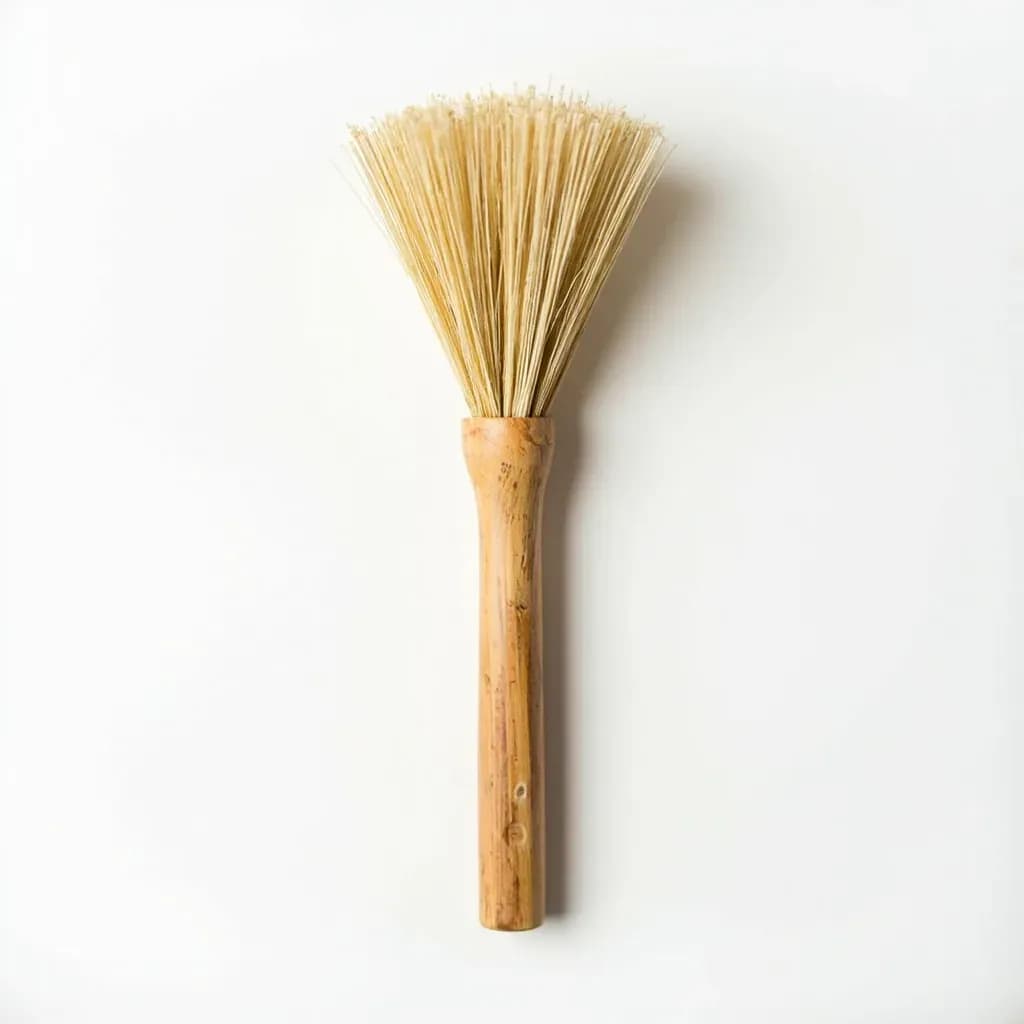
Bamboo Wok Brush
A stiff bundle of bamboo splints used to scrub a hot wok clean with water and no soap.
A bamboo wok brush is a fan of split bamboo bound at the handle, used to scour a wok while it is still hot. A quick scrub with hot water lifts stuck food without stripping the wok's seasoning the way detergent would. It is the traditional Chinese kitchen tool for keeping a carbon-steel wok clean and ready between dishes.
The bamboo wok brush is a stiff bundle of thin bamboo splints bound to a bamboo or wooden handle, used in Chinese kitchens for centuries to scrub a hot wok clean with nothing but water. Its job is unusual among scrubbers: it removes food residue quickly while leaving the thin, polymerized oil patina that builds up on a well-seasoned carbon-steel wok, the dark, almost lacquered film that gives the wok its non-stick quality and much of its flavor. The bamboo is hard enough to lift burnt-on rice, noodle films, and caramelized sauce, but soft enough that it will not scour that seasoning away the way steel wool, chain-mail, or a scouring pad can.
In a busy restaurant the brush is used dozens of times a day, dipped in hot water, swept across the wok, and hung bristle-end up over the stove to dry between passes. The trade-off is that the brush itself is a consumable: the splints soften, splay, and eventually shed as they absorb water, oil, and starch, so serious cooks replace them on a schedule rather than waiting for failure. Modern alternatives look tougher, but most Chinese and Taiwanese cooks still keep a bamboo brush specifically for the final pass on a freshly rinsed hot wok, finishing with a thin wipe of oil before the wok returns to the burner.
Alternatives
Types & varieties
The classic full-length version with the bristled head set into a long bamboo shaft, used standing at the stove; common in restaurant kitchens.
A handheld version the size of a clothes brush, used close to the wok; easier for smaller woks and Western home ranges.
A flat bundle of wider bamboo splints shaped like a small paddle; aggressive on heavy fond, gentler on the wok's seasoning than a stiff round brush.
Commercial versions blend bamboo with coconut or palm fibers for burnt-on residue; harsher on seasoning and best reserved for unseasoned steel.
A modern head shaped like a Chinese wok spatula, loaded with bundled bamboo slivers; fits standard wok-station holders and takes replaceable inserts.
Why no soap
Soap is the enemy of a seasoned wok not because the wok is dirty, but because its non-stick quality is a thin layer of polymerized oil that soap emulsifies and rinses away. A bamboo brush with plain hot water removes food; soap removes the patina along with it, and you end up reseasoning from bare metal. Busy restaurants that scrub woks dozens of times a service rely on this distinction, finishing with bamboo and water after every round and re-oiling once at the end of the day. The brush attacks only the food, not the seasoning, which is why it has survived the arrival of chain-mail scrubbers, scouring pads, and dishwashers in modern Chinese kitchens.
- Soap emulsifies the polymerized oil patina and rinses it away
- Bamboo lifts residue mechanically without dissolving the seasoning film
- Chain-mail and steel wool are faster but remove patina along with food
- If you do soap a wok by accident, scrub it bare, dry it on the burner, and reseason from scratch
Daily care and replacement
The brush is cheap and disposable, but it lasts longer with a few habits. Keep two in rotation so one can dry for a full day between uses; this roughly doubles working life and prevents the mildew that comes from sealing a damp brush in a drawer. Hang bristle-end up in a ventilated spot, ideally over the stove where residual heat helps. Retire the brush the moment the wooden handle cracks, the binding cord frays, or splints start shedding into the wok; bamboo splinters in food are a real hazard.
- Buy two brushes and rotate them 24 hours apart
- Hang bristle-end up; never lay the brush flat in a sink
- Replace when splints soften, splay, or shed, typically every 1–4 months
- A soft brush can be revived briefly with a hot-water soak and sun-dry, but plan a replacement
Common uses
Tips & pitfalls
- Always scrub the wok while it is still very hot, right after pouring out the food; the heat loosens residue and the brush does the work with just water
- Never pair the brush with dish soap on a seasoned wok, or you will strip the patina and need to reseason from bare metal
- Rinse the brush, shake it firmly, and stand it bristle-end up so air circulates; a damp, sealed brush mildews within days
- Run the brush over the wok in the direction of the splints, not across them, to maximize contact and slow wear
- For a stubborn ring of cooked-on oil at the oil line, add a tablespoon of coarse salt with the water and use the brush as the abrasive; salt cleans without stripping seasoning
- If a hairline crack appears in the handle or the binding cord frays, retire the brush; bamboo splinters in food are a real hazard
- If the brush has gone soft, soak it in hot water for ten minutes and set it in the sun to dry; this firms it briefly but plan a replacement
- Buy two and rotate them, giving each a full 24 hours to dry, which roughly doubles the brush's working life
Good to know
- Material
- Thin bamboo splints shaved from bamboo culms, bound with cord to a bamboo or wooden handle
- Origin
- China; a traditional tool of home and restaurant kitchens for centuries
- Also known as
- Bamboo wok scrubber, bamboo wok broom, zhu shua zi (竹刷子), zhu sao
- Typical length
- 30–50 cm total (working head 10–20 cm, handle 20–30 cm); short palm-sized versions also exist
- Cleaning agent
- Plain hot water only; soap strips the polymerized oil patina on seasoned carbon steel and cast iron
- Surface suitability
- Carbon steel, cast iron, and stainless steel; not for non-stick coatings or enamel
- Lifespan
- Roughly 1–4 months in a busy home kitchen; replace when splints soften, splay, or shed
- Care
- Rinse, shake out water, and hang bristle-end up in a dry, ventilated spot; never store damp or sealed
Also called
bamboo-wok-brush · wok whisk brush · bamboo cleaning brush
Related

Peeler
Swift blade for stripping skin off fruit and vegetables

Grater
Sharp-toothed surface for shredding cheese and vegetables

Microplane
Ultra-fine rasp for citrus zest, garlic, and hard cheese

Mixing Bowl
All-purpose bowl for combining, whisking, and tossing

Whisk
Looped wires that beat air into eggs, cream, and sauces

Spatula
Flat blade for flipping, lifting, and scraping

Slotted Spoon
Pierced spoon that lifts solids and drains the liquid behind

Wooden Spoon
Gentle, heat-friendly spoon for stirring anything