Prep Tools
Wooden Yogurt / Butter Churner (Madani)
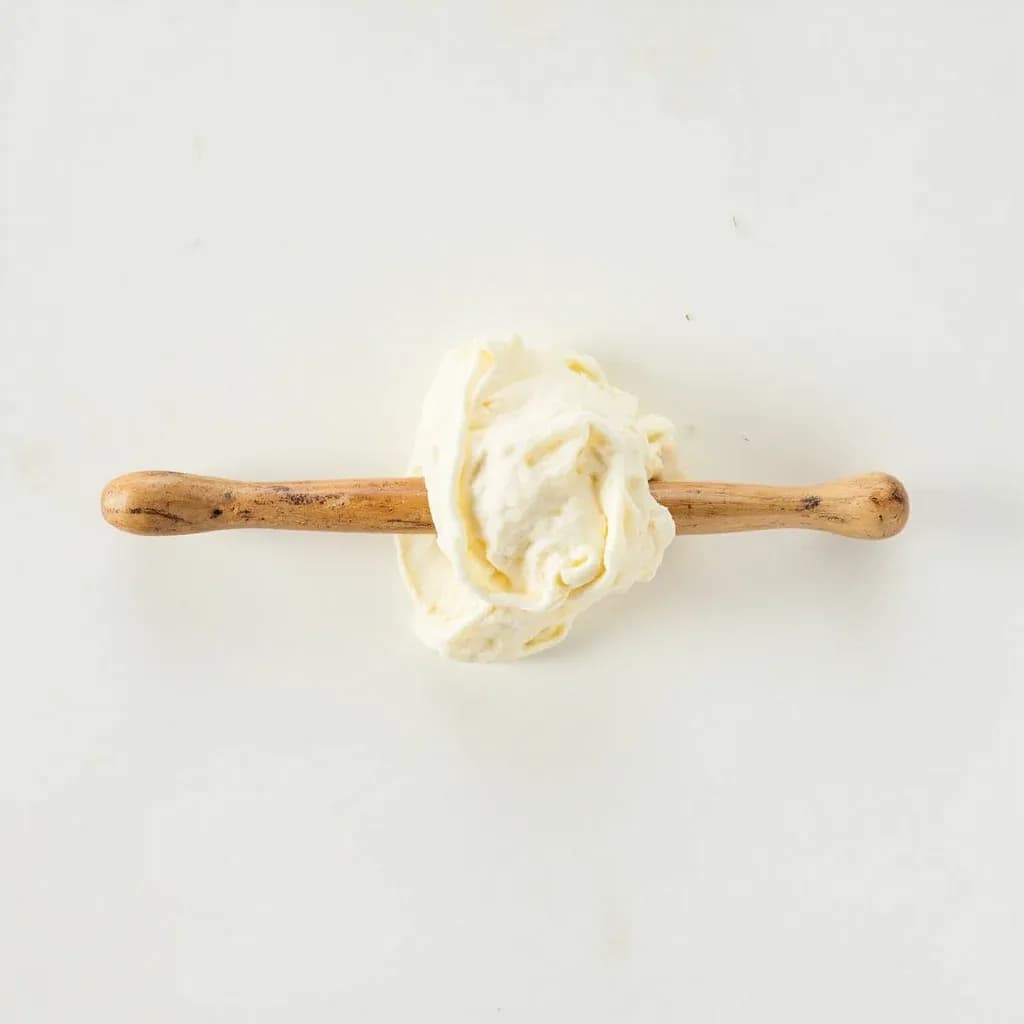
A wooden stick churner spun in a pot to whip yogurt or cream into butter and buttermilk.
A madani is a traditional wooden churning stick, often with a fluted or paddled head, spun between the palms or with a pull-cord inside a pot of curd or cream. The rapid agitation separates butter from buttermilk and froths yogurt-based drinks like lassi and chaas. Versions appear across South Asia and the Himalayas, including butter churns used for yak butter tea.
A wooden yogurt and butter churner — known across northern India as a mathani, madani, or madani-lauri — is a hardwood stick tipped with a flat, perforated disc that is spun between the palms inside a pot of cultured dairy. Its job is the unglamorous but essential one of beating fat globules out of cream or yogurt until they fuse into butter, leaving a thin, tangy buttermilk behind. The tool is deceptively simple: a rod and a paddle, no gears, no electricity, no moving parts beyond your own hands. Yet the design has barely changed in centuries, and a great deal of traditional Indian cookery depends on the butter and buttermilk it produces.
What separates a wooden churner from a balloon whisk or a stand mixer is partly the wood and partly the perforated paddle. Hardwood — usually sheesham, mango, or neem — does not conduct heat from the hands and does not react with the lactic acid in soured dairy, so the cream stays cool and the butter sets white and firm rather than soft and yellow. The slot or row of holes in the disc is not decoration: it forces the dairy through a narrow opening, multiplying the shear at exactly the point where fat membranes rupture. Combined with the natural cooling of an unglazed earthen matka, this is why a few minutes of patient spinning can do what a food processor struggles to match cleanly.
For a cook, the churner unlocks flavours you simply cannot buy. Fresh makhan, churned from hung dahi, tastes clean, faintly lactic, and faintly grassy — nothing like the salted, cultured blocks from a dairy case. The chaas or mattha left behind is the proper base for kadhi and a cooling summer drink in its own right. Mastering the rhythm is also the gateway to bilona ghee, the slow-cooked, cultured clarified butter prized in Ayurvedic and temple cooking. In short, the tool is a one-piece physics experiment that turns a pot of yogurt into two of the most useful ingredients in the Indian kitchen.
Alternatives
Types & varieties
Single long wooden rod with a flat, slotted or perforated disc at the working end. Spun between the palms in a pot. The most common household form.
Traditional wooden barrel (often sheesham) with a rope-and-stick plunger or a swinging cross-bar. Used for larger batches and is the tool behind the Ayurvedic bilona ghee method.
A vertical wooden rod with paddle that sits in a tall pot; rotated by hand or a cord. Less common today, but seen in Rajasthani villages.
A wide-mouthed matka paired with a short wooden dasher; spun by hand. Valued for keeping the cream cold and for the subtle earthy note it lends the butter.
How Churning Actually Works
The churner exploits a simple piece of dairy chemistry. In cream and full-fat yogurt, butterfat exists as tiny globules suspended in water and stabilised by a thin skin of milk proteins. Mechanical shear — the friction created by spinning the paddle through the liquid — ruptures those protein membranes. Once freed, the fat globules collide and fuse into larger and larger clumps until they become visible butter granules, at which point the watery phase around them has turned into chaas or buttermilk. Two details make a wooden churner unusually efficient at this job. The perforated disc forces dairy through a narrow aperture, dramatically raising the local shear. And because wood neither conducts heat nor reacts with lactic acid, the cream stays close to 15–18 °C — just below the melting point of butterfat — so the butter sets firm and white instead of soft and greasy.
Choosing and Caring for the Wood
A churner is one of the few kitchen tools that gets better with age, but only if you look after it. Wood is forgiving but not indestructible: a few habits will keep it serviceable for decades.
- Soak a new churner overnight in warm salted water to leach out raw-wood tannins and prevent splitting on first use.
- Wash only with cool water and a soft brush. Soap penetrates the grain and will taint the next batch.
- Rinse, shake off excess water, and stand upright to air-dry. Never leave it soaking or sitting in a damp drawer.
- Once a month, rub a few drops of food-grade oil (mustard, coconut, or sunflower) into the paddle and shaft to keep the wood from drying and cracking.
- Keep it out of direct sunlight, which can warp the disc and bleach the wood.
- Replace only when the paddle disc is cracked or the shaft develops a deep split that harbours residue — light surface roughness is normal and harmless.
Common uses
Tips & pitfalls
- Use cold, well-soured full-fat dahi — warm yogurt gives greasy, soft butter that will not hold shape. (Common mistake: churning at room temperature.)
- Hang the dahi in muslin for 1–2 hours first to drop some whey; the thicker the cream, the faster the butter 'breaks'.
- Fill the pot only one-third full. Too much dairy means the paddle cannot agitate properly and you will tire your hands long before the fat separates. (Common mistake: overfilling.)
- Maintain a steady, even rhythm — jerky spinning splashes and aerates the cream without actually separating the fat.
- Switch spin direction every few minutes if butter has not formed by 10 minutes; the change in shear helps break stubborn emulsions.
- When butter granules appear and the liquid turns a pale green-yellow, stop. Over-churning past this point makes greasy, hard-to-wash butter. (Common mistake: churning until the butter looks 'done'.)
- Wash the fresh butter in iced water two or three times to rinse out buttermilk; residual buttermilk clinging to the fat is the single biggest cause of rancid homemade butter.
- Never use detergent on a wooden churner — it soaks into the grain and flavours the next batch. Cool water and a soft brush only.
- If using a metal pot, chill it first; earthen matkas naturally stay cool and give cleaner butter.
- Reserve the buttermilk — it is probiotic and is the proper ingredient in kadhi, not a waste product.
Good to know
- Also known as
- mathani, madani, makhani-lauri, raibachcha — regional names across northern India
- Origin
- Indian subcontinent; traditional tool of Punjabi, Haryanvi, Rajasthani, and UP households
- Primary material
- Hardwood — typically sheesham (Indian rosewood), mango wood, or neem; sometimes walnut or teak
- Typical length
- Stick-style churners run 30–45 cm (12–18 in); bilona barrel churners are 30–60 cm tall
- Companion vessel
- Traditionally an unglazed earthen pot (matka) or wooden khada; modern metal pots also work
- Best dairy
- Full-fat cultured yogurt (dahi) or malai (clotted cream); lower-fat dairy yields far less butter
- Typical churn time
- 10–25 minutes of sustained spinning for yogurt; 5–10 minutes for thick malai
- Yield
- Roughly 50–100 g butter per litre of full-fat dahi, depending on fat content and water removal
- Outputs
- Two products: makhan (fresh butter) and chaas or mattha (buttermilk by-product)
- Cleaning
- Rinse with cool water only, no soap. Air-dry upright. Periodically rub with a little food-grade oil to prevent cracking
- Storage
- Store dry, away from direct sunlight; never soak. Oil the paddle end occasionally to keep the wood from splitting
- Skill level
- Beginner — the motion is simple but requires a steady, sustained rhythm
Also called
madani · madhani · churning stick · yak-butter-churn · butter churner
Related

Peeler
Swift blade for stripping skin off fruit and vegetables

Grater
Sharp-toothed surface for shredding cheese and vegetables

Microplane
Ultra-fine rasp for citrus zest, garlic, and hard cheese

Mixing Bowl
All-purpose bowl for combining, whisking, and tossing

Whisk
Looped wires that beat air into eggs, cream, and sauces

Spatula
Flat blade for flipping, lifting, and scraping

Slotted Spoon
Pierced spoon that lifts solids and drains the liquid behind

Wooden Spoon
Gentle, heat-friendly spoon for stirring anything