Prep Tools
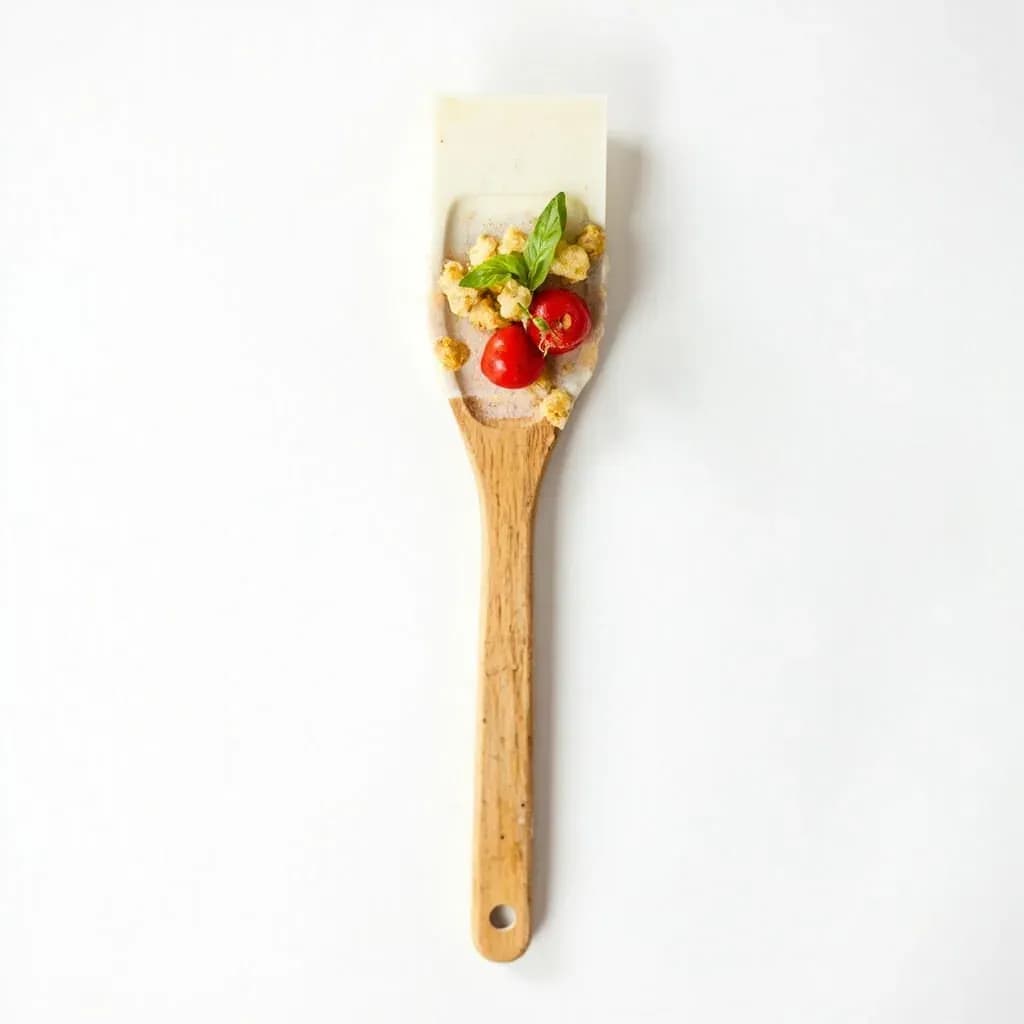
Wooden Spatula
Flat-edged wooden utensil for stirring, scraping, and turning without scratching pans.
A wooden spatula is a flat-bladed wooden utensil used to stir, scrape fond, and turn food in a pan. Because it won't scratch non-stick or seasoned surfaces and doesn't conduct heat, it stays cool to hold and gentle on cookware. The straight edge is good for reaching into pan corners and lifting delicate items.
A wooden spatula is any cooking utensil turned or carved from a dense hardwood — beech, maple, birch, or olive are the common choices, with bamboo as a lighter, cheaper cousin — shaped for stirring, scraping, lifting, or folding. Cooks reach for wood because it is uniquely gentle: it won't score a non-stick coating, strip the patina off carbon steel, or craze the enamel on a Dutch oven, and it carries no metallic taste into acidic sauces. Wood is also a poor conductor of heat, so the handle stays comfortable to hold even after the working end has been working through a hot pan for minutes.
The trade-off is maintenance. Wood soaks up water, dries out, scorches at high temperatures, and ultimately cracks or splinters if mistreated — which is why a well-kept wooden spatula can outlive several non-stick pans, while a neglected one is in the trash within months. Treat it the way you treat a cast-iron skillet or a carbon-steel knife: wash by hand, dry promptly, and feed it a little oil now and then.
Across professional and home kitchens, the wooden spatula functions as the default "do no harm" tool — the one you grab when you aren't sure whether metal is safe, or when you want a quiet, non-reactive, heat-forgiving edge in the pan.
Alternatives
Types & varieties
Rectangular or beveled-corner paddle — workhorse for pancakes, eggs, smashburgers, and scraping fond.
Cut-outs let fat or liquid drain when lifting fried or grilled items.
Deep bowl and long handle for stirring stocks, sauces, and risotto.
Hybrid spoon/spatula with shallow oval bowl — common for sautéing vegetables and deglazing.
Flat, oblong Japanese paddle for folding rice; doubles as a stirrer for custard and polenta.
Dense, oily hardwood prized for its grain and longevity; typically turned in the Mediterranean.
Lighter and cheaper, but more prone to splitting than solid hardwood.
Long, flat, narrow paddle used in Cajun and commercial kitchens for stirring roux and stock pots.
Caring for a Wooden Spatula
Wood lasts for years when treated like the living material it is. The enemies are prolonged water, dry heat, and neglect between uses.
- Wash by hand in warm soapy water within a few minutes of use; rinse and towel-dry immediately. Never let it sit in a sink or run it through the dishwasher — the long soak swells the grain, and the dry cycle then splits it.
- Store upright in a crock or on a hook so air circulates on all sides; lying flat in a damp drawer invites mildew.
- Condition new or thirsty wood by rubbing in a thin coat of food-grade mineral oil, letting it sit overnight, then buffing off the excess. Repeat once a month for a spatula in daily service.
- If the surface fuzzes or feels rough, sand lightly with 220-grit sandpaper, wipe clean, and re-oil — this refreshes the tool without sending it to the landfill.
When to Reach for Wood — and When Not To
Wood earns its place on the stove, but it isn't the right tool for every job. A quick comparison helps.
- Wood vs. silicone: silicone tolerates higher heat (often 450–600°F) and is dishwasher-safe; wood wins on rigidity, fond-scraping, and aesthetics. Use silicone for hard sears and candy; wood for gentler work.
- Wood vs. metal: metal turners are sturdier and more rigid for breaking up fond or portioning a roast, but they will shred non-stick coatings and strip carbon-steel patina. Default to wood whenever the pan surface is the priority.
- Wood vs. plastic/nylon: plastic melts at lower temperatures than wood scorches and can impart off-flavors when overheated; wood is a safer, more durable choice for almost any stove-top task.
Common uses
Tips & pitfalls
- Don't run wooden utensils through the dishwasher — the prolonged heat and water cycle cracks and splinters them within weeks.
- Never leave a wooden spatula sitting in a hot, dry pan; the contact point will scorch and may ignite.
- Stain and smell are not the same as contamination; a baking soda paste or a brief soak in diluted vinegar will refresh most lingering odors.
- Reserve separate spatulas for sweet and savory work if you cook heavily with garlic, onion, or fish — wood holds scent tenaciously.
- Replace immediately if you see deep cracks, splinters, or any black mold — these are not fixable and can harbor bacteria even after washing.
- For very high-heat searing, reach for metal or a high-heat-rated silicone instead — wood scorches and can flavor the food.
Good to know
- Material
- Dense hardwoods — most commonly beech, maple, birch, and olive wood; bamboo is a related but technically a grass.
- Typical length
- 10–14 in (25–36 cm) for stove-side turners; cooking spoons run 11–18 in.
- Heat tolerance
- Will scorch above roughly 400°F/200°C; handle stays cool because wood is a poor heat conductor.
- Best surfaces
- Non-stick, enameled cast iron, carbon steel, ceramic — won't scratch coatings or strip seasoning.
- Acidic foods
- Generally non-reactive; long-simmered tomato or wine sauces may pick up faint woody flavor from new or dry spatulas.
- Care
- Hand wash, towel-dry, never soak; periodically rub down with food-grade mineral oil.
- Lifespan cues
- Replace when cracked, deeply split, splintered, or permanently stained and odor-laden — cracks harbor bacteria and won't seal.
- Origin
- Long-handled wooden cook's spoons date to medieval Europe; flat-edged turners became standard with cast-iron and later non-stick cookware in the 20th century.
Also called
Wooden Turner · Wood Spatula
Related

Peeler
Swift blade for stripping skin off fruit and vegetables

Grater
Sharp-toothed surface for shredding cheese and vegetables

Microplane
Ultra-fine rasp for citrus zest, garlic, and hard cheese

Mixing Bowl
All-purpose bowl for combining, whisking, and tossing

Whisk
Looped wires that beat air into eggs, cream, and sauces

Spatula
Flat blade for flipping, lifting, and scraping

Slotted Spoon
Pierced spoon that lifts solids and drains the liquid behind

Wooden Spoon
Gentle, heat-friendly spoon for stirring anything