Prep Tools
Wooden Stirring Stick (Mwiko / Mthiko)
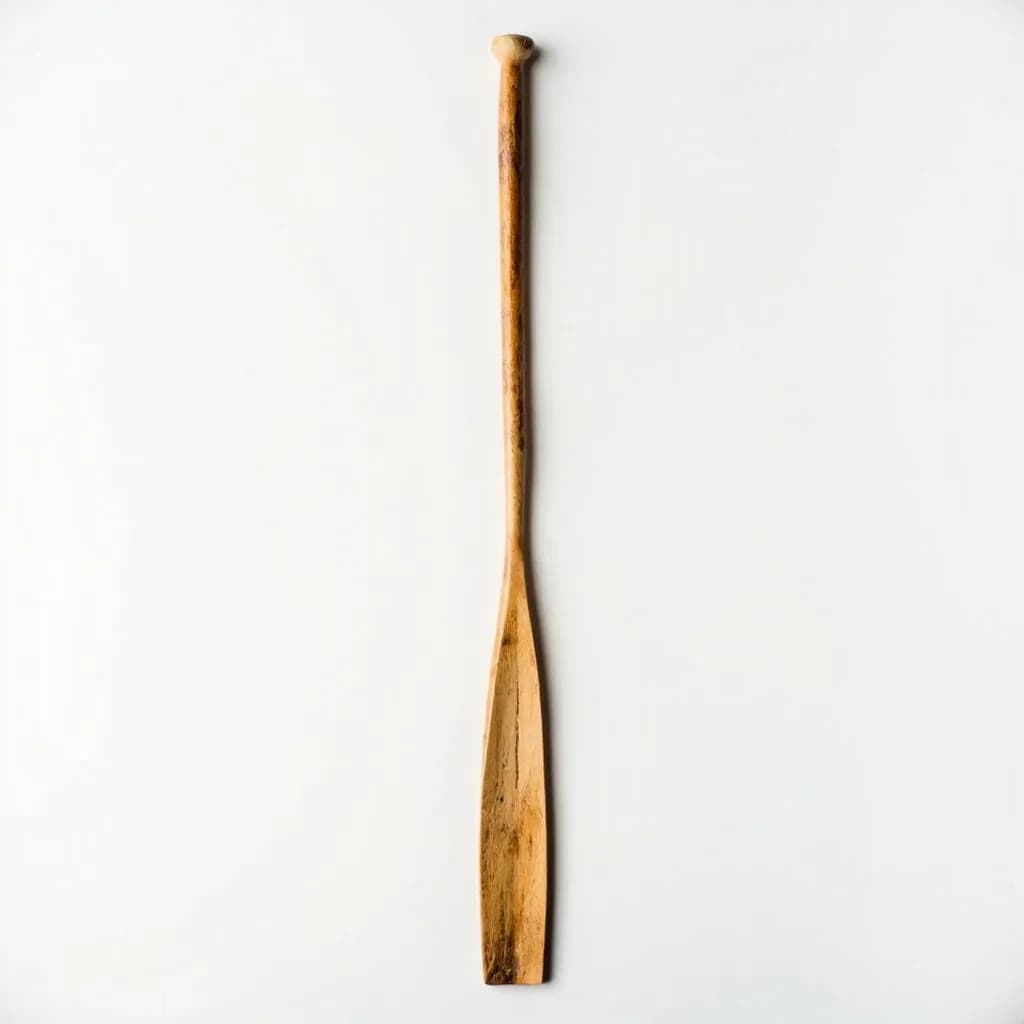
Long, sturdy wooden paddle for stirring thick porridges and stiff doughs over heat.
A wooden stirring stick, known as mwiko or mthiko across much of Africa, is a long flat paddle used to work very thick, heavy mixtures that a spoon can't manage. It is essential for cooking maize porridges like nsima, ugali, and pap, where the cook beats stiff dough against the pot to smooth it. The long handle keeps hands away from the heat while the broad blade gives leverage.
The mwiko (also spelled mthiko or mwiiko across East African Bantu languages) is a long, single-piece hardwood paddle designed for one of the most physically demanding tasks in the kitchen: stirring a thin maize porridge until it becomes a stiff, dough-like mass called ugali. What looks like an oversized wooden spoon is actually a specialized lever. The handle runs 60 to 100 cm so the cook's hand stays well clear of the rising steam and bubbling starch, while the flat blade at the working end — typically 8 to 15 cm across — gives a wide enough surface to fold, cut, and lift a thickening porridge that has stopped behaving like a liquid.
The tool's geometry exists because ugali (known as sima across the Swahili coast, nshima in Malawi and Zambia, sadza in Zimbabwe) does not so much cook as transform. As maize meal hydrates and gelatinizes over sustained heat, the cook must continually break up lumps, sweep the base to prevent scorching, and eventually fold the mass until it pulls cleanly away from the pot. A short spoon cannot deliver the leverage, and a whisk is useless once the mixture stiffens. The mwiko is the answer East African cooks arrived at: a long-handled, flat-faced paddle built to apply force at a distance.
Tradition aside, the mwiko is also a useful introduction to how solid-wood stirring tools behave. It is carved from one dense, non-resinous hardwood — historically Markhamia or Ficus, today often beech, maple, or olive wood — with no joins, metal parts, or coatings to fail under heat. Care is the same as for any quality wooden paddle: oil-season before first use, hand-wash, never soak, and dry upright. Treated well, a mwiko serves for years.
Alternatives
Types & varieties
The most common form; rectangular flat paddle that breaks lumps efficiently as ugali thickens.
Slightly scooped blade favored for sweeping the base of round pots and folding stiff doughs.
Extra-long versions around 1 m, used over large family- or community-scale sufurias.
Shorter versions around 50–60 cm for small pots; still longer than a typical wooden spoon.
Factory-made beech, maple, or olive-wood paddles sold as 'African stirring paddles' or 'ugali sticks.'
Why the long handle is not optional
The mwiko's length is often mistaken for cultural flourish, but it is a safety and leverage feature. As maize meal cooks, the mixture bubbles violently and releases jets of steam that scald at a distance. A short wooden spoon forces the cook's hand directly over the pot; a mwiko keeps the working hand 50 cm or more away. The same length also delivers torque. Once ugali stiffens into something closer to bread dough than porridge, breaking up lumps and folding the mass against the side of the pot requires downward force at the end of a long lever — exactly what the paddle's proportions provide.
- Handle length keeps the hand out of the steam plume
- Long lever multiplies the force delivered at the blade
- Flat blade acts as both scraper and folding surface
Material and seasoning
A mwiko should always be a dense, non-resinous hardwood. Softwoods like pine splinter, absorb water quickly, and can leach resinous flavors into hot food. Traditional East African paddles were carved from locally available dense timbers such as Markhamia and Ficus; contemporary kitchen versions are usually beech, maple, or olive wood. New wood benefits from oil-seasoning before first contact with food.
- Rub the dry paddle with a thin coat of neutral vegetable oil or food-grade mineral oil
- Let it soak in for an hour, then wipe dry and leave overnight
- Repeat two or three times to build a water-resistant surface
- Re-oil periodically, especially if the surface looks dry or pale
Common uses
Tips & pitfalls
- Choose dense, non-resinous hardwood — softwoods splinter, absorb water, and can leach resinous flavor into hot food.
- Season a new mwiko with food-safe oil (neutral vegetable oil or food-grade mineral oil) before first use; repeat two or three times to build a water-resistant surface.
- Never soak a wooden stirring paddle in water — it swells, then cracks as it dries. Wash briefly by hand, rinse, and dry upright on its handle end.
- Use a side-to-side wrist motion once the porridge stiffens rather than a circular stir; the flat face of the paddle then cuts lumps against itself and develops ugali's characteristic smooth, dense texture.
- Common mistake: using too short a paddle and burning the hand on rising steam — the length is a safety feature, not just tradition.
- Common mistake: leaving the mwiko resting in a hot pot off the heat. Thermal shock splits the blade. Lift it out and stand it on its handle to cool.
- If the blade develops a fuzzy or rough surface, sand it lightly with fine sandpaper and re-oil before next use.
- Replace rather than repair when a crack runs along the handle — a split handle can snap under the leverage of stirring thick ugali.
Good to know
- Primary name
- Mwiko (Swahili); also mthiko or mwiiko in other East African Bantu languages
- Region of origin
- East Africa — Kenya, Uganda, Tanzania, Rwanda, eastern DR Congo
- Material
- Single piece of dense, non-resinous hardwood; traditional species include Markhamia and Ficus; modern versions in beech, maple, or olive wood
- Typical length
- 60–100 cm; longer examples reach 120 cm for very large sufurias
- Blade width
- Approximately 8–15 cm across; handle rounded and noticeably slimmer for grip
- Construction
- Carved from one solid piece of wood — no joins, no metal fasteners, no glue
- Paired cookware
- Heavy aluminum sufuria, cast-iron pot, or traditional clay pot
- Primary use
- Stirring ugali and similar stiff maize-meal porridges from liquid to dough consistency
Also called
nsima-stirring-stick · xima-stirring-stick · nshima-cooking-stick · wooden-stirring-stick-pap · long-handled-paddle · snowshoe-paddle · Mwiko · Mthiko
Related

Peeler
Swift blade for stripping skin off fruit and vegetables

Grater
Sharp-toothed surface for shredding cheese and vegetables

Microplane
Ultra-fine rasp for citrus zest, garlic, and hard cheese

Mixing Bowl
All-purpose bowl for combining, whisking, and tossing

Whisk
Looped wires that beat air into eggs, cream, and sauces

Spatula
Flat blade for flipping, lifting, and scraping

Slotted Spoon
Pierced spoon that lifts solids and drains the liquid behind

Wooden Spoon
Gentle, heat-friendly spoon for stirring anything