Water & Steam
Clay Pot Rice Cooking (煲仔飯)
Cooking rice and toppings in a clay pot over flame to steam through and form a crackling scorched crust.
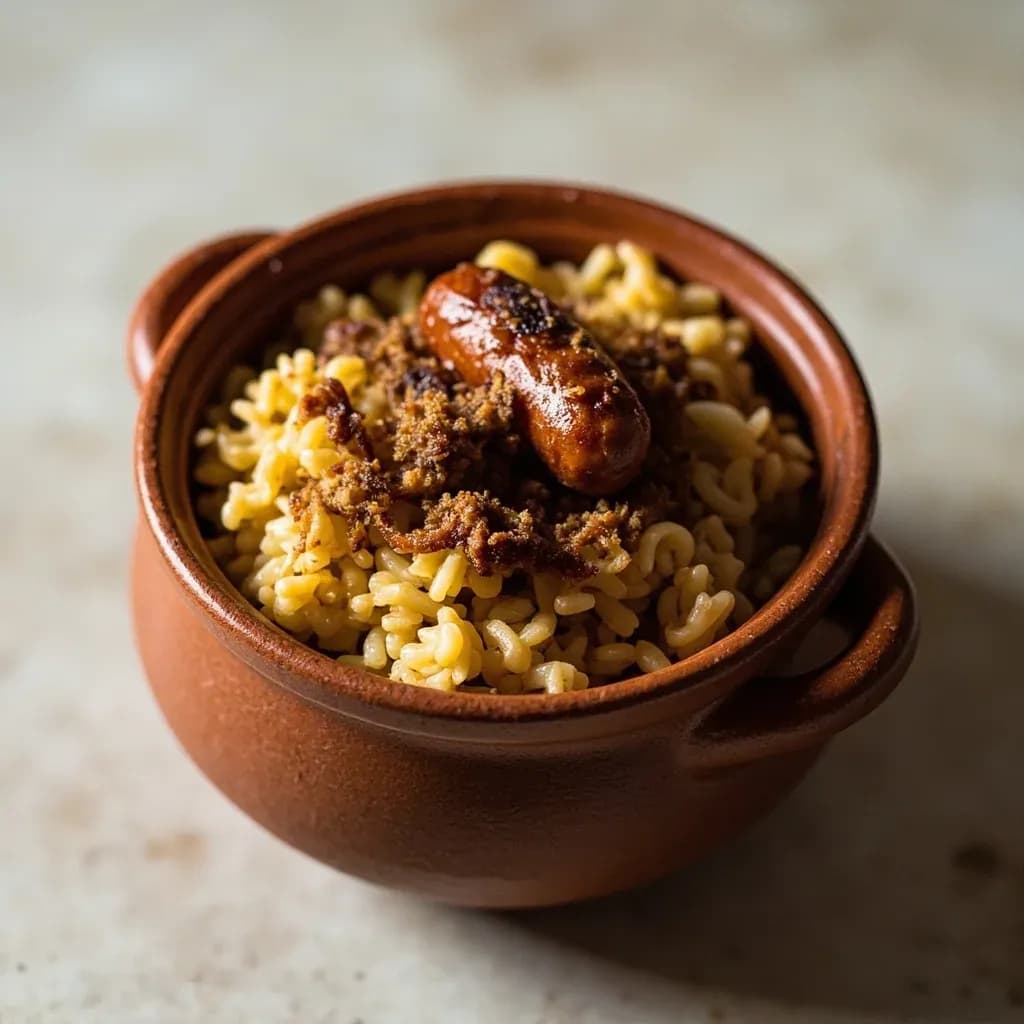
Clay pot rice, or bo zai fan, layers raw rice, water, and toppings such as cured sausage or chicken in a glazed clay pot set over direct flame. The rice steams as it absorbs the liquid, while the clay's retained heat scorches the bottom into a prized crisp golden crust. A drizzle of soy sauce and a final blast of heat finish the dish tableside.
Cantonese claypot rice is a one-pot technique in which rice is brought from cold water to a tight, dry doneness inside an unglazed earthenware pot, then crowned with marinated raw toppings that finish in the trapped steam. The clay itself is the technology: it heats slowly, holds heat stubbornly, and creates the temperature gradient that lets the bottom grains turn into a single, golden sheet of toasted rice — the 飯焦 (fan jiu) — while the grains above stay tender. Cooks listen for the crust as much as taste it; when the sizzle sharpens and the room smells like toast rather than char, the pot is ready.
The cooking logic is unusual among rice methods. Rice goes into a cold pot with slightly less water than usual, is brought to a bare boil on high, then dropped to medium-low. Toppings are added only when the water has just been absorbed, so they steam on top of the rice rather than boil in liquid. A brief blast of high heat at the end — sometimes only thirty seconds — sets the crust, and a hot, sweetened soy sauce is poured at the table so the rice seasons as diners eat.
In Hong Kong and Guangzhou the dish is closely tied to cool weather; dai pai dong and cha chaan teng kitchens often stop serving it once the warm season arrives, because the pot arrives at the table still hot enough to burn. A close relative, 砂鍋飯 (sa ko fan), is a wetter, family-style sand-pot rice with more liquid and less emphasis on the crust.
- Difficulty
- Medium
Types & varieties
The classic winter version: Chinese sausage (lap cheong), cured pork belly, sometimes liver sausage, laid on the rice mid-cook so the fat renders into the grains.
Marinated chicken (ginger, Shaoxing, oyster sauce) placed on raw so it finishes cooking in the steam.
Spare ribs marinated in black bean, garlic, soy and sugar; the most common restaurant version.
Salted fish with diced chicken; intensely savory and a long-standing favorite.
Marinated frog legs, seasonal and prized.
Eel, often pre-braised, laid over the rice.
Sliced beef with a raw egg cracked on at the end; the residual heat barely sets the yolk.
Shrimp with softly cooked egg stirred in at the table.
Just rice with mushrooms, greens, or preserved vegetables — the version that most tests a cook's crust control.
How to do it
- 1
Season the pot and prep the rice
Brush the inside of a dry clay pot (bottom and lower walls) with a thin coat of peanut oil or lard. Rinse long-grain rice — optionally blended 80/20 with short-grain or glutinous — until the water runs nearly clear, then soak 30 minutes to 1 hour and drain.
- 2
Cold start with rice and water
Add the drained rice to the pot with cold water at roughly 1 part rice to 1.1–1.3 parts water. Cover and place on high heat. Do not stir after this point.
- 3
Bring to a boil, then drop the heat
Heat until you hear vigorous bubbling. As soon as the water level drops to meet the surface of the rice, reduce to medium-low and set a timer. Keep the lid on.
- 4
Add the toppings at the right moment
When the water has just been absorbed and small steam holes form in the rice (about 8–12 minutes in, depending on rice and flame), arrange the marinated raw toppings in a single, uncrowded layer on top. Re-cover. Lean the lid slightly ajar with a chopstick if the pot traps too much condensate.
- 5
Finish low, then blast the crust
Cook on low for another 8–12 minutes, until the toppings are just done and the rice on the lower wall smells toasted. For the last 30–60 seconds, raise the heat to high to set and brown the 飯焦; you will hear a sharp sizzle.
- 6
Rest briefly and pour the sauce
Pull the pot off the heat and rest, covered, 1–2 minutes so the crust releases from the clay. Heat the soy, dark soy, sugar, and a splash of water together until the sugar dissolves, then drizzle it around the rim so it runs down through the rice. Scatter sliced scallions and cilantro over the top.
- 7
Serve in the pot
Carry the pot to the table on a thick wooden trivet and warn diners the clay is still scorching — it holds dangerous heat for 20 minutes or more. Set out a metal or wooden spatula so they can pry the crust up in shards to eat with the rice.
The Crust (飯焦)
The crust is the entire point of the dish, and also the part easiest to ruin. The clay's low thermal conductivity means the bottom of the pot keeps climbing in temperature long after the flame is dropped, which is why a long, gentle cook followed by a short, hot finish is the right shape: you want the lower grains to dry out and toast, then briefly fry in their own starch. A good 飯焦 is a single, even, golden sheet about the thickness of a coin — crunchy, faintly smoky, and tasting of toast. A black scorch where the flame concentrates, with the surrounding rice still pale and soft, is the classic failure: heat is not spreading evenly, usually because the burner is too hot or the pot is too small for the flame, and the rice above the hot spot burns while the rest never dries out.
- Brush the pot with oil before adding rice so the crust releases in a clean sheet rather than fragmenting.
- Use less water than you would for ordinary rice so the bottom can dry out and crisp.
- Finish with 30–60 seconds of high heat and listen for the sizzle to sharpen; the room should smell like toast, not smoke.
- If the crust sticks, rest the covered pot off the heat for 2–3 minutes; the residual steam loosens it.
The Pot and the Burner
An unglazed clay pot holds heat the way a brick oven does — slowly up, stubbornly down. That is exactly what 煲仔飯 needs, but it also means the pot must be handled with respect. A brand-new clay pot should be cured by simmering plain water in it twice, dried thoroughly on low heat, and brushed with a thin film of oil before its first use; skipping this step is the most common reason a new pot cracks the first time it meets a flame. On a powerful domestic burner, set the pot on a wire mesh diffuser (or simply turn the flame down) so heat spreads evenly across the base; without it, the flame concentrates in the middle, the rice directly over it scorches, and the outer ring stays undercooked.
- A heavy Dutch oven or cast-iron pot is the most common substitute and can produce a respectable crust, but lacks the gentle, even heat of true clay.
- Never add cold liquid to a hot clay pot — the thermal shock will crack it.
- After cooking, let the pot cool fully, then soak and scrub; a small amount of soap is fine, but dry it thoroughly before storing or it will absorb kitchen odors.
Common uses
Tips & pitfalls
- Soak the rice 30 minutes to 1 hour; it cooks more evenly and the bottom can crisp without leaving a raw core in the center.
- Brush the inside of the cold pot with a thin film of peanut oil or lard — this is what lets the crust release as a single sheet.
- Use less water than you would for ordinary rice: aim for the water level to sit roughly a knuckle above the rice, not a full inch.
- Start on high to bring the water to a boil, then drop to medium-low; lifting the lid costs you steam and crust.
- Lay marinated raw toppings on the rice only after the water has been absorbed — they will steam on top, not boil in liquid.
- For a thick, golden 飯焦, finish with 30–60 seconds of high heat and listen for the sizzle to sharpen.
- Heat the soy sauce drizzle (with the sugar dissolved) before pouring — cold sauce sinks into the crust and soggies it.
- The classic failure is uneven heat — a black scorch where the flame concentrates with the surrounding rice still pale and soft. A wire mesh diffuser, or simply a lower, even burner, fixes it.
Good to know
- Origin
- Cantonese (Guangdong and Hong Kong), southern China
- Cantonese name
- 煲仔飯 (bo zai fan), literally 'small-pot rice'
- Also called
- Claypot rice, clay pot rice
- Pot material
- Unglazed or lightly glazed earthenware, typically 15–20 cm (6–8 in) for a single serving
- Pot weight (empty)
- Roughly 0.8–1.5 kg for a single-serve pot; retains heat for a long time after leaving the flame
- Rice traditionally used
- Long-grain Chinese rice (絲苗 si mei) or jasmine, sometimes blended with 10–20% short-grain or glutinous rice for body
- Water ratio
- Slightly less than standard — roughly 1 part rice to 1.1–1.3 parts water by volume
- Total cooking time
- About 20–30 minutes from a cold pot to the table
- Signature element
- 飯焦 (fan jiu) — the golden, crisp scorched crust on the bottom
- Finishing sauce
- Heated mixture of light soy, dark soy, sugar, hot water, and optional oyster sauce and sesame oil; drizzled at the table
- Serving vessel
- Same clay pot, brought to the table on a wooden trivet; diners are warned the pot stays scorching hot for 20+ minutes
- Season tradition
- Strongly associated with cool weather (autumn and winter) in Hong Kong and Guangzhou; a street and dai pai dong classic
Also called
clay-pot-rice-cooking · Bo Zai Fan · 煲仔飯
Related

Boil
Cook in vigorously bubbling liquid at full rolling heat

Simmer
Hold liquid at a gentle shimmer for tender, unhurried cooking

Poach
Cook gently in barely-trembling liquid for silky, tender results

Steam
Cook in rising vapor to keep color, nutrients, and shape intact

Blanch
Plunge briefly in boiling water, then shock cold to lock color

Braise
Sear, then cook slow in a little liquid until fall-apart tender

Stew
Simmer bite-sized pieces fully submerged into a rich, unified pot

Sous-Vide
Seal and cook in precise warm water for edge-to-edge doneness