Prep & Assembly
Dough Tossing / Spinning
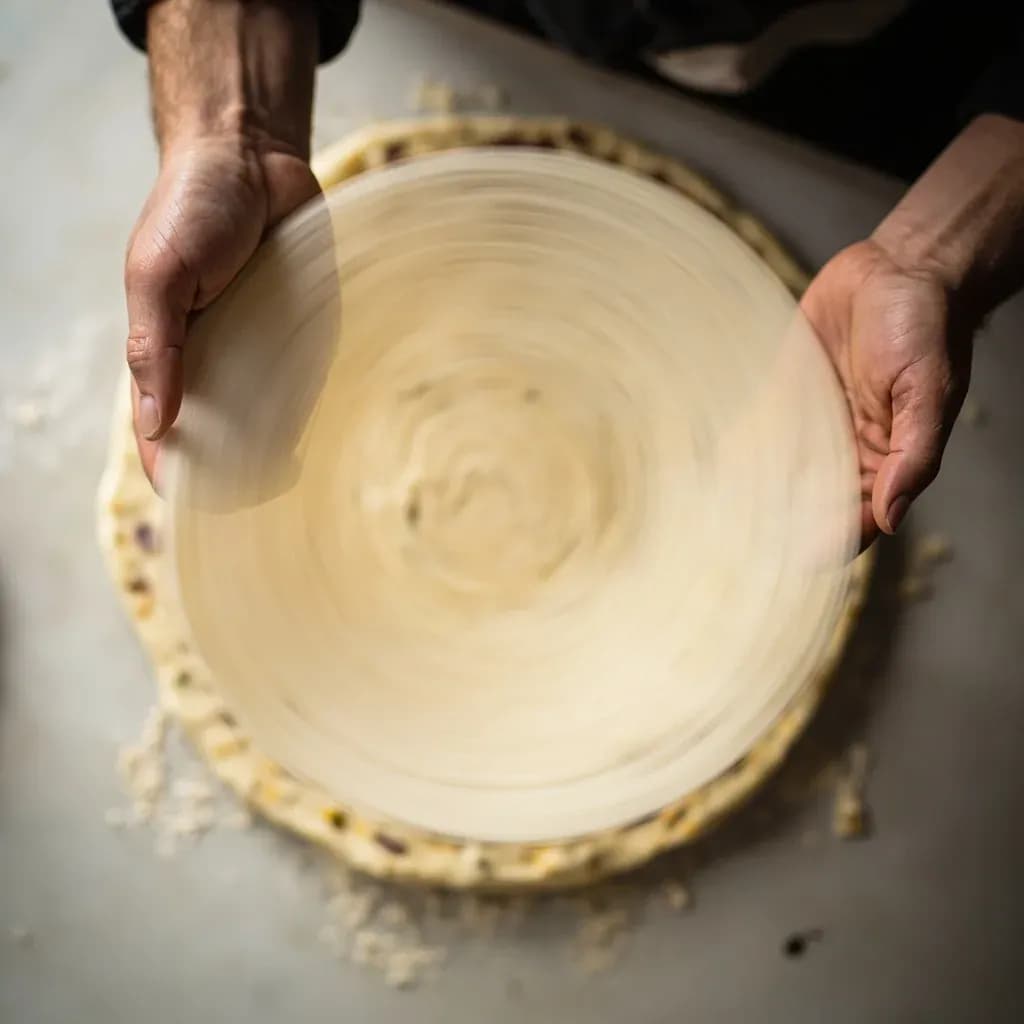
Stretching pizza dough by spinning and tossing it on the knuckles into a thin round.
Dough tossing stretches a ball of pizza dough into a thin disc by spinning it in the air on the backs of the hands, using centrifugal force to thin and widen it. It avoids the tears and dense spots that heavy-handed rolling can cause and keeps the rim airy. It takes practice to control thickness and shape, but it gives an even, gluten-friendly stretch.
Dough tossing — *lancio* in Italian — is the pizzaiolo's signature method for transforming a tight, fermented ball of high-hydration wheat dough into a thin, even round ready for topping. The dough is draped across the backs of both closed fists and rotated slowly so that gravity pulls the center downward while the rim stays supported on the knuckles. Done correctly, the technique stretches a typical pizza ball into a 25–35 cm skin in 15–30 seconds, with a translucent center 2–3 mm thick and a preserved outer band roughly 1.5–2 cm tall that will inflate into the puffy *cornicione* in the oven.
The reason tossing exists as a discipline rather than a party trick is mechanical. Centrifugal force and gravity do the stretching work; the pizzaiolo's hands only guide the rotation and protect the rim. Pressing, rolling, or pulling the dough outward compresses the gas cells built up during bulk fermentation and produces a dense, cracker-like crust. Letting the skin hang and spin keeps those bubbles intact, which is what gives a Neapolitan pie its leopard-spotted, blistered rim and an open, chewy crumb at the center.
The same physics — gravity, centrifugal force, and relaxed gluten — apply when opening out other well-fermented, room-temperature, high-hydration doughs, though most are shaped by hand on the bench rather than spun in the air. The art is codified as a defining gesture of the Neapolitan *pizzaiuolo* tradition, inscribed on UNESCO's Representative List of the Intangible Cultural Heritage of Humanity in December 2017.
- Difficulty
- Hard
Types & varieties
The canonical toss-and-spin, performed on the backs of the fists to preserve the cornicione; centerpiece of the UNESCO-recognized pizzaiuolo tradition.
Heavier, more elastic doughs are sometimes passed with a two-hand over-the-shoulder motion rather than spun; less aerial, more horizontal stretch.
Larger, thinner skins; pizzaioli often use a single-hand over-the-knuckle rotation for show rather than repeated passes.
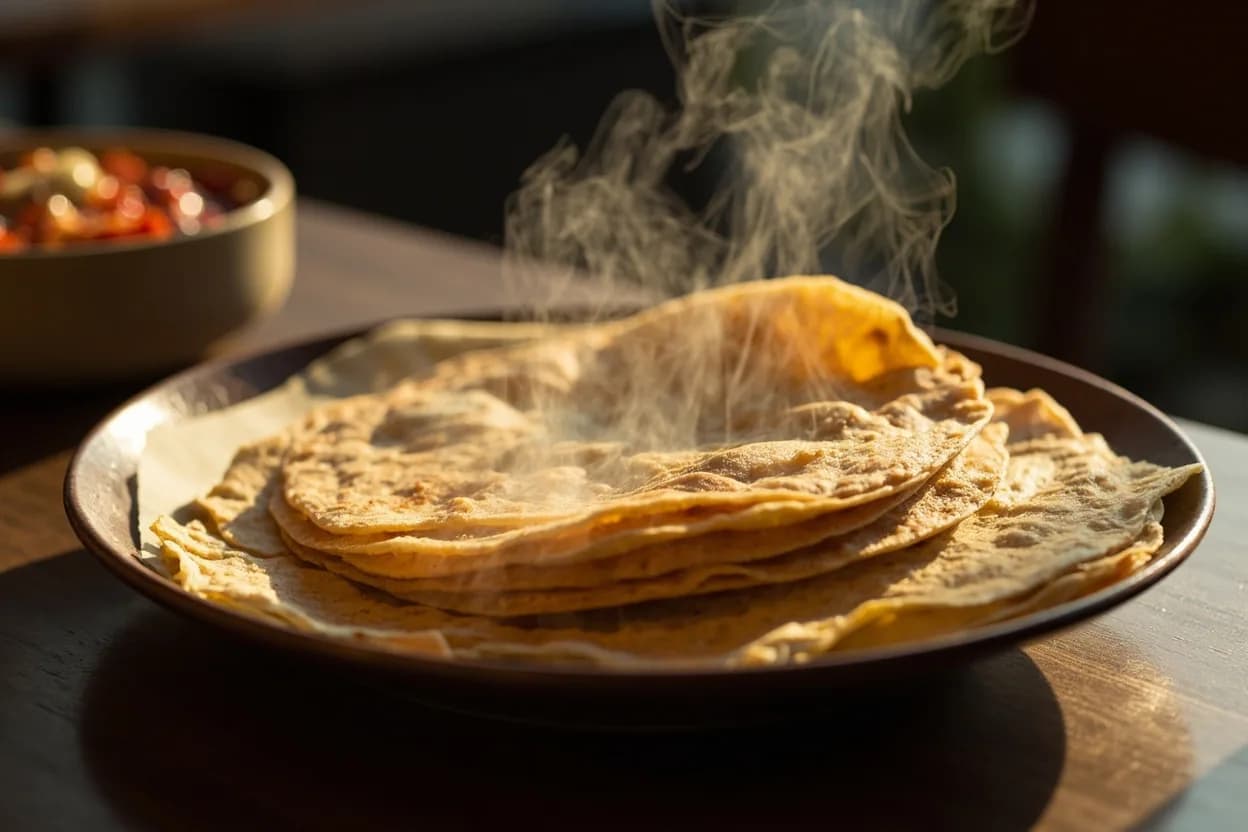
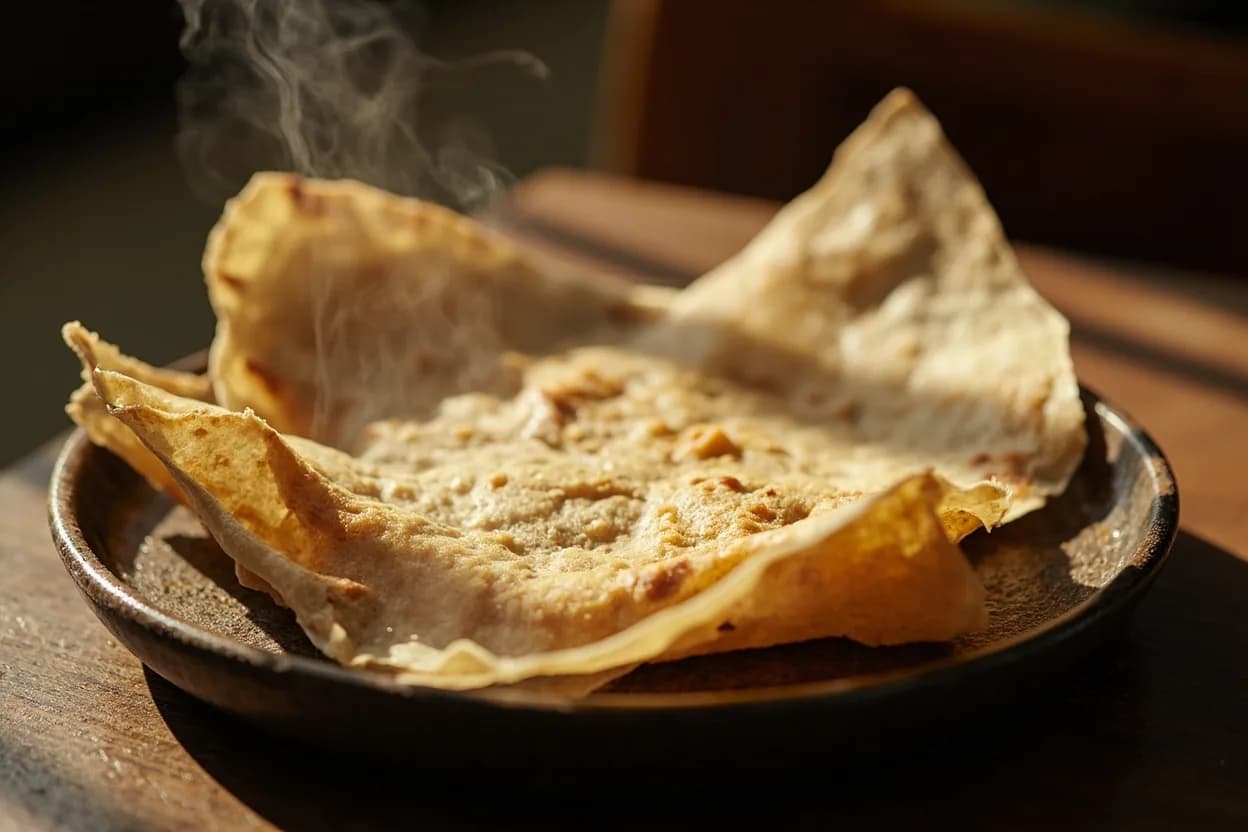
South Asian cousin used to stretch wheat flatbreads; the dough is flipped between palms and onto a hot tawa rather than a pizza peel.
An exaggerated vertical spin, sometimes 2–3 m high, performed for tableside theater; not the standard pizzeria technique and discouraged by traditionalists because it risks tearing the skin.
How to do it
- 1
Temper the dough
Remove the dough ball from refrigeration 1–2 hours before shaping so the gluten relaxes and the interior comes to roughly 20–24 °C. Cold dough fights you and tears during the toss.
- 2
Pre-shape on the bench
Lightly dust the work surface with '00' flour or fine semolina. Place the ball seam-side down, then press outward with the pads of your fingertips — never the palms — into a disc about 10–12 cm across, leaving a noticeably thicker rim. Do not flatten the center thinner than about 5 mm at this stage.
- 3
Drape on the knuckles
Pick up the disc and drape it over the backs of both closed fists, with the thicker edge (cornicione) resting along the tops of your knuckles and the thinner center hanging between your hands. Keep your fingers curled in so the dough cannot sag onto them.
- 4
Begin the rotation
Slowly rotate your wrists in opposite directions so the dough slides from one hand to the other. Gravity pulls the center downward while the rotation keeps the rim supported on the knuckles. Do not pull outward with the fingers.
- 5
Stretch by centrifugal force
Gradually widen the arc of your rotation. As the skin turns, the center thins and the diameter grows. Work evenly around the circle; if one section is thicker, rotate that section upward and let it pass through the lower point of the spin.
- 6
Build the cornicione
Throughout the stretch, keep your hands just inside the rim so the outer 1.5–2 cm is never pressed or pulled. This preserved band becomes the puffy cornicione that traps oven spring.
- 7
Reach target size
Continue until the skin is 25–35 cm across (for Neapolitan) with a 2–3 mm translucent center. The skin should rotate smoothly and feel light; if it drags on the knuckles, dust them lightly with flour.
- 8
Land on the peel
Lay the stretched skin flat onto a semolina-dusted pizza peel. Give the peel a small shake to confirm the skin slides freely; if it sticks, lift and add more semolina before topping. Top and bake immediately, or the dough will begin to adhere and sag.
Why toss at all
A tossed skin is aerated, not compressed. The alternative methods — bench stretching with the backs of the hands, or sheeting with a *matterello* (rolling pin) — work, but each has a cost. Bench stretching can leave a thicker, less uniform center. A rolling pin crushes the air pockets that ferment in the dough's interior and produces the dense, even crumb associated with pan or tavern pizza rather than the open, chewy texture of pizza Napoletana. Tossing is the method that best preserves the open crumb, because the dough is never pressed; it is only rotated and allowed to fall.
- The cornicione is a structural feature, not decoration: it traps oven spring and gives the slice its pillow.
- Gluten must be relaxed before tossing — under-rested dough snaps back and tears at the center.
- Room-temperature dough is non-negotiable; refrigeration tightens gluten and makes the skin behave like rubber.
Alternatives and when to use them
Tossing is one of three principal routes from ball to skin, and choosing the right one depends on the style of pizza and the state of the dough.
- Bench hand-stretching — push the disc outward with the backs of the hands while it lies on a lightly floured surface; the gentlest method and the best fallback for under-rested dough.
- Rolling-pin sheeting — fast and gives a uniform thin base; the standard for thin-crust American and cracker-style pies, but unsuitable when an open, airy cornicione is the goal.
- Tossing — the right method for high-hydration, well-fermented dough destined for a hot, short bake, where the open crumb is the whole point.
Common uses
Tips & pitfalls
- Bring dough fully to room temperature before shaping — cold gluten snaps back and the skin tears.
- Flour or, better, semolina the work surface lightly; over-flouring makes the dough slide off the knuckles and inhibits grip.
- Press the initial disc with fingertips only, leaving at least a 1.5–2 cm untouched border so the cornicione traps fermentation gas.
- Drape the dough over the backs of closed fists, never the palms or fingers — knuckles let the skin hang and stretch under its own weight.
- Rotate the wrists continuously and let gravity do the work; do not pull, fling, or stretch outward by force, or the dough thins unevenly and tears.
- Keep the skin in constant motion: a dough that sits still on a hand sticks and loses its open crumb.
- If a small tear appears, pinch it closed immediately and rotate the hole away from the area being stretched so gravity doesn't enlarge it.
- Common mistake: tossing the dough upward like a frisbee. Authentic technique is a gentle horizontal rotation, not a vertical throw.
- Common mistake: reaching for a rolling pin after tossing to 'even it out' — this crushes the air pockets that give Neapolitan crust its leopard-spotted, pillowy rim.
- Common mistake: practicing on under-fermented or just-mixed dough, which is tight, springy, and the single biggest cause of failed tosses.
Good to know
- Primary use
- Shaping pizza dough into a thin round before topping and baking
- Typical target diameter
- 25–35 cm (10–14 in) for Neapolitan pies; smaller for personal pies, larger for New York or American styles
- Target center thickness
- 2–3 mm; the outer cornicione kept 1.5–2 cm tall and untouched
- Dough temperature
- Room temperature, roughly 20–24 °C (68–75 °F); cold dough resists stretching and springs back
- Best flour
- High-protein flour — Italian '00' or bread flour at 12–14% protein, hydrated 60–70%
- Rest time before shaping
- 1–4 hours at room temperature after balling, to relax the gluten
- Speed
- Skilled pizzaioli stretch a ball into a finished skin in 15–30 seconds
- Italian term
- Lancio (the toss) and stesura (the broader hand-shaping); performed by a pizzaiolo or pizzaiola
- Cultural status
- Codified as a defining element of the Neapolitan pizzaiuolo tradition, inscribed on UNESCO's Intangible Cultural Heritage list in December 2017
Also called
Pizza Tossing · Dough Spinning · Hand-Stretching
Dishes that rely on it
Related

Whisk
Beat ingredients smooth and aerated with a looping wire motion

Sift
Pass dry ingredients through mesh to aerate and remove lumps

Strain
Pour through mesh to separate solids from liquid for a smooth result

Filter
Pass liquid through fine material to clarify out the smallest particles

Rice
Press cooked potatoes through small holes for fluffy, lump-free texture

Mash
Crush soft cooked food into a rustic, creamy purée

Grind
Crush food into a coarse to fine texture, from spices to meat

Grate
Shred food into fine bits against a sharp-toothed surface