Prep & Assembly
Fufu Pounding
Pounding boiled starchy roots into a smooth, stretchy West African dough.
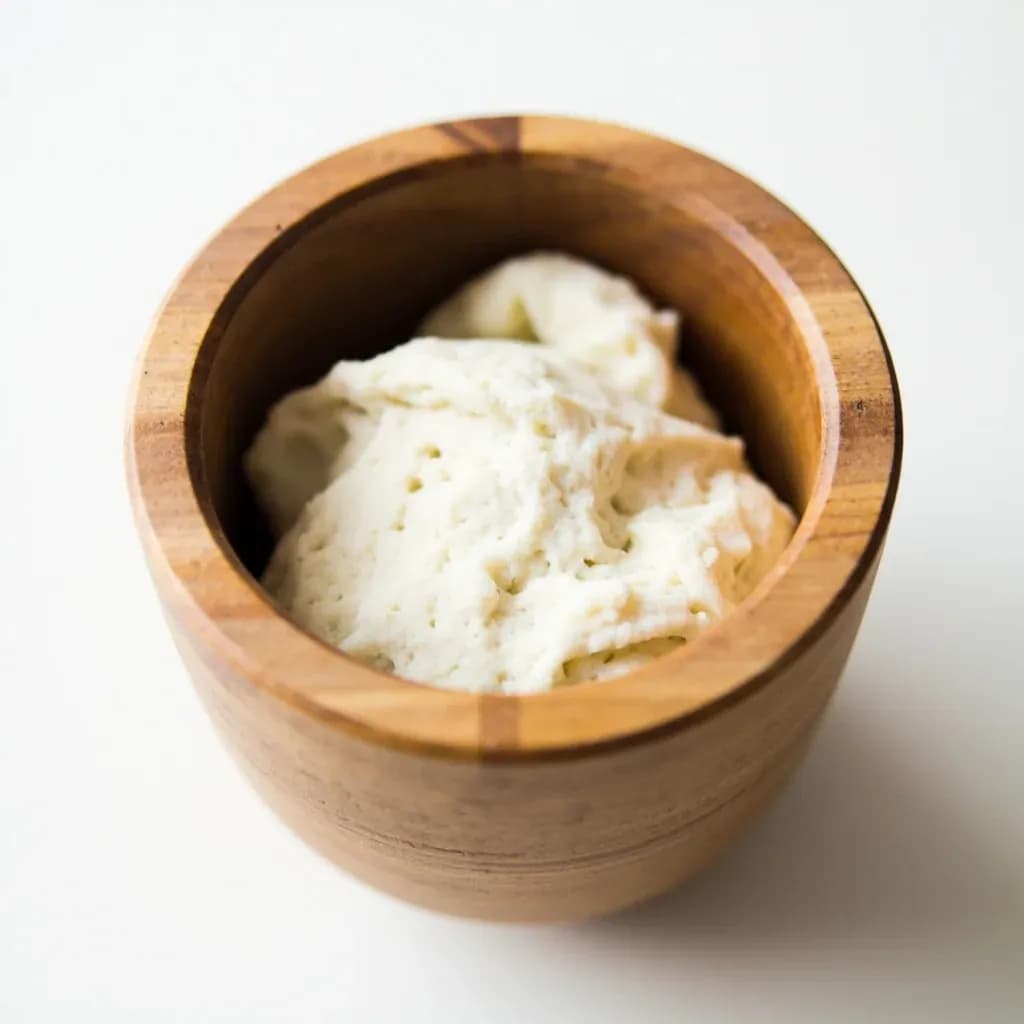
Fufu pounding uses a tall wooden mortar and pestle to beat boiled cassava, yam, or plantain into a smooth, elastic dough eaten alongside soups and stews. The rhythmic pounding develops the starch into a cohesive, stretchy mass with no lumps. It is physically demanding work, often done by two people in tandem, though modern cooks may use a stand mixer or instant flour.
Fufu pounding is the traditional West African technique of transforming boiled starchy roots and tubers into a smooth, stretchy, cohesive dough through repeated impact in a wooden mortar. The work is almost always shared between two people in a tight rhythm: the pounder drives a heavy wooden pestle down in steady strikes while the turner rotates the mass and flicks hot water onto it between each hit. Over 20 to 45 minutes of active labor, the impact realigns swollen starch granules and ruptures plant fibers, releasing amylose that binds the mass into a single elastic ball that clings to the pestle and pulls in long ribbons. This stretch, not just smoothness, is what distinguishes true pounded fufu from a stirred porridge or a mashed approximation.
The resulting dough is the starchy anchor of a West African meal, pinched off by hand and used as an edible scoop for soup. How it eats depends on the base: cassava fufu is light and elastic, pounded yam is famously stretchy and the benchmark of skill, plantain fufu is dense with a faint sweetness, and cocoyam yields the silkiest result. The technique demands strength, patience, and coordination, and it remains a deeply social act in most households, often carried out in the kitchen doorway or courtyard while conversation and music set the tempo.
Modern shortcuts such as reconstituted fufu flour and food processors have made the dish accessible on busy weeknights, but they do not replicate the glossy, taffy-like pull of properly pounded fufu. Understanding the technique, even if you finish in a stand mixer, helps a cook control texture, hydration, and timing.
- Difficulty
- Hard
Types & varieties
The most widespread version across Ghana, Nigeria, and Francophone West Africa; lighter and more elastic than other bases
Made from true yam (Dioscorea spp.); prized for its stretchiness and considered the benchmark for skilled pounding
Made with unripe green plantains; slightly sweet, dense, common in Ghana and Côte d'Ivoire
Softer, smoother, more delicate texture; common in parts of Nigeria, Ghana, and Cameroon
Combines cassava with plantain or yam to balance stretch, flavor, and yield
Found in parts of Francophone West Africa and the Congo basin, blended with maize flour for a thicker result
How to do it
- 1
Cook the base
Peel and boil cassava, yam, plantain, or a mix in salted water until completely tender. The pieces should be soft enough that a fork slides through with no resistance; undercooked roots will never smooth out, no matter how long you pound. Drain well and keep hot.
- 2
Set up the mortar and pestle
Place the wooden mortar on a damp cloth or rubber mat so it cannot slide. Stand the pestle upright within reach. Position the pounder and turner on opposite sides, and place a small bowl of hot water with a spoon or ladle beside the turner.
- 3
Begin the first pounding
Drop a small batch of the hot cooked roots into the mortar. The pounder strikes down firmly while the turner quickly flips and rotates the dough between each hit. Start with moderate force to break the lumps apart before moving to full strokes.
- 4
Add water as you go
The turner flicks a small amount of hot water onto the dough between strikes. Add water sparingly, just enough to keep the mass pliable. Too much water turns fufu into a sticky paste; too little makes it crumble and tear.
- 5
Build the elastic texture
As the dough forms a single mass, the pounder increases to full, heavy strokes. The dough should start clinging to the pestle and stretching into long ribbons when lifted. Keep pounding and turning until no lumps remain and the surface looks glossy.
- 6
Test for doneness
Lift the pestle: well-pounded fufu will hang from it in a smooth, stretchy sheet rather than breaking off in chunks. Stretch a small piece with wet fingers; it should pull like taffy without tearing. If it sticks, tears, or feels grainy, keep working it.
- 7
Shape and serve
Wet your hands, pinch off a fist-sized piece, and roll it into a smooth ball. Place in a covered bowl or wrap to keep warm. Serve immediately with soup, or hold over a pot of simmering water for up to an hour.
The science of the stretch
Fufu pounding is less about crushing the food and more about working the starch. The repetitive impact realigns swollen starch granules, breaks down cell walls, and ruptures fibers, releasing amylose that binds the mass into a single elastic dough. Stirring or mashing cannot apply the same directional force, which is why stirred cornmeal dishes like ugali and sadza have a porridge texture rather than the taffy-like pull of true fufu. Hot water added during pounding keeps the starch pliable and prevents the surface from drying and tearing; cold water shocks the starch and yields a stiff, crumbly result.
- Impact force, not just heat, is what releases the binding starches
- Hot water (not cold) keeps the dough pliable during work
- The stretch is a sign of properly ruptured, well-aligned starch granules
- Stirred dishes from maize meal have a different texture because they lack this directional force
The two-person rhythm
In Ashanti and many other West African kitchens, fufu is almost never a solo project. The pounder stands over the mortar with a heavy pestle; the turner crouches or stands opposite, holding a small bowl of hot water and a spoon. The turner flips the dough between strikes, signals when to hit, and flicks water onto the mass as it dries. The two fall into a steady cadence, and the conversation, laughter, and music that surround the work are part of the tradition. For cooks working alone, a stand mixer with a paddle, a food processor, or even a sturdy potato masher can approximate the texture, but the final stretch usually improves with a few minutes of hand working over the dough.
- Pounder and turner work in alternating rhythm; the turner signals each strike
- The mortar is usually placed on a damp cloth or mat so it does not slide
- A small pinch of salt rubbed on the pestle tip helps prevent sticking
- Mortar and pestle are often passed down as household heirlooms
Related techniques across Africa
Outside West Africa, similar starchy accompaniments are made by stirring rather than pounding. East African ugali and Southern African sadza are stiff maize-meal porridges shaped into balls and used to scoop stews. Across Central Africa, fufu (spelled foufou in Francophone regions) made from cassava and plantain is common; in some communities it is finished with a final stretchy pounding, in others it is served as a smoother stirred dish. The defining line is texture: pounded fufu pulls in ribbons, while stirred fufu holds its shape but breaks cleanly when pinched.
- Ugali and sadza are stirred maize-meal porridges, not pounded
- Foufou is simply the Francophone spelling of fufu, not a separate dish
- The stretchy pull is the hallmark of true West African pounding
Common uses
Tips & pitfalls
- Cook the base until fork-soft and very hot before pounding; cold or under-cooked roots will not stretch no matter how long you work them
- Keep a small bowl of hot water beside the mortar and have the turner flick it on the dough between strikes; never add cold water, which shocks the starch and makes the dough stiff
- Maintain a steady rhythm and let the turner signal when to strike; uncoordinated pounding leaves lumps and tears the dough apart
- Begin with light pounding to break the food down, then move to heavy, full strokes once a single mass forms
- Portion the cooked base into manageable batches; too much in the mortar at once prevents even pounding and exhausts the pounder
- Rub a pinch of salt onto the pestle tip to keep the dough from sticking during the stretchy stage
- Wet your hands when shaping the final balls so the surface stays smooth and glossy
- For solo work, use a stand mixer with a paddle or a strong food processor, then finish with a few minutes of hand pounding or vigorous stirring to develop the stretch
Good to know
- Origin
- West and Central Africa; the word derives from the Twi/Akan term meaning 'to mash' or 'mix up'
- Primary bases
- Cassava, yam, plantain, cocoyam, and mixtures of these
- Key equipment
- Wooden mortar (Akan: ase or nkora) and tall wooden pestle (twa or nkatenase); modern electric pounders and food processors are also used
- Texture goal
- Smooth, glossy, highly elastic dough that stretches without breaking
- Typical time
- Roughly 20–45 minutes of active pounding per batch
- Difficulty
- High — requires strength, rhythm, and coordination between pounder and turner
- Tradition
- A two-person job: one pounds, the other turns and wets the dough between strikes
- Eaten with
- Egusi, light soup, groundnut soup, palm nut soup, okra soup, and kontomire stew
Also called
Pounding Fufu
Related

Whisk
Beat ingredients smooth and aerated with a looping wire motion

Sift
Pass dry ingredients through mesh to aerate and remove lumps

Strain
Pour through mesh to separate solids from liquid for a smooth result

Filter
Pass liquid through fine material to clarify out the smallest particles

Rice
Press cooked potatoes through small holes for fluffy, lump-free texture

Mash
Crush soft cooked food into a rustic, creamy purée

Grind
Crush food into a coarse to fine texture, from spices to meat

Grate
Shred food into fine bits against a sharp-toothed surface