Beef — Primal & Subprimal
Beef Tendon vs. Shank Cross-Cut
Also: ngau chin, achilles tendon, osso buco shank, niújiàn, gân bò
Two collagen-dense cuts from the lower leg — the Achilles tendon itself and the cross-cut shank — that transform through long wet heat into silk.
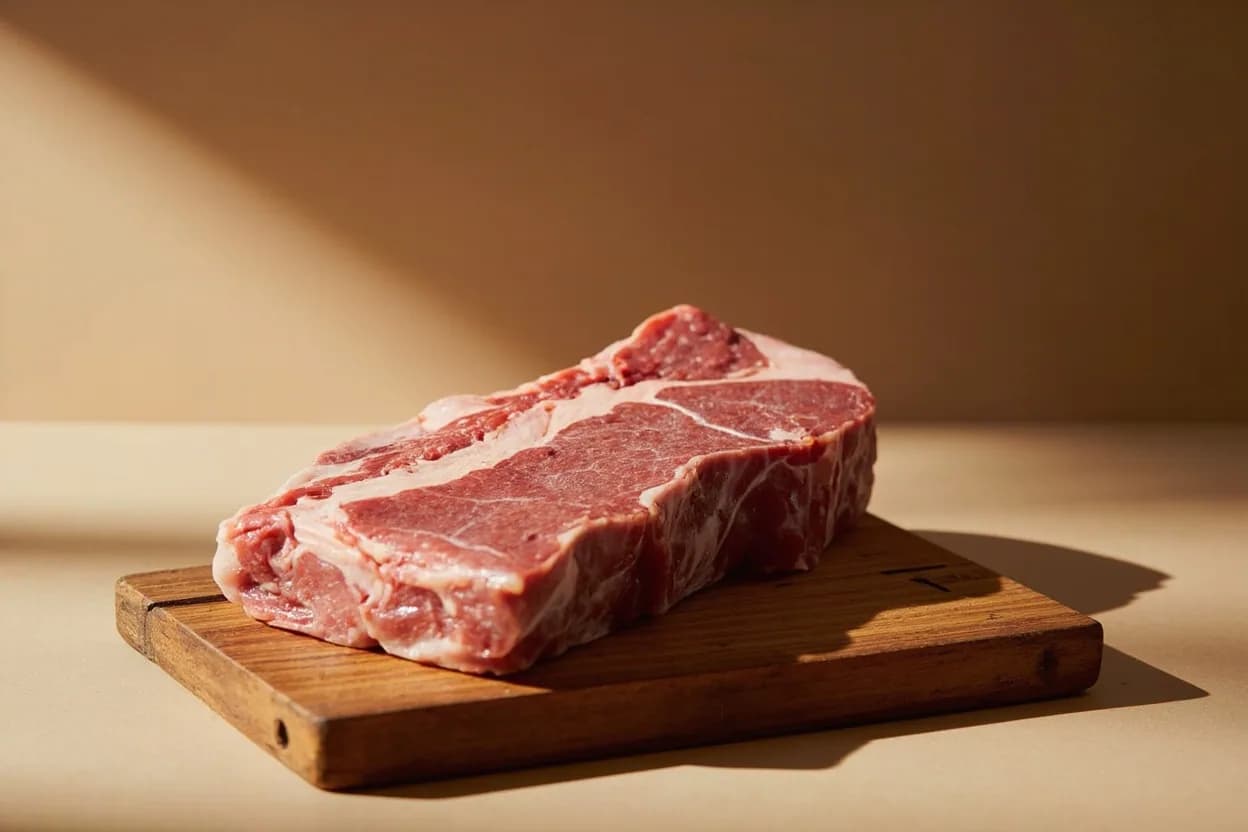
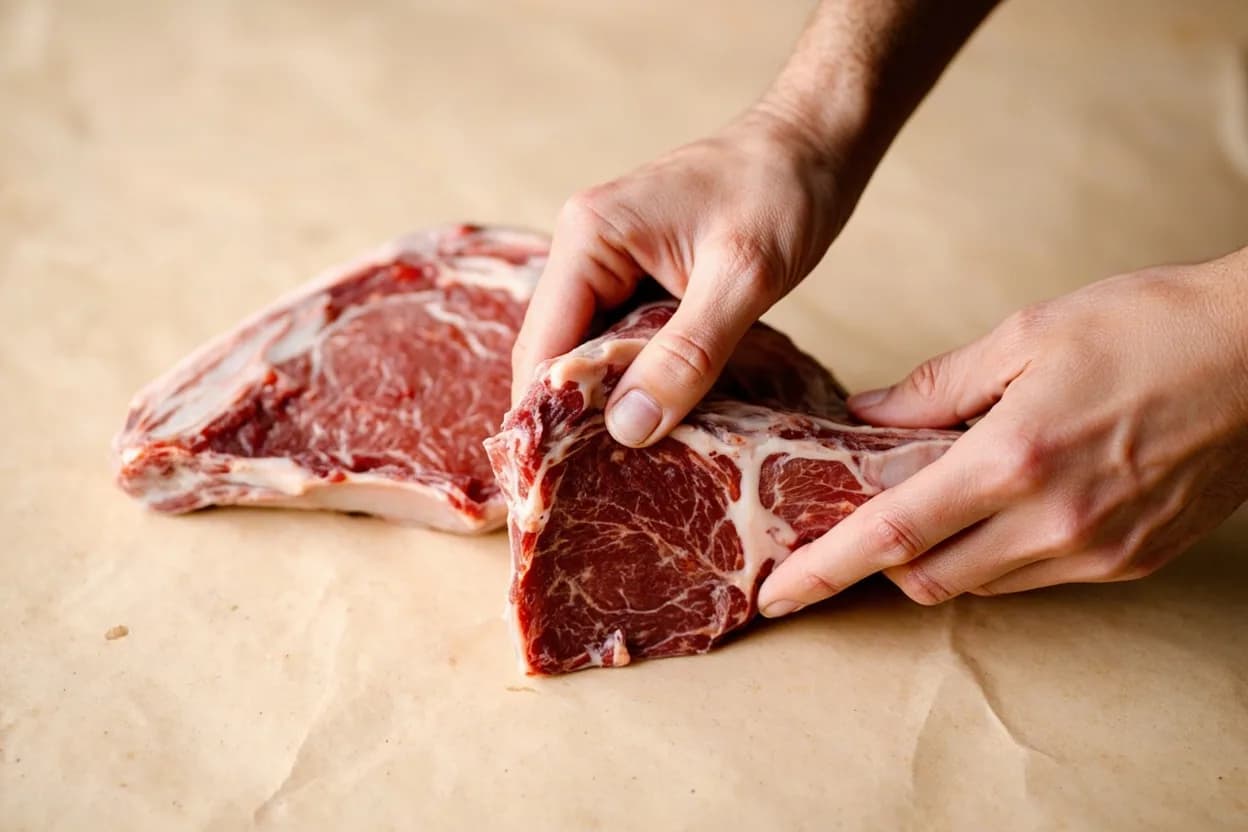
The beef shank cross-cut (also sold as osso-buco style beef) is a 3–5 cm thick slice taken perpendicular through the whole shank bone and surrounding muscle, revealing a marrow-filled ring of bone encased in concentric rings of dense leg muscle bound with intramuscular collagen. The Achilles (or 'beef tendon' per Asian markets) is the pure extramuscular tendon stripped from the posterior hock — a fibrous, translucent cord weighing 200–400 g that contains virtually no muscle fibre, only collagen and elastin. The two items are anatomically adjacent but culinarily very different in their initial character and their trajectories under heat.
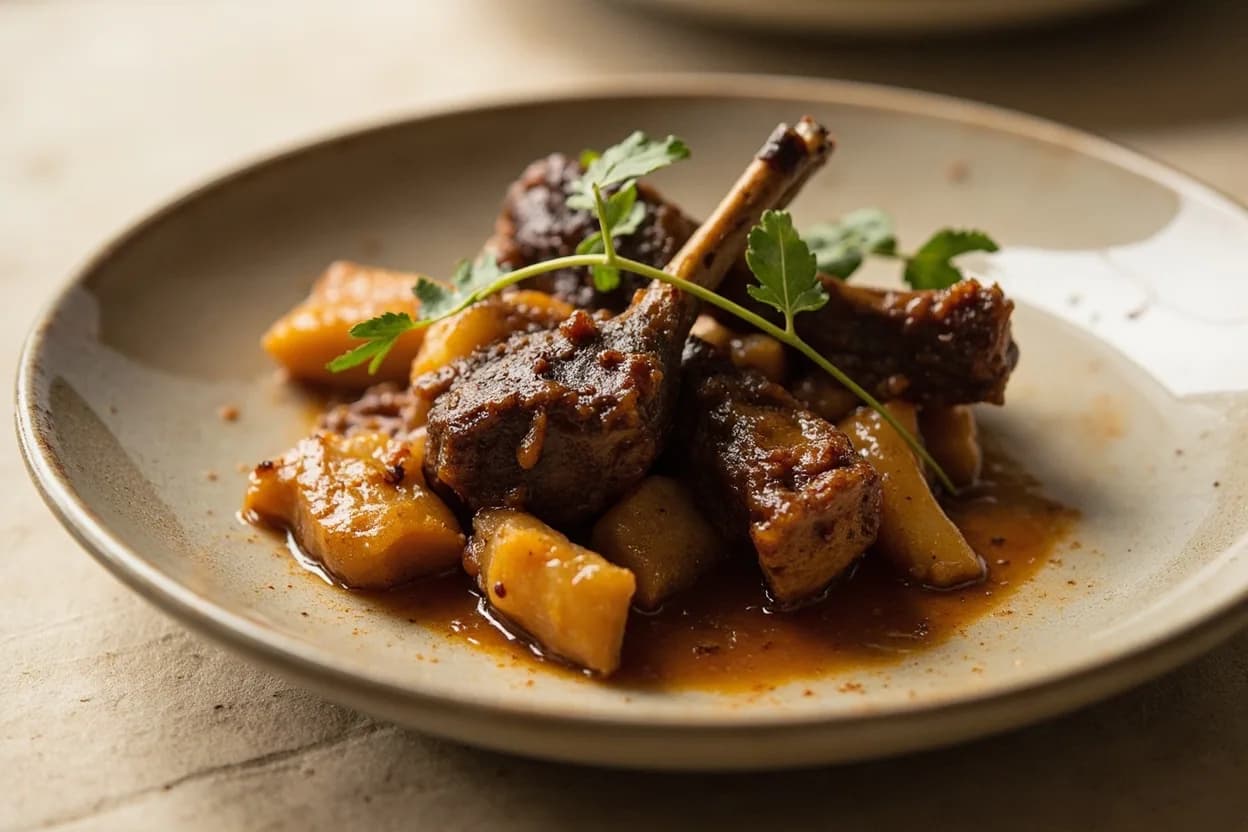
In photos
Where it comes from
Both originate in the beef shank primal (the lower forelimb or hindlimb). The cross-cut shank is sliced from the full shank after the foot is removed; the Achilles tendon attaches the gastrocnemius/superficial digital flexor complex to the calcaneus (heel bone) and is peeled away from the hock during carcass breakdown. Asian butchers often sell the tendon separately; Western supermarkets typically discard it or grind it.
Best for
How to cook it
- 1TENDON: Blanch in cold-start water, bring to boil, drain and rinse to remove impurities and odour.
- 2TENDON: Simmer 2–3 hours (or pressure-cook 40–45 min) in aromatics until a skewer passes with no resistance; it should jiggle like firm jello.
- 3TENDON for cold-slice: cool in liquid, refrigerate until set solid, slice into 5 mm coins, dress with chilli oil, Sichuan pepper, black vinegar, soy, sesame.
- 4TENDON for pho: add partially-cooked tendon to the finished broth 30–45 min before serving; it will finish cooking in the bowl.
- 5SHANK CROSS-CUT: Sear hard on all cut faces until deeply caramelised before braising — the marrow rings need colour.
- 6SHANK CROSS-CUT: Braise covered at a bare simmer (150–160 °C oven or low stovetop) for 2.5–3.5 hours; liquid should barely tremble, not boil.
- 7Tie butcher's twine around each shank slice to keep the meat from falling off the bone during braising.
Prep & butchery
- Tendon: scrape away any residual periosteum or blood clots; blanch before cooking
- Shank cross-cut: pat dry thoroughly before searing; moisture causes steaming not browning
- Remove any excess surface fat from shank slices — there is little, but trim what exists
- For cold-slice tendon preparations, cook a whole piece then slice after chilling — cutting raw tendon is difficult and dangerous
Substitutes
- Pork tendon
Similar collagen character; cooks faster (90 min pressure); common in Chinese and Filipino braised dishes
- Oxtail
Comparable gelatin yield and deep flavour; substitute 1:1 in braises but cooking time may extend
- Short rib (bone-in)
Higher fat, more flavour; lacks the lean, clean succulence of shank but substitutes in European braises
Related cuts
- Beef Shank (whole)
The parent cut before cross-cutting; used for clear broths and pot-au-feu
- Oxtail
Similar collagen loading; tail bones provide even more surface area for gelatin
- Beef Foot / Trotter
Another extreme-collagen cut from the same leg region, used in menudo and birria
Appears in
References
- 1.The Professional Chef, 9th ed. — Culinary Institute of America (Wiley, 2011)
- 2.On Food and Cooking — Harold McGee (Scribner, 2004)
- 3.Land of Fish and Rice — Fuchsia Dunlop (Norton, 2016)
- 4.The Food Lab — J. Kenji López-Alt (Norton, 2015)
Confidence: high
Notes
Why blanching matters for tendon
Raw Achilles tendon carries blood, bone-dust, and surface microbes from hock processing. A cold-start blanch — covering with cold water, bringing to a rolling boil, then draining and rinsing under cold water — purges grey foam and neutralises the slightly funky smell. Skipping it produces a murky, off-flavoured broth.
The collagen geometry difference
In the cross-cut shank, collagen is intramuscular — woven between muscle fibres. As it converts to gelatin, it lubricates and tenderises the surrounding meat but the fibres themselves remain intact, giving the characteristic shred. In pure tendon, the entire structure IS collagen, so the result is not shredded meat but a continuous gelatinous mass — sliceable when cold, quivering when warm.