Regional Meat Cuts
Bulgogi Slice (Thin Ribeye / Sirloin)
Also: 불고기용 고기, bulgogi meat, bulgogi-yong, Korean BBQ slice
Partially-frozen ribeye or sirloin sliced 2–3 mm across the grain, designed to absorb soy-sesame marinade rapidly and cook to caramelized tenderness in under two minutes.
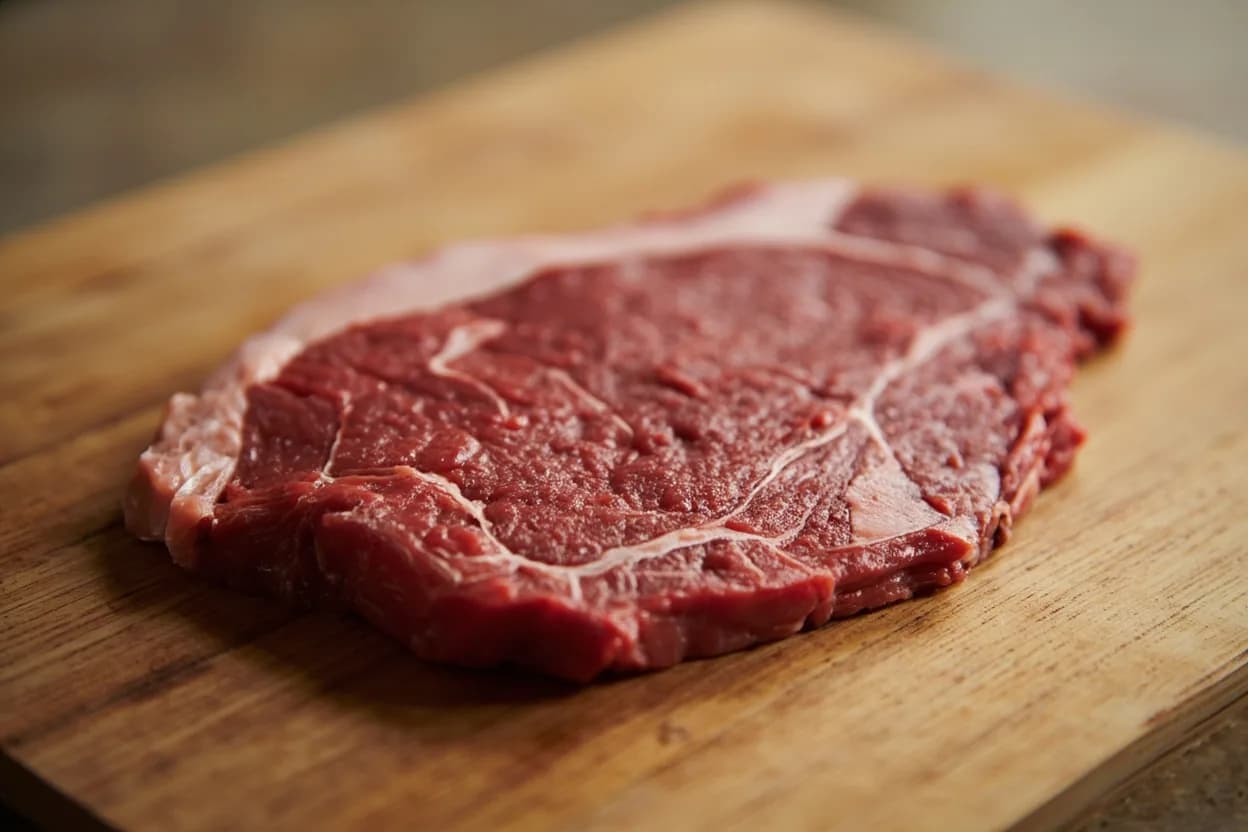
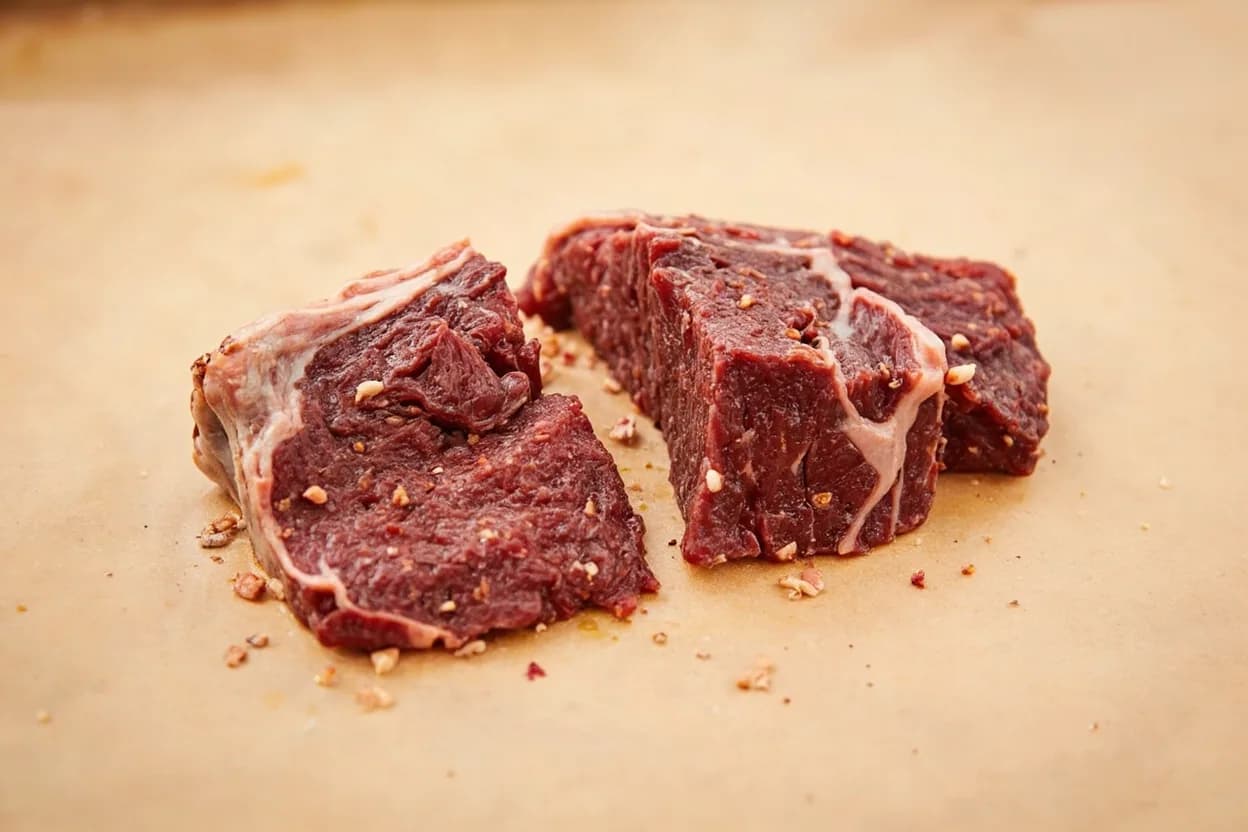
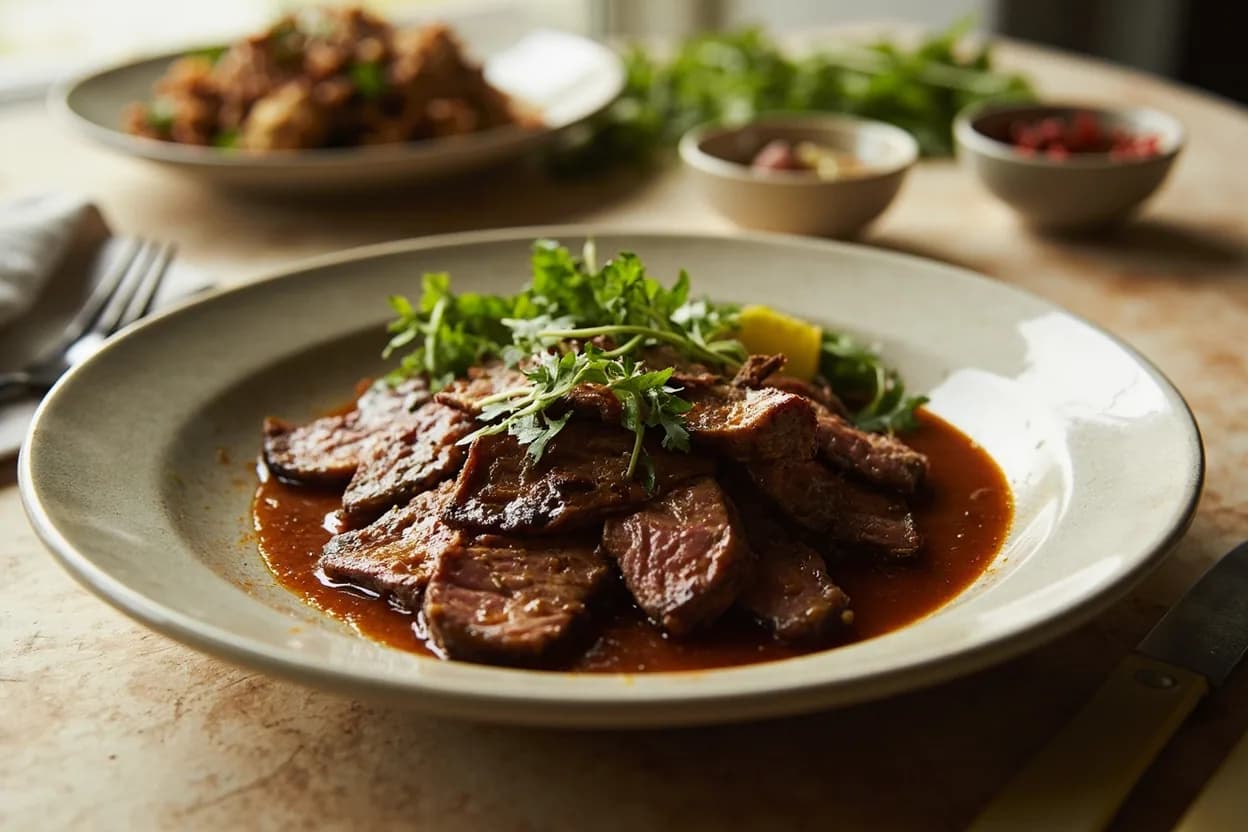
Bulgogi slice (불고기용) is the retail and restaurant presentation of beef specifically cut for bulgogi (불고기, 'fire meat'). Ribeye is most prized for its even intramuscular fat; top sirloin and eye of round are leaner budget options. The meat is sliced 2–3 mm thick across the grain—thicker than chadolbaegi, thin enough that marinade penetrates to the center within 30 minutes. Machine-cut slices are uniform; hand-cut slices often show slight irregularity but preserve more texture. The thin cross-grain cut dramatically shortens muscle fiber lengths, making even moderately tough cuts meltingly tender after marinating.
In photos
Where it comes from
Primarily beef ribeye (등심, deungsim) or sirloin (채끝, chaekeut). Butchers may also use thin-cut top round or eye of round for cost-sensitive applications. The slice comes from the whole muscle rolled or stacked flat, then cut perpendicular to the fiber direction.
Best for
How to cook it
- 1Marinate for at least 30 minutes; 2–4 hours gives optimal flavor penetration without breaking down the texture past the desired tenderness.
- 2The classic bulgogi marinade base: soy sauce, sugar (or honey), sesame oil, garlic, ginger, and Asian pear or kiwi (tenderizing enzymes).
- 3Grill or pan on high heat—the marinade sugars must caramelize rapidly or the meat steams and toughens.
- 4Cook in small batches; crowding drops pan temperature and causes the meat to release moisture and braise rather than sear.
- 5Total cook time: 1–2 minutes per side. The meat is thin; watch the edges, not a timer.
- 6Rest 30 seconds off heat; serve immediately over rice or inside lettuce wraps.
Prep & butchery
- Partially freeze the beef block (1–2 hours in the freezer) to firm it enough for a slicer or a steady hand-cut without tearing.
- Slice perpendicular to the muscle grain—visible grain lines should run short across the width of each piece, not lengthwise.
- Machine slicer set at 2–3 mm is preferred for restaurant-grade uniformity; a sharp chef's knife or slicing knife at a slight downward angle works at home.
- If buying pre-sliced, look for even thickness and no 'folded' pieces that will cook unevenly.
- Separate slices before marinating to ensure each piece is fully coated.
Substitutes
- Chadolbaegi (brisket)
Thinner and fattier; cooks faster and does not need marinade, so swap only in ungarnished grill applications.
- Beef chuck eye roll
Sliced thin, chuck eye mimics ribeye texture at lower cost; fat distribution is less even.
- Lamb leg, thinly sliced
Used in Korean-lamb fusion; marinade ratios unchanged but cook time shortens by ~20%.
Related cuts
- Chadolbaegi (Brisket Slice)
The paper-thin brisket counterpart; no marinade, faster cook, different grill presentation.
- Deungsim (Korean Sirloin / Ribeye Primal)
The primal from which the highest-quality bulgogi slices are taken.
- Shabu-shabu beef
Japanese counterpart—sliced even thinner (1 mm) for hot-pot; not suitable for direct grill.
Appears in
References
- 1.The Korean Cookbook — Judith Ridner & Taekyung Chung, Phaidon
- 2.Korean Food Culture — Chung Jae Lee, Seoul National University Press
- 3.Koreatown: A Cookbook — Deuki Hong & Matt Rodbard, Clarkson Potter
Confidence: high
Notes
Machine-cut vs. hand-cut
Professional Korean butchers pride themselves on hand-cut bulgogi, arguing that the slight variation in thickness creates textural interest—some edges crisp while the center stays tender. Machine-cut slices are perfectly uniform and preferred in high-volume restaurants. For home cooks, partial freezing and a sharp knife with a 30° downward angle achieves close to machine uniformity.
The tenderizer debate
Traditional recipes use Asian pear (배, bae) or kiwi as a marinade ingredient; both contain proteolytic enzymes (actinidin in kiwi, peptidases in pear) that begin breaking down myosin. The effect is real but time-sensitive: 30 minutes softens the texture pleasantly; 4+ hours can turn ribeye mushy. Lean cuts like eye of round benefit most from extended enzyme time.