Beef — Primal & Subprimal
Burnt Ends (Point Cube)
Also: burnt ends, poor man's candy, point cubes, brisket candy
Cubed brisket point re-smoked in its own juices until lacquered with bark and rendered fat — Kansas City's most coveted BBQ byproduct.
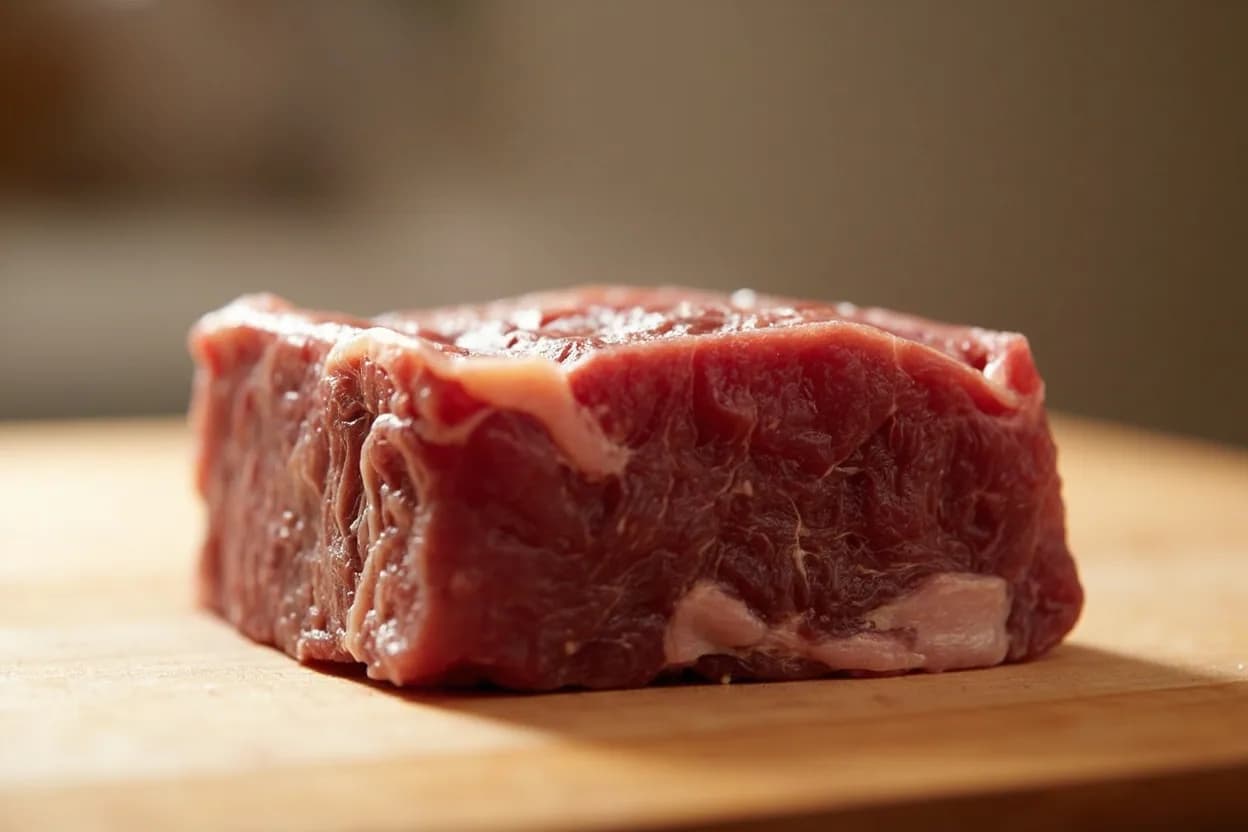
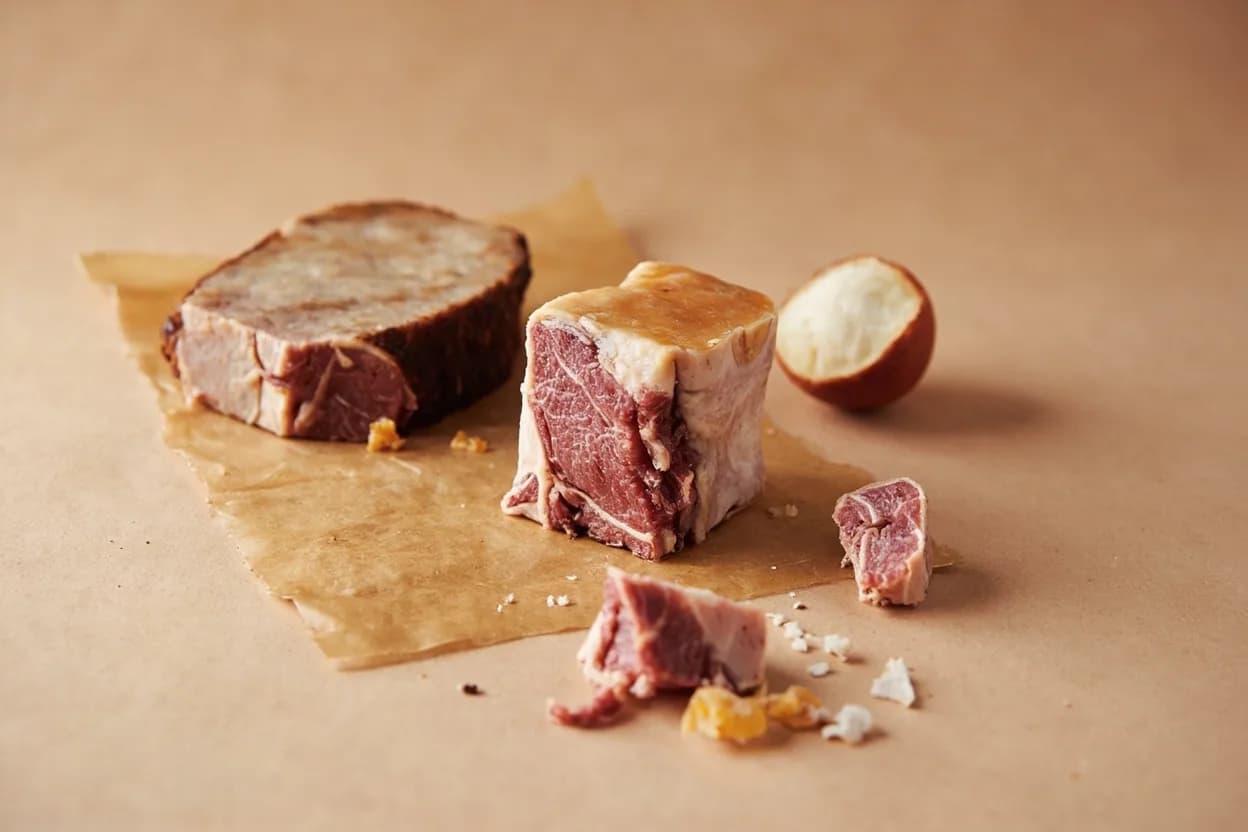
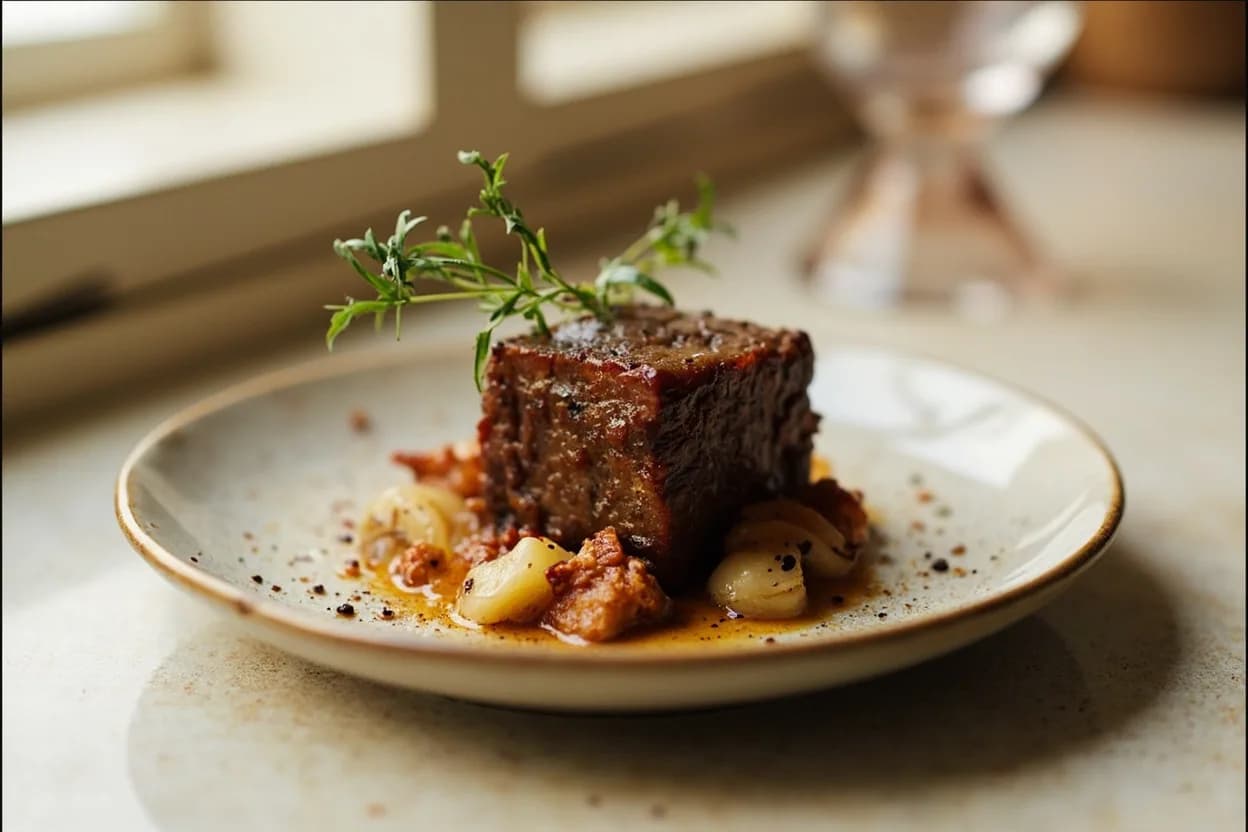
Burnt ends are the twice-cooked cubes cut from the deckle-rich point (deckle) end of a whole packer brisket after the flat has been sliced. The point is separated from the flat along the fat seam, cubed into roughly 1–1.5-inch pieces, sauced, and returned to the smoker until bark reforms on all six faces and internal fat is fully rendered. The result is a caramelized, mahogany-crusted cube with a molten, gelatinous interior.
In photos
Where it comes from
The point muscle sits atop the flat (pectoralis profundus) and is anatomically the serratus ventralis. It is far thicker than the flat, contains significantly more intramuscular fat and connective tissue, and is separated from the flat by a thick fat seam that must be trimmed before cubing.
Best for
How to cook it
- 1Smoke the whole packer brisket fat-side up at 225–250 °F (107–121 °C) with post-oak or hickory until the flat reaches 200–205 °F (93–96 °C) and probes like butter.
- 2Rest the whole brisket 30–60 minutes, then separate the point from the flat by cutting along the visible fat seam; trim excess exterior fat to about ¼ inch.
- 3Cube the point into 1–1½-inch pieces; season with a light second coat of rub (brown sugar, smoked paprika, black pepper, garlic powder).
- 4Toss cubes with 2–3 tablespoons of Kansas City–style BBQ sauce and 2 tablespoons of beef tallow or unsalted butter.
- 5Arrange in a single layer in a foil pan or directly on grates; return to the smoker at 250–275 °F (121–135 °C) uncovered for 1.5–2.5 hours, tossing once halfway, until bark is set and sauce is lacquered.
- 6Optional final glaze: brush with additional sauce in the last 20 minutes for a stickier finish. Internal temperature of individual cubes should read 205–210 °F (96–99 °C).
- 7Rest 10 minutes before serving — the gelatin needs to resettle or the cubes will fall apart.
Prep & butchery
- Separate point from flat while the brisket is still warm — the fat seam is easier to navigate when the fat is pliable.
- Trim exterior fat cap to ¼ inch maximum before cubing; excessive fat prevents bark formation on those faces.
- Cut against the grain of the point muscle — the point grain runs perpendicular to the flat, so orient cuts accordingly.
- Uniform cube size is critical for even second-smoke cooking; inconsistent sizes mean some cubes over-render while others remain underdone.
Substitutes
- Chuck roast burnt ends
Cut chuck into cubes and smoke from raw — produces similar caramelized bark with less deep beefy flavour; sometimes called 'poor man's burnt ends'.
- Short rib burnt ends
Boneless short rib cubed and double-smoked; richer fat content, slightly different collagen structure, excellent results.
- Pork belly burnt ends
Pork belly cubed and smoked then sauced; not beef, but the technique is identical and the results are crowd-pleasing.
Related cuts
- Brisket Flat
The complementary half of the whole packer brisket — leaner, sliced for plating while the point becomes burnt ends.
- Brisket Point (Deckle)
The parent subprimal from which burnt ends are produced; the deckle/point is the fattier, thicker upper muscle of the brisket primal.
- Whole Packer Brisket
The full NAMP 120 primal cut (flat + point together); burnt ends require starting with the whole packer to allow separation after the first cook.
Appears in
References
- 1.Franklin Barbecue: A Meat-Smoking Manifesto — Aaron Franklin & Jordan Mackay (Ten Speed Press, 2015)
- 2.The Food Lab: Better Home Cooking Through Science — J. Kenji López-Alt (W. W. Norton, 2015)
- 3.Meathead: The Science of Great Barbecue and Grilling — Meathead Goldwyn (Rux Martin/Houghton Mifflin Harcourt, 2016)
- 4.NAMP Meat Buyer's Guide, 8th ed. — North American Meat Processors Association (2010)
Confidence: high
Notes
Origin
Burnt ends were not a planned dish. At Arthur Bryant's in Kansas City, Missouri, the crispy, over-smoked edges of sliced brisket were piled in a bin and given free to waiting customers. Calvin Trillin's 1972 Playboy essay 'The Happiest Man in the World' brought national attention to Bryant's and to these bark-crusted scraps. The transition from free bar snack to cubed, re-smoked centerpiece happened gradually through the 1970s–80s as Kansas City pitmasters realised that deliberately treating the point to a second smoke produced something more extraordinary than the first cook alone.
Bark science
The bark that forms on burnt ends is a composite of Maillard reaction products, smoke-deposited phenols and carbonyls, polymerised proteins, and caramelised sugars from the rub. The second smoke creates a second bark layer — the outer crust of the first cook is now interior, and a fresh crust forms on the newly exposed surfaces of each cube. This double-bark structure is unique to burnt ends and accounts for their intense flavour concentration.