Fish — Fabrication & Breakdown
Butterfly Fillet (Herring / Sardine Method)
Also: butterflied herring, double fillet, open fillet, spatchcocked small fish
Small oily fish opened flat along the belly and spine-freed while both halves remain hinged at the back — a single piece that grills, cures, or pickles beautifully.
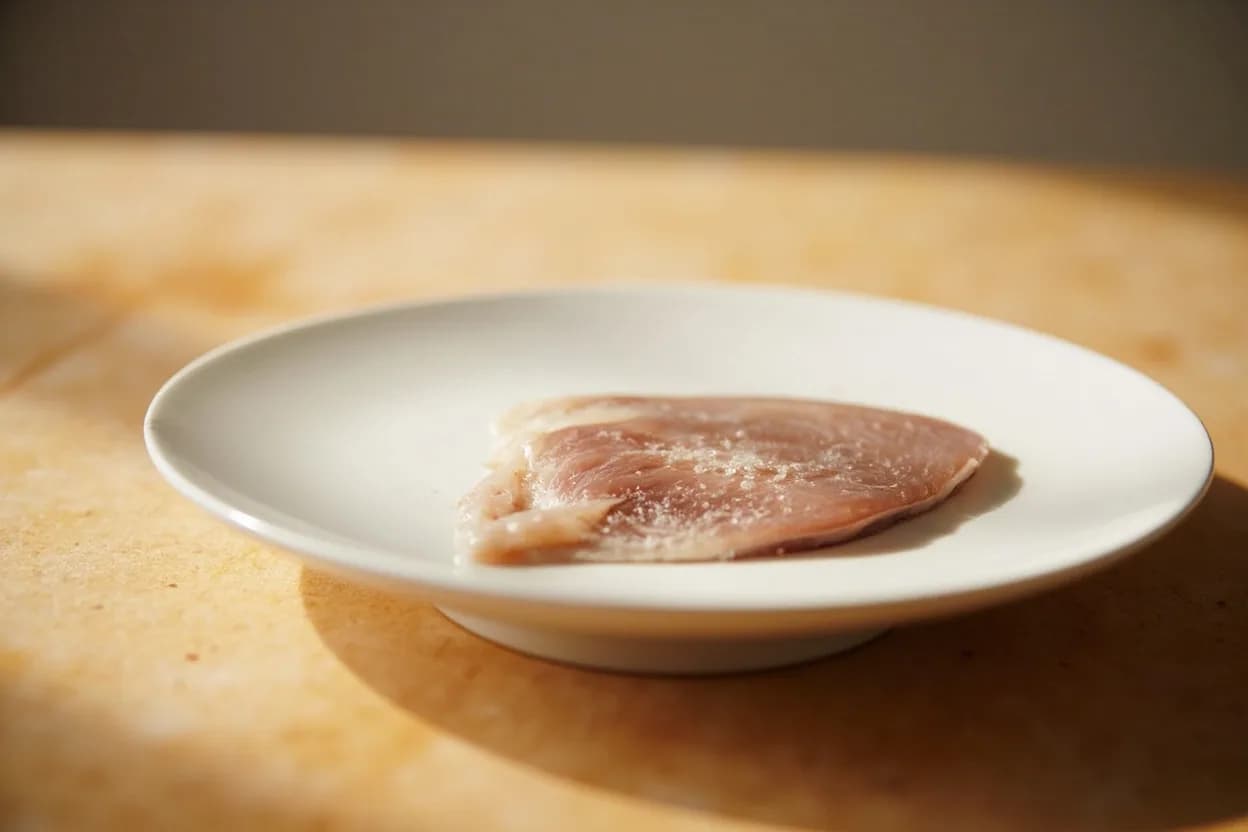
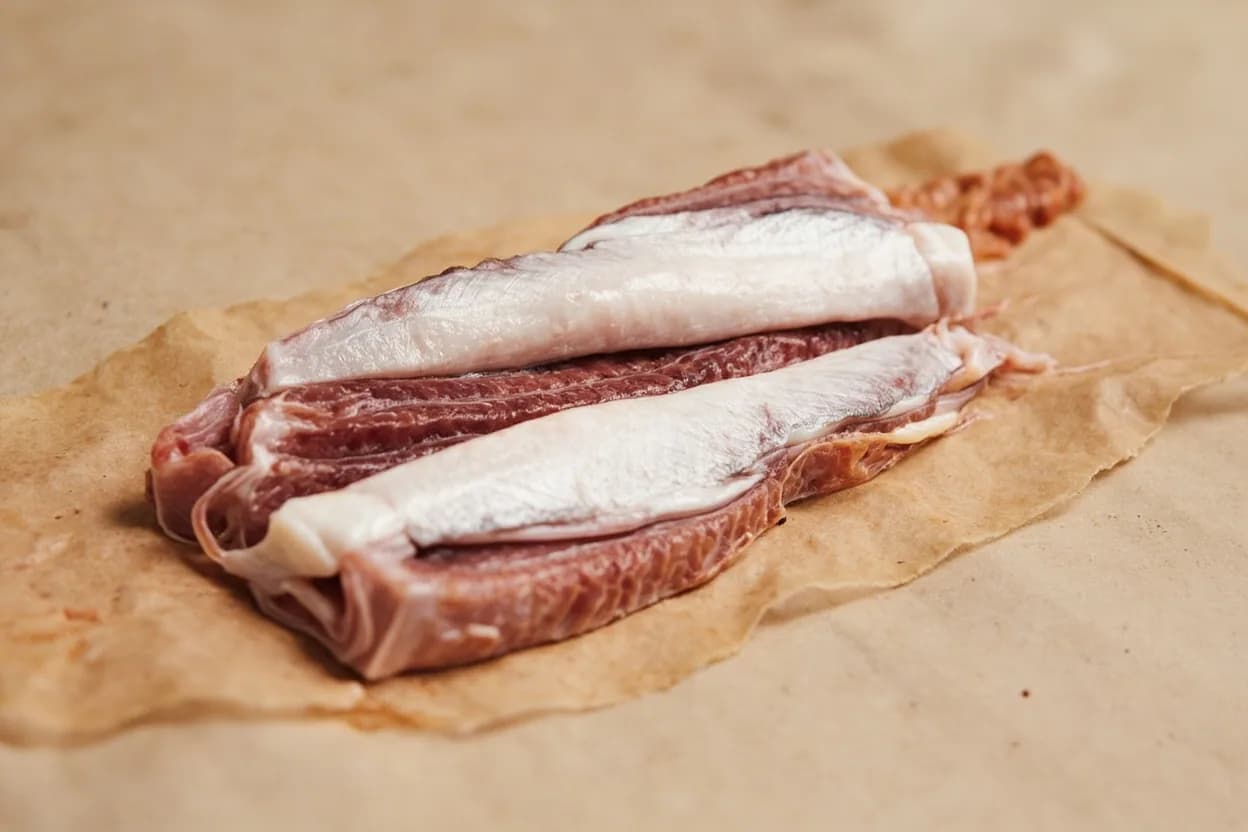
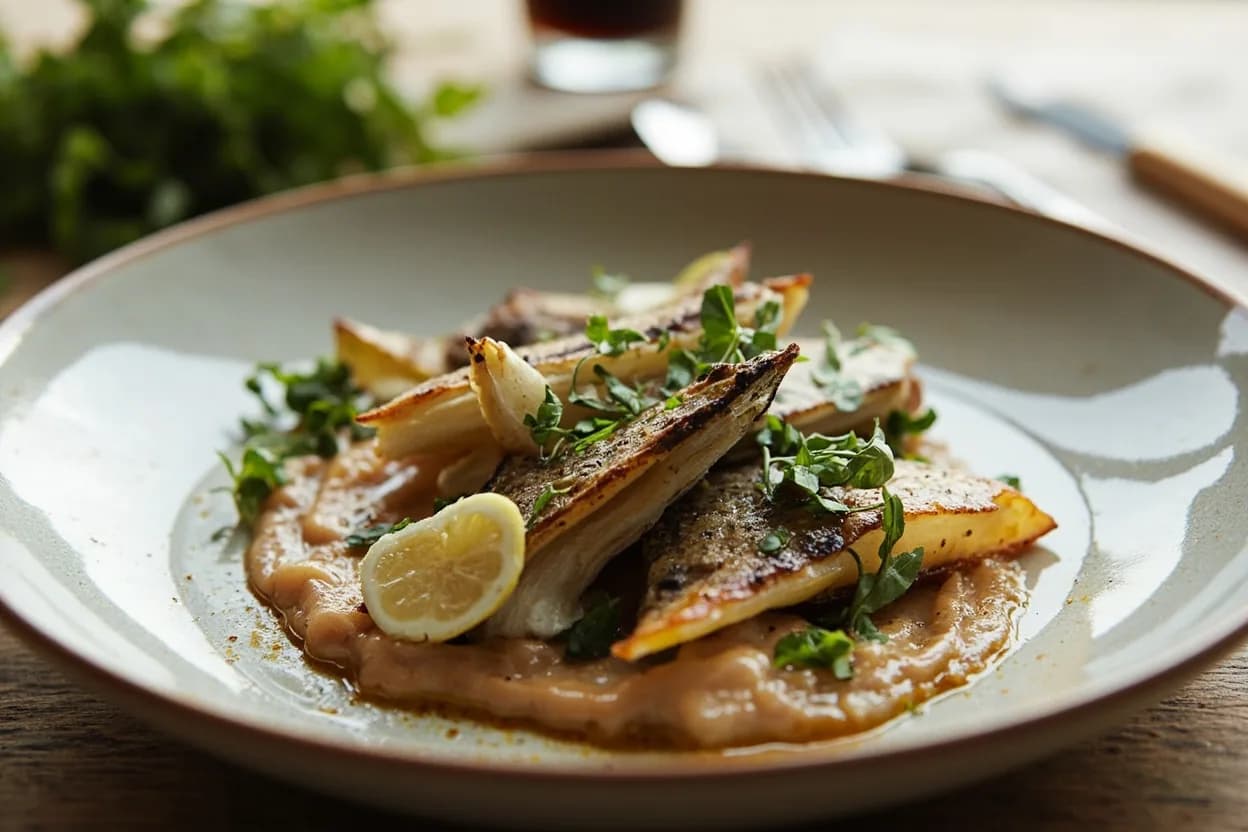
The butterfly fillet technique for small round fish (herring, sardine, mackerel, sprat, anchovies) involves splitting the fish along its ventral (belly) surface, then pressing the two fillets flat while running the thumb along the backbone to detach it from the flesh. The spine and rib cage are lifted out in one piece, leaving both fillets joined at the dorsal skin — a single symmetrical 'butterfly' that maximises flesh yield, reduces fiddly pinboning, and presents attractively on the plate. It is the foundational prep for rollmops, gravlax-style herring, grilled sardines à l'huile, and Catalan arengada.
In photos
Where it comes from
Applied to small-to-medium round oily fish: European herring (Clupea harengus), Atlantic sardine / pilchard (Sardina pilchardus), Pacific sardine, mackerel (Scomber scombrus), rainbow smelt, sprat, and fresh anchovies (Engraulis encrasicolus). The technique exploits the anatomy of these fish — a relatively straight backbone with small, detachable ribs — making belly-entry easier than in larger round fish.
Best for
How to cook it
- 1Scale the fish if needed (sardines need scaling; herring scales detach easily under running water). Remove the head by cutting just behind the pectoral fin — or leave head-on for presentation.
- 2Hold the fish belly-up and slit along the entire length of the belly with the tip of a filleting knife, cutting just deep enough to open the cavity without piercing the dorsal skin.
- 3Clean out the viscera; rinse the cavity under cold water and pat dry.
- 4Open the fish like a book, flesh side up on the board. Press down firmly along the dorsal skin with the heel of your hand to flatten and loosen the backbone.
- 5Starting at the head end (or tail if head-off), slide your thumb under the exposed backbone and peel it away from the flesh in a single motion; the rib bones come with it. Snip the backbone at the tail if it resists tearing.
- 6Use tweezers to remove any remaining pin bones along the lateral line.
- 7The butterfly is now ready: cure (salt and vinegar for rollmops; dry-brine for gravlax-style), grill flat (score the skin first at 1 cm intervals), or marinate as needed.
Prep & butchery
- Work with very fresh fish — oily species deteriorate rapidly and stale fish will tear during butterflying.
- Keep the fish cold (on ice or in the refrigerator) until the moment of preparation.
- The belly-entry cut should reach only the spine, not pierce the dorsal skin; that dorsal skin hinge is what keeps the butterfly in one piece.
- For rollmop preparation: after butterflying, cure in a dry salt-and-sugar brine for 30 minutes, rinse, then roll with gherkin or onion and secure with a toothpick before submerging in spiced vinegar.
- Score the skin at 1 cm intervals at 45 degrees before grilling to prevent curling and allow heat to penetrate.
Substitutes
- Mackerel (butterfly method)
Slightly larger; same technique, proportionally thicker flesh — cook 1–2 minutes longer
- Rainbow smelt (butterfly method)
Much smaller; delicate skin — press backbone out very gently to avoid tearing
- Sprat (butterfly method)
Tiny; only practical for frying en masse; backbone often eatable when fried crisp
Related cuts
Larger-fish version of the same dorsal-skin-intact deboning concept
- Herring fillet (conventional)
Two separate fillets cut from the same fish — the alternative to butterflying
- Sardine fillet
Separated fillet; used for boquerones, conservas, and anchovy paste
Appears in
References
- 1.Fish & Shellfish — James Peterson (1996)
- 2.The River Cottage Fish Book — Hugh Fearnley-Whittingstall & Nick Fisher (2012)
- 3.Charcuterie: The Craft of Salting, Smoking and Curing — Michael Ruhlman & Brian Polcyn (2005)
- 4.Modernist Cuisine: The Art and Science of Cooking — Myhrvold et al. (2011)
Confidence: high
Notes
Head-on vs head-off
In Portugal, Spain, and Greece, sardines and small mackerel are almost always butterflied and grilled head-on — the head is considered part of the presentation and the collar flesh is prized. In Northern European preparations (rollmops, Scandinavian cures) the head is removed first. Head-off also makes the belly cut and cavity-clean slightly easier for the uninitiated.
Curing after butterflying
A butterfly fillet has roughly 2–3× more flesh surface exposed than a conventional fillet, so cure times must be shortened accordingly. A herring needing 2 hours in salt as a round fillet will be over-cured in 40 minutes as a butterfly. Taste-test and trust the texture of the flesh over the clock.