Fish — Fabrication & Breakdown
Whole Fish — Backbone Removal for Grilling (Spatchcock Fish)
Also: spatchcocked fish, butterflied whole fish, boned-out whole fish for grilling, fish opened flat
A whole fish deboned through the belly or back while the two sides remain joined at the skin, laid flat for even, fast grilling over charcoal or in a plancha.
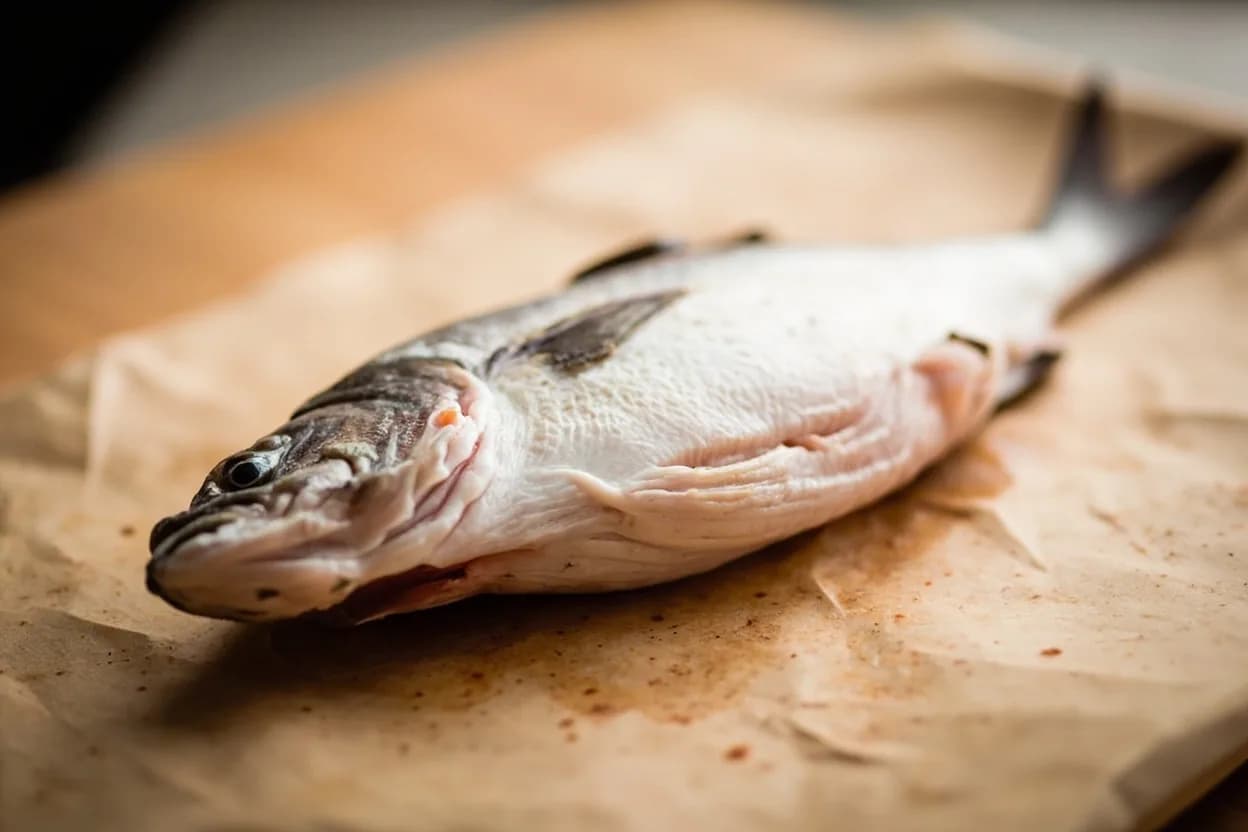
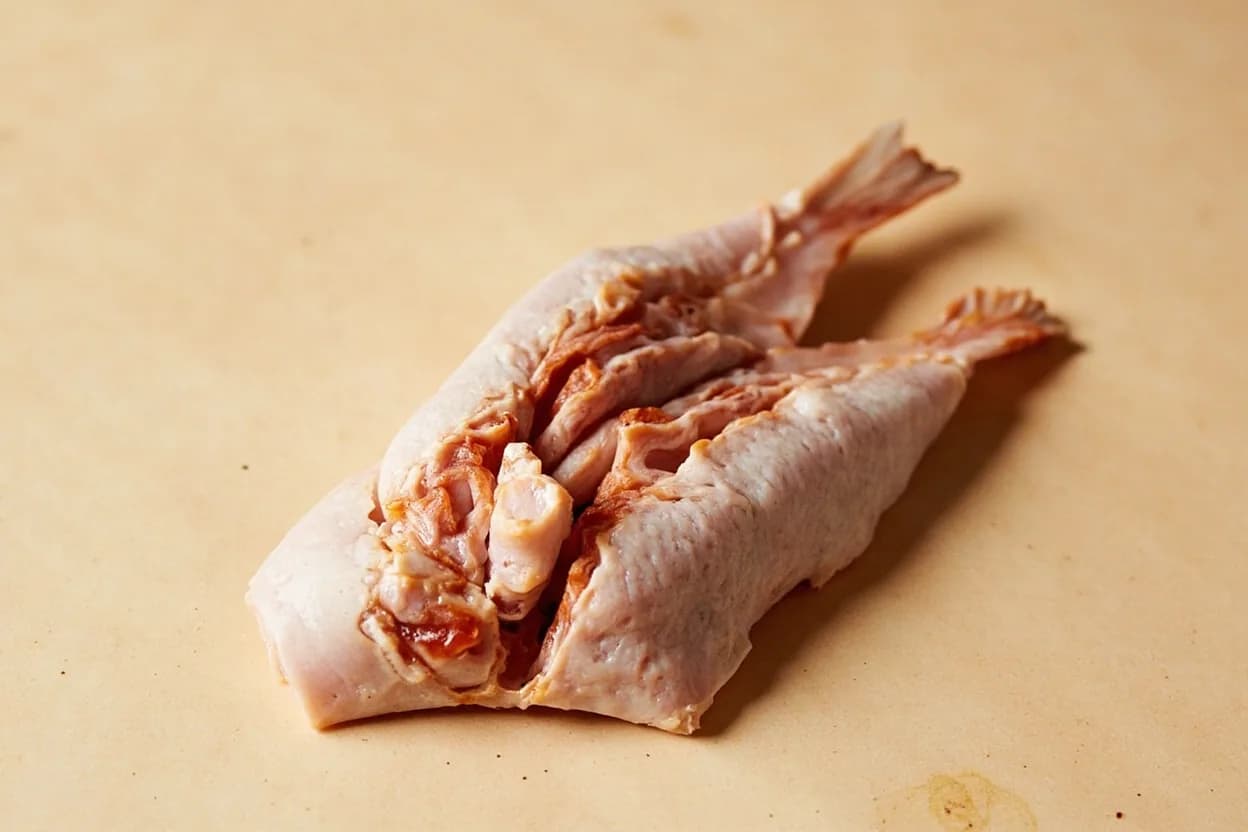
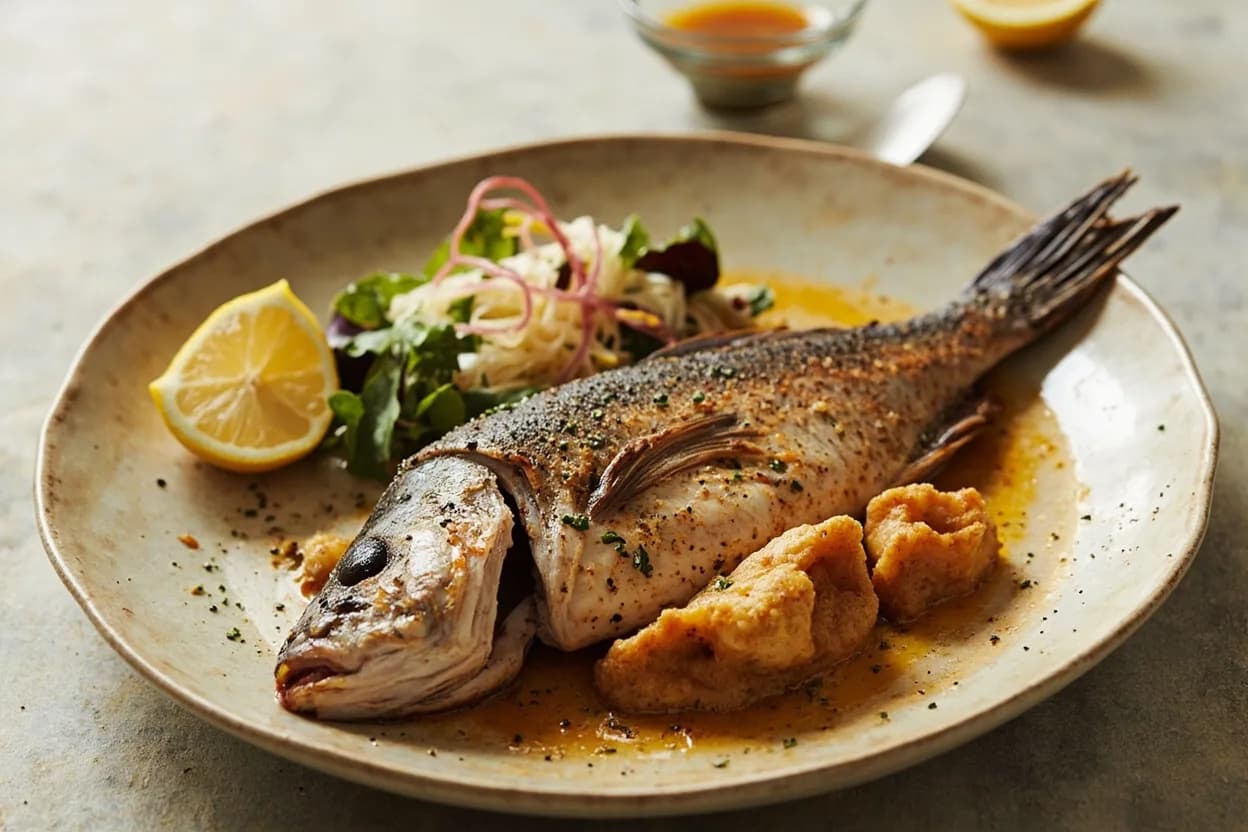
Spatchcocking a fish — by analogy with the poultry technique — means removing the backbone (and sometimes rib cage) while leaving both sides of the fish attached at the dorsal or ventral skin, so the whole fish can lie completely flat on the grill. This dramatically increases contact area with the heat source, halves cooking time compared to a whole round fish, and solves the chronic problem of the fish curling away from the grill. It is distinct from the small-fish butterfly fillet technique (herring/sardine) in scale and in the entry point: for a medium-to-large fish the approach differs by tradition — through the belly (Persian and Latin American schools) or through the back (some Japanese and Levantine methods).
In photos
Where it comes from
Applied to medium-to-large round fish: sea bass (Dicentrarchus labrax), red snapper, branzino, sea bream (Sparus aurata), tilapia, whole trout, striped bass, gilt-head bream, and larger sardine or mackerel. The fish must have a distinct lateral muscle mass on each side of a separable backbone.
Best for
How to cook it
- 1Scale the fish and remove gills; leave the head and tail on.
- 2BELLY METHOD (Persian / Latin American): Make a deep incision along the entire length of the belly. Spread the two sides open; reach in and cut along both sides of the backbone with scissors or the tip of a boning knife; snip the backbone at the tail and the head junction, then lift it out in one piece. The fish now opens like a book.
- 3BACK METHOD (Japanese / Levantine alternative): Insert the knife along the dorsal side of the backbone and cut the flesh away on one side, then repeat on the other, without cutting through the belly skin — similar to butterflying from the top.
- 4Pat the opened fish thoroughly dry; score the flesh on each side with 3–4 diagonal slashes about 1 cm deep (prevents curling at the edges and promotes even cooking).
- 5Rub with oil, salt, and the marinade or spice paste appropriate to the preparation — advieh, chermoula, achiote, or simply olive oil, garlic, and lemon.
- 6Rest flesh-side down on a hot, oiled grill for 5–7 minutes (for a 600 g fish) until the flesh releases naturally; turn and cook skin-side for 3–4 minutes. The fish is done when the thickest part of the flesh flakes cleanly from the pin bones (internal 60–63 °C).
Prep & butchery
- Keep the fish on ice until immediately before butterflying; cold flesh is firmer and easier to debone cleanly.
- Use sturdy kitchen scissors alongside the boning knife — for snipping the backbone at the head and tail ends nothing is better.
- Remove all rib cage bones after the backbone: grip each rib with a finger and thumb and pull towards the head end along the line they grew.
- Dry the opened fish in the refrigerator, uncovered, for 30–60 minutes before grilling if possible — dry skin is the key to non-stick crisp results.
- Oil the grill grates generously and pre-heat until smoking before placing the fish.
Substitutes
- Whole trout (butterfly-filleted)
Smaller; 3–4 min per side suffices; excellent for the belly-entry method
- Whole red snapper
Thicker bone structure — use kitchen scissors to cut the backbone free; needs 8–10 min per side
- Tilapia, butterflied
Widely available and inexpensive; firm white flesh holds together on the grill well
Related cuts
The small-fish analogue — same concept at a fraction of the scale
Related whole-fish technique that cuts for heat penetration rather than flat cooking
Individual portioned fillet — what spatchcock fillets can be broken into post-cooking for plating
Appears in
References
- 1.The Professional Chef, 9th ed. — The Culinary Institute of America (2011)
- 2.Fish & Shellfish — James Peterson (1996)
- 3.Zaitoun: Recipes from the Palestinian Kitchen — Yasmin Khan (2018)
- 4.Plenty More — Yotam Ottolenghi (2014)
- 5.My Iran: Six Families, One Country — Claudia Roden cited in The Food of Iran — Shirin Simmons (2000)
Confidence: high
Notes
Persian New Year tradition
In Iran, Nowruz (Persian New Year) dinner centres on mahi (fish) grilled over wood or charcoal. The fish — typically Caspian kutum or local white fish — is butterflied through the belly, stuffed with a herb paste of garlic, fresh coriander, fenugreek, and dried sour plum (aloo), then grilled flat. The technique is ancient and unchanged; the flat configuration ensures the herb-stuffed cavity chars slightly at the edges while the thick dorsal flesh stays succulent.
Belly vs back entry
The belly entry is faster and leaves the dorsal skin fully intact — important when you want the fish to hold together when turned. Back entry preserves the belly presentation (useful for market display) but is more technically demanding. For a first attempt, belly entry is recommended.