Fish — Fabrication & Breakdown
Whole Fish Breakdown — Tilapia & Catfish (West African)
Also: West African fish prep, tilapia breakdown, catfish portioning, pepper soup fish prep
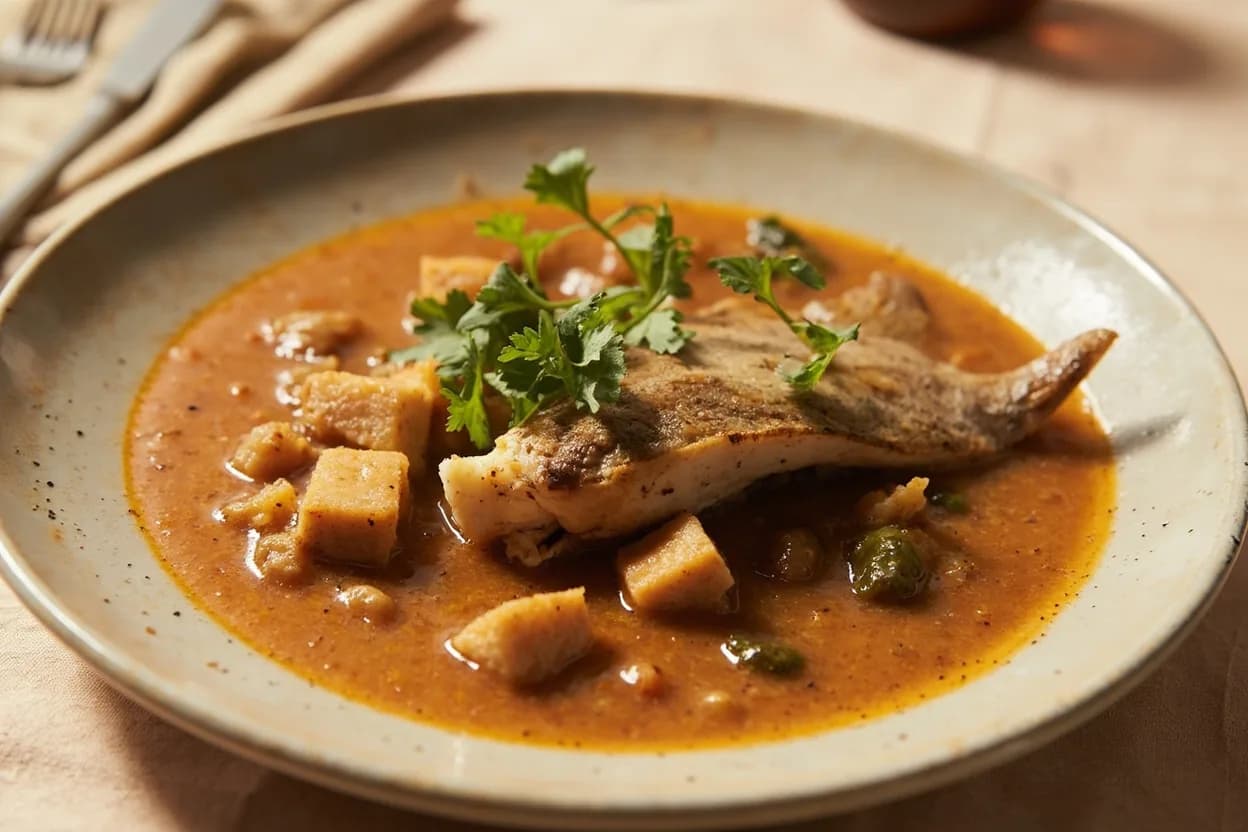
The West African method of scaling, gutting, scoring, and portioning tilapia and catfish for pepper soup, stews, and grilled preparations.
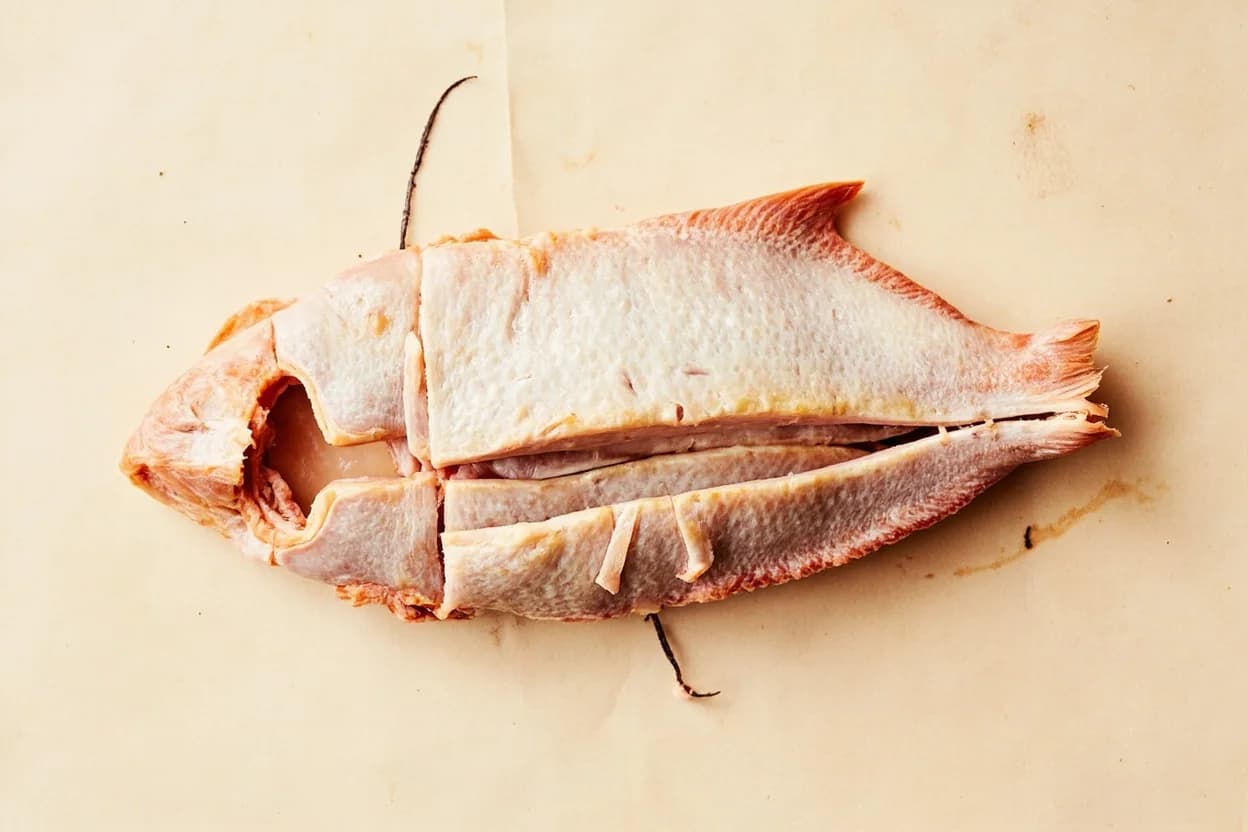
In West African kitchens — from Nigeria's pepper soup joints to Ghana's chop bars — tilapia and catfish are almost always sold and cooked whole, and broken down by the cook at home or at market. The technique is distinct from European filleting: fish are scored rather than filleted, portioned through the bone, and often cooked bone-in to enrich broth. The breakdown encompasses scaling, gutting, gall-bladder removal, head retention, cross-cutting into steaks, and the critical step of deep-scoring the flesh to allow marinade and heat penetration.
In photos

Where it comes from
Nile tilapia (Oreochromis niloticus) and African catfish (Clarias gariepinus) are the two workhorses; both are farmed and wild-caught across sub-Saharan Africa. Tilapia has a firm white fillet on a relatively flat, wide body; catfish is eel-like, scaleless, with a thick skin and dense, dark flesh.
Best for
How to cook it
- 1Scaling tilapia: hold the fish by the tail and scrape from tail to head with the back of a knife or fish scaler; scale under cold running water to contain mess. Catfish has no scales — skip directly to cleaning the skin.
- 2Catfish skin prep: rub the fish vigorously with coarse salt or wood ash and rinse; this strips the mucus layer. Some cooks use boiling water (brief pour-over) to firm the skin before cutting.
- 3Gutting: insert the tip of a knife at the anal vent and cut up the belly to the base of the gills. Remove viscera in one pull; locate and excise the dark-green gall bladder without rupturing it.
- 4Gill removal: reach inside the head behind the gill plate and tear out the gill arches; they are bitter if left in. Rinse the cavity thoroughly.
- 5Portioning into steaks: lay the fish flat and cut straight through the spine with a heavy knife or cleaver in 4–6 cm cross-sections. For pepper soup, pieces remain large and bone-in. For frying, smaller steaks (3 cm) allow better crust development.
- 6Scoring: make 3–4 diagonal cuts on each side of every steak or on the whole fish, cutting down to the bone. This allows marinade (salt, ata-rodo, seasoning cubes, uziza) to penetrate and ensures the thickest part cooks through at the same rate as the edges.
- 7Season immediately after scoring and allow to marinate at room temperature for 20–30 minutes minimum before cooking.
Prep & butchery
- Always gut and gill the fish immediately after purchase if not cooking same day; ungutted fish deteriorates rapidly.
- For pepper soup, do not remove the skin — it adds body and its gelatin enriches the broth.
- If frying whole tilapia, dry the scored fish thoroughly with paper towels before introducing to hot oil to prevent dangerous spatter.
- Catfish can be portioned live in some West African markets; if buying live, dispatch quickly with a sharp blow to the head before gutting.
Substitutes
- Red snapper (whole)
A premium substitute with similar bone structure; works in all the same applications.
- Bream / sea bream
Comparable body shape to tilapia; appropriate for grilled or stewed preparations.
- Carp
Dense flesh and bony structure; excellent for brothy soups but requires confident bone navigation.
Related cuts
Related breakdown step focusing on the pectoral collar, popular in East African grilled fish traditions.
- Fish steak / cross-cut
The bone-in transverse portion produced by this West African breakdown method.
- Whole fish breakdown — European
Contrasting approach that typically removes fillets and discards carcass rather than cooking bone-in.
Appears in
References
- 1.The Soul of a New Cuisine — Marcus Samuelsson (2006)
- 2.Zoe's Ghana Kitchen — Zoe Adjonyoh (2017)
- 3.The Groundnut Cookbook — Duval Timothy, Jacob Fodio Todd & Folayemi Brown (2015)
- 4.My Afritada Kitchen — Ngo Thi Huong Lan (field reference for comparative bone-in portioning)
- 5.Nigerian cookbook traditions documented in 'The Complete Nigerian Cookbook' — Chief Mrs. T.A. Odunfa (1982)
Confidence: high
Notes
Bone-in cooking as flavor doctrine
West African fish cookery is built around the premise that bones are an asset, not a nuisance. The spine, ribs, and head of tilapia and catfish release gelatin, calcium-rich minerals, and marrow-adjacent flavor compounds during long simmering that no boneless fillet can replicate. Pepper soup cooked with boneless fish is considered flat and incomplete by most West African cooks.
The gall bladder rule
Catfish gall bladders are large relative to body size and intensely bitter. A burst gall bladder can render an entire pot of pepper soup unpalatable. The remedy is swift, confident excision with scissors or the knife tip — cut close around it rather than trying to tear it free. If bitterness is detected after cooking, there is no correction; the pot must be discarded.