Charcuterie & Cured Meat Cuts
Whole Fish Butterfly Cut for Pescado a la Talla
Also: mariposa cut, abierto en mariposa, spatchcocked fish, belly-slit butterflied fish
A whole fish split open through the belly and flattened like a book, head intact, for high-heat grilling over coals.
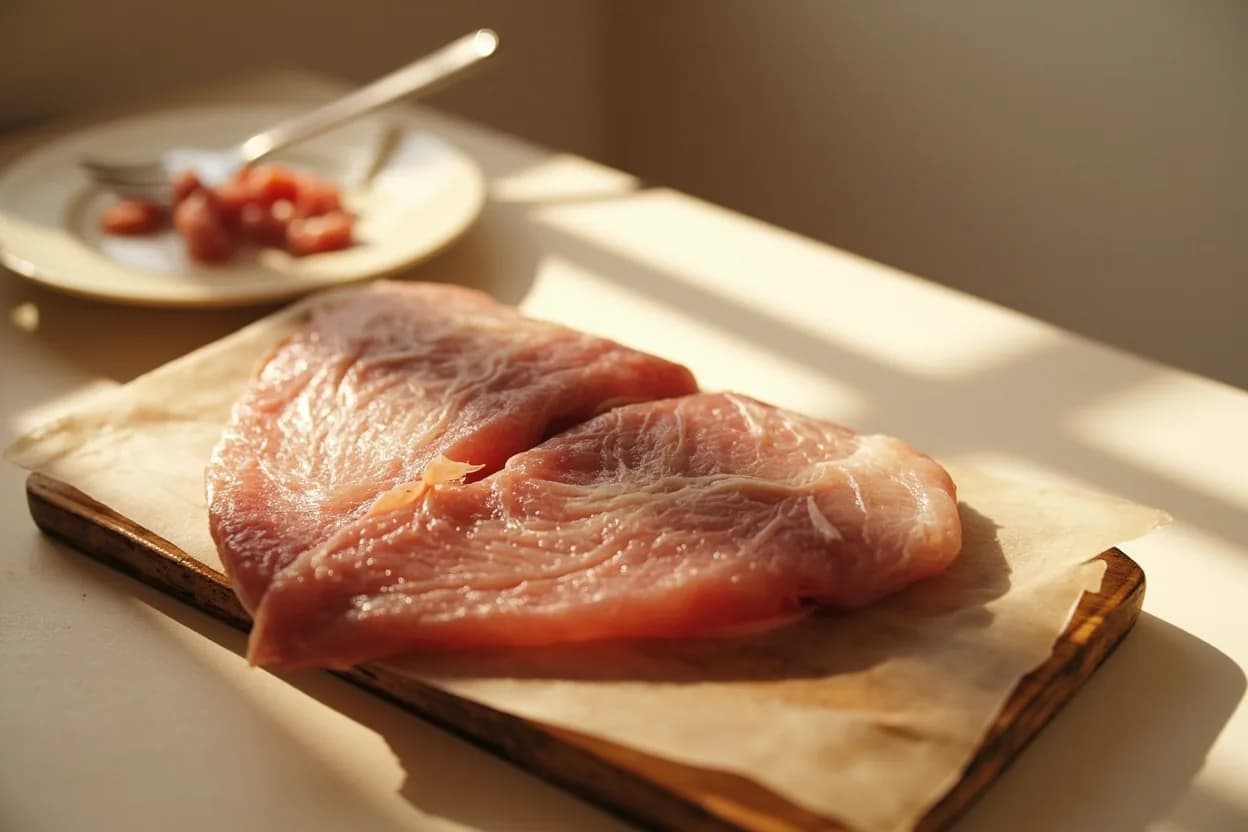
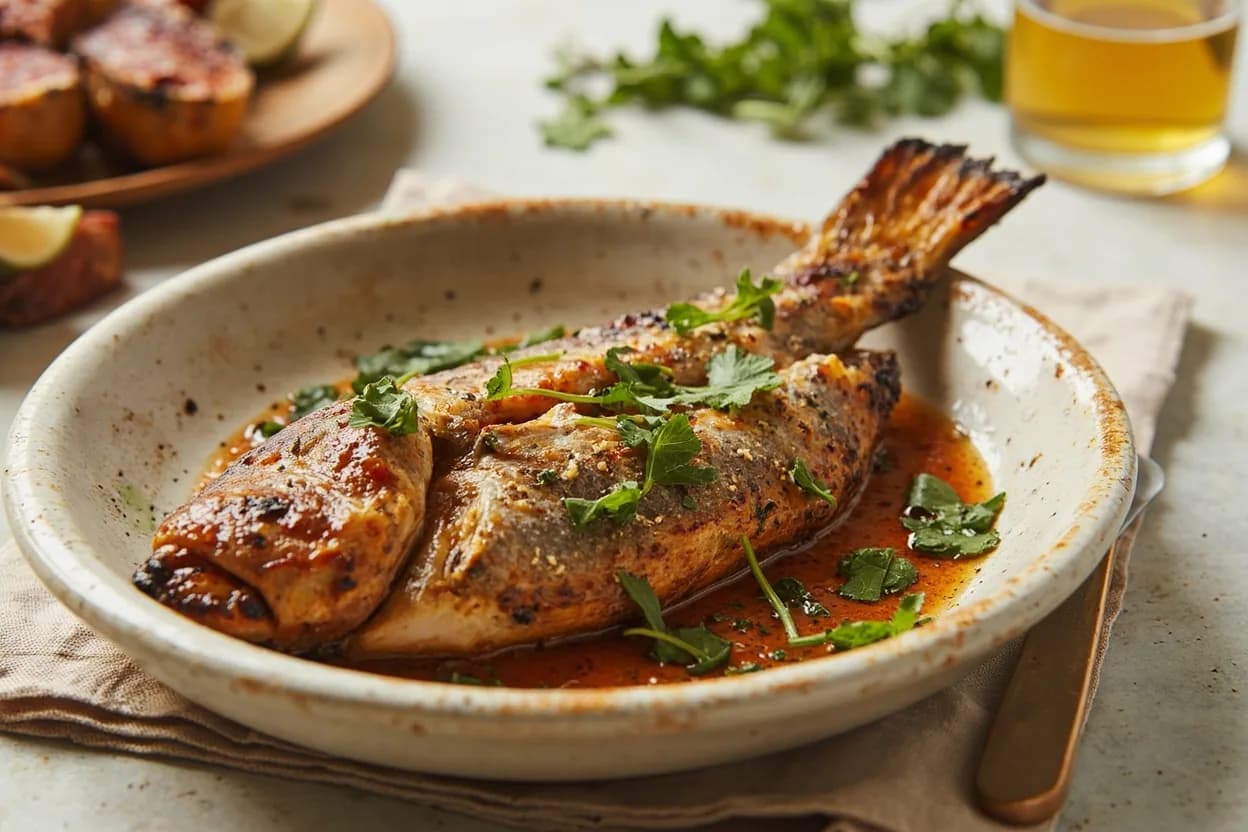
The butterfly cut for pescado a la talla opens a whole fish — classically a red snapper (huachinango) or sea bass (robalo) — through the ventral cavity from tail to just behind the gills, then presses the halves flat so the fish lies open like a splayed book. The spine remains attached, anchoring both fillets. The head is left on, as it signals freshness and is considered the prize for the cook.
In photos

Where it comes from
Applied to a whole round fish (5–8 lb / 2.3–3.6 kg). The incision runs along the belly cavity already opened during gutting, extended toward the tail; the fish is then pressed open and the backbone may optionally be scored but is not removed. Ribs are left in to hold structure on the grill.
Best for
How to cook it
- 1Scale and gut the fish; rinse and dry thoroughly.
- 2Lay the fish belly-up. Starting at the tail, run the knife along the inside of the belly cavity, cutting through the rib cartilage on one side all the way to just behind the gills.
- 3Open the fish flat, pressing firmly on the spine to crack it slightly and let the fish lie completely level.
- 4Score the flesh diagonally at 3–4 cm intervals on both fillets without cutting to the skin; this lets the adobo penetrate and prevents curling.
- 5Apply the adobo — typically a paste of dried chiles (ancho, guajillo), achiote, garlic, oregano, citrus juice, and salt — generously over all exposed flesh. Marinate 30 minutes to 2 hours.
- 6Oil the grill grate well and heat to high (mesquite ideal). Place fish flesh-side down first for 4–5 minutes to char lightly and set the marinade.
- 7Flip skin-side down; cook 8–12 minutes more (depending on thickness) until skin is crisp and flesh flakes easily at the thickest point near the spine.
- 8Serve immediately with charred scallions, lime wedges, tostadas, and additional salsa.
Prep & butchery
- A thin flexible boning knife or a stiff fillet knife both work; the key is getting through the rib joints without mangling the flesh.
- If butterflying a fish with pin bones (e.g., striped bass), tweeze them from the fillets before marinating.
- Dry the skin extremely well — moisture on skin causes sticking and steaming instead of crisping.
- If the fish is large (over 4 lb), a second score pass perpendicular to the first creates a crosshatch that speeds heat penetration.
Substitutes
- Whole snapper spatchcocked over the back
Some cooks cut through the dorsal side instead; results are comparable but the belly-cut is traditional for talla style.
- Spatchcocked branzino
Smaller fish (1–1.5 lb) work well for individual portions; reduce grill time to 6–8 minutes total.
- Butterflied whole trout
Freshwater alternative; flesh is more delicate — use a fish basket and reduce direct-heat exposure.
Related cuts
- Spatchcocked chicken
Same flatten-for-even-cooking logic applied to poultry; the term 'spatchcock' is the English equivalent of mariposa.
- Kited herring
Traditional British butterflied herring, split through the back; related open-book format.
- Butterflied whole sea bream (dorade)
Mediterranean equivalent prepared the same way for grilling over wood.
Appears in
References
- 1.Bayless, Rick — Mexico: One Plate at a Time (Scribner, 2000)
- 2.Stupak, Alex & Goode, Jordana — Tacos: Recipes and Provocations (Clarkson Potter, 2015)
- 3.Kennedy, Diana — The Art of Mexican Cooking (Bantam, 1989)
- 4.Muñoz Zurita, Ricardo — Larousse de la Cocina Mexicana (Larousse, 2012)
Confidence: high
Notes
Regional origin
Pescado a la talla is most closely associated with the port of Zihuatanejo and the Guerrero coast of Mexico, where it is grilled over glowing mesquite in open-air seafood comedores steps from the water. The reddish achiote-chile adobo is the defining marinade, not the cut itself, but the butterfly presentation is inseparable from the dish's identity — it maximizes marinade contact and produces the signature charred-edged, flat appearance.
Head-on etiquette
Leaving the head on is non-negotiable in the traditional preparation. The cheeks, collar, and eyeballs are considered delicacies. Removing the head before cooking is regarded as wasteful and signals an unfamiliar cook. The head also physically anchors the butterfly during grilling, preventing the halves from folding back together over the grate.