Lamb & Goat — Primal & Subprimal
Champ (Rack of Lamb Rib Cutlets)
Also: chop, cutlet, lamb champ, chaamp, chaap
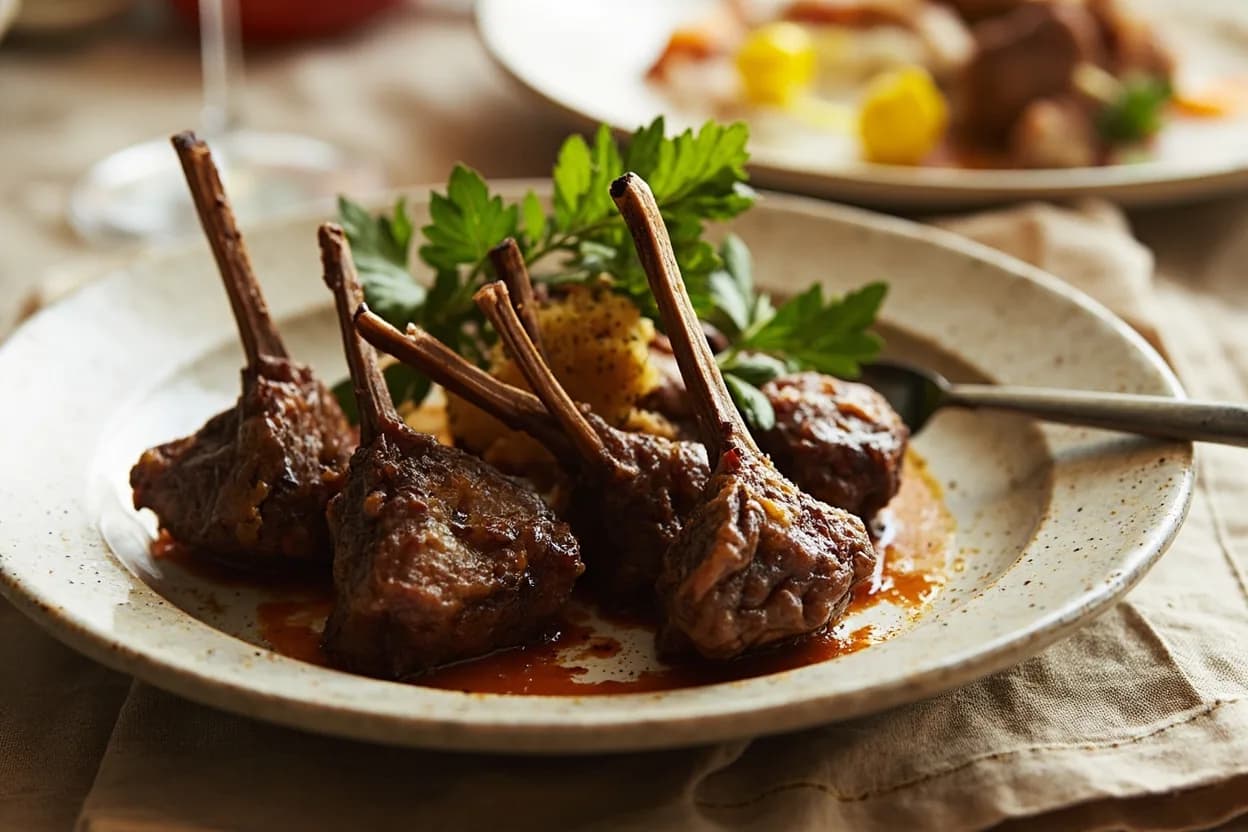
Individual frenched lamb rib cutlets — the signature cut for tandoor and griddle in South Asian cooking.
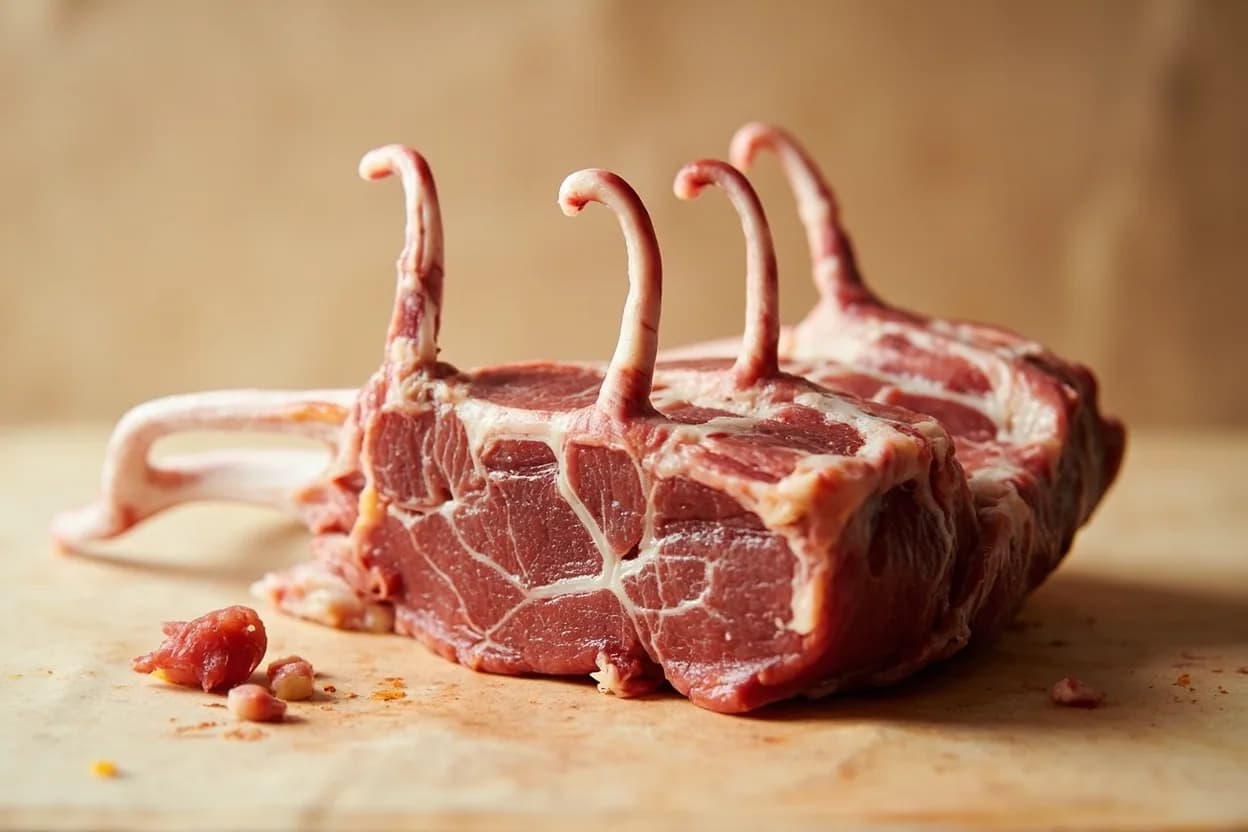
Champ (from Hindi-Urdu 'chaamp') refers to individual lamb rib cutlets taken from the rack, each consisting of a single rib bone attached to a portion of the longissimus dorsi (eye of loin) and intercostal meat. The bone is typically frenched — scraped clean of meat and membrane — exposing 6–8 cm of handle, while the eye meat at the base is left intact.
In photos

Where it comes from
Rib section of the lamb carcass, ribs 6–12. The rack (carré d'agneau in French) is split into individual cutlets, each bearing one rib bone and approximately 60–90 g of loin muscle. In South Asian halal butchery, the whole rack is often sold unseparated (a 'rack') or pre-cut into single champs.
Best for
How to cook it
- 1Marinate for at least 4 hours (overnight preferred) in a paste of yogurt, raw papaya or pineapple enzyme, ginger-garlic, red chilli, garam masala, and a neutral oil — the enzyme tenderises the muscle fibre while yogurt conducts char.
- 2Allow the champs to come to room temperature before cooking; cold meat entering a hot tandoor seizes and cooks unevenly.
- 3In a tandoor, hang or skewer the champs and cook at 380–420 °C for 5–7 minutes, rotating once, until the exterior is charred and the interior reads 63 °C for medium-rare.
- 4On a charcoal grill, cook over direct high heat 3–4 minutes per side, resting the bone away from coals to avoid burning the handle.
- 5On a tawa (flat griddle), heat until smoking, add a film of ghee, and press each champ flat; cook 3 minutes per side, finishing with a squeeze of lemon and chaat masala.
- 6Rest 2–3 minutes before serving — the residual heat in the bone continues cooking the eye meat.
Prep & butchery
- French the rib bones by scoring around the bone 4–5 cm from the tip, then scraping downward with the back of a knife to remove membrane and meat — this prevents burning in the tandoor.
- Score the eye meat in a crosshatch pattern to allow marinade penetration without cutting all the way through.
- Remove the chine bone (backbone) if purchasing a whole rack before separating into individual champs; a cleaver or band saw is needed.
- Pat completely dry before applying marinade — residual moisture inhibits the Maillard reaction.
Substitutes
- Lamb loin chop
Similar tenderness and size; lacks the long frenched bone handle but flavour profile is comparable.
- Goat rib cutlet
Smaller and slightly tougher; requires longer marinade time but works well in the same preparations.
- Lamb shoulder chop
Less tender but more flavourful; better suited to longer marination and slower heat.
Related cuts
- Rack of lamb
The whole uncut primal from which champs are separated.
- Lamb loin chop
From the adjacent loin section; similar cooking applications.
- French-trimmed cutlet
Western term for the same frenched rib cutlet preparation.
- Lamb noisette
The boned, rolled loin — related in tenderness but different presentation.
Appears in
References
- 1.The Complete Indian Regional Cookbook — Mridula Baljekar
- 2.Prashad: Cooking with Indian Masters — J. Inder Singh Kalra
- 3.On Food and Cooking — Harold McGee
- 4.The River Cottage Meat Book — Hugh Fearnley-Whittingstall
Confidence: high
Notes
The papaya marinade secret
Raw green papaya contains papain, a cysteine protease that cleaves myosin heavy chains — the same proteins responsible for toughness in muscle fibre. South Asian tandoor cooks apply a paste of raw papaya (or kachri powder, made from a dried wild melon) as the first layer of marinade, leaving it on for 30–60 minutes before applying the spice-yogurt coat. The result is a tenderness that mimics dry-aged beef without any aging.
Halal butchery presentation
In South Asian halal butcher shops (qasai), champs are typically sold pre-separated and partially frenched, stacked in a tray. The cut often includes a thin flap of flank meat left attached at the base — in restaurant kitchens this is removed for a clean presentation, but home cooks prize it as it crisps beautifully on a tawa.