Pork — Primal & Subprimal
Chamorro (Pork Hock) Preparation
Also: pork hock, jarrete de cerdo, pata, codillo, ham hock
The lower leg of the pig, scored through its thick skin and braised or fried to yield fall-apart meat and crackling.
The chamorro is the section of the pork leg below the knee joint — the hock — comprising shank meat, dense connective tissue, and a thick hide. In Mexican and Filipino cooking the term specifically connotes a preparation mode as much as an anatomical cut: the whole hock is worked before cooking to maximize skin crispness and collagen extraction. The term 'chamorro' is most common in central Mexico (particularly Michoacán and Mexico City taquerías), while Filipino pork hock (pata) preparations follow closely parallel logic despite arriving through independent culinary traditions.
In photos
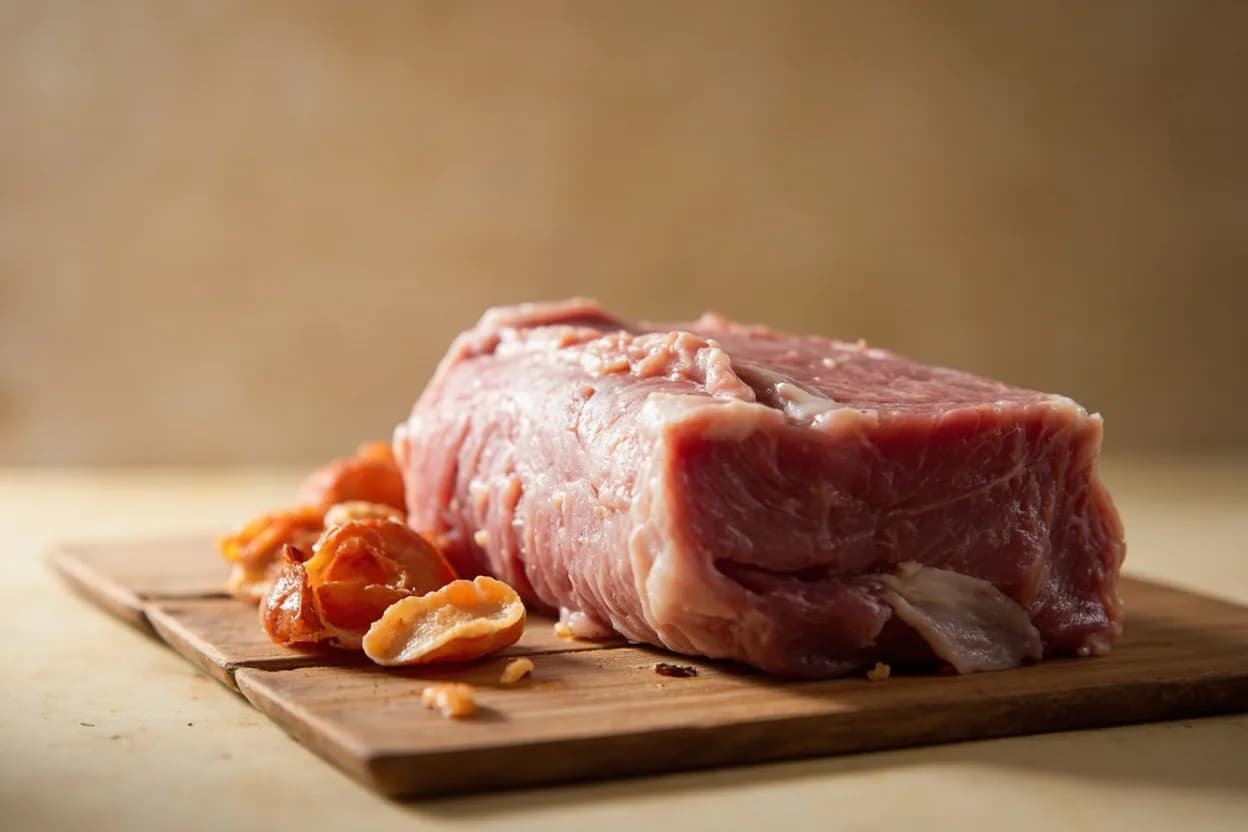
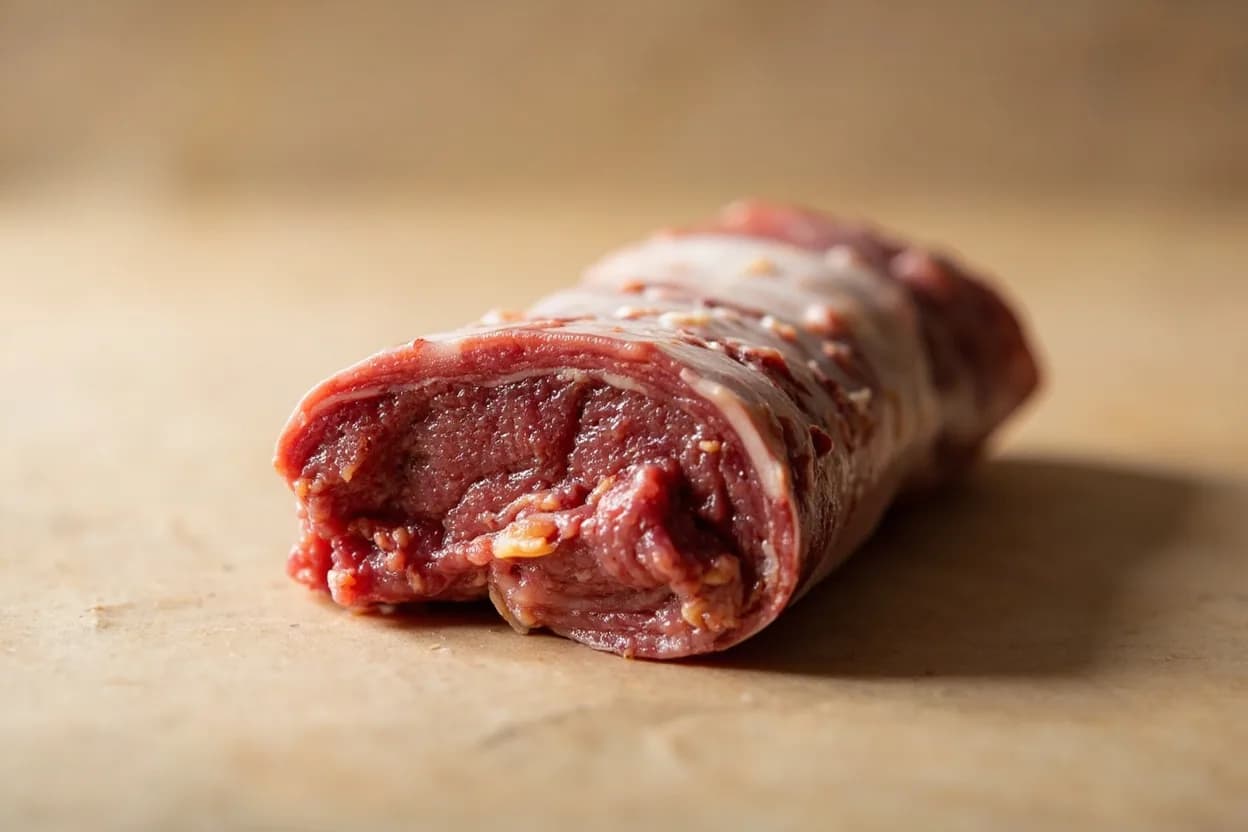
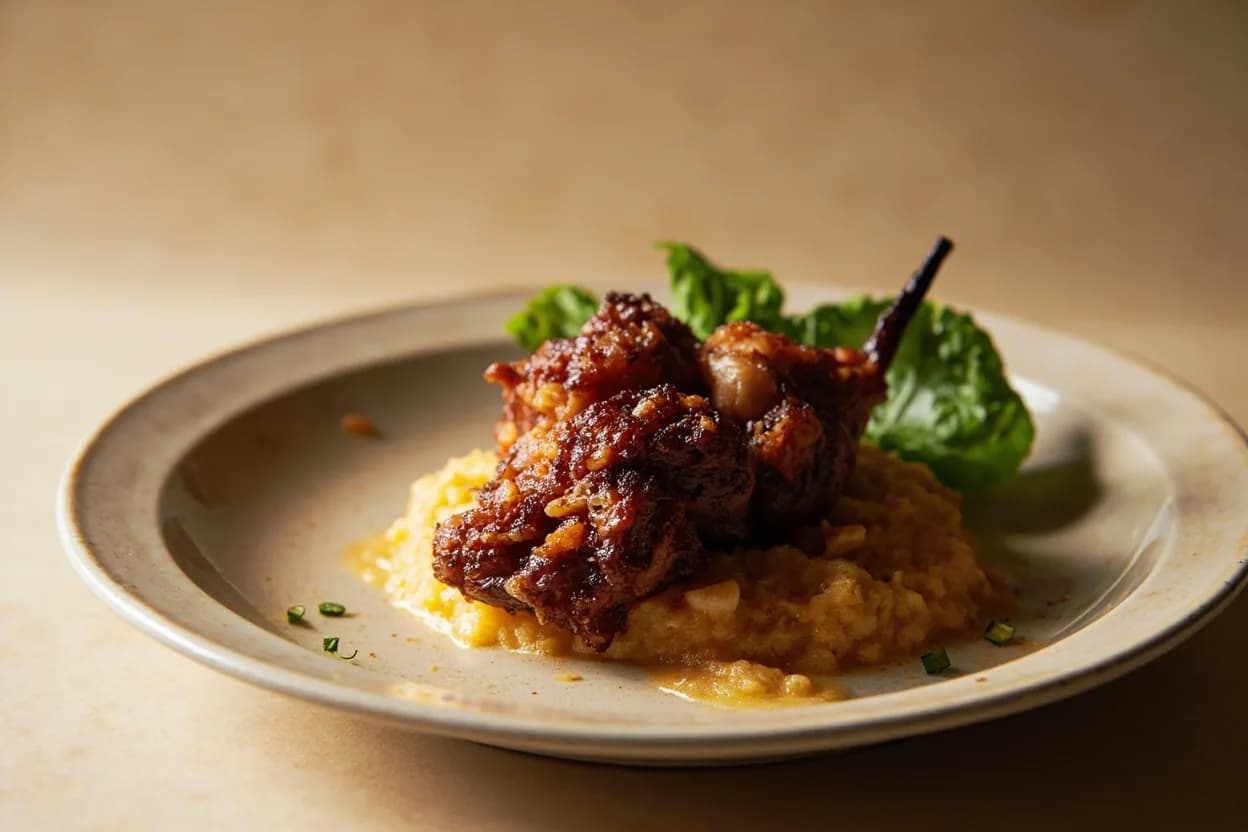
Where it comes from
Cut from the hind leg between the trotter (foot) and the ham (pernil/kasim). The hind hock is larger and meatier than the fore hock. Butchers typically separate it by sawing through the distal femur joint, leaving 15–20 cm of shank attached.
Best for
How to cook it
- 1Score the skin in a crosshatch or parallel pattern down to (but not through) the subcutaneous fat — cuts should be 1–2 cm apart. This prevents the skin from curling and seizing during cooking, allows seasoning to penetrate, and creates defined crackling panels.
- 2Separate the hock cleanly from the trotter at the ankle joint if still attached: bend the joint to expose the cartilage, then cut through with a boning knife. Do not saw through here — a clean cut preserves the foot for stock separately.
- 3For Mexican chamorro: marinate scored hock in adobo (chile guajillo, chile ancho, garlic, cumin, oregano, vinegar) for 4–12 hours. Braise covered in stock with the marinade at a gentle simmer 2–3 hours until the meat yields to a skewer. Pat skin completely dry, then deep-fry in lard or oil at 190°C for 8–12 minutes until skin blisters and crisps.
- 4For Filipino crispy pata: simmer the whole hock in water with garlic, onion, peppercorns, bay leaf, and soy sauce for 2.5–3 hours. Drain, air-dry uncovered in the refrigerator overnight. Deep-fry at 175°C for 12–15 minutes, raising to 190°C for the final 2 minutes to fully puff the skin. Serve with vinegar-soy dipping sauce.
- 5Rest 5 minutes before carving — the hock retains heat intensely and the juices need to redistribute.
Prep & butchery
- Score skin in a tight crosshatch with a sharp knife or box-cutter blade — score only to the fat, never through it, or the skin will tear away during frying
- Blanch in boiling water 5 minutes before braising to clean the hock, tighten the skin, and remove excess blood
- Dry thoroughly before frying — any surface moisture causes violent spattering and prevents crisping; overnight refrigerator drying is ideal
- Tie scored skin back to the shank with butcher's twine if crosshatching has loosened it, to maintain a compact shape during braising
Substitutes
- Pork shank (bone-in)
Similar collagen content; less skin surface area, so the crackled-skin effect is reduced
- Pork trotter
Even higher collagen and skin-to-meat ratio; fully gelatinous, no substantial muscle mass
Structurally analogous but leaner and with a distinct flavor; no skin-crisping potential
Related cuts
- Pork Trotter
The foot immediately below the hock; even higher in collagen and skin, minimal meat
- Ham / Pernil
The upper leg above the hock; larger muscle mass, less connective tissue, cooks faster
- Pork Shank
Overlapping term — in North American butchery, 'shank' often means the hock segment without the foot
Appears in
References
- 1.The Complete Meat Cookbook — Bruce Aidells & Denis Kelly
- 2.Pati's Mexican Table — Pati Jinich
- 3.The Adobo Road Cookbook — Marvin Gapultos
- 4.Mexico: The Cookbook — Margarita Carrillo Arronte
Confidence: high
Notes
Why score before braising, not after
A common error is to score the skin after the braise, just before frying. Scoring before braising serves three functions: it allows the seasoning brine or marinade to penetrate the subcutaneous fat; it prevents the skin from contracting unevenly during the moist-heat phase, which can pull the meat away from the bone; and it creates defined panels that separate cleanly during frying into individual crackling shards. Post-braise scoring on wet, softened skin is also more dangerous — the knife skips unpredictably on slick collagen.
Mexican vs. Filipino traditions
Mexican chamorro and Filipino pata share the braise-then-fry logic but diverge in seasoning and finish. Mexican preparations lean on dried chiles, cumin, and Mexican oregano in an acidic adobo; the final fry is often in lard and may be brief (8 minutes) to leave the interior moist. Filipino crispy pata emphasizes soy, garlic, and bay leaf in the braise, calls for thorough overnight drying, and fries longer for a more completely rendered, fully puffed skin. Both traditions serve with acidic counterpoints — the Mexican with salsa verde or pickled jalapeños, the Filipino with sukang maasim (cane vinegar) and soy.