Beef — Primal & Subprimal
Châteaubriand
Also: chateaubriand steak, double filet, tenderloin center roast
The thick, center-cut roast from the heart of the beef tenderloin — the most tender steak cut on the animal.
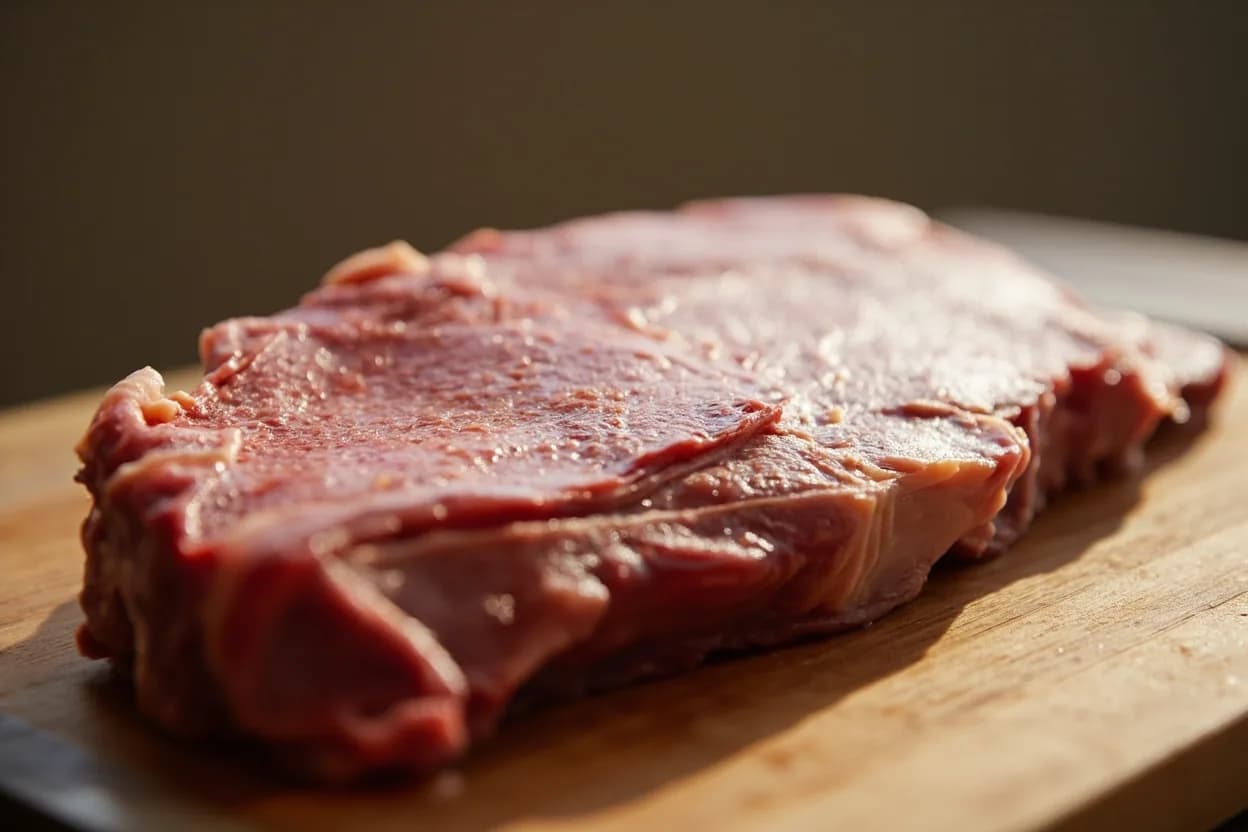
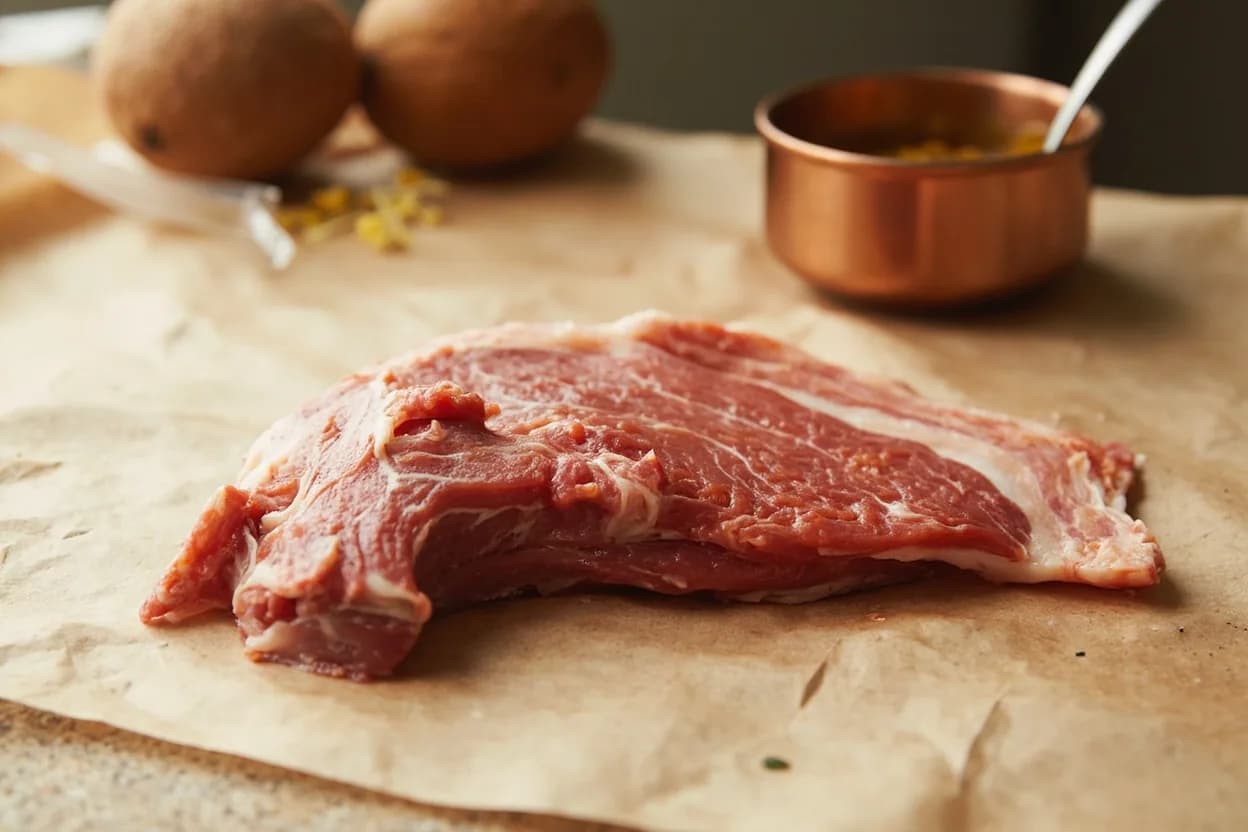
The châteaubriand is a thick roast or double-portion steak carved from the widest, most central section of the beef tenderloin (psoas major). Classically it weighs between 300–500 g (10–18 oz) and is intended for two; contemporary restaurant practice sometimes applies the name to a single large steak. It sits between the butt end (head of tenderloin) and the slender tail section, occupying the geometrically most uniform part of the muscle.
In photos
Where it comes from
Center of the beef tenderloin (psoas major), running along the inner lumbar vertebrae beneath the sirloin. The muscle does no locomotive work, which is the anatomical basis for its extreme tenderness.
Best for
How to cook it
- 1Trim any remaining silverskin or surface fat and tie the roast with butcher's twine at 2 cm intervals to maintain an even cylinder.
- 2Bring to room temperature 30–45 minutes before cooking to ensure even cooking through the thick center.
- 3Sear hard on all sides in a very hot cast-iron or carbon-steel pan with clarified butter or a neutral oil to develop a deep Maillard crust.
- 4Finish in a 200–220 °C (400–425 °F) oven or slide it to a cooler part of the grill; target an internal temperature of 52–54 °C (125–130 °F) for medium-rare.
- 5Rest on a rack for at least 10 minutes — the thick mass retains heat and will carve to a perfect rosy interior.
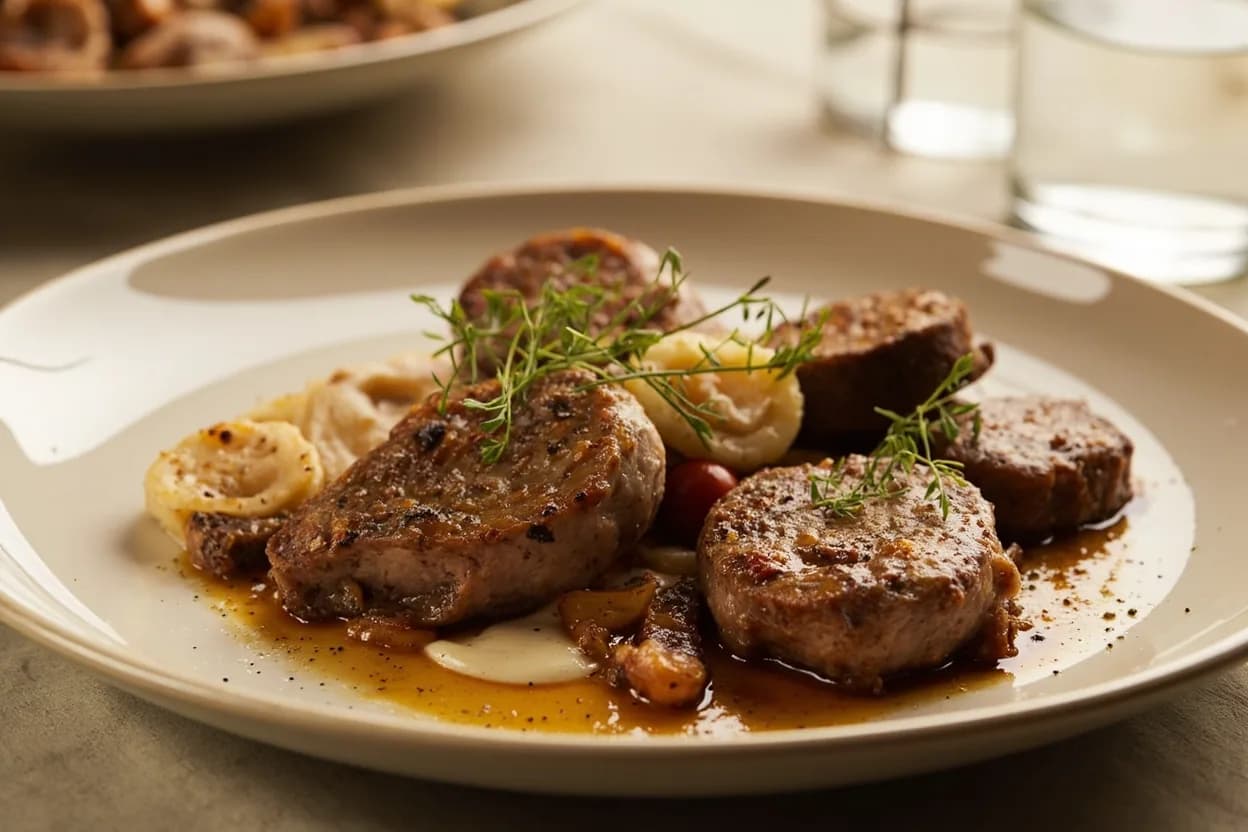
- 6Carve at the table on the bias into thick medallions (1.5–2 cm) and serve with Béarnaise, Bordelaise, or a simple reduction sauce.
Prep & butchery
- Remove the chain muscle (chain) that runs alongside the tenderloin before portioning — reserve for tartare or stir-fry.
- Use a sharp boning knife to shave away all silverskin in long, shallow strokes, angling the blade slightly upward to avoid wasteful gouging.
- A châteaubriand portion should be cut from the center section only — avoid the narrow tail (use for medallions) and the butt end (use for roasts or carpaccio).
- Tying is essential: loop butcher's twine at 2 cm intervals so the roast cooks as a perfect cylinder rather than an irregular mass.
Substitutes
- Beef Tenderloin Filet (Tournedos)
Single-portion cuts from the same muscle; identical flavor, much thinner and faster-cooking
- Eye of Round Roast
Similarly lean and cylindrical but significantly tougher — adequate for thin-slice preparations only
- Pork Tenderloin
Same muscle in pork; far smaller and must be cooked to higher internal temperature
Related cuts
- Filet Mignon
Smaller single-serve portions cut from the narrow tail end of the same tenderloin
- Tournedos
Classic French medallion cuts (2–3 cm thick) from the center section, identical muscle
- Tenderloin Tip (Butt Tenderloin)
The wider head end of the same muscle; slightly less tender, better for roasting whole
Appears in
References
- 1.The Professional Chef, 9th ed. — The Culinary Institute of America (Wiley, 2011)
- 2.Larousse Gastronomique — Prosper Montagné (Clarkson Potter, 2001)
- 3.Modernist Cuisine: The Art and Science of Cooking — Nathan Myhrvold et al. (The Cooking Lab, 2011)
- 4.Meat: Everything You Need to Know — Pat LaFrieda (Artisan, 2014)
Confidence: high
Notes
Origin of the Name
The cut is named after French author and statesman François-René de Chateaubriand, though whether his chef Montmireil invented it or merely popularized it is disputed. The first written recipe appears in Viard's 'Le Cuisinier Royal' (1817). The classical preparation calls for two thin steaks to flank the thick center cut during cooking, charring on the outside while insulating the center — then those flanking steaks are discarded, a now-antiquated technique.
Modern vs. Classical Usage
In classical French brigade cookery, 'châteaubriand' strictly denotes the portion and its sauce (a reduced white wine and demi-glace finished with butter and herbs — distinct from the modern 'Château sauce'). Contemporary menus often use the name loosely for any generously thick filet steak, occasionally even a single-diner portion. When ordering or specifying, confirm portion weight: a true châteaubriand for two starts at 450 g raw weight.