Seafood & Shellfish Breakdown
Geoduck Sashimi Slice
Also: mirugai sashimi, giant clam sashimi, 象拔蚌切片
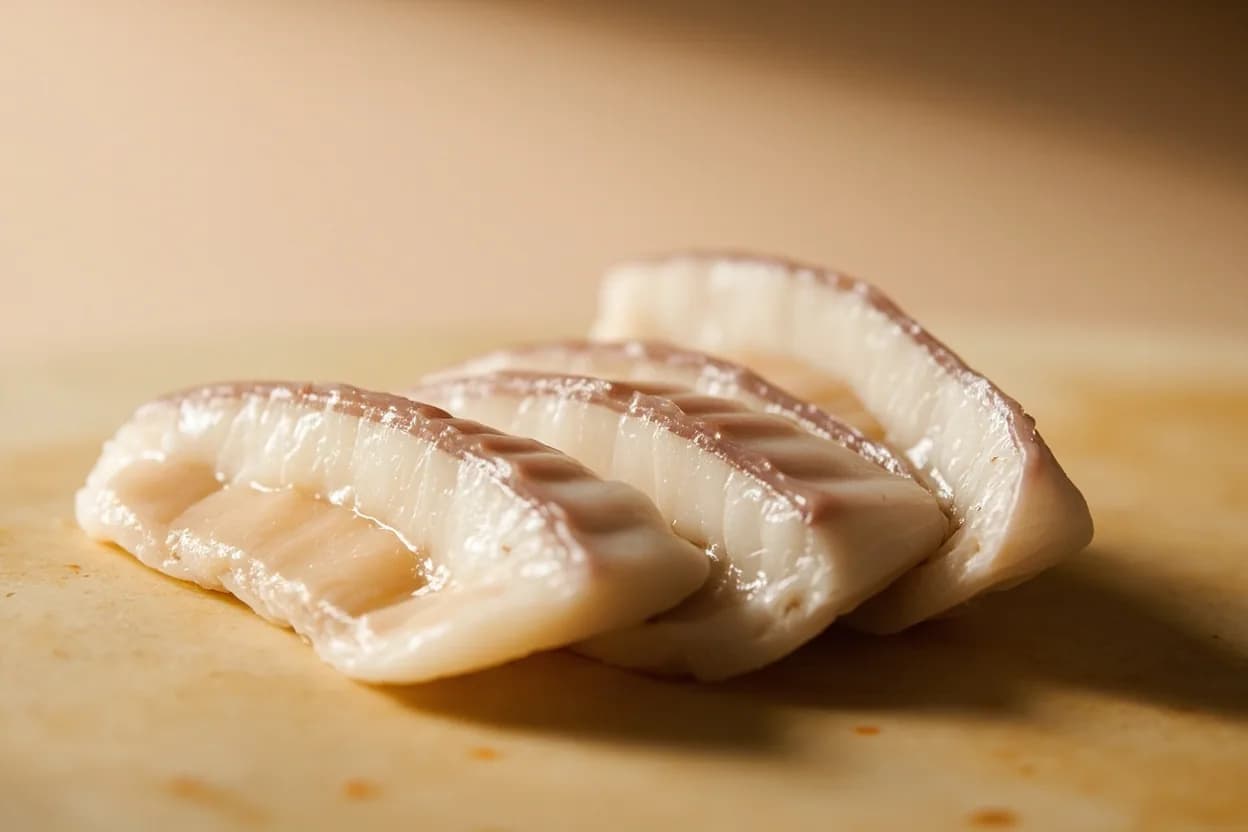
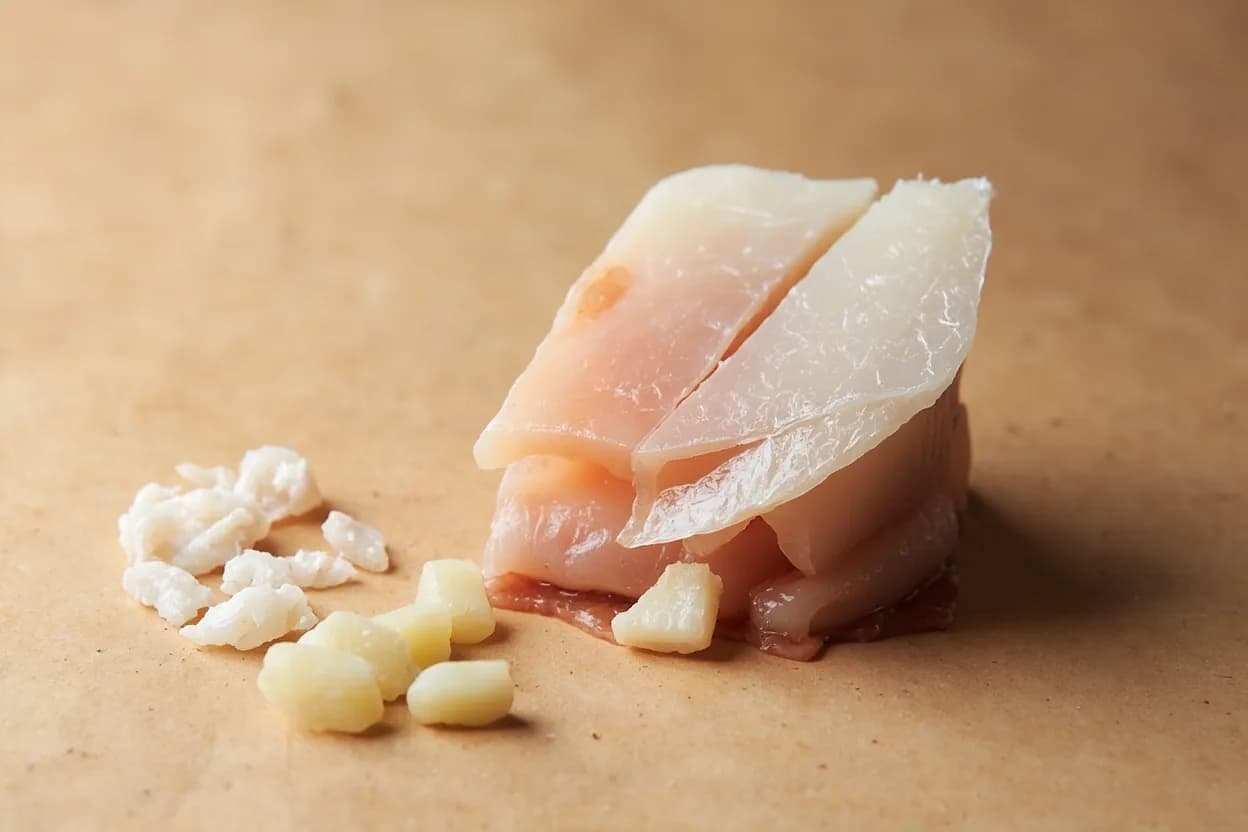
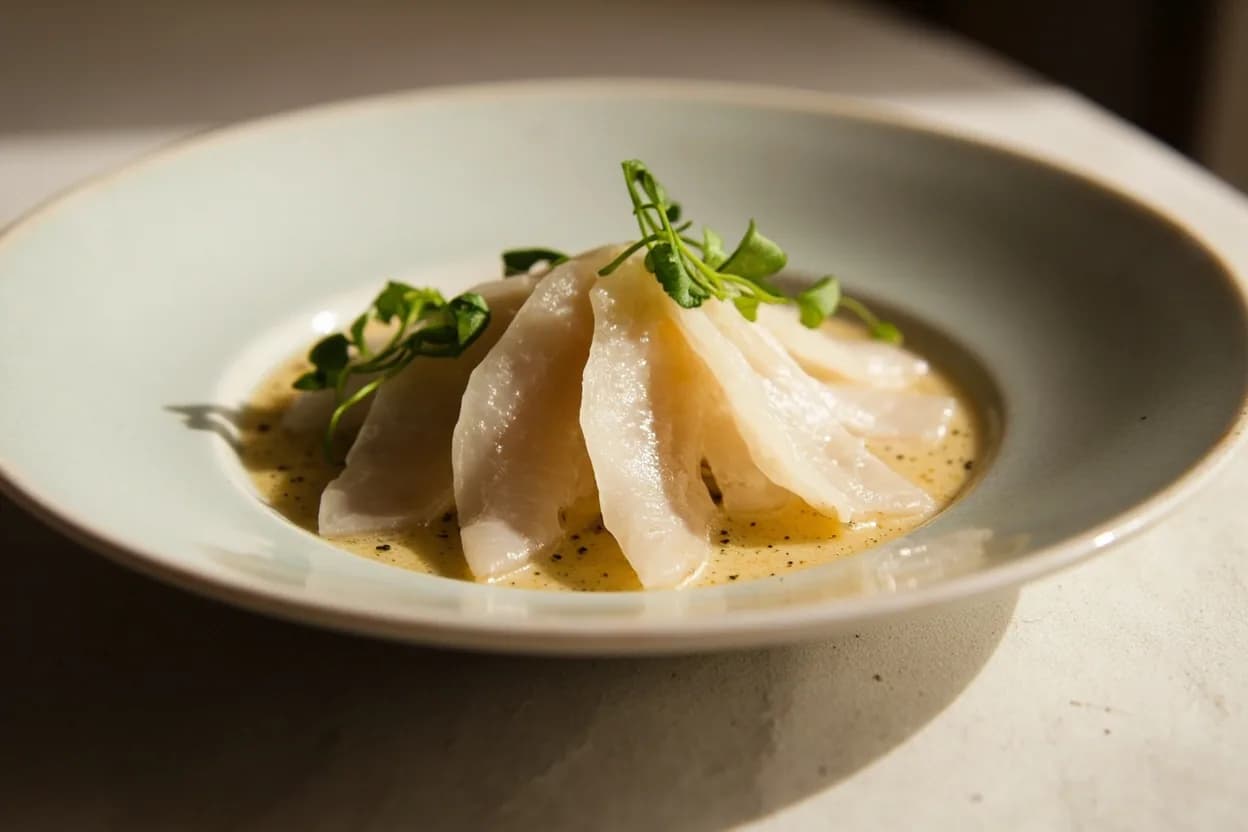
Blanching the siphon to slip off its skin, then slicing the sweet, crunchy flesh paper-thin for raw Cantonese or Japanese sashimi service.
Geoduck sashimi preparation is the technique of cleaning a live geoduck clam (Panopea generosa), poaching its enormous siphon briefly in hot water to loosen and remove the outer leathery skin, then slicing the pearlescent, crunchy siphon meat into translucent cross-sections for raw service. The body (mantle and adductor) is treated separately for hot preparations.
In photos
Where it comes from
The geoduck (pronounced 'gooey-duck') is the world's largest burrowing clam, native to the Pacific Northwest coast of North America and British Columbia. The siphon — an elongated, neck-like appendage that can reach 1 meter — is the primary sashimi cut. The body and mantle are used for stir-fries and hot pots.
Best for
How to cook it
- 1Place the live geoduck in the freezer for 10–15 minutes to stun and relax it, making the siphon easier to extend and handle.
- 2Bring a pot of water to a rolling boil and prepare an ice bath alongside.
- 3Hold the geoduck over the pot and submerge the siphon in boiling water for exactly 8–10 seconds — no longer, or the flesh will cook through.
- 4Immediately plunge the siphon into the ice bath to halt cooking.
- 5The outer leathery skin will now peel away in one or two pieces — pull it off like a glove. The inner flesh should be firm and ivory-pearlescent.
- 6Rinse the siphon in cold water and pat dry.
- 7Slice the siphon crosswise into thin rounds, 2–3 mm thick, using a sharp sashimi knife (yanagiba) in a single drawing motion per slice.
- 8Separate the body from the shell: cut adductor muscles at both shell walls, open the shell, and remove the mantle and body for separate use.
- 9Trim any dark digestive gland or dark organs from the body before any hot preparation.
- 10Serve siphon slices immediately over ice with ponzu, wasabi, and pickled ginger, or with soy and sesame oil in the Cantonese style.
Prep & butchery
- Geoduck must be alive at time of preparation — siphon should retract when touched.
- The 8–10 second blanch window is critical: under-blanching leaves the skin stuck; over-blanching cooks the flesh opaque and ruins the raw texture.
- A yanagiba or any long, thin, single-bevel sashimi knife is essential — a chef's knife drags and tears the delicate flesh.
- Siphon slices can be scored with shallow crosshatch on the inner surface before slicing to help them curl slightly when plated.
- Body and mantle can be stir-fried with ginger and scallion or added to congee.
Substitutes
- Abalone (raw, thinly sliced)
Closest in crunchy texture and oceanic sweetness; more widely available though often more expensive.
- Mirugai (horse clam / gaper clam)
True mirugai as sold in Japanese fish markets is a related species (Tresus spp.) with similar texture and application; smaller siphon.
- Whelk (boiled and sliced)
Similar chew and brine notes but requires cooking; not a raw substitute.
Related cuts
Both are premium Pacific luxury shellfish requiring live-animal preparation and immediate raw service.
Similar concern with dry vs wet handling and immediate plating for quality sashimi service.
Appears in
References
- 1.The Complete Fish & Shellfish Cookbook — Marie Simmons (2002)
- 2.Fish & Shellfish — James Peterson (1996)
- 3.Nobu: The Cookbook — Nobu Matsuhisa (2001)
- 4.Hank Shaw, Hunter Angler Gardener Cook — shellfish technique reference
Confidence: high
Notes
Siphon vs Body
These are two entirely different culinary products from one animal. The siphon (neck) is for raw sashimi: crisp, sweet, and best paper-thin. The body — including the mantle and adductor — is chewy raw and is always better cooked in a hot pot, stir-fry, or chowder. Do not swap them.
Cantonese vs Japanese Service
In Cantonese seafood restaurants, geoduck sashimi is typically plated with soy sauce, sesame oil, and thinly sliced ginger. Japanese sushi bars serve it as mirugai nigiri or alongside wasabi and ponzu. Both traditions prize the snapping crunch and sweet brine as their own.