Seafood & Shellfish Breakdown
Scallop Preparation (Vieiras)
Also: vieiras, coquilles Saint-Jacques preparation, scallop breakdown, noix de Saint-Jacques
Opening the shell, freeing the adductor muscle from its frilly skirt and roe, and understanding the crucial dry-vs-wet distinction that determines whether a scallop will sear or steam.
Scallop preparation covers the full technique of opening a live scallop shell, separating the round white adductor muscle (the part most commonly eaten in commerce), removing the grey-brown gills and black stomach sac, optionally retaining the coral-orange roe, and drying the adductor for optimal searing. Vieiras is the Spanish term used along the Galician coast, where scallops are a pillar of regional cuisine; coquilles Saint-Jacques is the French term for the same species (Pecten maximus) off Brittany and Normandy.
In photos
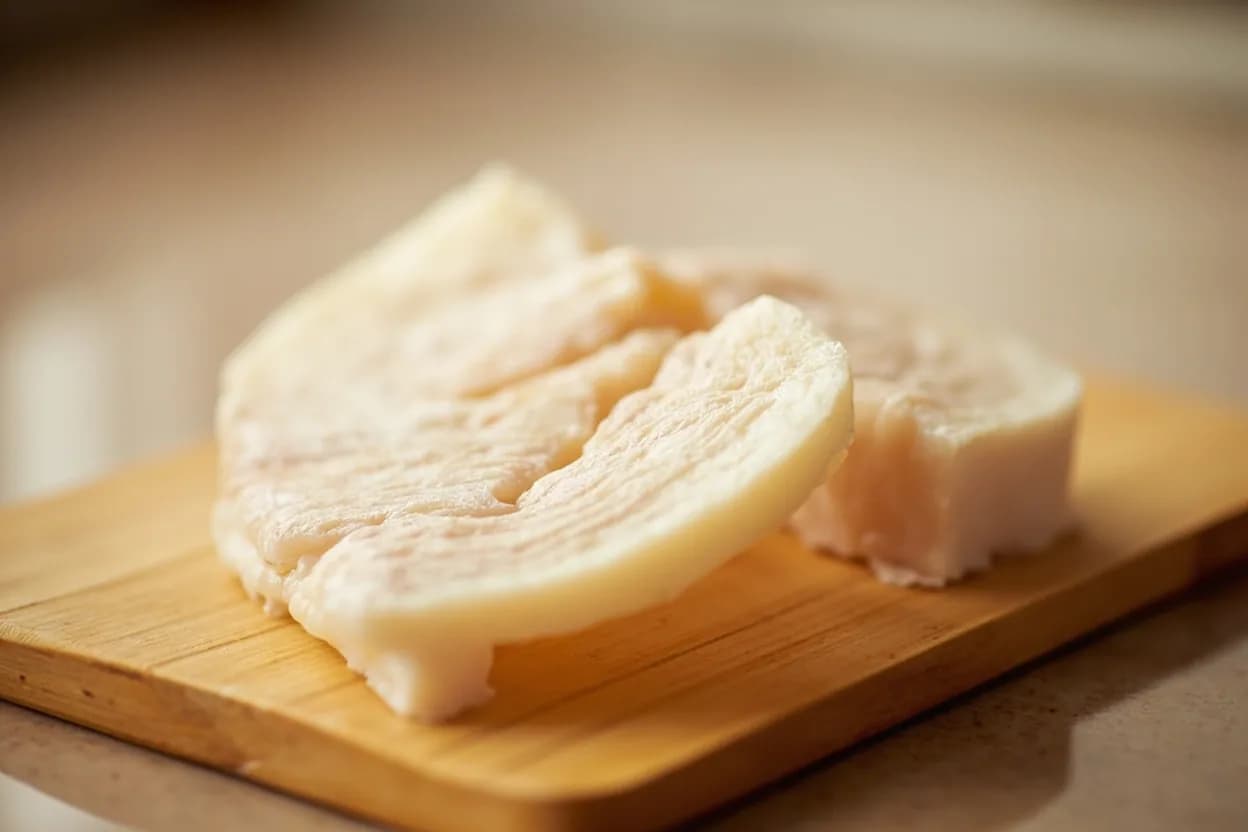
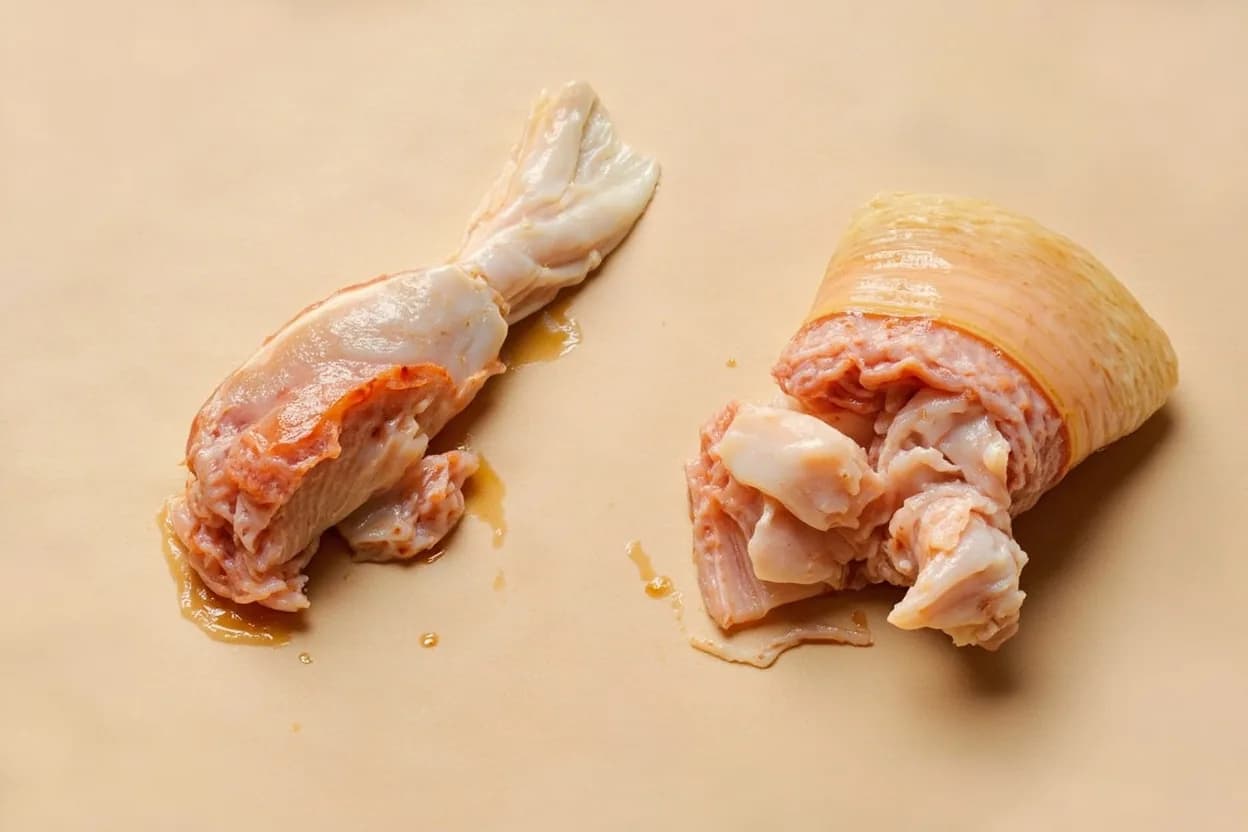
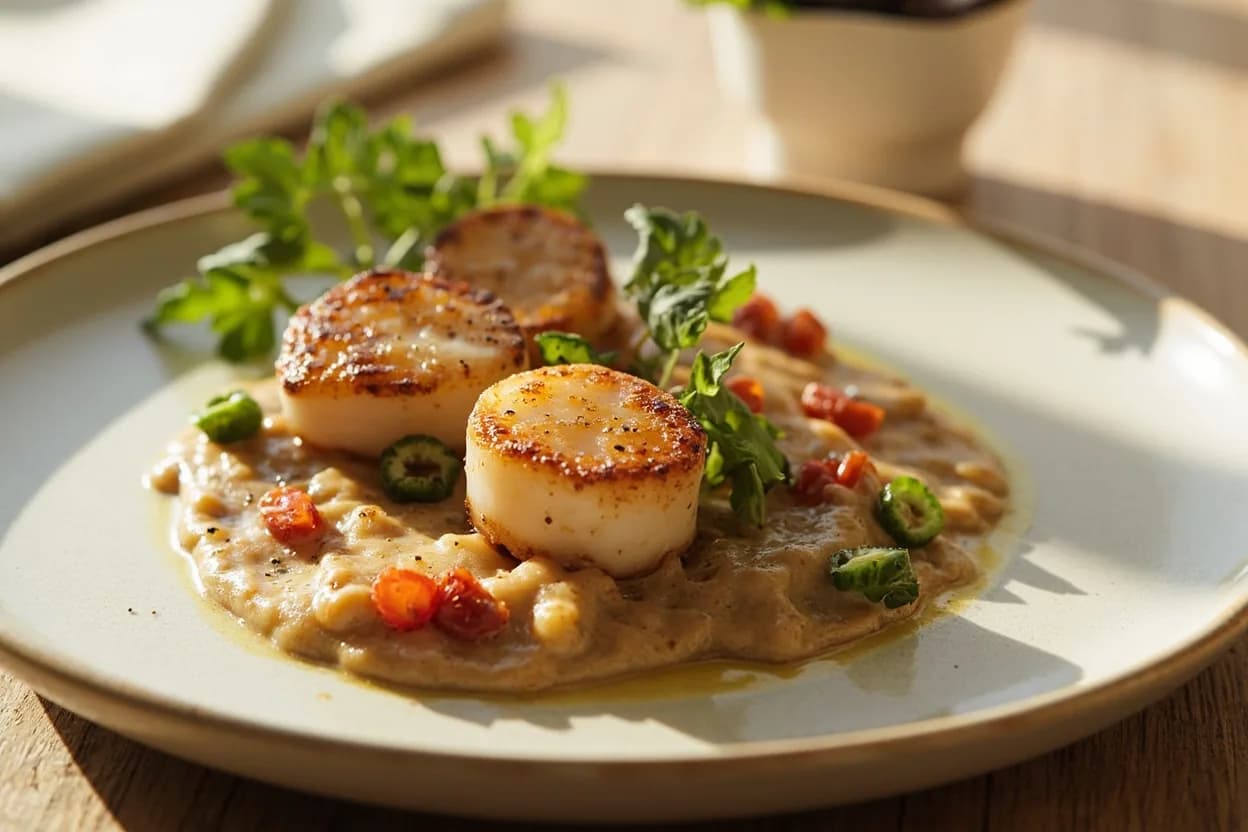
Where it comes from
The adductor muscle is a single, thick, round muscle that holds the two halves of the shell together. It sits at the center of the scallop interior. Around it lies the frill (skirt/gill tissue), the cream-to-orange crescent roe (gonad), and the black stomach sac. In American commerce, sea scallops (Placopecten magellanicus) are almost always sold shucked, while in Europe whole scallops in shell are the market standard.
Best for
How to cook it
- 1Hold the scallop flat-side up. Insert a sturdy, thin-bladed knife into the hinge gap and slide it flat against the top shell to sever the adductor. Remove the flat shell.
- 2The adductor will be attached to the curved bottom shell. Slide the knife flat under the adductor and any attached organs to free the whole interior in one piece.
- 3Pull away the frill (the feathery or frilly skirt tissue around the adductor) — pinch and tear; it comes free easily. Reserve for stock if desired.
- 4Remove the black stomach sac — pinch and pull it cleanly away from the adductor without breaking it (bitter if pierced).
- 5The roe (orange crescent) can be kept attached or removed: French and Spanish preparations typically keep it; British and American typically remove it for aesthetic consistency. Roe is edible and delicious.
- 6Rinse the adductor briefly in cold water and pat thoroughly dry with paper towel. For best searing, leave uncovered in the refrigerator on a rack for 30–60 minutes before cooking.
- 7For searing: cast-iron or stainless pan very hot with neutral oil; lay scallop flat side down; do not move for 90 seconds until a deep brown crust forms; flip and cook 60 seconds; baste with butter and herbs.
Prep & butchery
- Dry vs wet: 'Wet' or 'soaked' scallops have been treated with sodium tripolyphosphate (STP) solution, absorbing up to 30% extra water by weight. They steam rather than sear and exude white foam in the pan. 'Dry' scallops are untreated; they sear cleanly and taste sweeter.
- To identify wet scallops: they appear very white and perfectly uniform, sitting in milky liquid. Dry scallops are slightly ivory or pinkish, dull, and dry to the touch.
- Tough foot: a small, crescent-shaped side muscle (the foot) is sometimes present on shucked scallops. It is slightly chewy and should be pinched off before cooking.
- Scallop roe is highly seasonal — it is richest and fullest in autumn and winter in the Northern Hemisphere.
- For coquilles Saint-Jacques, the shell itself is the serving vessel: scrub and dry the curved (bottom) shell for use as a gratin dish.
Substitutes
- Large sea scallops (pre-shucked, dry)
Dry-packed (not water-treated) commercial scallops are an excellent substitute when live scallops are unavailable; look for 'dry' or 'diver' on the label.
- King scallops (Pecten maximus)
The European equivalent; same technique applies. Larger than American bay scallops.
- Bay scallops (Argopecten irradians)
Much smaller, sweeter, and more delicate; too small for searing — best for quick sautés, chowders, or crudo.
Related cuts
Both are luxury shellfish preparations where immediate handling after opening is critical to quality.
- Oyster Shucking
Similar knife-entry-at-hinge technique; scallop requires the flat knife run along the shell interior rather than simply popping the hinge.
Appears in
References
- 1.Fish & Shellfish — James Peterson (1996)
- 2.The French Laundry Cookbook — Thomas Keller (1999)
- 3.Larousse Gastronomique (2009 edition)
- 4.On Food and Cooking — Harold McGee (2004)
Confidence: high
Notes
The Wet Scallop Problem
No other variable affects scallop cooking outcome as dramatically as the dry-vs-wet distinction. A wet scallop placed in a hot pan will immediately begin expelling water, dropping pan temperature, and steaming — producing a grey, rubbery result instead of a seared crust. If wet scallops are the only option, salting and patting them dry 30 minutes ahead, then leaving uncovered in the fridge, can partially mitigate the problem — but dry scallops are always superior.
Spanish Vieiras Context
In Galicia, vieiras hold near-sacred cultural status — the scallop shell is the emblem of the Camino de Santiago pilgrimage. Traditional vieiras a la gallega are baked on the half-shell with a sofrito of onion, tomato, white wine, and jamón, topped with breadcrumbs and paprika. The roe is always left on.