Seafood & Shellfish Breakdown
Sea Urchin (Uni) Opening & Cleaning
Also: uni preparation, oursin opening, erizo de mar limpieza
Scissors-entry through the mouth disk, rinse of golden gonads free of intestines and roe skirt, then careful plating of uni tongues.
Sea urchin preparation is the technique of opening a live urchin shell with scissors, removing the edible gonads (commonly called 'tongues' or 'uni' in Japanese culinary practice), and cleaning them of any intestinal matter, black digestive organs, and bitter fluid before service or further use.
In photos
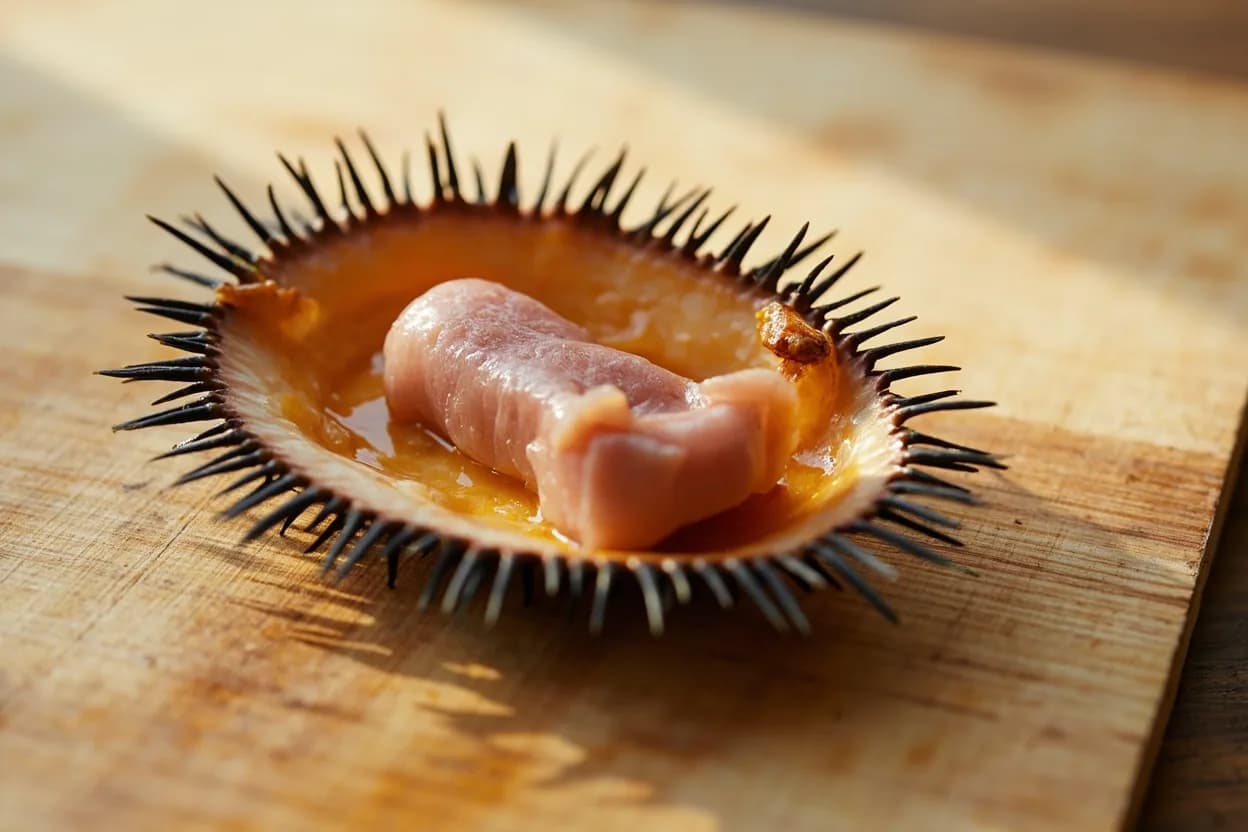
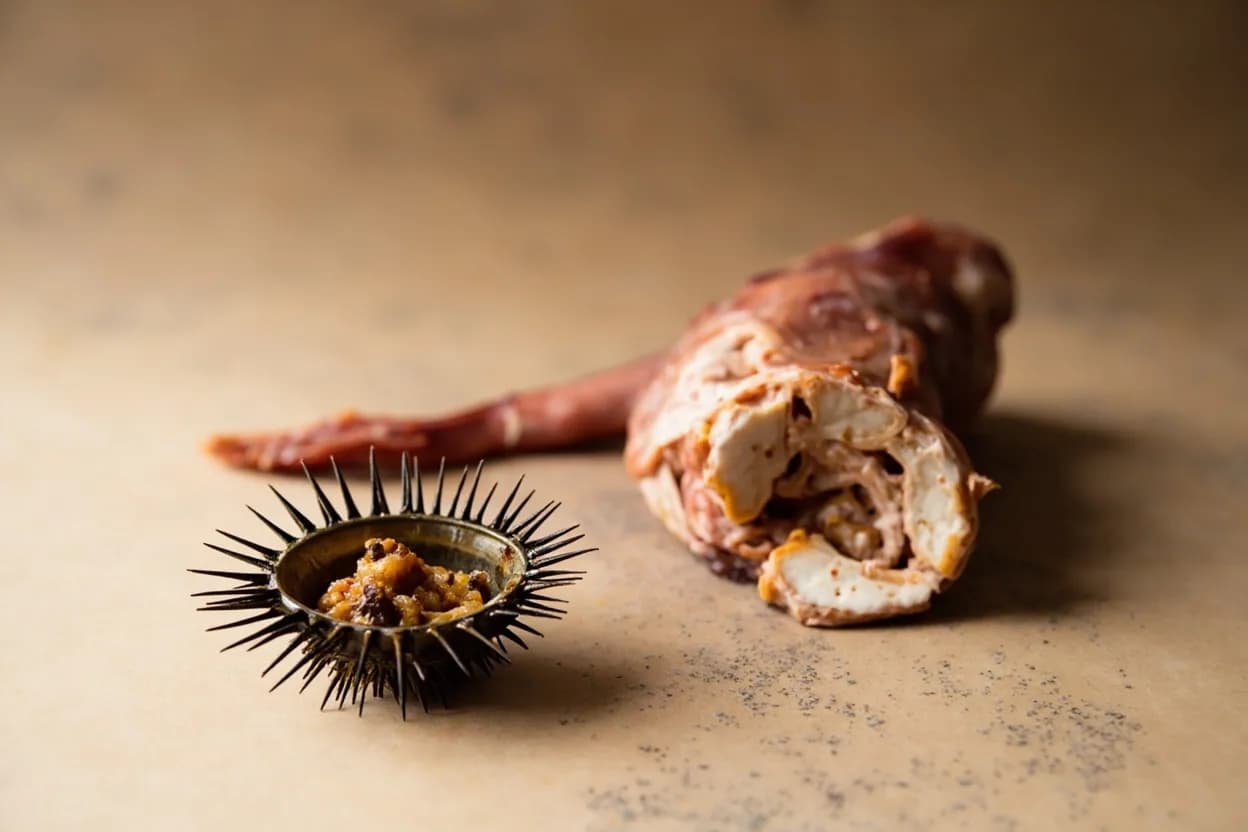
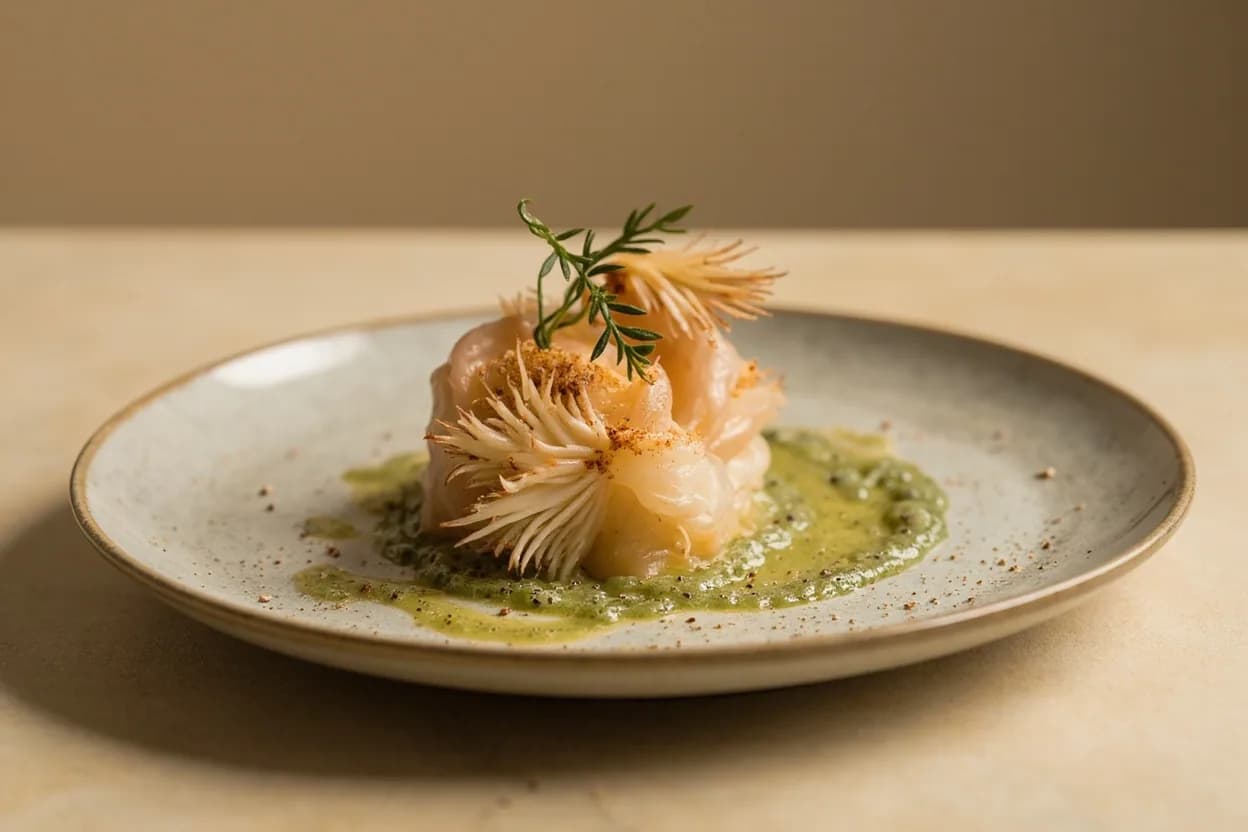
Where it comes from
The five golden-orange lobes arranged radially inside the hard spiny test (shell) of sea urchin species such as Strongylocentrotus franciscanus (red urchin, Pacific), Paracentrotus lividus (Mediterranean), and Strongylocentrotus droebachiensis (green urchin, Atlantic). These lobes are the gonads — the reproductive organs — not roe in the fish-egg sense.
Best for
How to cook it
- 1Hold the live urchin spine-side down in a thick cloth or kitchen towel to protect your hand from spines.
- 2Locate the mouth (Aristotle's lantern) — the flat, five-toothed dark disk on the underside — and insert the tip of kitchen scissors or dedicated uni scissors into the center.
- 3Cut in a circle around the mouth, about 2–3 cm from the center, to create a removable cap. Lift away the cap and discard.
- 4Drain the dark, bitter internal fluid by inverting the shell briefly over the sink or a bowl. Do not let this fluid touch the gonads.
- 5Using a small spoon, gently loosen the five orange tongues from the shell wall. Work carefully — the gonads tear easily.
- 6Remove and discard black intestines, the dark roe skirt (the stringy dark membrane running between tongues), and any dark sac material.
- 7Rinse gently in cold salted seawater or lightly salted fresh water for 20–30 seconds. Avoid tap water at full pressure — it bruises the gonads.
- 8Lay tongues flat on a small tray lined with paper towel, cover with plastic film, and refrigerate until service. Use within 2–4 hours.
Prep & butchery
- Live urchins should be purchased alive, spines moving; dead urchins have bitter, watery gonads.
- Japanese grades: Grade A (firm, golden, sweet, no off-odor), Grade B (slightly soft or pale), Grade C (soft, may have ammonia note). Grade A only for raw service.
- Alum (potassium alum) is used commercially to firm gonads and extend shelf life but imparts an astringent, metallic note — avoid where possible.
- Mediterranean uni (riccio) is typically smaller and more intensely briny than Pacific varieties.
- Season matters: Pacific red urchin is fattest and sweetest October through March; Mediterranean uni peaks in late spring.
Substitutes
- Fresh sea urchin roe trays (pre-packaged)
Tray-packed uni from processors is already cleaned; quality depends on freshness date. Suitable when live urchins are unavailable.
- Bottarga (cured mullet roe)
Completely different flavor and texture but provides a similar umami-forward, marine richness in pasta sauces.
Related cuts
Both are delicate bivalve-adjacent preparations requiring gentle handling to preserve texture and fresh flavor.
Another raw-service luxury shellfish prep demanding immediate service after cleaning.
Appears in
References
- 1.The Japanese Kitchen — Hiroko Shimbo (2000)
- 2.On Food and Cooking — Harold McGee (2004)
- 3.Le Bernardin Cookbook — Eric Ripert & Maguy Le Coze (1998)
- 4.Fish & Shellfish — James Peterson (1996)
Confidence: high
Notes
The Alum Question
Most commercially sold tray uni outside Japan has been treated with alum to extend shelf life and firm the texture. While it prevents the gonads from collapsing into liquid, it adds a detectable astringency. Seek out 'nama' (raw, non-preserved) trays or open live urchins yourself for the sweetest expression.
Draining is Non-Negotiable
The dark internal fluid is intensely bitter and will ruin the gonads if allowed to seep across them. Invert the shell immediately after cutting the cap, before any spoon touches the inside.