Beef — Primal & Subprimal
Seam Butchery (Muscle-by-Muscle Breakdown)
Also: seam cutting, muscle-by-muscle, European-style butchery, couture butchery, disaggregated breakdown
A technique of following natural connective-tissue seams between muscles rather than sawing through the carcass, yielding individually optimized, bone-free muscle roasts.
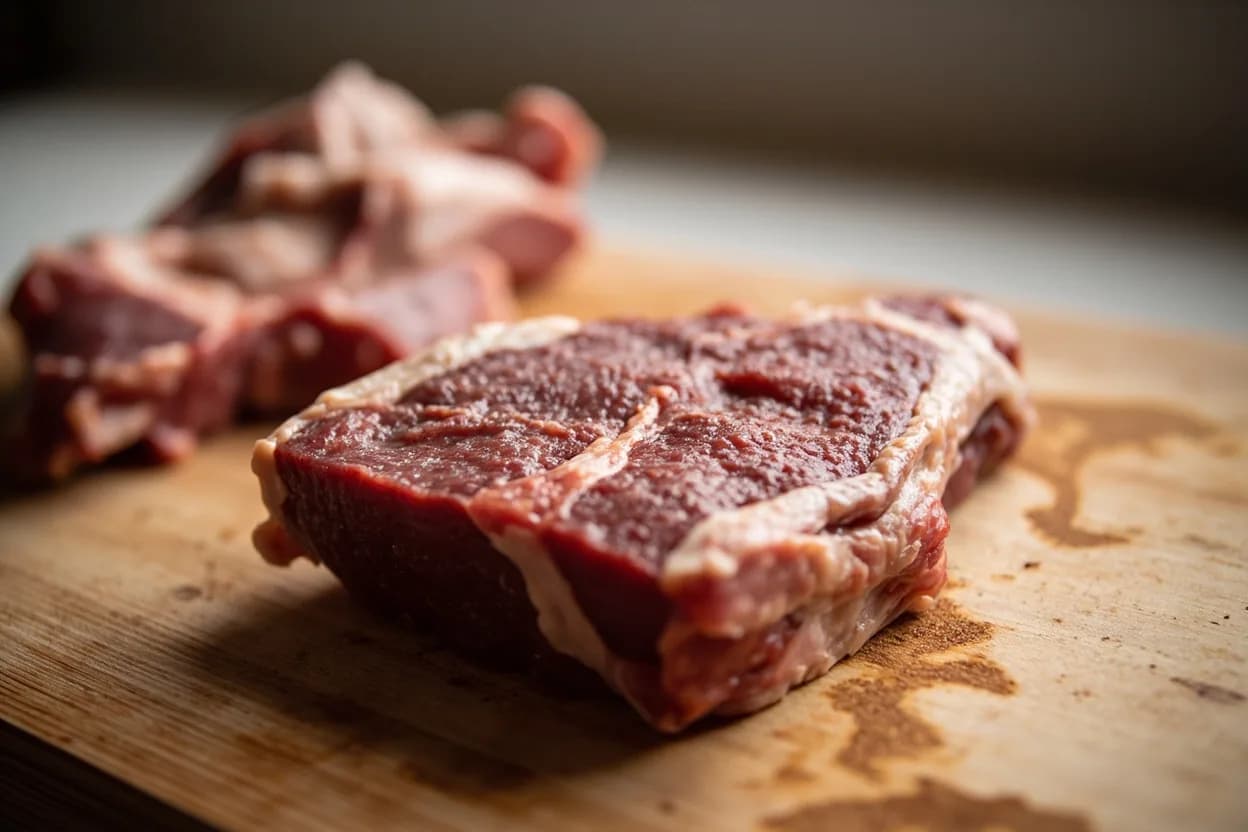
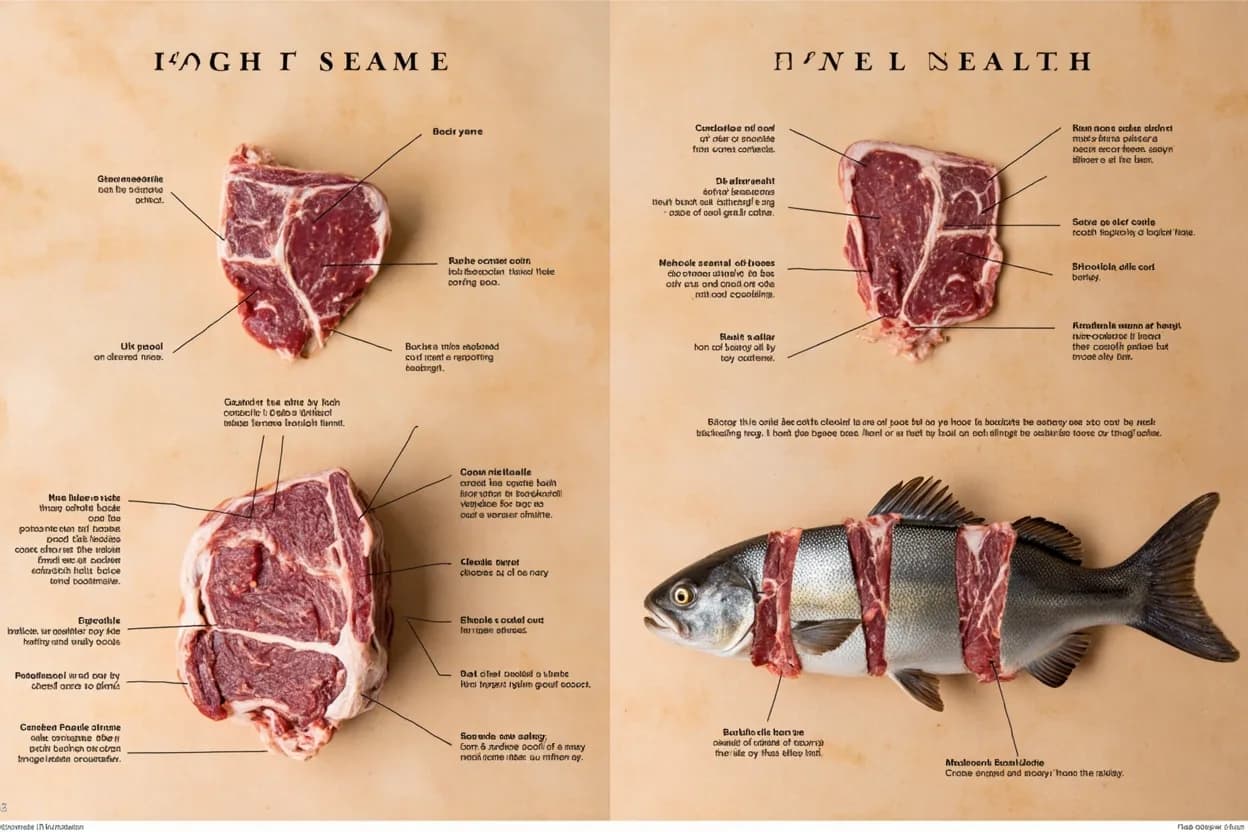
Seam butchery (also called muscle-by-muscle or European-style butchery) is the practice of disassembling a primal or subprimal by cutting along the natural fascial planes — the thin sheets of connective tissue that separate individual muscles — rather than using a band saw to produce uniform cross-sectional steaks or roasts. The result is a collection of whole muscles, each with its own cooking character, that can be prepared at their ideal method. A beef chuck, for example, seams into the chuck eye roll, flat iron (infraspinatus), chuck tender (supraspinatus), and several smaller muscles, rather than yielding anonymous 'chuck steaks' of mixed-muscle, mixed-texture character.
In photos

Where it comes from
Applied to any primal — most commonly beef chuck, round, and shoulder clod — wherever multiple muscles share a single primal boundary but differ substantially in fiber direction, fat content, and tenderness.
Best for
How to cook it
- 1Identify the fascial plane between muscles by look and feel — it is usually a white, papery membrane that resists but yields cleanly to a sharp boning knife.
- 2Work with the tip of a flexible boning knife, using short strokes rather than sawing, letting the knife follow the contour of the membrane rather than cutting through muscle fibers.
- 3Once a muscle is freed, remove all external silverskin by slipping the knife under it at a shallow angle and pulling the silverskin taut while cutting horizontally.
- 4Label and store each muscle separately — cooking times and methods diverge sharply between, for example, the flat iron (grill 4 minutes per side) and the chuck roll (braise 3 hours).
- 5Trim seamed muscles to consistent thickness before portioning steaks to ensure even cooking.
Prep & butchery
- A sharp, flexible 6-inch boning knife is the primary tool; a stiff knife cannot follow the curves of the seam.
- Chill the primal to 34–38 °F / 1–3 °C before seaming — firm cold fat and connective tissue hold their shape and the seams are more visible.
- Work under adequate light; fascial planes catch light differently from muscle tissue, making them easier to identify.
- Keep a damp cloth nearby to wipe the blade — fat buildup on the knife edge reduces precision.
Substitutes
- Traditional saw-through chuck steak
Same primal origin but mixed-muscle with less predictable eating quality; acceptable when seam-cut muscles are unavailable.
- Pre-portioned retail cuts
Supermarket flat irons and petite tenders are the commercially seamed products; buying them is effectively buying the result of seam butchery.
Related cuts
- Flat Iron
The commercial triumph of seam butchery — the infraspinatus muscle, once discarded with the chuck, is now a top-selling restaurant steak
- Petite Tender (Chuck Tender)
Supraspinatus muscle, seamed from the chuck; extremely tender, often mistaken for a tenderloin when trimmed
- Chuck Eye Roll
The longissimus dorsi continuation into the chuck; seamed out for slow-cooking or sliced for ribeye-adjacent steaks
- Denver Steak
Serratus ventralis muscle from the chuck underblade; well-marbled, revealed by seam butchery
Appears in
References
- 1.Cutting Meat: A Comprehensive Guide to Seam Butchery — Adam Danforth, Storey Publishing
- 2.The Butcher's Guide to Well-Raised Meat — Joshua Applestone & Jessica Applestone
- 3.Beef NAMP (North American Meat Processors) Buyers Guide — NAMI
- 4.In the Charcuterie — Taylor Peden & Cole Danehower
Confidence: high
Notes
Historical context
Seam butchery is not new — French and Italian butchers have always seamed the round and shoulder — but it was largely abandoned in the US after World War II when the band saw enabled high-speed, low-skill breakdown optimized for uniform retail steaks. The craft butchery revival of the 2000s, driven by chefs like Fergus Henderson, and research by the Beef Checkoff identifying novel cuts (flat iron, Denver steak), brought the technique back into commercial relevance.
Economic case
A seamed flat iron retails at a significant premium over a mixed chuck steak cut from the same primal. The additional 10–15 minutes of skilled labor to seam a chuck subprimal is recovered many times over in the value of the individual muscles, making seam butchery economically rational for any butcher with the skilled labor to execute it.