Pork — Primal & Subprimal
Secreto Ibérico
Also: secreto, pork secreto, hidden cut, corte secreto, Iberian secret
The 'secret' Ibérico cut — a thin, intensely marbled fat-seam muscle tucked between the shoulder blade and external fat layer, ideal for fast, ferocious heat.
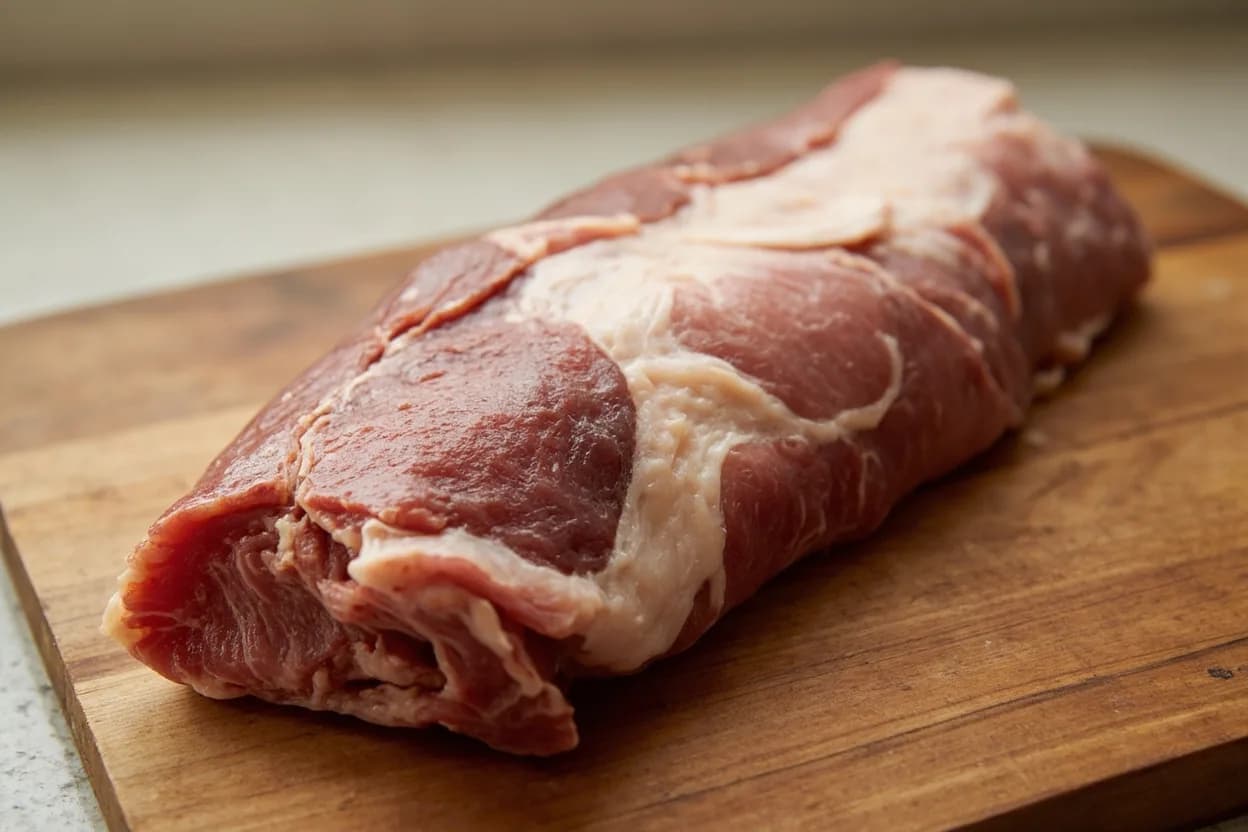
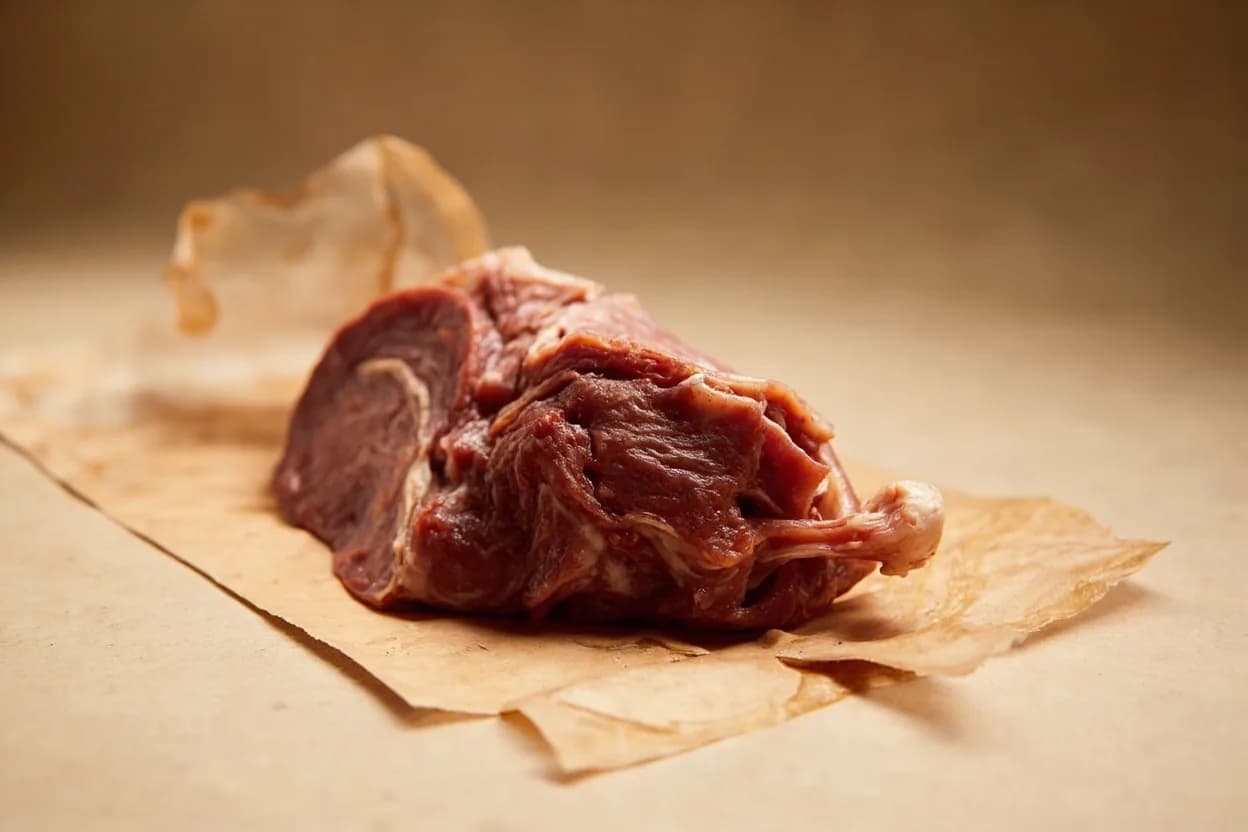
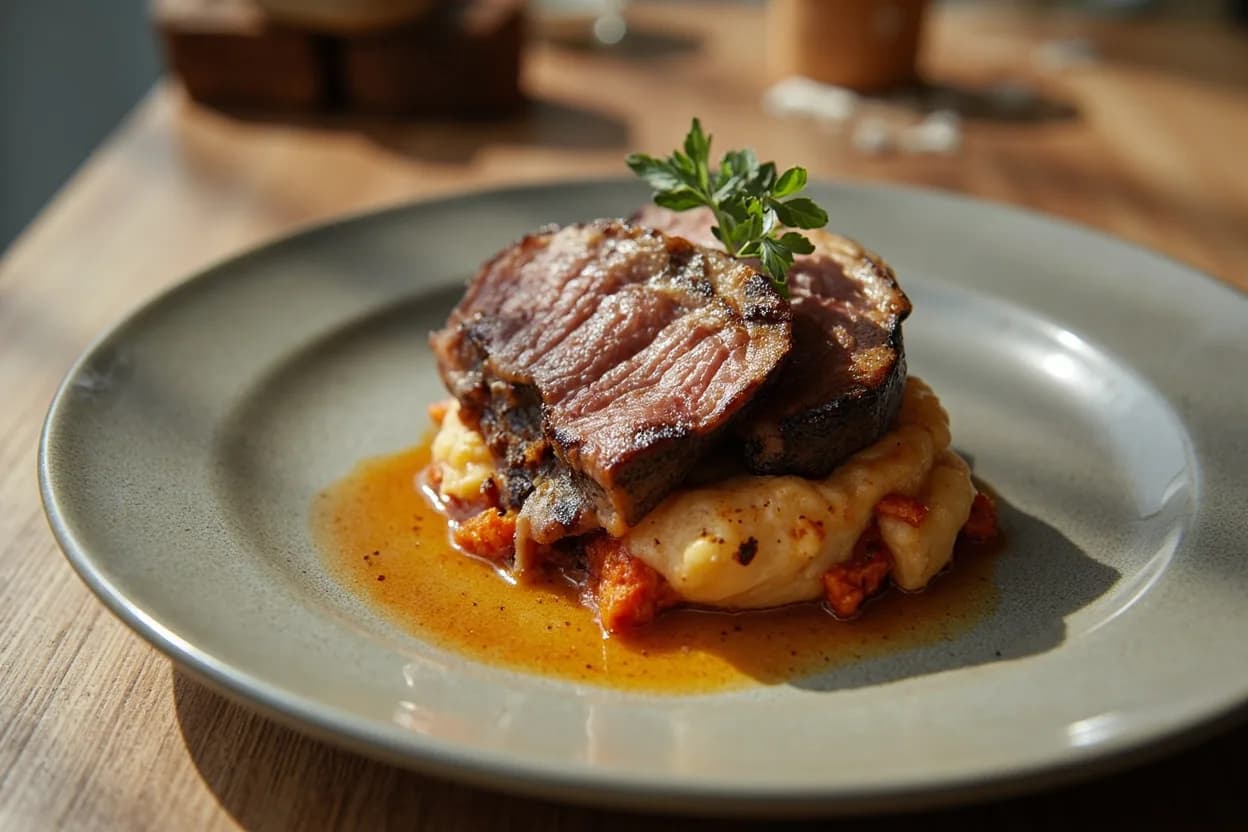
The secreto ibérico is a flat, broad muscle seam located between the scapula (shoulder blade) and the thick layer of external fat (tocino) that covers the Ibérico pig's dorsal shoulder. Its name — 'secret' — reflects both its concealed anatomy (it is not visible until the external fat is peeled away) and, historically, the fact that Spanish butchers quietly reserved it for themselves. It is one of the most richly marbled fresh pork cuts in existence, with intramuscular fat woven through in a distinctive pattern that resembles skirt steak. At high heat, this fat renders explosively, basting the lean from within and producing an intensely flavored, juicy result in under five minutes total.
In photos
Where it comes from
Located on the dorsal shoulder of the Ibérico pig, between the serratus ventralis muscle group and the external subcutaneous fat layer. Anatomically it corresponds to the subscapularis / intercostal fat-seam region. A single pig yields two secreto pieces, each weighing 150–300 g. In non-Ibérico pigs the equivalent fat seam exists but lacks the marbling density that makes the cut culinarily significant.
Best for
How to cook it
- 1Bring to room temperature 30–45 minutes before cooking — the fat must be supple to render quickly
- 2Season only with flaky sea salt immediately before cooking — no marinades needed; they mask the flavor
- 3Grill or sear over the highest available heat; cook 2 minutes per side for a thin piece (1 cm), 2.5–3 minutes per side for a thicker one
- 4Target internal temperature 58–63 °C (pink, not raw); the fat should be rendered and glistening, not translucent and raw
- 5Rest for at least 3–4 minutes — the fat seizes during cooking and must relax or the cut will squeeze dry when sliced
- 6Slice against the predominant grain in thin, 5–6 mm cuts; serve immediately
Prep & butchery
- Trim the sinew membrane from one face if present — it is tough and chewy; a dry cloth gives grip to peel it cleanly
- Remove the thick external fat layer if still attached (it is usually pre-trimmed in retail) but leave the intramuscular fat entirely intact
- Do not score or pound — the cut is already thin and its flat geometry ensures even cooking without modification
- For larger pieces: butterfly if over 2 cm thick to ensure rapid, even cooking on a hot grill
Substitutes
- Pork skirt (outside skirt / onglet from pork)
Similar thin, flat format with some grain complexity — much less fat but cooks in the same rapid manner
- Duroc pork shoulder steak
Duroc has the highest intramuscular fat of commercial breeds; a shoulder steak cut thin will approximate secreto in a pan-sear
The companion Ibérico cut — thicker and meatier, slower to cook, but similar flavor profile
- Pork collar / neck steak (coppa steak)
More marbled than average pork; similar quick-sear approach though the grain and shape differ significantly
Related cuts
Thicker shoulder cap cut; same pig, same marbling philosophy but longer cook time needed
Small loin-end triangle; similarly quick-cooking and marbled
- Beef Skirt Steak (Outside Skirt)
Analogous in shape and high-heat, quick-cook approach; similar resting and slicing logic
Parent entry covering the full cut vocabulary of the breed
Appears in
References
- 1.Whole Beast Butchery — Ryan Farr
- 2.BOE — Real Decreto 4/2014 (Spanish regulatory classification of Ibérico products)
- 3.The River Cottage Meat Book — Hugh Fearnley-Whittingstall
- 4.MeatEater Fish and Game Cookbook — Steve Rinella (butchery anatomy reference)
Confidence: high
Notes
The 'secret' origin story
Spanish matadero workers (slaughterhouse employees) reportedly peeled off the secreto for their own consumption because it was unknown to most buyers — not classified in standard wholesale cut charts and therefore easy to pocket. This clandestine history explains the name and also why it only entered mainstream Spanish restaurant culture in the 1990s as nose-to-tail eating gained prestige.
Temperature precision matters
The secreto is extremely unforgiving of overcooking. At 70 °C+ the intramuscular fat has fully rendered out and the lean seizes into a dry, chewy result. The sweet spot is 58–63 °C — pink throughout but not raw. Use an instant-read thermometer until you have a feel for the cut's rapid heat response.