Pork — Primal & Subprimal
Ibérico Pig Primal Cuts
Also: cerdo ibérico, pata negra cuts, Iberian pork primals
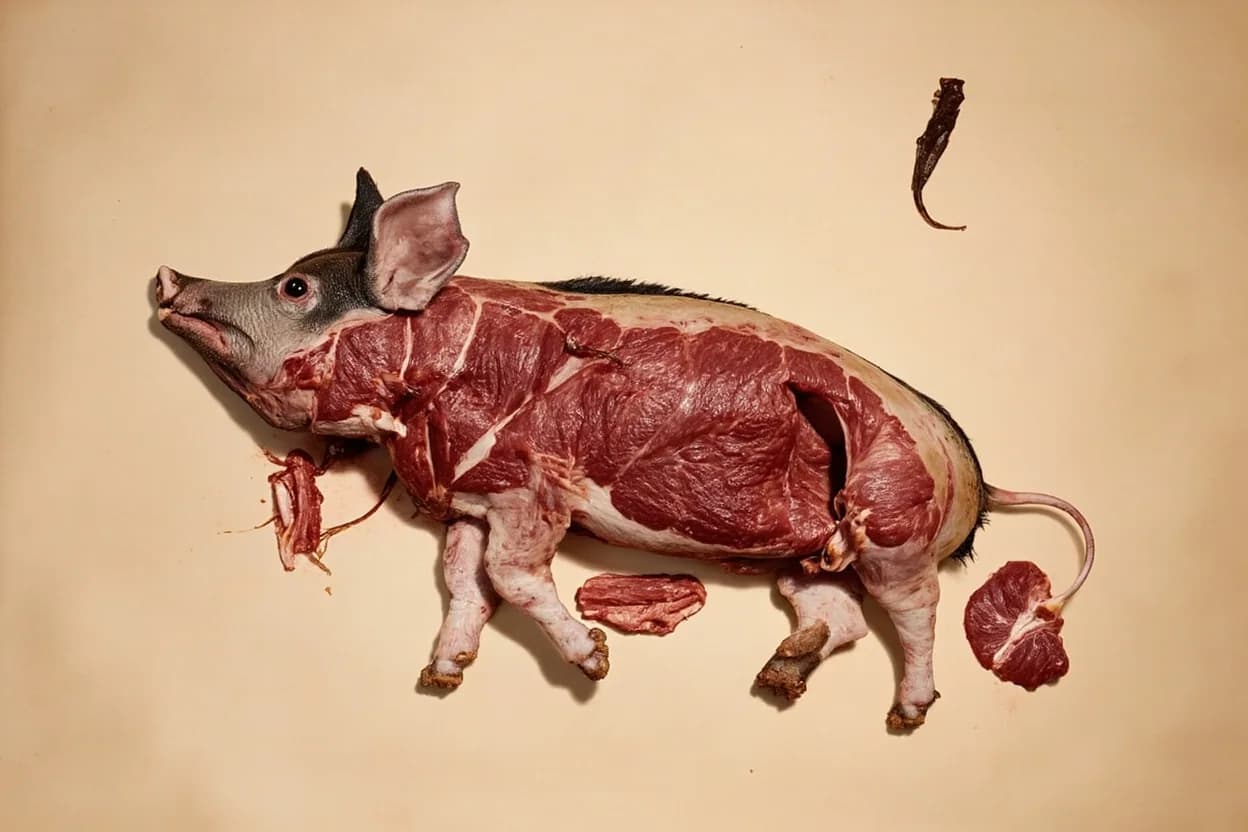
The Spanish Ibérico pig yields unique cuts — jamón, paleta, secreto, presa, pluma, carrillera, and morro — each defined by the breed's extraordinary intramuscular fat.
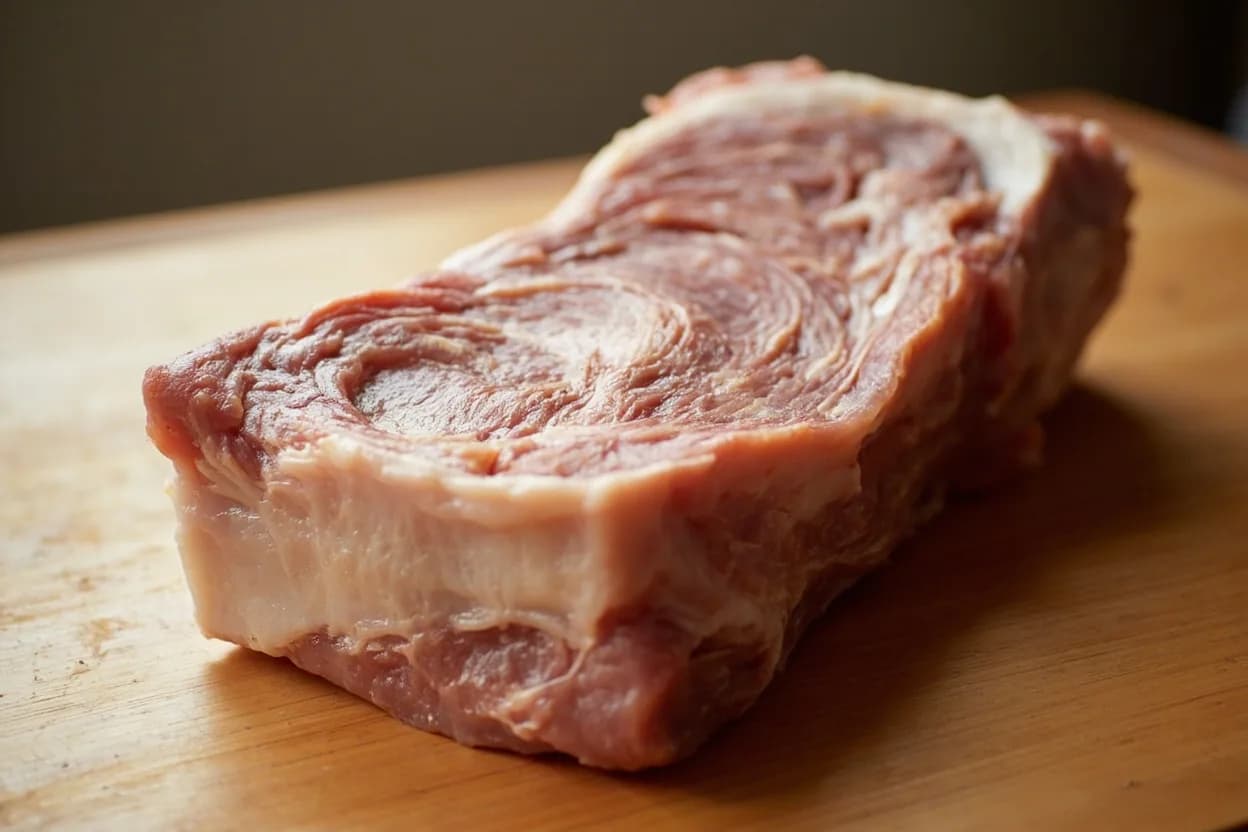
The Ibérico pig (Sus scrofa domesticus, Iberian breed) is genetically predisposed to deposit fat within its muscle tissue rather than primarily subcutaneously. Raised on acorns (bellotas) during the montanera season and exercising extensively across the dehesa (oak savanna), these pigs produce pork with extraordinary intramuscular fat (veteado) that marbles the meat like wagyu beef. The breed-specific anatomy and fat distribution produce cuts that have no direct equivalent in commercial white pig butchery: the secreto (a hidden seam between shoulder and back fat), the presa (a cap muscle atop the shoulder), and the pluma (a small triangular muscle at the loin end) are entirely unique to Ibérico butchery vernacular.
In photos
Where it comes from
Ibérico pigs, primarily raised in Extremadura, Huelva, Salamanca, and Córdoba provinces of Spain. Bellota-grade pigs (pata negra) graze on acorns from October to February, gaining 50–70 kg. The dehesa oak-pasture raising determines fat composition — oleic acid content can reach 55–60% of total fat, nearly olive-oil levels.
Best for
How to cook it
- 1Secreto: season with only salt and pepper — the fat carries enough flavor; grill over high heat to medium (60–62 °C core) and rest 5 minutes; slice against the grain of its broad sheet
- 2Presa: sear fat-side down first in a cast-iron pan, then flip; target 63–65 °C internal; rest generously — residual heat continues cooking aggressively in this thick cut
- 3Pluma: grill quickly over wood embers or a very hot plancha; serve at 60–63 °C internal; its small size means it overcooks in seconds past the ideal
- 4Carrillera: dredge in flour, sear, then braise in Pedro Ximénez or Amontillado sherry with onion and garlic for 2–3 hours until falling tender
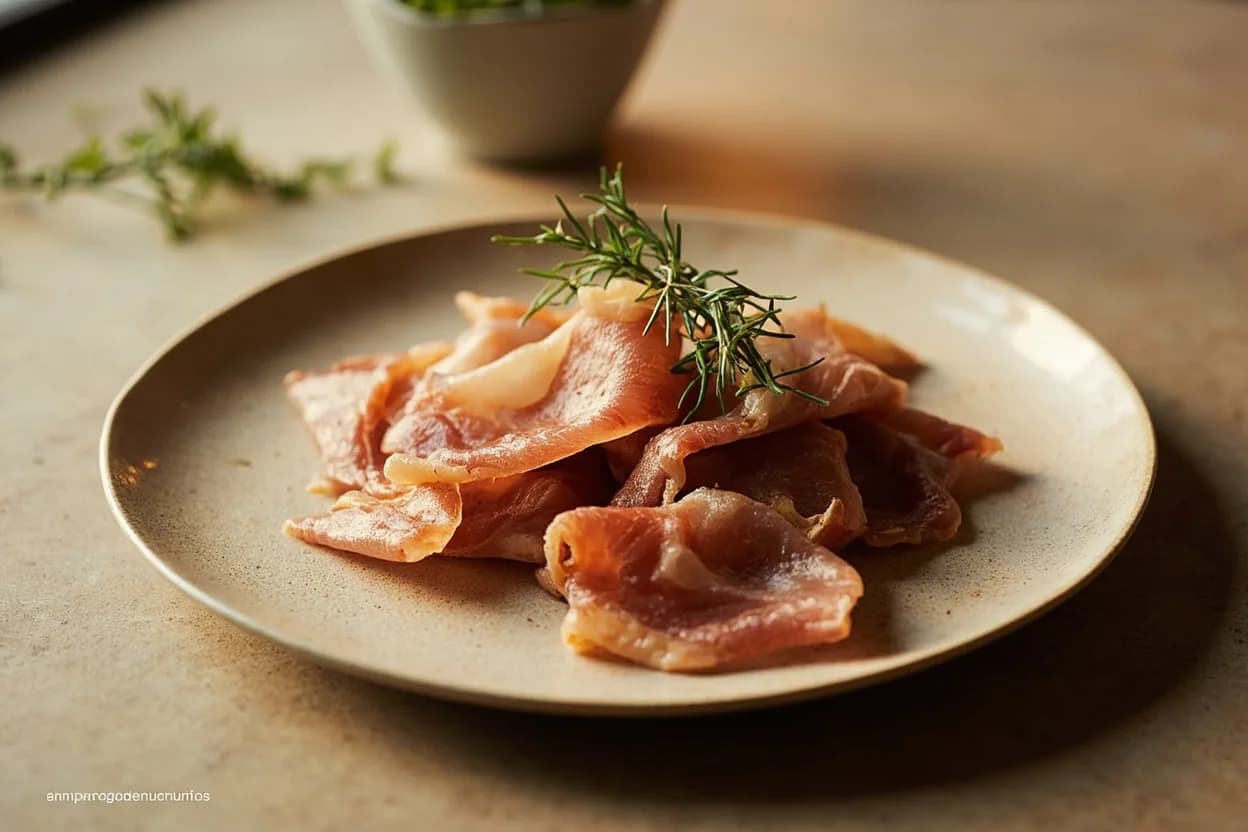
- 5Jamón: slice at room temperature with a long, flexible ham knife (cuchillo jamonero) in elongated, transparent, paper-thin slices; never refrigerate a cut jamón leg
Prep & butchery
- Fresh Ibérico cuts: remove only excess surface fat if necessary — the intramuscular fat is the point, do not over-trim
- Secreto: may arrive with some sinew on one face; peel this membrane off with a dry cloth for easier eating
- Presa: is often sold with a thick fat cap on one side — score it in a crosshatch before searing to prevent curling
- Jamón leg (whole): mount on a jamonero stand, cut away only the rind and yellow rancid surface fat as you slice inward; the red meat beneath should glisten with white fat veins
Substitutes
- Secreto from commercial Duroc pork
Duroc has higher intramuscular fat than most white breeds and is the closest commercial substitute for Ibérico fresh cuts
- Pork shoulder cap / picanha cut from pork
Can approximate the presa in a braised application; lacks the marbling for grilling
- Serrano ham
Anatomically the same leg as jamón ibérico but from a white pig; cured shorter; less complex, less fatty
- Pork cheek (any breed)
Adequate substitute for carrillera in braises — the muscle is the same, only the fat infiltration differs
Related cuts
One of the most prized individual cuts; detailed in its own entry
- Pork Shoulder (Boston Butt)
The closest commercial analogue to the presa anatomical region
- Lardo di Colonnata
Italian pure-fatback cure with parallel artisanal heritage to jamón
Italian cured cheek — similar artisanal logic to carrillera ibérica
Appears in
References
- 1.Whole Beast Butchery — Ryan Farr
- 2.The River Cottage Meat Book — Hugh Fearnley-Whittingstall
- 3.BOE — Real Decreto 4/2014 (Spanish regulatory classification of Ibérico products, official nomenclature)
- 4.On Food and Cooking — Harold McGee
Confidence: high
Notes
Regulatory grades
Spanish law (Real Decreto 4/2014) defines four grades based on breed purity and feeding regime: bellota 100% ibérico (black label), bellota ibérico (red label, 50–75% breed), cebo de campo ibérico (green label, free-range grain-finished), and cebo ibérico (white label, conventionally grain-fed). Only bellota-grade pigs develop the full veteado. The label color system applies to all cuts — fresh and cured.
Why the fat is different
During the montanera, pigs consume 6–10 kg of acorns per day. Acorns are rich in oleic acid (the same monounsaturated fat as olive oil). This dietary fat is incorporated directly into the pig's triglycerides, resulting in fat that is softer, more fluid at room temperature, and more aromatically complex than commercial pork fat — which is why jamón ibérico de bellota literally sweats beads of fat in a warm room.