Japanese Fish & Sashimi Cuts
Hiki-zukuri (Pulled Tuna Slice)
Also: hiki-zukuri, hikizukuri, pulled cut, drawing cut
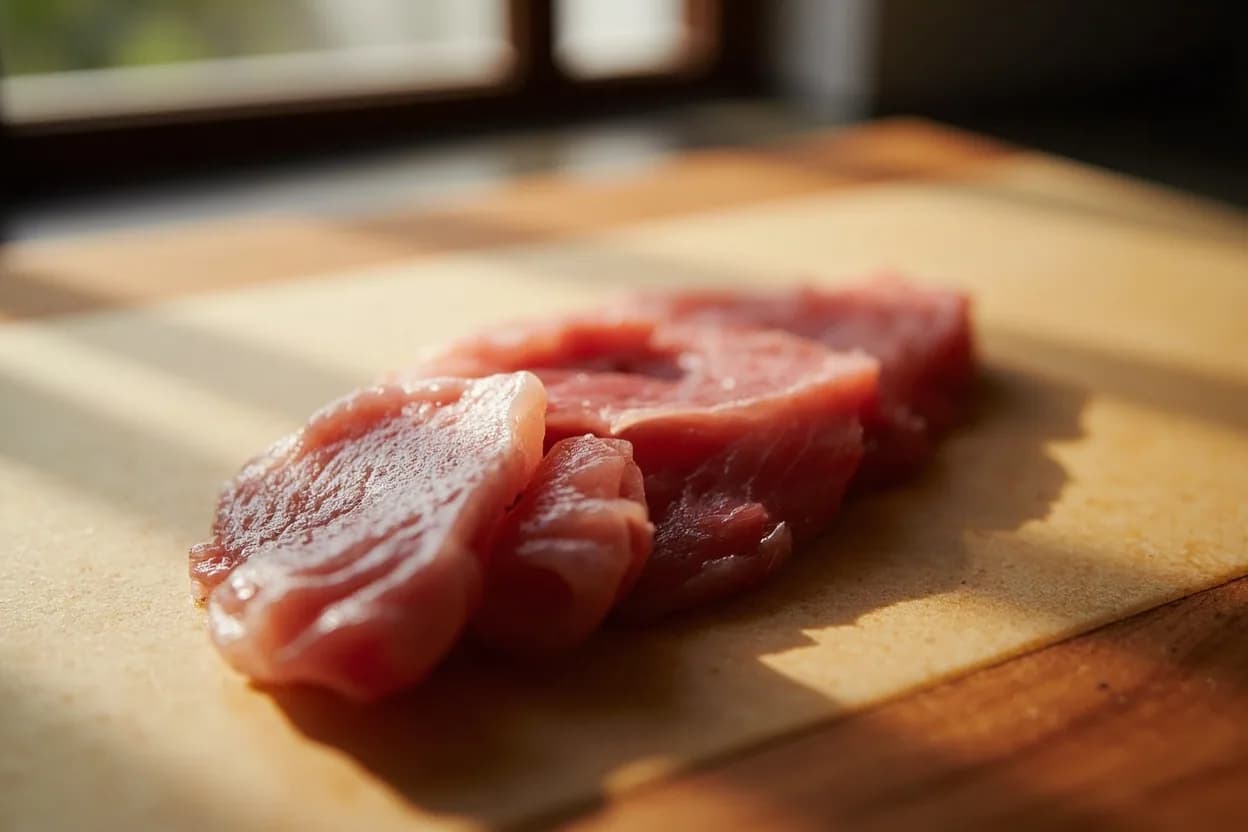
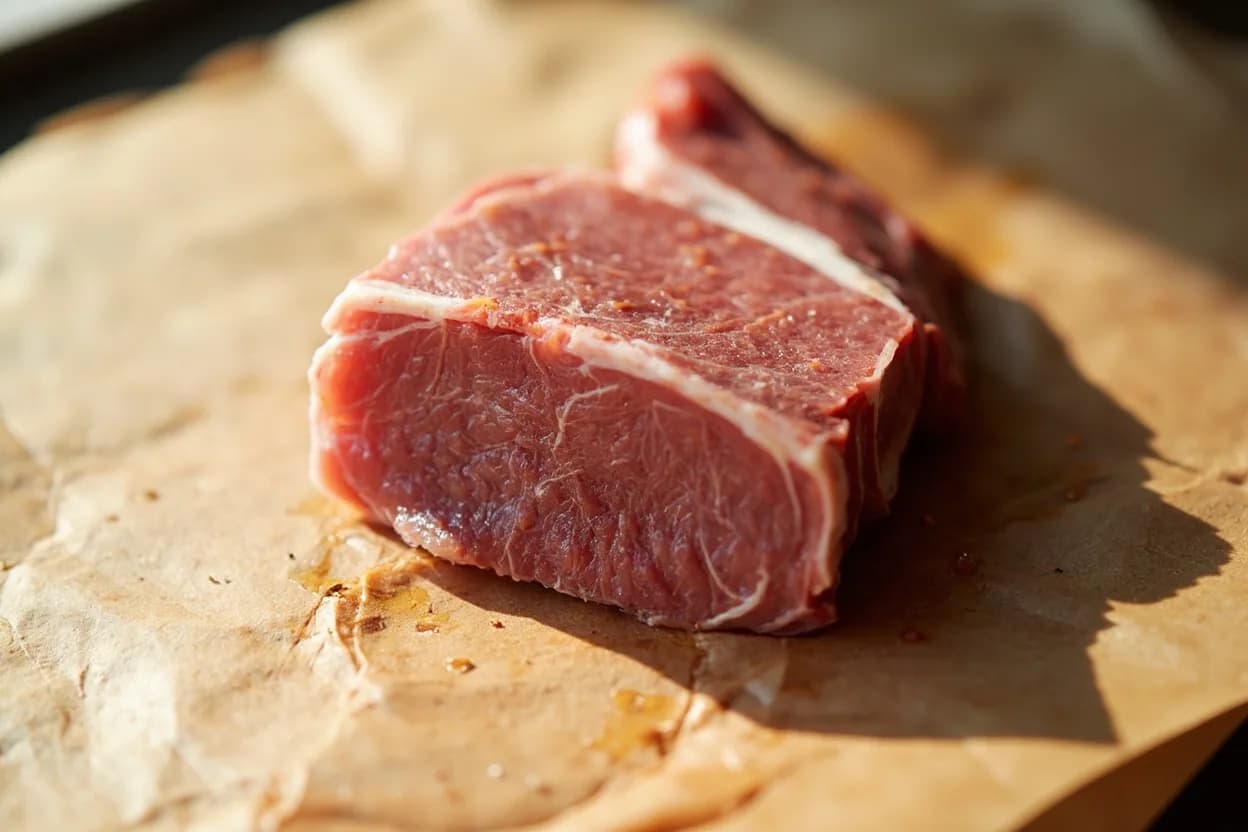
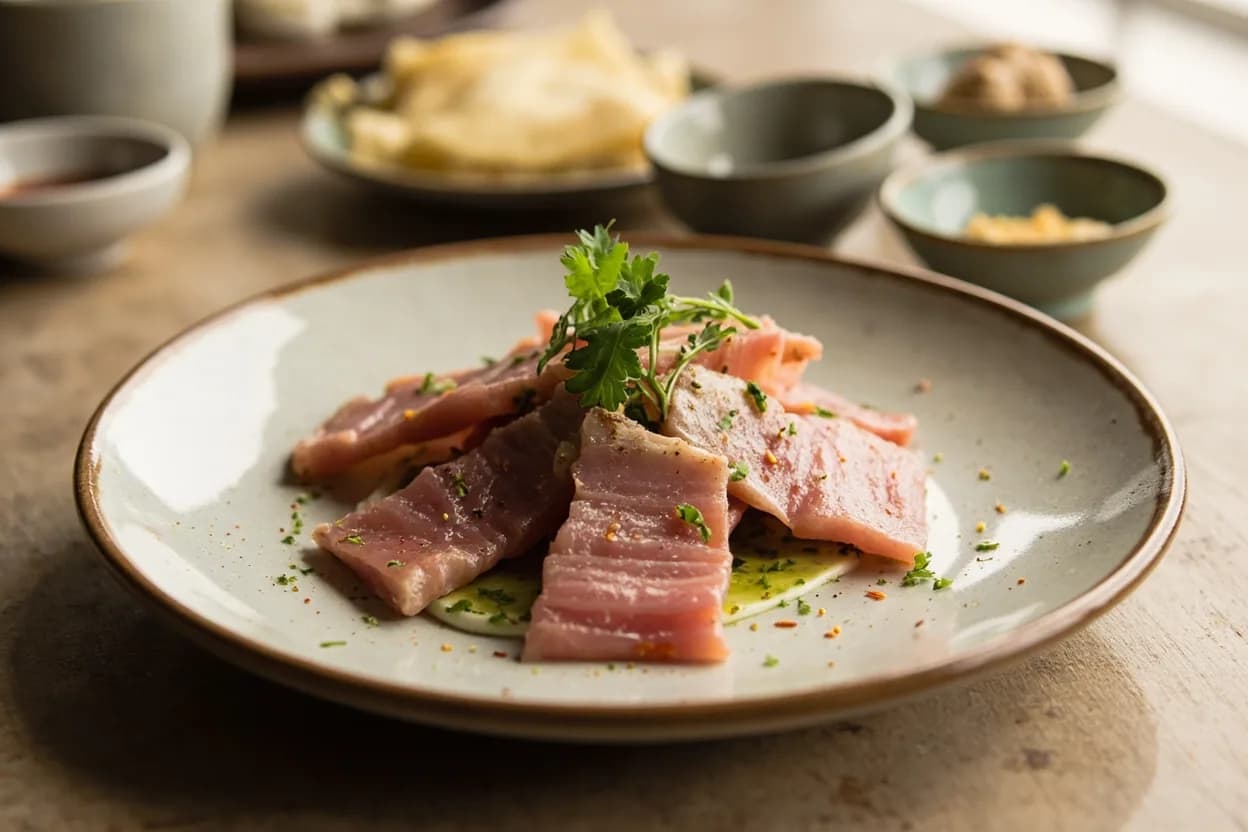
A long, single pulling stroke through tuna loin that yields thick, rectangular sashimi slices with a clean, unbroken face.
Hiki-zukuri is the foundational large-fish sashimi cut, performed by placing the blade near the heel of a yanagiba knife and drawing it the full length of the blade toward the body in one uninterrupted stroke. The result is a thick rectangular slice — typically 8–10 mm — with a smooth, gleaming face that reflects light and holds its shape on the plate.
In photos
Where it comes from
Applied to the block (saku) of akami (lean), chutoro (medium-fatty), or otoro (fatty belly) sections of bluefin or bigeye tuna loin after it has been portioned and trimmed to a clean rectangle. The cut travels perpendicular to the grain of the muscle fibers.
Best for
How to cook it
- 1Begin with a chilled, dry saku block placed on a damp cutting board; chill the yanagiba blade if possible
- 2Position the knife heel at the far edge of the block, blade angled slightly downward toward the board
- 3Apply light forward pressure and draw the entire blade length toward you in one fluid, uninterrupted stroke — never push or saw
- 4Lift the slice away with the flat of the blade or the non-cutting fingers, never with tongs
- 5Plate immediately; do not stack slices without parchment — the cut face is the presentation surface
- 6For otoro, allow the slice to rest 30 seconds at room temperature before serving to soften intramuscular fat slightly
Prep & butchery
- Skin and pin-bone the loin before blocking; any remaining membrane will cause the blade to drag and tear
- Square the saku to a uniform rectangular block with a single trim cut on each face
- Pat completely dry — surface moisture causes the knife to skate and ruins the cut face
- A yanagiba (single-bevel, 270–330 mm) is the canonical blade; a takohiki can substitute
Substitutes
- Sogi-zukuri
Angled diagonal cut — produces thinner, wider slices; use when the saku is narrow or for white fish
- Kaku-zukuri
Block cut — appropriate when a chewier, more substantial bite is desired or for firm fish like yellowtail
Related cuts
- Sogi-zukuri
Diagonal variant of the pulling stroke for thinner slices of white fish
- Kaku-zukuri
Block cut used for the same tuna species but yields a cube rather than a rectangle
- Usu-zukuri
Paper-thin extreme of the pulling technique, used for fugu and flounder
Appears in
References
- 1.Sushi and the Art of the Japanese Knife — Hiromitsu Nozaki
- 2.Washoku: Recipes from the Japanese Home Kitchen — Elizabeth Andoh
- 3.The Japanese Kitchen — Hiroko Shimbo
- 4.Knife Skills for Sashimi — Masaharu Morimoto (lecture notes, ICE)
Confidence: high
Notes
The one-pass rule
Hiki-zukuri is named for the hiku (引く) — the drawing, pulling action. Any interruption mid-stroke drags the knife across already-cut flesh, leaving a visible ridge and a roughened surface that absorbs soy sauce unevenly. Professional itamae train this stroke for months before cutting service-quality tuna.
Knife angle and thickness control
A steeper downward angle at the heel of the stroke produces a thicker slice; flattening the blade at the start yields a thinner result. Consistency requires fixing the wrist angle and letting the weight of the blade do the work — forced pressure creates compression and fiber damage.