Charcuterie & Cured Meat Cuts
Seekh Kebab Mince Grind Ratio
Also: seekh kebab mince, kebab grind, kofta grind, lamb mince for seekh
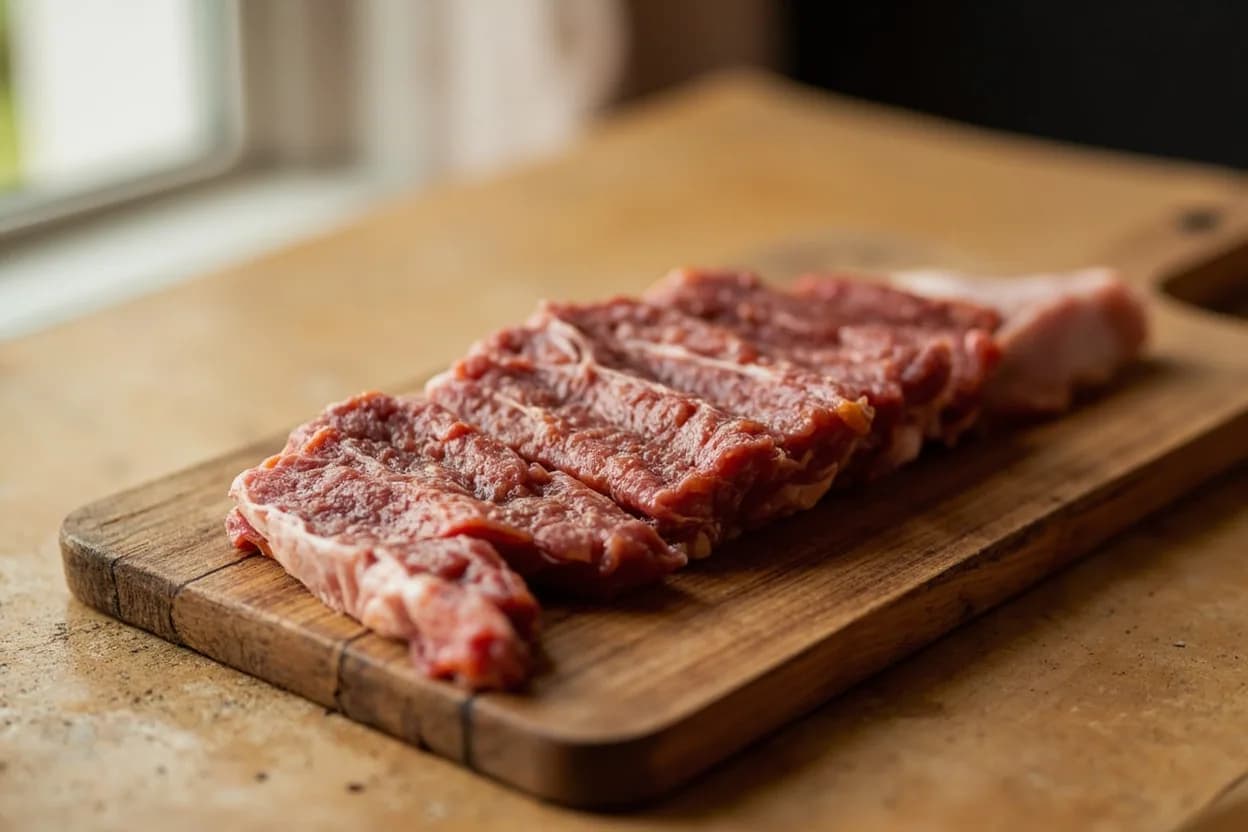
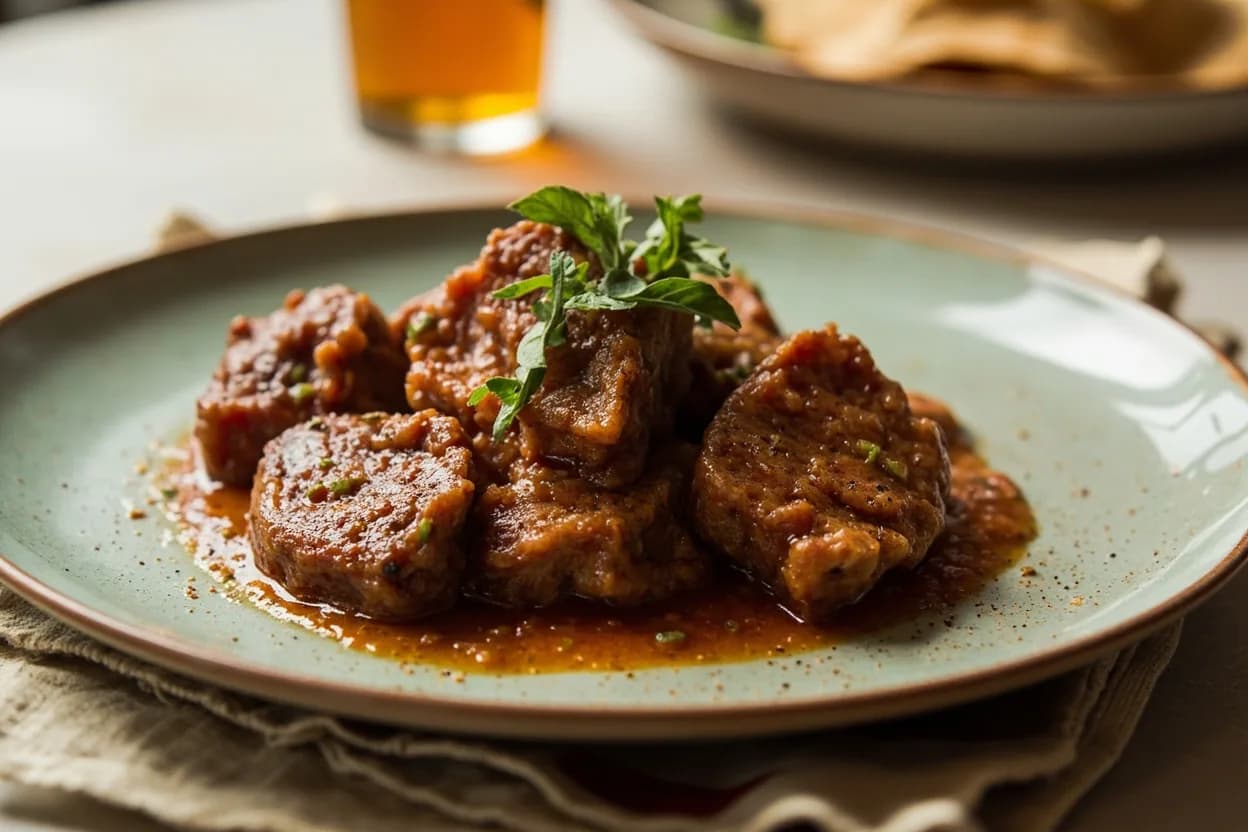
The fat-to-lean balance and coarseness of grind that allows hand-moulded lamb mince to cling to a flat metal skewer without binding agents.
Seekh kebab mince grind ratio describes the precise combination of fat content (typically 20–25% of total weight), grind coarseness (one pass through a 6–8 mm die plate for texture, sometimes followed by a second pass through a 4.5 mm plate for finer binding), and muscle selection that allows the mince to be hand-moulded around a flat, wide seekh skewer and hold its cylindrical shape over charcoal heat without crumbling, splitting, or sliding off. Getting the ratio right eliminates the need for egg, breadcrumbs, or chemical binders — the fat and the natural collagen in the cut do the work.
In photos
Where it comes from
Lamb shoulder is the canonical source — the front leg primal gives a ratio of approximately 75–80% lean muscle to 20–25% interspersed fat without further addition. Butchers and home cooks who use leaner leg meat must compensate by adding tail fat (chauri), kidney fat, or minced lamb belly to reach the target fat window.
Best for
How to cook it
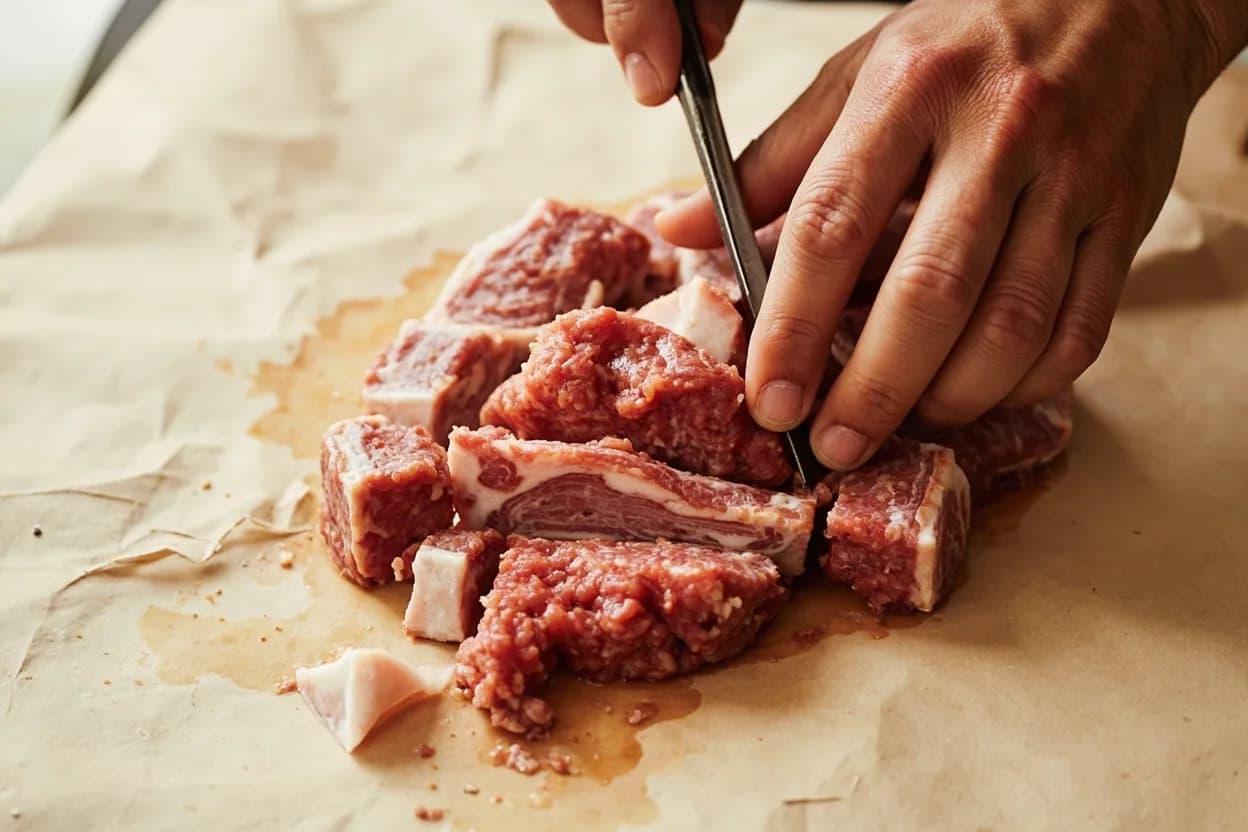
- 1Select bone-in lamb shoulder; bone out and cube into 2–3 cm pieces, keeping all visible fat attached.
- 2Chill the meat and grinding equipment to near-freezing (4°C); warm fat smears rather than cuts cleanly through the die.
- 3Pass through a 6–8 mm die once; assess texture. For a finer, more homogeneous result, pass once more through a 4.5 mm die.
- 4Add aromatics — grated raw onion (squeezed of excess water), fresh green chilli, ginger-garlic paste, coriander, cumin, garam masala, chilli powder, and salt.
- 5Knead the seasoned mince vigorously by hand for 3–5 minutes until the mixture becomes tacky and pulls away from the bowl cleanly; this activates myosin, the natural protein binder.
- 6Rest the mince, covered, for at least 30 minutes in the refrigerator to allow flavours to develop and proteins to bind further.
- 7Mould around a wide, flat seekh skewer with wet hands, squeezing firmly and rolling back and forth to compact; cylinders should be 2–2.5 cm in diameter.
- 8Grill over direct charcoal heat (or under a very hot broiler), turning frequently for even colour; internal temperature should reach 70°C.
Prep & butchery
- Remove any silverskin before grinding — it creates tough, stringy inclusions that disrupt the smooth cylinder.
- Squeeze grated onion in a cloth before adding; excess moisture prevents binding.
- If fat content is uncertain, fry a small test patty and check if it holds together — adjust by adding lamb fat trimmings and re-grinding if needed.
Substitutes
- Lamb leg mince
Too lean at 10–15% fat; must be supplemented with lamb tail fat or suet to reach the functional 20–25% fat window.
- Beef chuck mince (80/20)
A workable substitute in beef-seekh traditions; the binding behaviour is very similar, but the flavour profile changes substantially.
- Mutton shoulder mince
Older animal, stronger flavour; higher collagen content actually improves binding; traditional in many South Asian restaurants.
Related cuts
Parallel grind-ratio and die-plate discipline applied to beef in Mexican charcuterie tradition.
- Lamb Shoulder (bone-in)
The primary source cut; bone-in shoulder yields the correct fat distribution.
- Lamb Kofta Mix
Related preparation using a similar fat-to-lean ratio but moulded into balls rather than cylinders.
Appears in
References
- 1.Tandoori Cooking — Khalid Aziz
- 2.The Complete Asian Cookbook — Charmaine Solomon
- 3.660 Curries — Raghavan Iyer
- 4.On Food and Cooking: The Science and Lore of the Kitchen — Harold McGee
Confidence: high
Notes
Why shoulder and not leg
Lamb leg is the butcher's default mince cut in many Western markets, but its leanness (around 10–15% fat) makes it poorly suited to seekh kebab. The shoulder, by contrast, has extensive intramuscular fat from the constant work the front leg does in a grazing animal. This distributed fat — not added fat — is what allows the mince to bind, stay moist over a hot fire, and develop the characteristic faint char on the surface without drying out underneath.
The kneading step is non-negotiable
In professional tandoor kitchens, the mince is kneaded for far longer than most home recipes suggest — sometimes 10 minutes or more. This activates myosin, the primary meat protein responsible for gel formation when heated. Under-kneaded mince feels loose and the kebabs split over the fire; properly kneaded mince has a satiny, slightly sticky surface and springs back when pressed. Many cooks add a small amount of raw papaya paste (containing papain) as a tenderiser, but this must be used sparingly — too much breaks the protein structure and prevents binding.