Knife Cuts — Japanese
Sengiri (Japanese Fine Julienne)
Also: sen-giri, 千切り, fine shred cut
Ultra-fine Japanese julienne producing thread-like shreds 1–2 mm wide, prized for delicate texture and rapid, even pickling or seasoning.
Sengiri (千切り, literally 'thousand cuts') is the Japanese fine-julienne technique that reduces vegetables into long, hair-thin matchsticks of 1–2 mm square cross-section and 4–6 cm length. The cut is thinner and more uniform than its Western counterpart and is the standard shred cut in Japanese home and restaurant cooking.
In photos
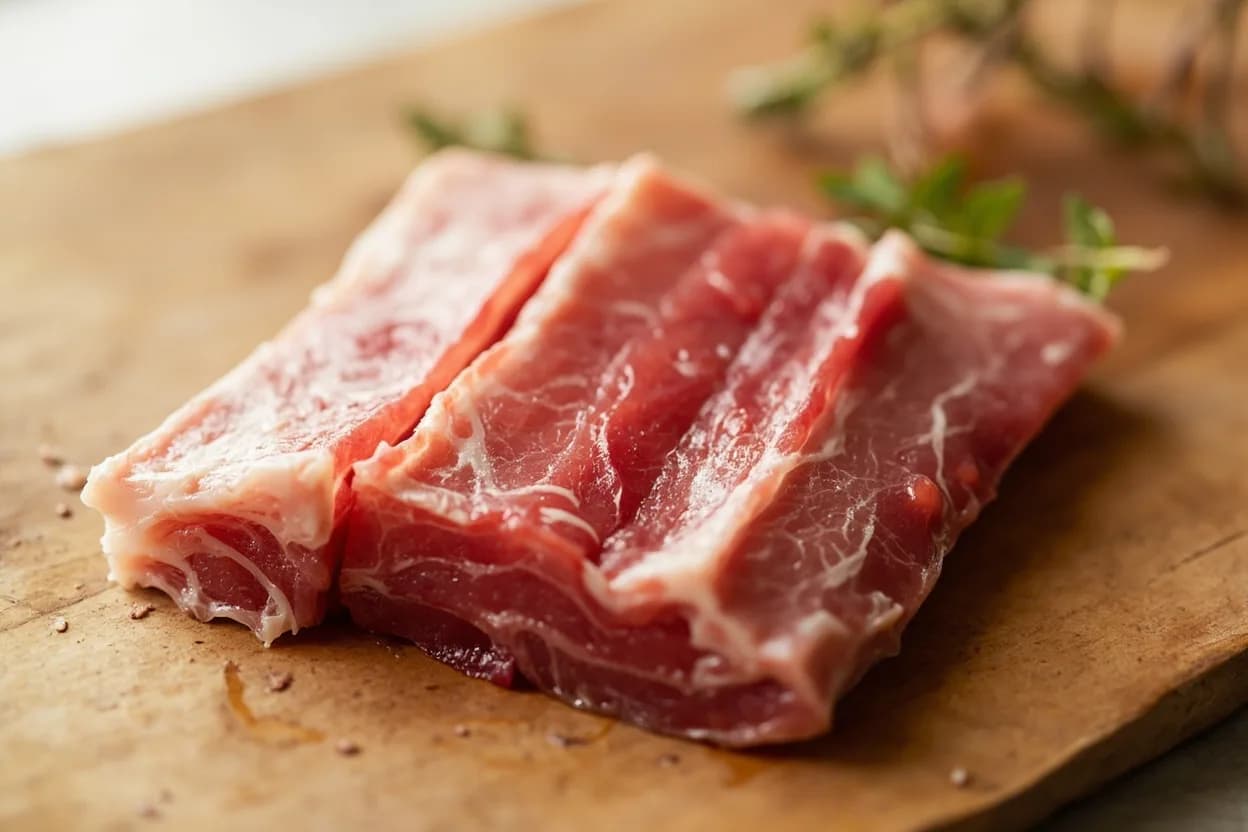
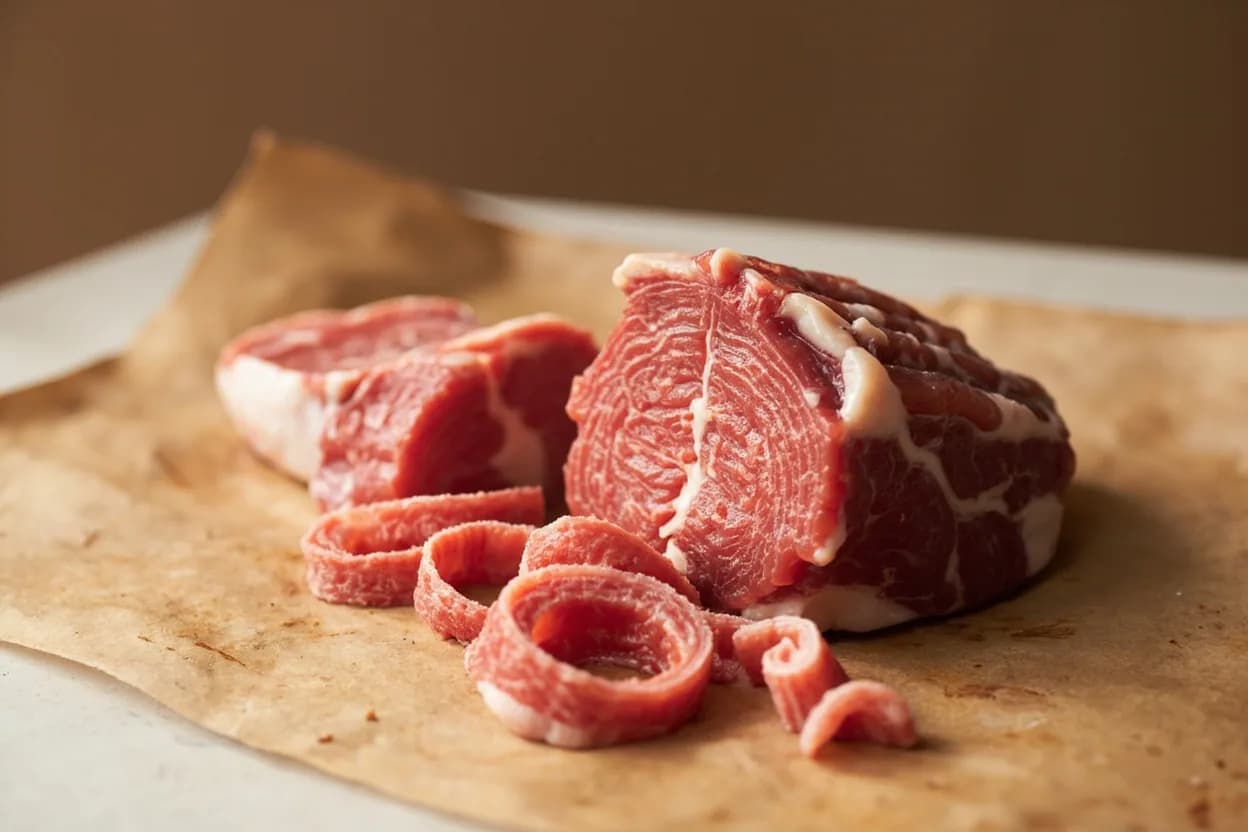
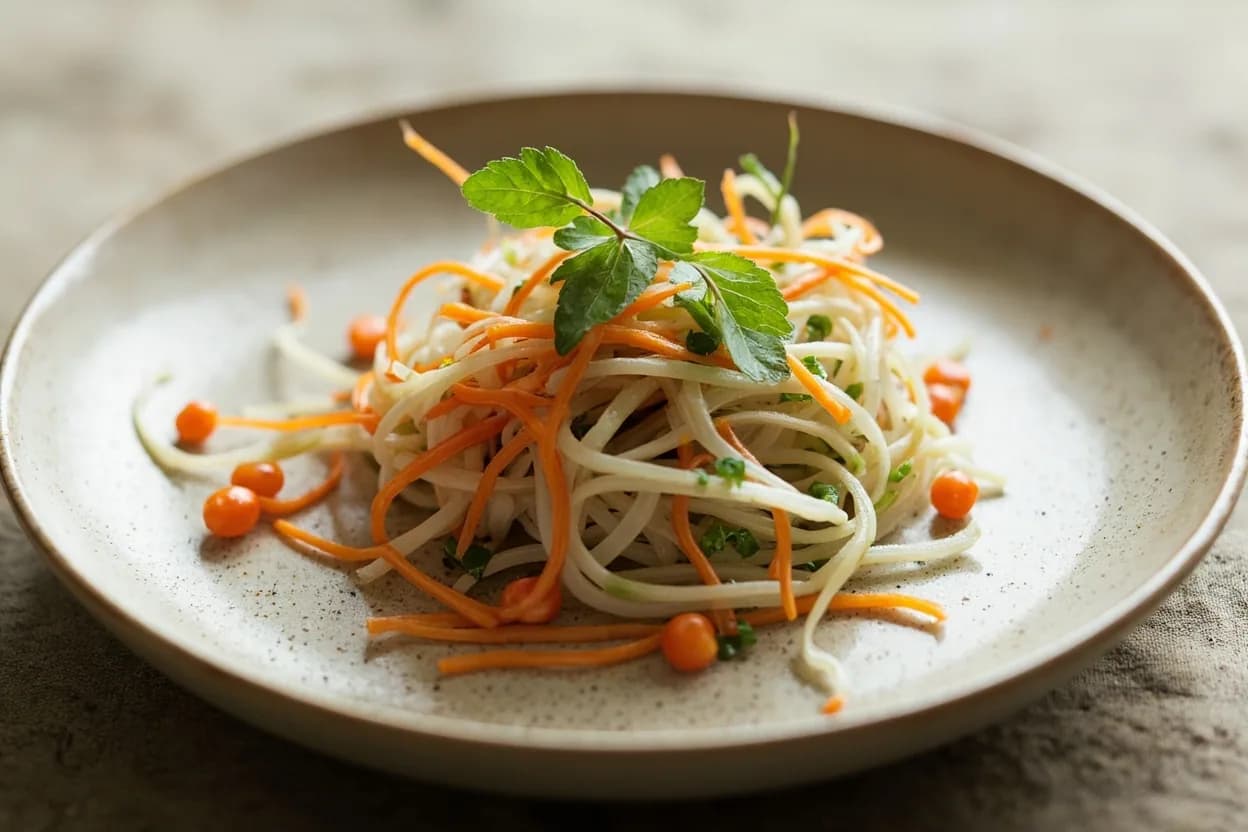
Where it comes from
Knife cut applied to vegetables; most classically to daikon (mooli), burdock root (gobo), cucumber, carrot, cabbage, and ginger. The geometry is a flat plank (hyoshigi-giri or katsura-muki sheet) stacked and sliced into fine strips.
Best for
How to cook it
- 1Peel the vegetable and slice lengthwise into thin planks 1–2 mm thick using a sharp yanagiba or usuba; a mandoline speeds this step for daikon.
- 2Stack 4–6 planks and align them precisely, then slice across the stack into 1–2 mm strips, keeping the blade vertical and using a push-cut with the knuckle as a guide.
- 3For daikon tsuma, soak completed shreds in ice water for 10 minutes to maximise crispness before draining and patting dry.
- 4For burdock (gobo), shave into water acidulated with rice vinegar as you cut to prevent oxidation, then parboil and dress.
- 5When used in vinegared salads, toss with salt first, squeeze out excess water, then dress to avoid diluting the tare.
- 6For stir-fries, cook over high heat no longer than 60–90 seconds to preserve crunch.
Prep & butchery
- Use an usuba (single-bevel rectangular vegetable knife) or a sharp thin-bladed gyuto for best results; a thick blade will crush the shreds.
- For cylindrical vegetables like daikon, first produce a thin sheet via katsuramuki (rotary peeling), then stack and slice.
- Chill the vegetable before cutting — cold flesh is firmer and produces cleaner, finer shreds.
- Keep a damp cloth handy to wipe the blade between passes to prevent cellular moisture from causing the strips to stick together.
Substitutes
- Mandoline fine-julienne blade
Produces comparable width mechanically but can crush delicate vegetables; still acceptable for daikon.
- Western fine julienne (1/16 inch)
Slightly coarser than sengiri standard; acceptable in most applications.
- Hasen-giri (torn shreds)
Used for cabbage; gives a rougher, more rustic texture but achieves similar volume.
Related cuts
The rotary-peel sheet technique that produces the planks later sliced into sengiri.
- Hyoshigi-giri
Thick rectangular batons — the opposite end of the width spectrum from sengiri.
- Sainome-giri
Small cube cut derived from planks similar to those used for sengiri.
- Western julienne
Broader 3 mm × 3 mm matchstick; sengiri is roughly half the width.
Appears in
References
- 1.Japanese Cooking: A Simple Art — Shizuo Tsuji
- 2.The Japanese Kitchen — Hiroko Shimbo
- 3.Washoku: Recipes from the Japanese Home Kitchen — Elizabeth Andoh
- 4.Knife Skills Illustrated — Peter Hertzmann
Confidence: high
Notes
Dimension standard
Professional Japanese kitchens target 1–2 mm width for sengiri; anything above 3 mm drifts into tanzaku-giri (thin rectangular) territory. The classic test is that a proper sengiri mound of daikon should be translucent and almost weightless when piled.
Tsuma garnish tradition
The daikon tsuma beneath sashimi is always sengiri. Beyond aesthetics, the shreds act as a mild palate cleanser and absorb any fish juices, keeping the presentation pristine. High-volume restaurants use a special daikon tsuma cutter, but the knife-cut result remains the benchmark for quality.