Pork — Primal & Subprimal
Pluma Ibérica
Also: pluma de lomo ibérico, feather cut ibérico, pluma de cerdo ibérico
A small, feather-shaped loin-tip muscle from the Ibérico pig — thin, quick-cooking, and marbled with the breed's signature oleic fat.
Pluma ibérica ('feather' in Spanish) is the fan-shaped terminal muscle at the rear end of the loin, where the longissimus dorsi broadens and tapers just before the hip. It is anatomically equivalent to a pork sirloin tip or loin flap on commercial pigs, but on the Ibérico breed it carries a concentration of intramuscular fat that gives it exceptional flavour for such a lean-seeming muscle. Each pig yields two plumas of roughly 150–250 g each.
In photos
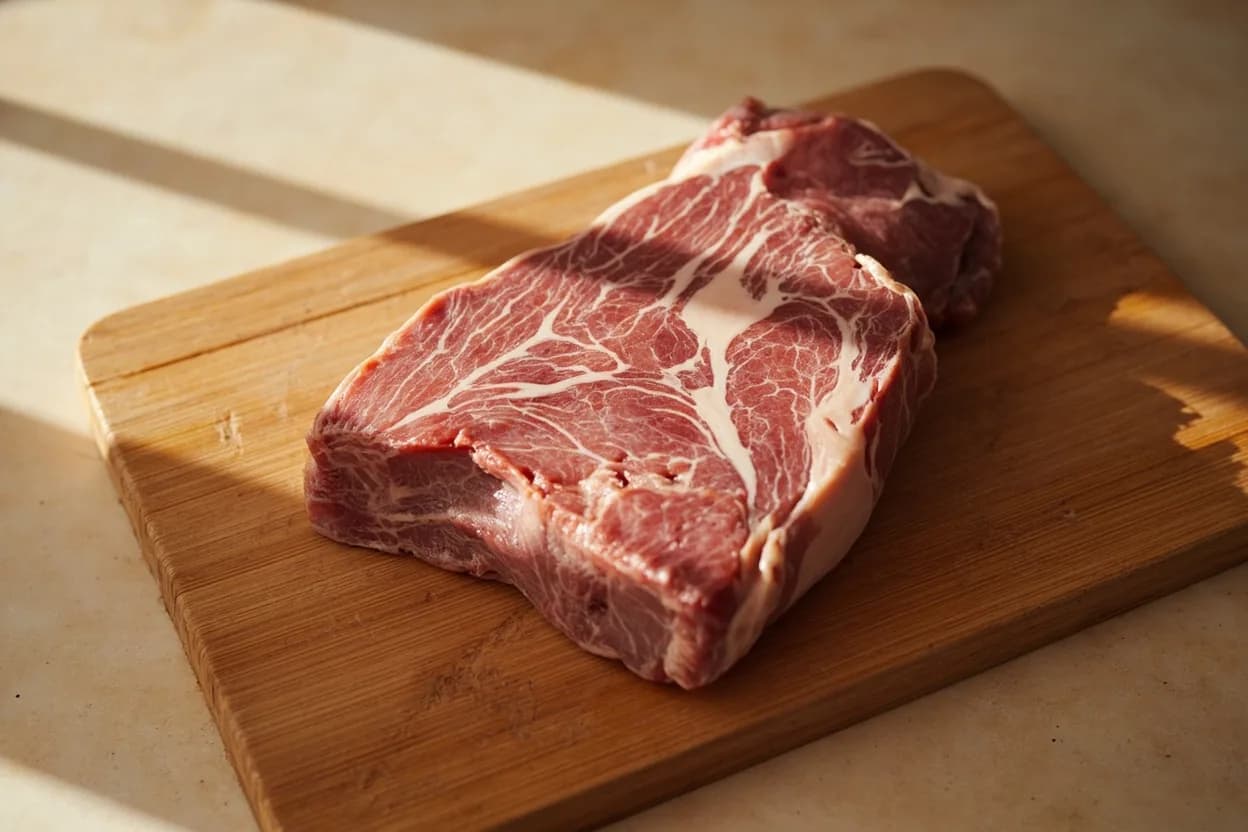
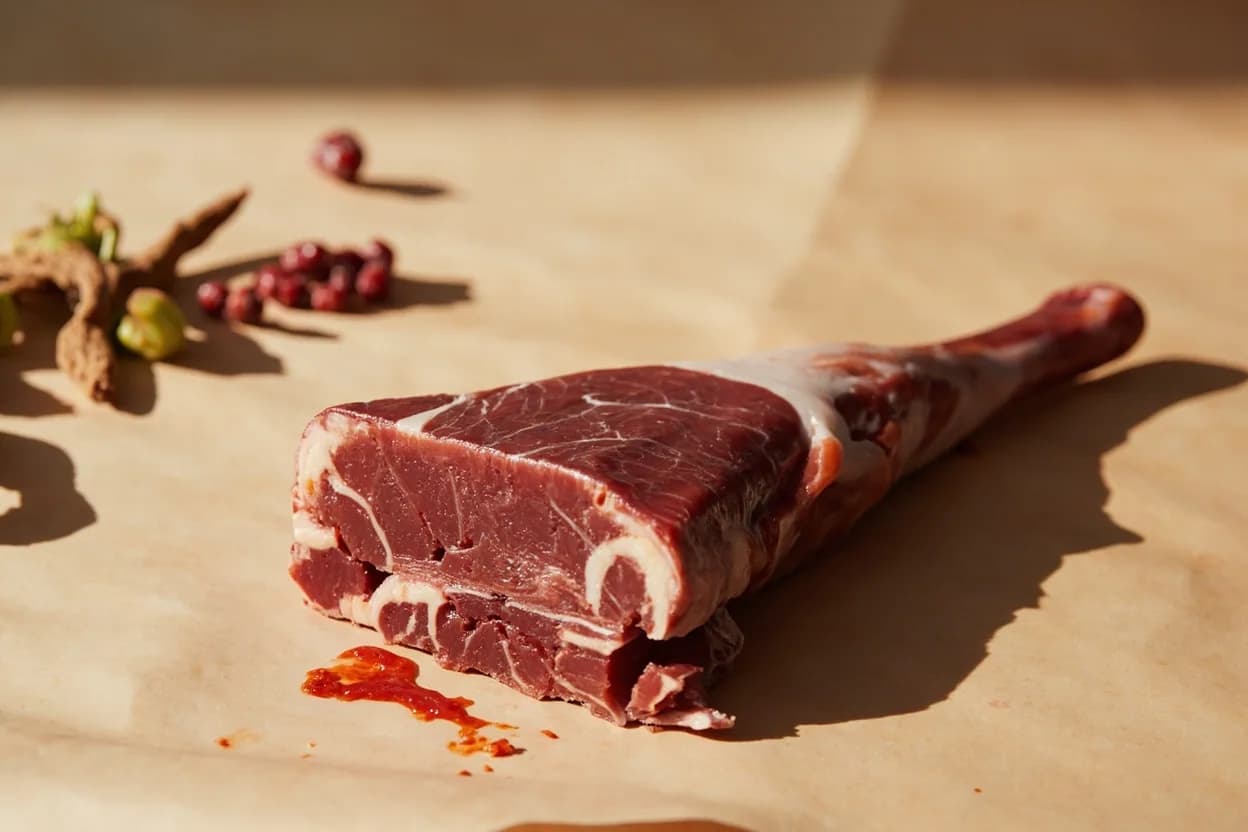
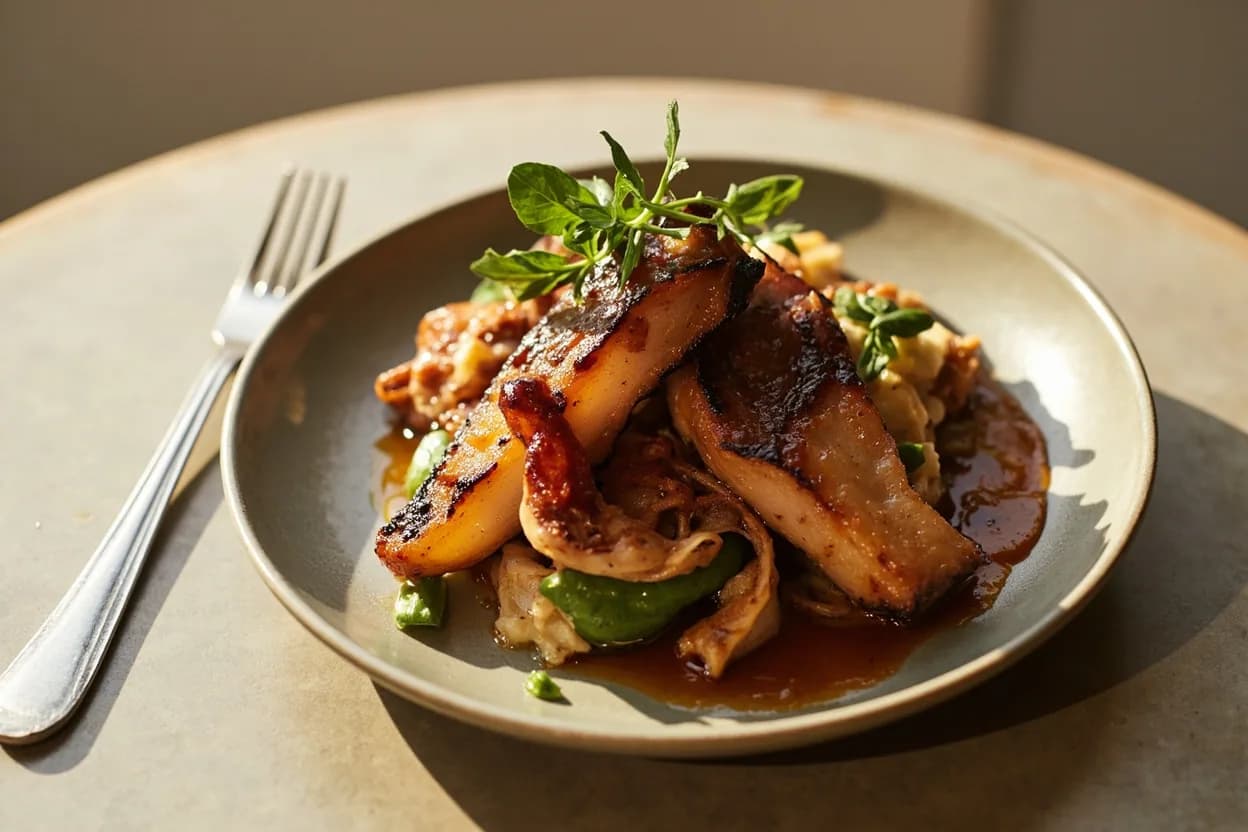
Where it comes from
Posterior tip of the pork loin (lomo), immediately anterior to the hip joint; the fan-shaped termination of the longissimus dorsi and associated muscles as the loin transitions to the leg. Separated by seam-cutting along the natural fascia boundary between the loin and the rump.
Best for
How to cook it
- 1Temper the pluma at room temperature for 20–30 minutes before cooking — its thinness means a cold centre cooks unevenly.
- 2Season with fine sea salt only just before cooking to avoid drawing out moisture.
- 3Get the plancha or cast-iron ripping hot (smoking); add a thin film of olive oil.
- 4Place the pluma flat and press lightly to ensure full contact; sear 90 seconds to 2 minutes per side for medium-rare (internal 58–60 °C).
- 5Remove immediately — residual heat will carry it another 2–3 degrees. Rest on a board for 2–3 minutes.
- 6Slice on the diagonal across the grain; serve with a drizzle of aged sherry vinegar reduction or smoked salt.
Prep & butchery
- Butchery: after splitting the loin from the leg, the pluma is peeled away from the rump end of the loin using a flexible boning knife along the natural seam — it lifts off cleanly with minimal trimming.
- Leave the thin layer of external fat intact — it flavours the crust during searing.
- If the pluma has a thicker lobe on one side, butterfly that section lightly for even thickness before cooking.
- Cook whole for restaurant service; halve or slice thin for tapas boards.
Substitutes
Thicker and more robust; increase cook time by 3–4 minutes and rest longer.
Thin like the pluma but from the axillary region; very similar cooking window and flavour.
- Pork Tenderloin (non-Ibérico)
Comparable thickness and quick cooking but much leaner and blander; use only if Ibérico unavailable.
Related cuts
Shoulder cap of the same breed; thicker, richer, and slower-cooking
Axillary skirt muscle of the same breed; nearly identical cooking approach
- Lomo Ibérico
The full loin from which the pluma is the terminal cut
- Pork Sirloin Tip
Anatomically equivalent muscle on commercial breeds
Appears in
References
- 1.Charcutería: The Soul of Spain — Jeffrey Weiss (2014)
- 2.The River Cottage Meat Book — Hugh Fearnley-Whittingstall (2004)
- 3.Denominación de Origen Protegida: Cerdo Ibérico — Spanish Ministry of Agriculture (BOE 2014)
Confidence: high
Notes
Why the Feather Shape Matters
The fan-like taper of the pluma means the thin tip cooks faster than the thick base. Professional cooks either butterfly the thick end or pull the tip off the grill 30 seconds early. Getting the whole piece to uniform medium-rare requires attention to this geometry.
Bellota Grade
Like all Ibérico cuts, the pluma's flavour is dramatically better on bellota-grade animals (acorn-finished in the dehesa). The oleic fat in bellota presa and pluma has a genuinely different taste profile — nuttier, more unctuous — than grain-fed Ibérico or standard commercial pork.