Pork — Primal & Subprimal
Presa Ibérica
Also: presa de paleta, shoulder cap ibérico, presa de cerdo ibérico
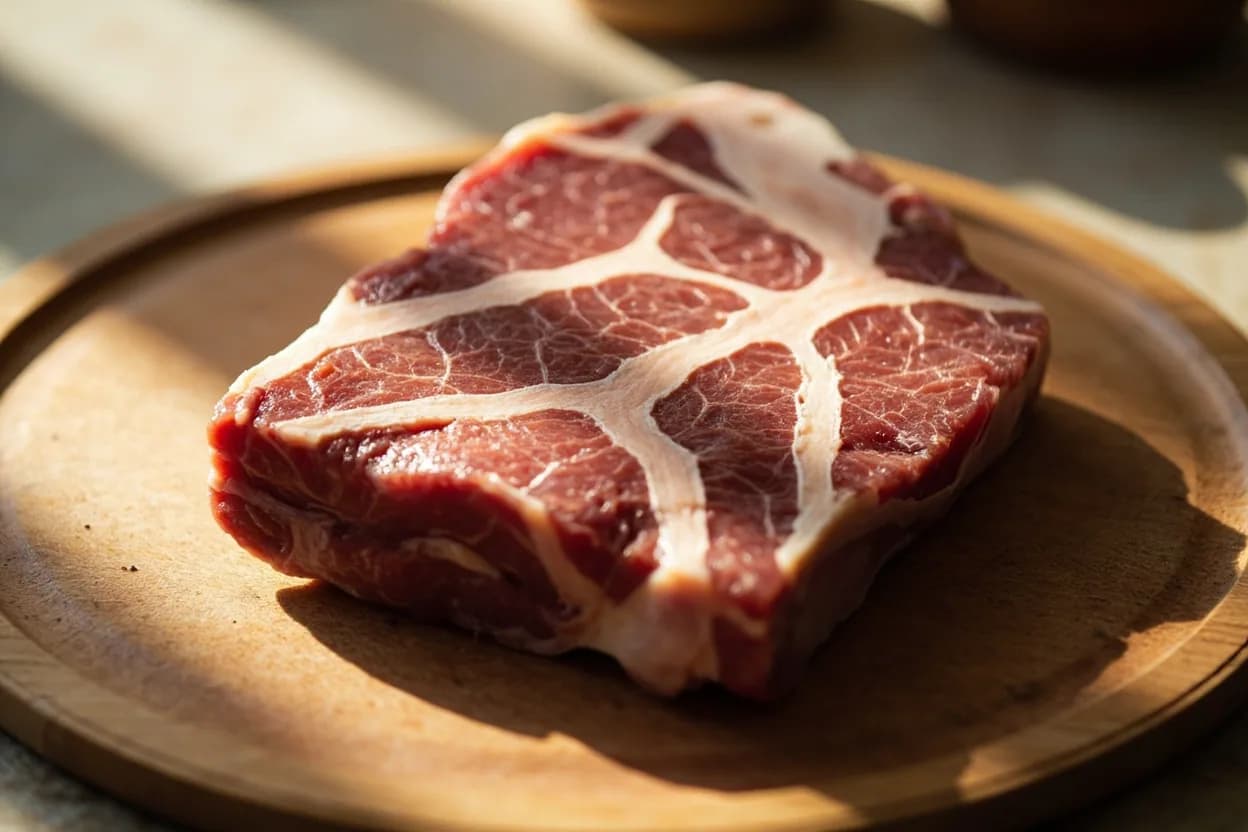
The prized shoulder cap of the Ibérico pig, threaded with extraordinary fat infiltration and prized for its deep, nutty flavour.
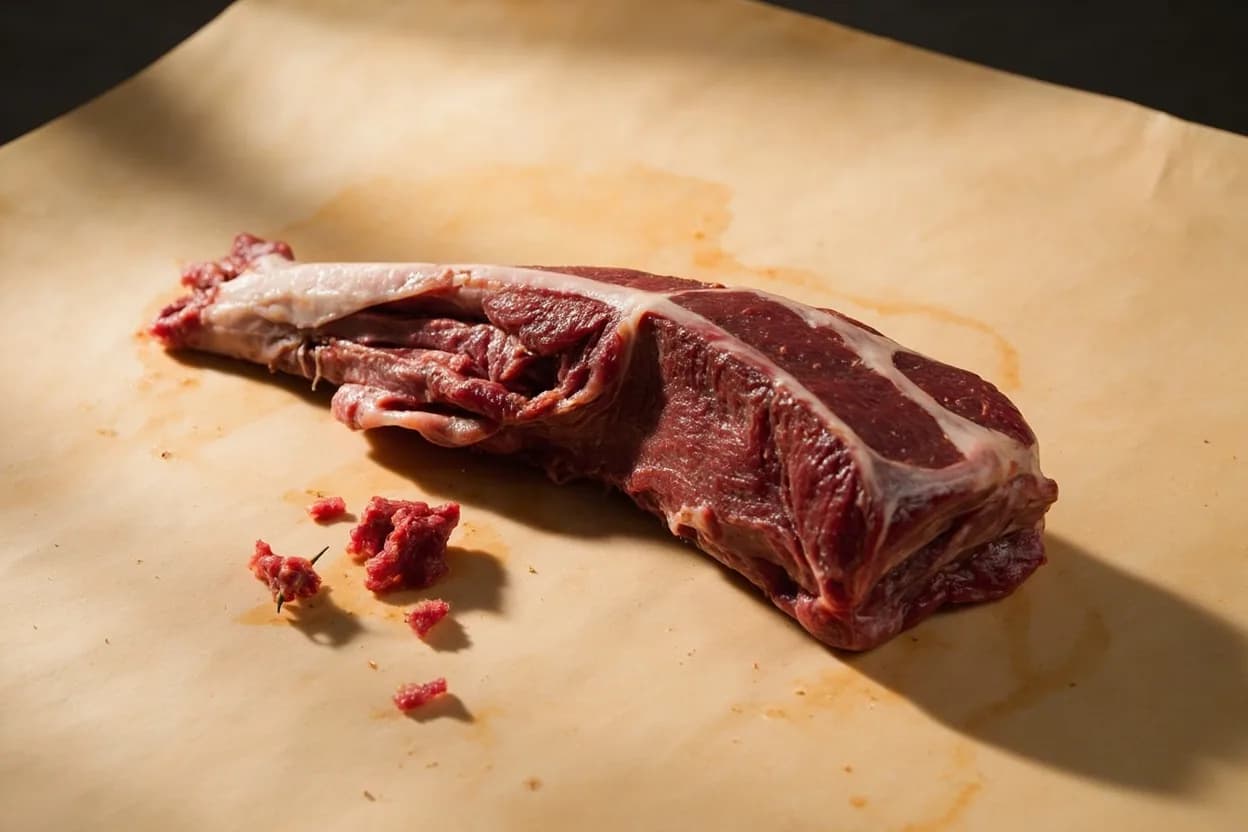
Presa ibérica is a single, roughly triangular muscle separated from the upper-anterior portion of the Ibérico pig's shoulder (paleta/espalda) where it meets the neck. It sits between the coppa/cabecero and the main shoulder blade musculature. On a standard pig the corresponding muscle is unremarkable, but on a pata negra animal finished on acorns (bellota) the presa is laden with oleic-acid-rich intramuscular fat that rivals wagyu in marbling density.
In photos
Where it comes from
Anterior shoulder cap of the Ibérico pig (Sus scrofa domesticus, Ibérico breed); specifically the serratus ventralis and associated shoulder-cap muscles above the scapula. Sits dorsal to the coppa and anterior to the loin, separated by hand with a thin boning knife along natural seam lines.
Best for
How to cook it
- 1Remove from the refrigerator 30–45 minutes before cooking to temper; presa is thick and benefits from even internal temperature.
- 2Season generously with sea salt only — the fat and acorn flavour need no masking.
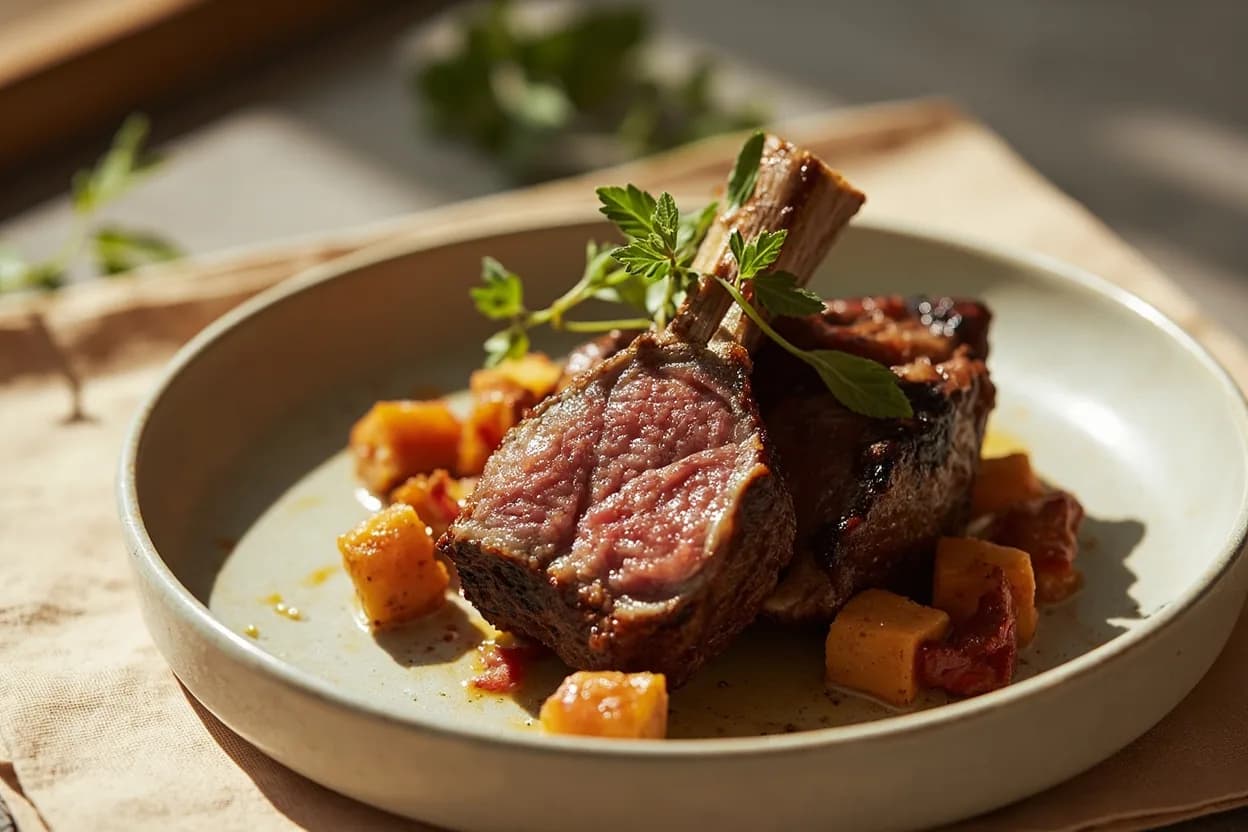
- 3Sear on a very hot plancha, cast-iron, or wood-fire grill, turning frequently (every 60–90 seconds) to build a crust without burning the external fat.
- 4Cook to an internal temperature of 58–62 °C (medium-rare to medium); presa is safe and far superior at this doneness — going beyond 65 °C dulls the fat.
- 5Rest on a wire rack for at least 5 minutes before slicing across the grain into 1.5 cm medallions.
- 6Serve immediately; a few drops of good DOP olive oil and flaky salt on the slice are the only garnish needed.
Prep & butchery
- Butchery: after removing the front leg (paleta) at the shoulder joint, the presa is seam-cut from the top of the blade with the tip of a flexible boning knife, following the natural fat seam — no saw required.
- Trim the outer silverskin membrane if present; the fat cap itself should remain intact.
- For restaurant portioning, individual pieces (200–300 g) are cut perpendicular to the grain of the thick end.
- Freezing is acceptable but degrades the delicate fat structure; use fresh or 24-hour refrigerator-thawed.
Substitutes
- Coppa / Cabecero Ibérico
From the same pig's neck; slightly more sinew but similar fat levels. Requires longer cooking if braised.
- Pork Collar (non-Ibérico)
Widely available and fatty, but lacks the oleic-acid richness and acorn complexity; cook to medium rather than medium-rare.
Another prized Ibérico muscle (skirt/flap between the shoulder and belly); even thinner, faster-cooking, and similarly fatty.
Related cuts
Thin intercostal / axillary flap of the same breed; faster-cooking but equally fatty
Loin-tip feather cut; leaner and quicker-cooking than presa
- Coppa / Cabecero Ibérico
Neck collar of the same pig; more connective tissue, suits braise or slow-grill
- Secreto de Paleta
Variant term used in some regions for a sub-muscle adjacent to the presa
- Pork Collar
Non-Ibérico equivalent from the neck-shoulder junction
Appears in
References
- 1.Charcutería: The Soul of Spain — Jeffrey Weiss (2014)
- 2.The Whole Beast: Nose to Tail Eating — Fergus Henderson (2004)
- 3.Denominación de Origen Protegida: Jamón Ibérico — Spanish Ministry of Agriculture regulations (BOE 2014)
- 4.On Food and Cooking — Harold McGee (2004)
Confidence: high
Notes
Bellota vs. Cebo
The presa cut exists on all Ibérico pigs, but only animals finished on acorns in the dehesa (bellota designation) develop the extraordinary oleic-acid marbling that makes the cut world-class. Cebo (grain-finished) presa is good but noticeably leaner and milder. The DOP label on the package will specify the diet tier.
Safe Temperature
EU and US food-safety guidance for whole pork muscle now permits 63 °C (145 °F) with a 3-minute rest, making medium-rare presa legally and practically safe. The old 'cook pork to grey' advice destroys the cut.