Offal & Variety Meats
Ponmo (Cow Skin) — Sizing Cuts
Also: kanda, ko (Ghana), wele, cow hide pieces
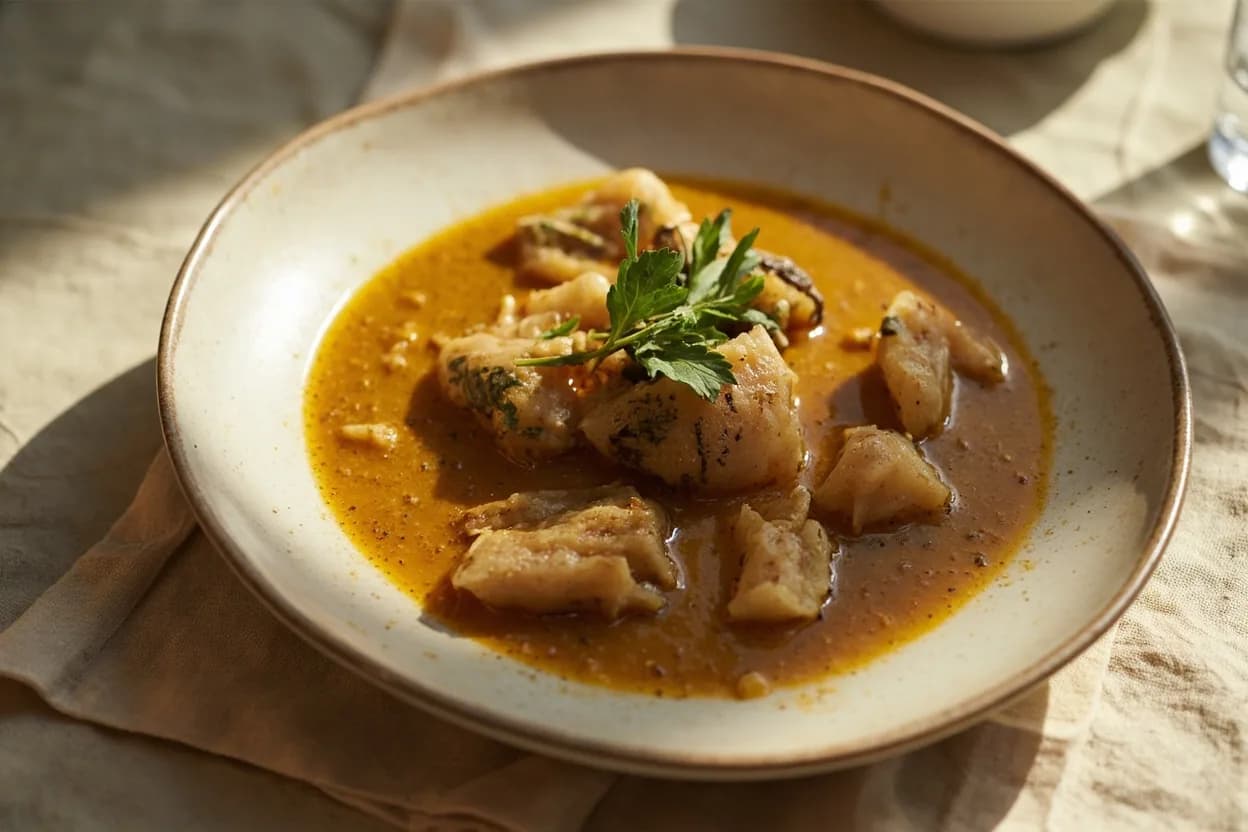
Bite-sized pieces of dried or smoked cow skin, rehydrated and trimmed for West African soups and stews.
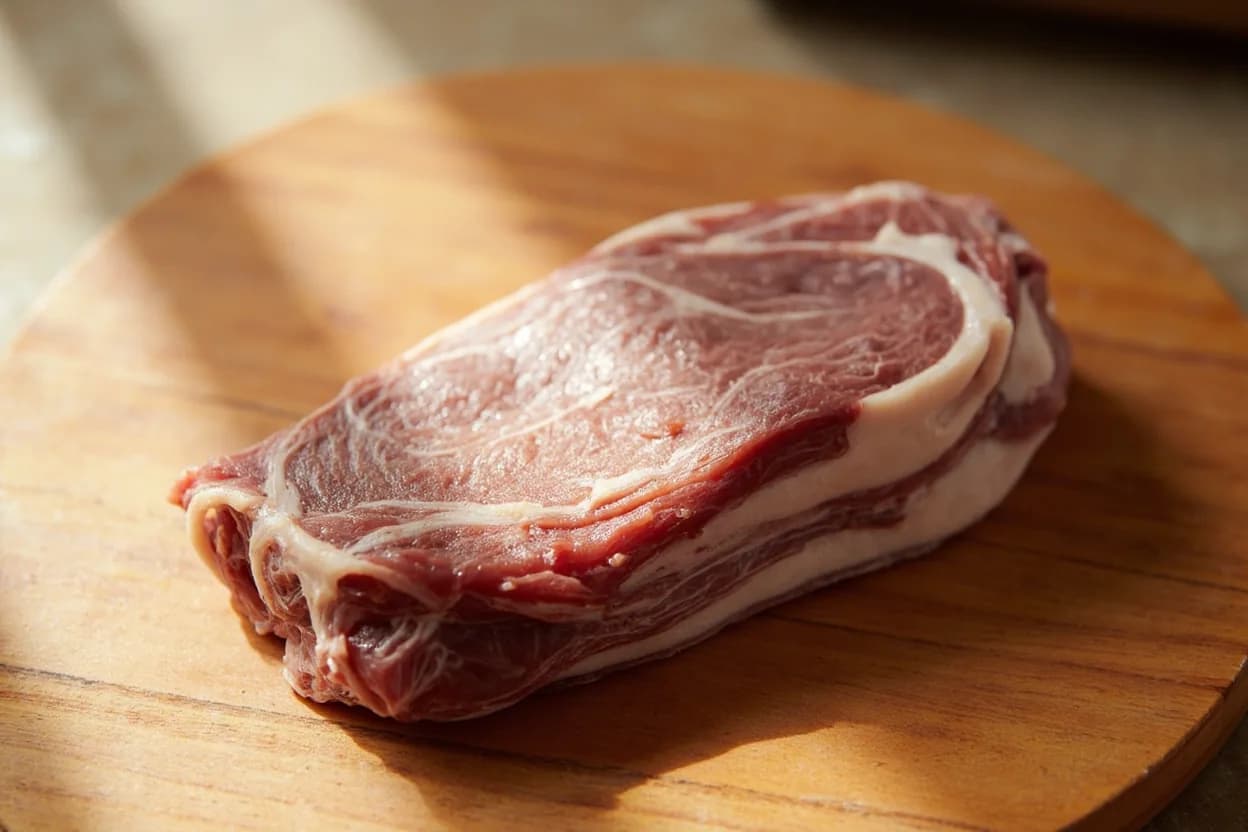
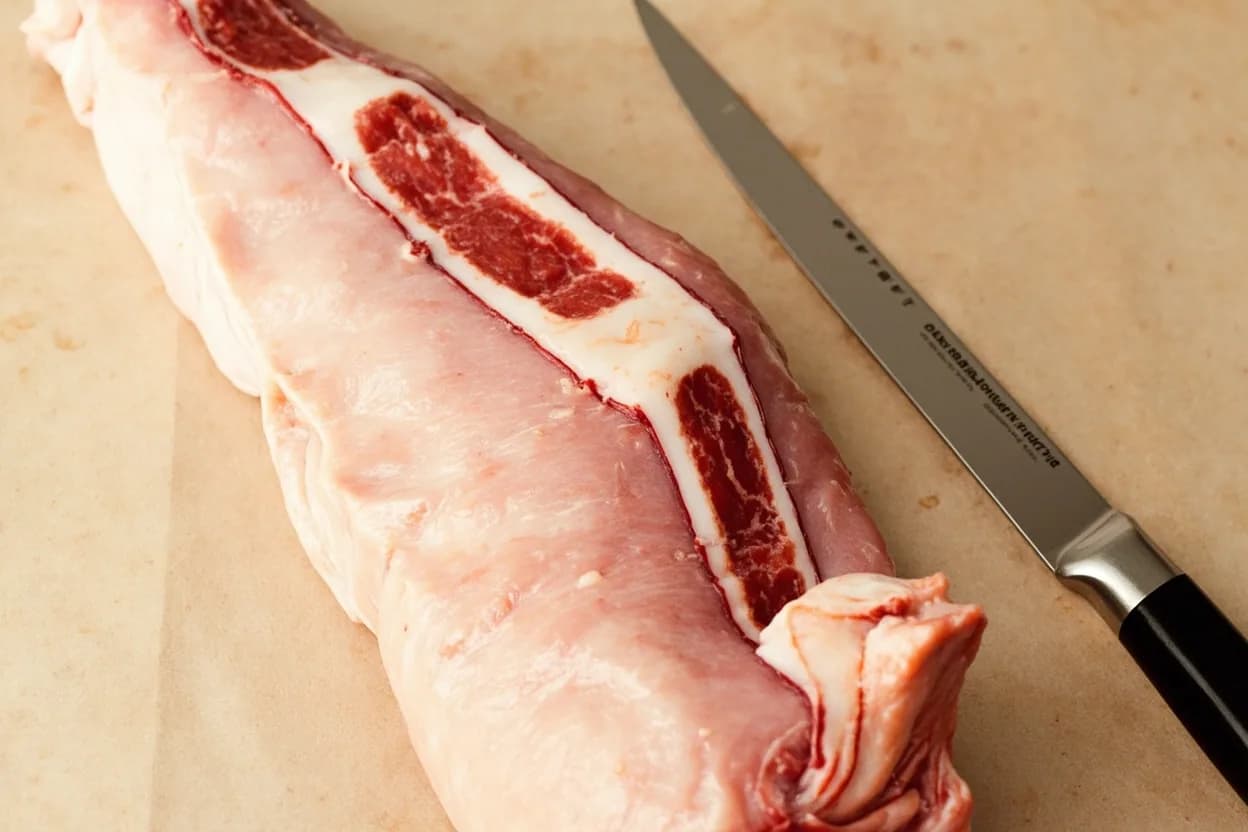
Ponmo is cow skin (hide) that has been fire-singed to remove hair, then dried or smoked for preservation. Before cooking, it must be rehydrated in hot water and cut into uniform bite-sized pieces — typically 2–4 cm squares or strips — so it cooks evenly and absorbs sauce without becoming unwieldy in the bowl.
In photos
Where it comes from
The entire outer hide of the cow, usually the thick dorsal or flank skin sections; the neck and leg hide is thicker and requires longer rehydration than the belly skin.
Best for
How to cook it
- 1Scrape any remaining singed hair from the surface using the back of a knife under running water.
- 2Soak in boiling water for 20–40 minutes (thicker dorsal sections may need up to 1 hour) until pliable but not falling apart.
- 3Drain, then cut into 2–4 cm pieces — squares, rectangles, or strips depending on the dish; smaller pieces suit light pepper soups, larger for thick stews.
- 4Parboil cut pieces in fresh water with aromatics (onion, seasoning cube) for 15–20 minutes to purge residual odour before adding to the main pot.
- 5Add to the soup pot during the last 20–30 minutes of cooking so it absorbs seasoning without over-softening.
Prep & butchery
- Hair removal is critical: if the dried skin still has stubble, hold a torch or gas flame briefly over the surface and scrub under water.
- Rehydration water should be discarded — it carries the initial purge of odour compounds.
- Score very thick sections with shallow parallel cuts before soaking to speed water penetration.
- Cut against any folded grain of the hide for more uniform pieces.
Substitutes
- Trotters (pig's feet)
Similar collagen payoff in a stew context, but the flavour profile is porkier; works in non-halal households.
- Oxtail pieces
Provides gelatin and chew but is considerably richer and more expensive.
- Tendon (beef)
High collagen, similar translucent chew; available in Asian butchers and substitutes well in soups.
Related cuts
- Shaki (Tripe)
Frequently combined with ponmo in assorted offal (assorted meat) soups.
- Beef Shank Cross-Cut
Another high-collagen addition to the same soups.
- Oxtail
Shares the role of gelatin donor in long-cooked West African stews.
Appears in
References
- 1.The Complete Nigerian Cookbook — Tayo Adeyemi
- 2.Zoe's Ghana Kitchen — Zoe Adjonyoh
- 3.West African Cookery — Elizabeth Isichei
- 4.Journal of Animal Science and Technology: Nutritional composition of cow hide (ponmo) — Adeyemi & Olorunsanya
Confidence: high
Notes
Thickness grades
Commercial ponmo sold in Nigerian markets comes in at least two grades: thin (belly hide, pale beige, soft after 20 minutes) and thick (dorsal or neck hide, very dark, chewy even after an hour). Many cooks prefer the thick grade for its longer chew and deeper smoky character.
Nutritional debate
Ponmo is almost pure collagen — minimal protein in the complete amino acid sense — which has prompted Nigerian public-health advisories against using it as a primary protein source. It is best understood as a textural component, not a nutritional substitute for muscle meat.