Knife Cuts — Regional & Global
Plantain — Green Coin, Diagonal & Lengthwise Cuts
Also: tostones cut, patacones cut, maduros cut, alloco cut
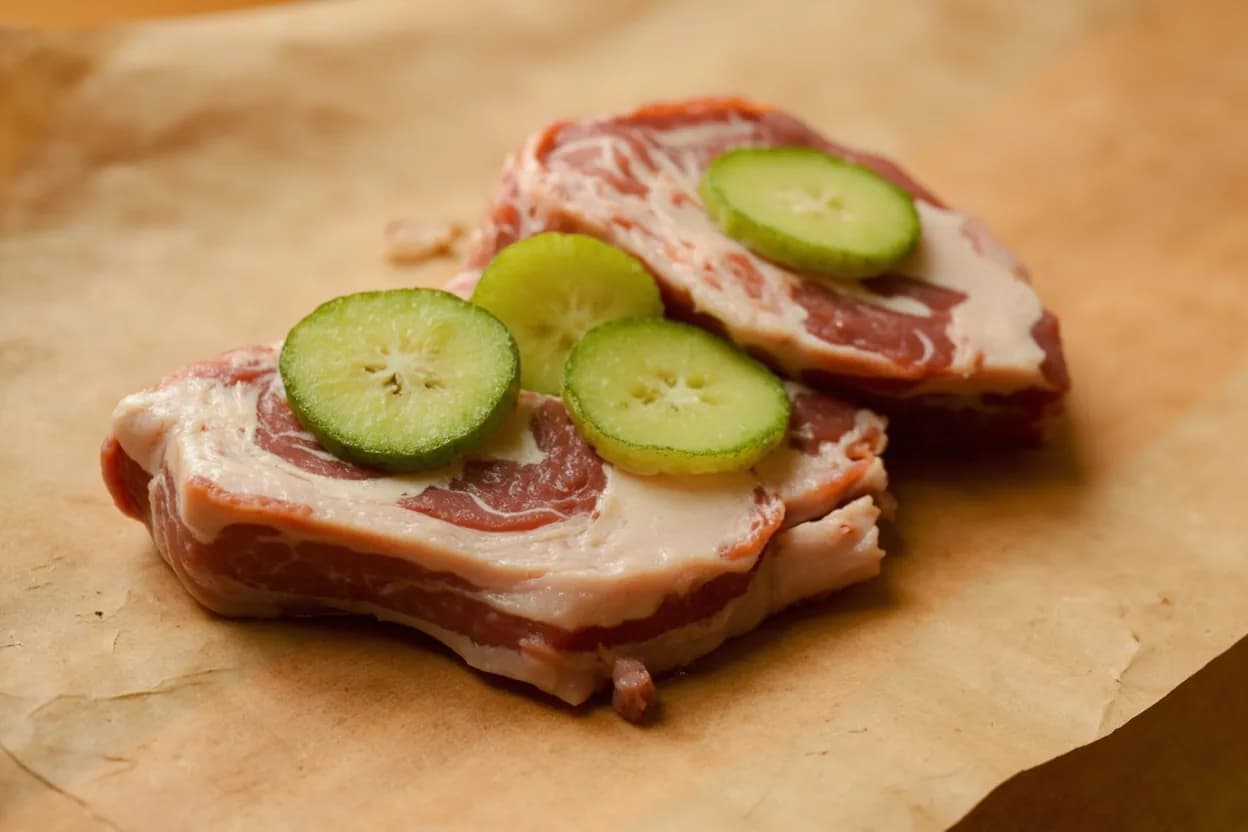
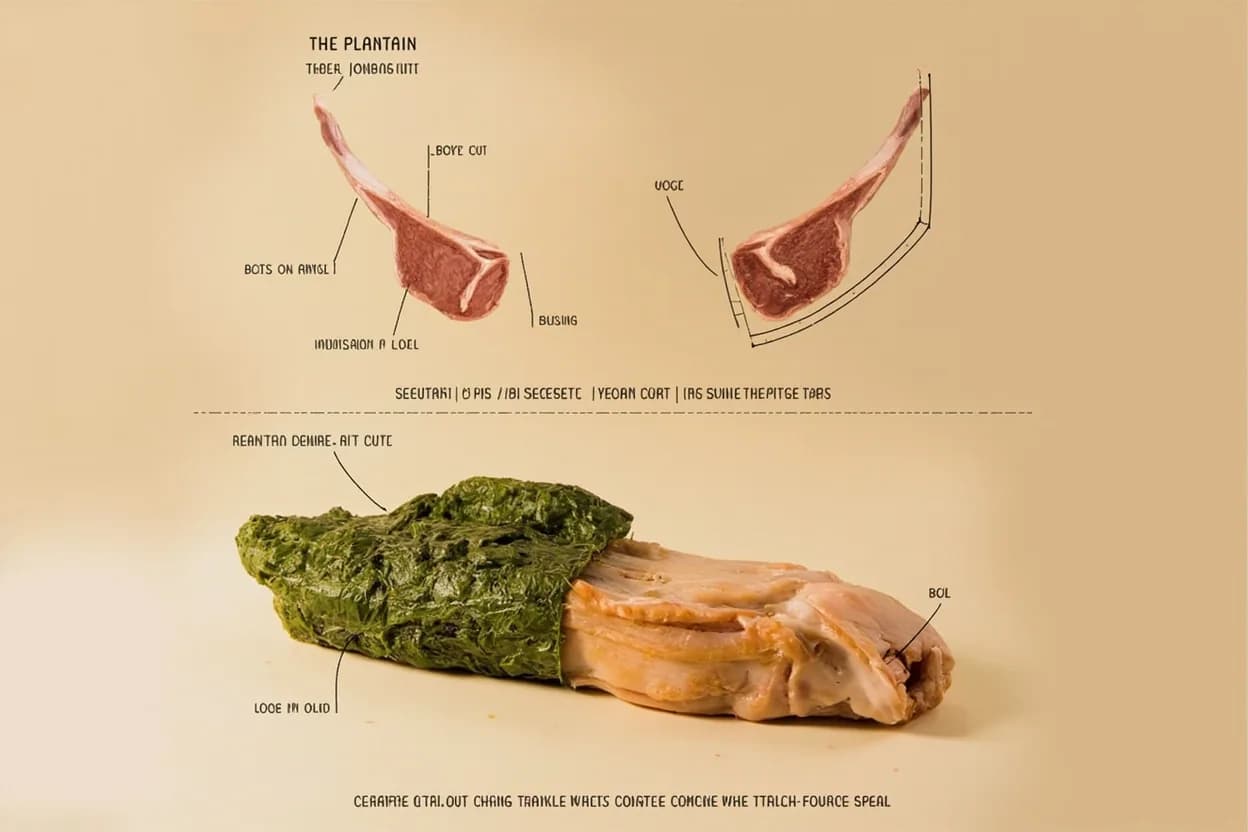
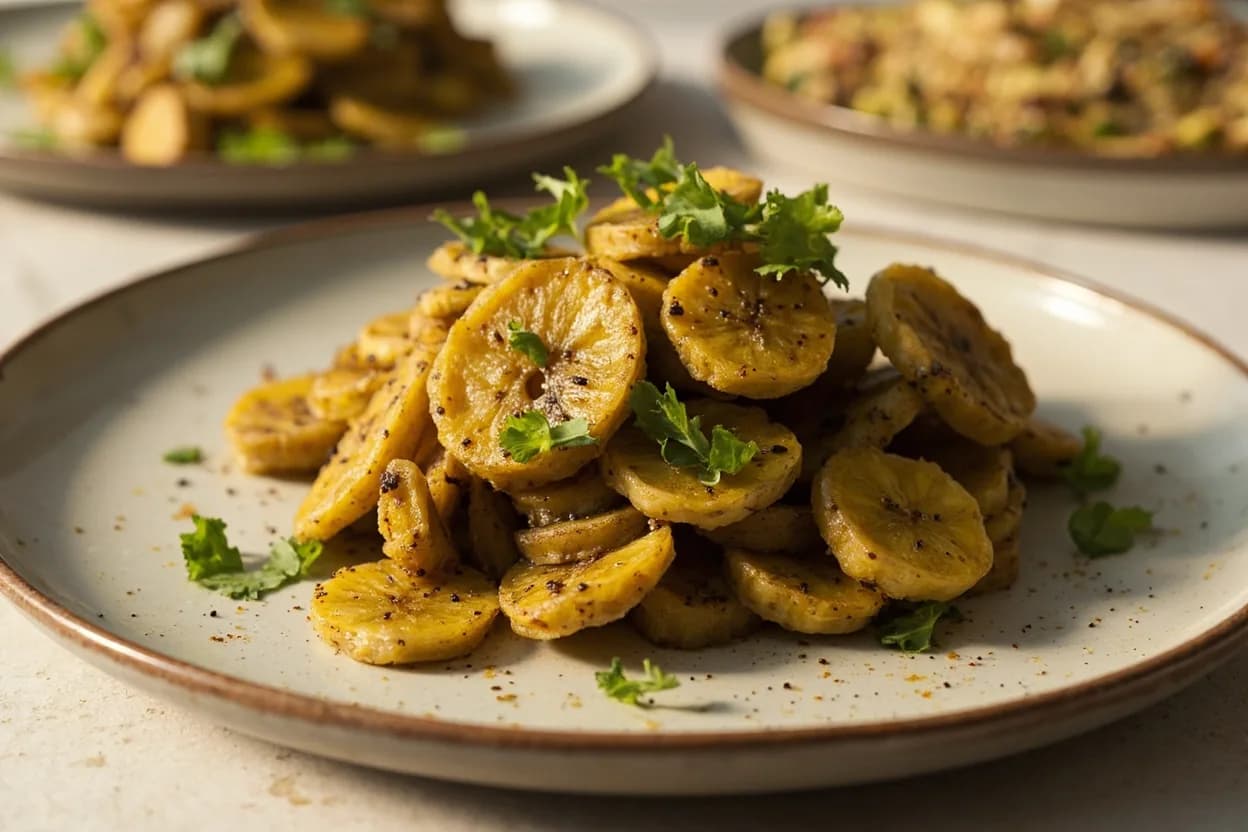
Three distinct knife cuts of the plantain, each matched to ripeness stage and culinary destination — thick coins for tostones, angled slices for West African frying, lengthwise strips for sweet maduros.
Plantains (Musa × paradisiaca) are cooked at three ripeness stages — green (starchy), yellow-ripe (semi-sweet), and black-ripe (sweet) — each demanding a different cut geometry. The thick transverse coin (1.5–2.5 cm rounds) is used for green plantain tostones where the slice will be smashed and double-fried. The diagonal or bias cut (1–2 cm oblique rounds, up to 45° angle) is common in West and Central African preparations and some Caribbean styles, producing an elongated oval slice with more surface area for caramelization. The lengthwise split or plank (2–4 mm thick, running the full length of the fruit) is used for ripe-to-overripe maduros and Caribbean baked plantains where the natural curvature and sweetness are showcased.
In photos
Where it comes from
The cultivated starchy fruit of Musa × paradisiaca; botanically a berry. Grown across tropical Africa, the Caribbean, Central and South America, and Southeast Asia. Unlike dessert bananas, plantains are almost always cooked before eating.
Best for
How to cook it
- 1Thick coin for tostones: score the green skin lengthwise with a knife tip and peel in strips (don't peel like a banana — the skin is tough). Cut into 1.5–2.5 cm transverse rounds.
- 2First fry the coins in 180°C (350°F) oil for 3–4 minutes until pale gold but not cooked through. Drain.
- 3Smash each coin flat with a tostonera, the bottom of a glass, or a folded piece of parchment to about 6 mm thickness. Return to 190°C (375°F) oil for 2–3 minutes until golden and crisp.
- 4Diagonal cut for West African style: peel a yellow-ripe plantain and cut at a 30–45° angle to the long axis, producing oval slices 1–2 cm thick.
- 5Season diagonal slices (salt, cayenne, ginger for kelewele) and shallow-fry in vegetable oil at 175°C (345°F) for 2–3 minutes per side until amber and caramelized.
- 6Lengthwise plank for maduros: peel a black or fully ripe plantain and halve lengthwise. Each half can be left whole or split again into thinner planks.
- 7Pan-fry lengthwise planks in oil or butter over medium heat, 2–3 minutes per side, until deeply bronzed and sticky with released sugars. Alternatively roast at 200°C (400°F) for 15–20 minutes.
Prep & butchery
- Green plantains are difficult to peel; score the skin with three lengthwise cuts and soak in salted water for 5 minutes to loosen before peeling.
- A mandoline can cut thin, uniform lengthwise planks for crispy maduros chips, though most traditional recipes use a simple chef's knife.
- Dry cut pieces with a paper towel before frying — surface moisture causes splattering and inhibits crisping.
- The ends of a plantain cook faster than the center; for diagonal cuts, make end slices slightly thicker to equalize cooking.
Substitutes
- Green banana (for tostones)
Similar starch content; slightly more bitter, but smashes and double-fries well.
- Cassava (for thick coin)
Starchy root can be sliced and fried to similar effect; different flavor profile.
- Sweet potato lengthwise plank (for maduros)
Comparable caramelization and sweetness; lacks the plantain's distinctive flavor.
Related cuts
- Yuca (cassava) — thick coin
Analogous starchy fry cut for a similar tropical root.
- Sweet potato — lengthwise plank
Same geometry for baked or fried sweet preparations.
- Transverse round (general)
The coin cut's parent technique; applies across cucumbers, carrots, and tubers.
Appears in
References
- 1.Afro-Vegan: Farm-Fresh African, Caribbean & Southern Flavors Remixed — Bryant Terry
- 2.Gran Cocina Latina: The Food of Latin America — Maricel Presilla
- 3.The Complete Caribbean Cookbook — Dunstan Harris
- 4.The Africa Cookbook: Tastes of a Continent — Jessica B. Harris
Confidence: high
Notes
Why ripeness dictates cut
Starch-to-sugar conversion transforms the plantain as it ripens. A green plantain is roughly 70% starch with negligible free sugars, making it structurally suited for the coin cut — it holds together under pressure for smashing and absorbs minimal oil. By the black stage, free sugars exceed 15% of dry weight, and the fruit is so soft that lengthwise planks must be handled gently; the high sugar content is precisely what produces the mahogany caramelization that defines maduros.
Regional cutting traditions
The diagonal cut's prevalence across West and Central Africa likely reflects both aesthetic preference (the larger oval face presents well) and practical reality: semi-ripe plantains at the yellow-turning stage are the most common market offering in many urban West African contexts. The thick coin and lengthwise plank reflect Caribbean culinary development where both ends of the ripeness spectrum are deliberately cultivated for distinct dishes.