Pork — Primal & Subprimal
Pig Primal Breakdown (Italian Norcino)
Also: norcino breakdown, Italian whole-hog fabrication, suino norcino, macellazione norcina
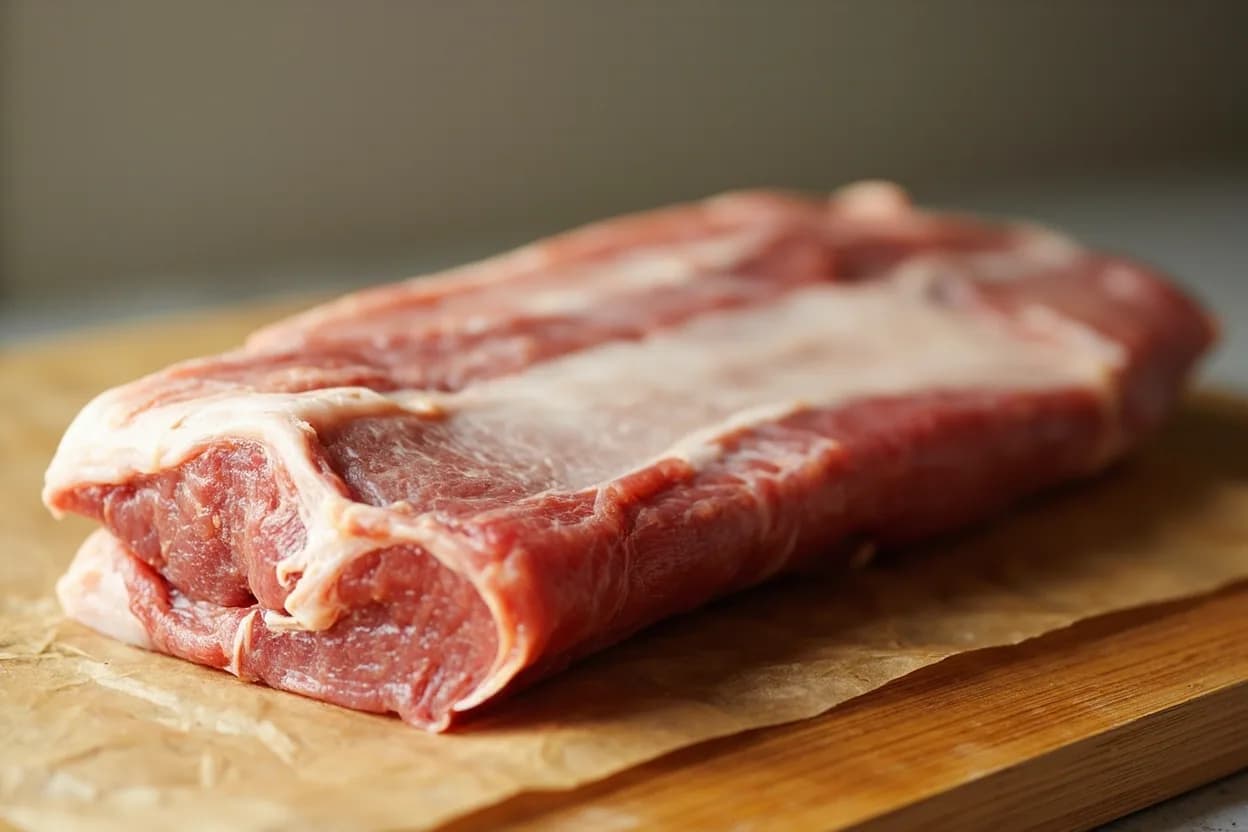
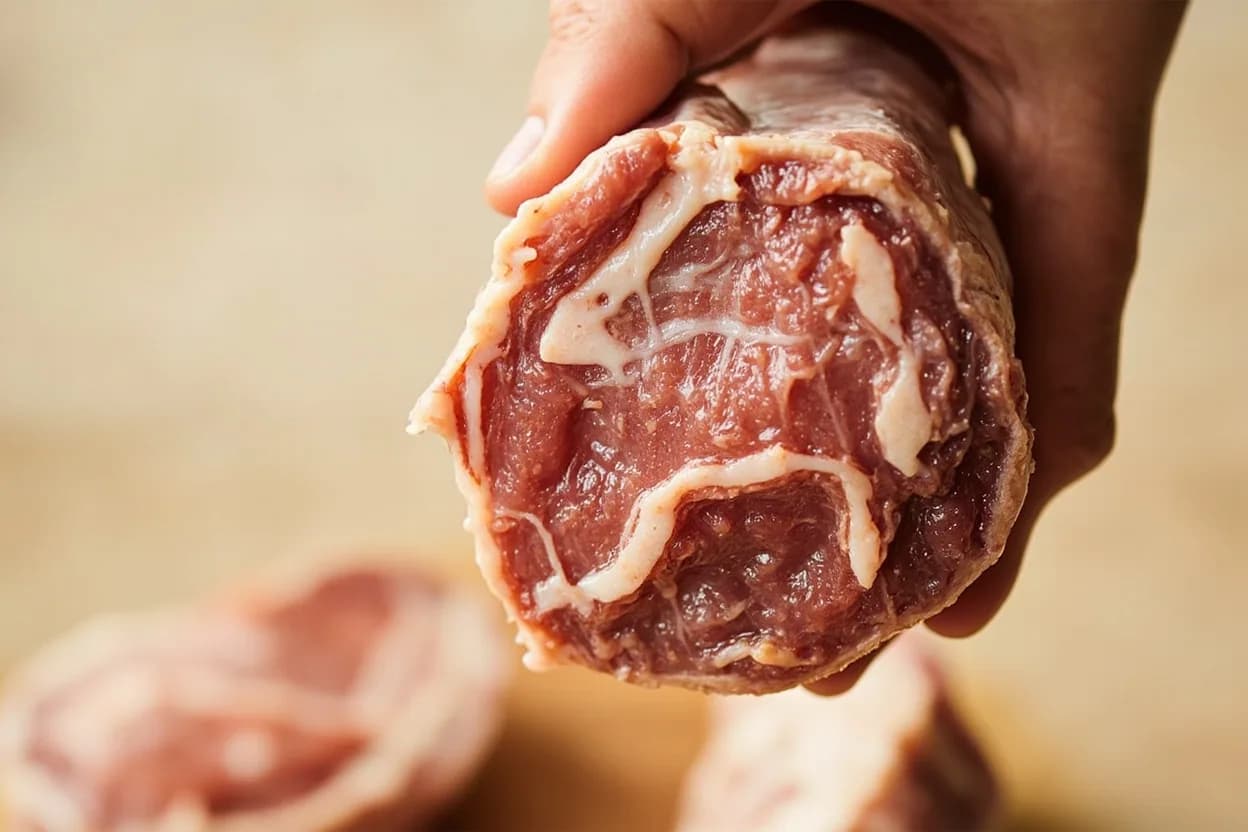
The Italian art of whole-hog butchery in the Norcino tradition, mapping every primal to a cured product — from prosciutto and coppa to guanciale, pancetta, lardo, and salame.
The Norcino tradition is Italy's master school of pork butchery, named after Norcia, a mountain town in Umbria whose butchers (norcini) have historically travelled all of Italy to slaughter and cure hogs. A whole pig (suino) in this tradition is fabricated with the explicit goal of producing a complete range of salumi — no muscle, organ, fat, or skin is wasted. The breakdown follows a logic of preservation: muscles best suited to dry-curing are left whole; fattier cuts destined for cured fat or sausage are rendered or minced; bones go to broth; blood to sanguinaccio.
In photos
Where it comes from
A whole pig carcass (typically 130–180 kg live weight, 80–120 kg hanging weight), split along the spine into two half-carcasses (mezzene). Italian norcini traditionally work a locally bred Cinta Senese, Mora Romagnola, or Suino Nero Calabrese, though commercial Large White × Landrace crosses are most common in modern production.
Best for
How to cook it
- 1PROSCIUTTO (coscia/hind leg): remove the trotter at the hock joint; trim the cushion of excess external fat to a uniform 1.5–2 cm layer; salt-cure bone-in for 60–90 days per 10 kg, then hang to air-dry for 12–36 months.
- 2COPPA (collo/neck): separate the neck collar from the shoulder between the 4th and 5th cervical vertebrae; remove the vertebrae with a flexible boning knife; roll the muscle cylinder, net it, and cure 3–6 weeks in salt with nutmeg and cloves before hanging to dry for 3–6 months.
- 3GUANCIALE (guancia/jowl): separate the cheek-and-jowl flap at the mandible; trim to a neat triangular slab; rub with salt, black pepper, and chilli; cure 10–14 days, then hang to air-dry for 3 weeks minimum.
- 4PANCETTA (pancia/belly): remove the belly plate from the ribcage by cutting along the rib ends; square-trim the skin-on slab; cure flat (tesa) or roll skin-in (arrotolata) in salt, pepper, and spices for 8–12 days; hang to dry 3–8 weeks.
- 5LARDO (dorso/back fat): lift the solid back-fat sheet from the spine in one piece; cure in marble troughs (Colonnata style) with rosemary, garlic, and spices packed in coarse salt for 6–12 months.
- 6LONZA (lombata/loin): debone the loin leaving the muscle cylinder; cure in salt with pepper and herbs for 5–7 days; tie and hang to dry 2–4 months.
- 7SALAME (ritagli/trimmings + shoulder): mince shoulder, neck, and belly trimmings at a ratio roughly 70% lean to 30% fat; season with salt, pepper, garlic, and regional spices; stuff into natural casings; ferment and dry 4–12 weeks depending on diameter.
Prep & butchery
- Chill the carcass to 2–4 °C before fabrication to firm the fat and prevent bacterial growth; norcini traditionally work in cold mountain air.
- Split the carcass along the spine with a saw or heavy cleaver to produce two mezzene; lay each skin-side down on a work table.
- First separation: remove the head at the atlas joint; the cheeks (guanciale) are then separated from the head by tracing the mandible with a knife.
- Second: remove the trotter and hock; seam out the hind leg (coscia) for prosciutto by cutting through the hip joint.
- Third: separate the loin from the shoulder along the 4th–5th rib; the shoulder (spalla) is left intact for coppa or spalla cotta.
- Fourth: remove the belly plate along the rib line; the spare ribs (costine) go to the kitchen, not the salumeria.
- Finally: lift the back fat sheet for lardo; collect all lean trimmings for salame filling; save the skin for cotenne in soups.
Substitutes
- Spanish Ibérico Whole-Hog Breakdown
Parallel tradition (matanza); products differ — jamón, lomo, chorizo, morcilla — but fabrication logic is nearly identical.
- French Charcutier Breakdown
Emphasises rillettes, pâtés, and jambon; more cooking-oriented vs. Italian dry-curing bias.
- American Southern Whole-Hog BBQ Breakdown
Fresh-cooking focus; primals the same anatomically but not fabricated for curing.
Related cuts
- Prosciutto (hind leg)
Most prestigious dry-cured product from the coscia
- Coppa / Capicola
Cured neck cylinder; first subprimal separated after the head
Cured jowl; anatomically distinct from American cheek bacon
Cured belly; flat (tesa) or rolled (arrotolata)
Cured back fat; prized in Colonnata and Arnaud form
- Lonza
Cured loin cylinder; leaner alternative to coppa
Appears in
References
- 1.Salumi: The Craft of Italian Dry Curing — Michael Ruhlman & Brian Polcyn (2012)
- 2.The Art of Making Fermented Sausages — Stanley Marianski & Adam Marianski (2009)
- 3.Charcuterie: The Craft of Salting, Smoking, and Curing — Michael Ruhlman & Brian Polcyn (2005)
- 4.Guida all'arte norcina — Camera di Commercio di Perugia (2001)
- 5.On Food and Cooking — Harold McGee (2004)
Confidence: high
Notes
Why Norcia?
Norcia's elevation (604 m), cold winters, and mountain air created ideal natural curing conditions. Norcini would travel throughout Italy from November (slaughter season) through February, preserving pigs for year-round eating. The town gives Italy its word for pork butcher (norcineria) just as the French town of Bayonne gives its name to its cured ham.
The Nose-to-Tail Calculation
A skilled norcino wastes almost nothing. From a 100 kg half-carcass, roughly 8–10 kg goes to prosciutto, 2–3 kg to coppa, 1–2 kg to guanciale, 5–6 kg to pancetta, 2–4 kg to lardo, 3–5 kg to lonza, and 10–15 kg to salame and fresh sausage. Bones go to brodo; blood to sanguinaccio; feet to zampone. The total yield from slaughter to plate approaches 85–90%.
The Guanciale vs. Pancetta Distinction
Many non-Italian recipes conflate guanciale and pancetta. They are anatomically distinct: guanciale is jowl (cheek and jaw fat), pancetta is belly. Guanciale has a higher fat-to-lean ratio, a more assertive flavour, and is the correct choice for authentic carbonara, amatriciana, and gricia. The distinction matters in cooking because guanciale renders more fat and crisps differently.