Lamb & Goat — Primal & Subprimal
Goat — Whole Leg, Shoulder Chop & Curry Cut
Also: bakri ka gosht, goat leg, mutton chop, bone-in goat, curry goat pieces
Three essential goat cuts — the whole hind leg, the cross-cut shoulder chop, and the bone-in curry cut — that define West African and South Asian goat cookery.
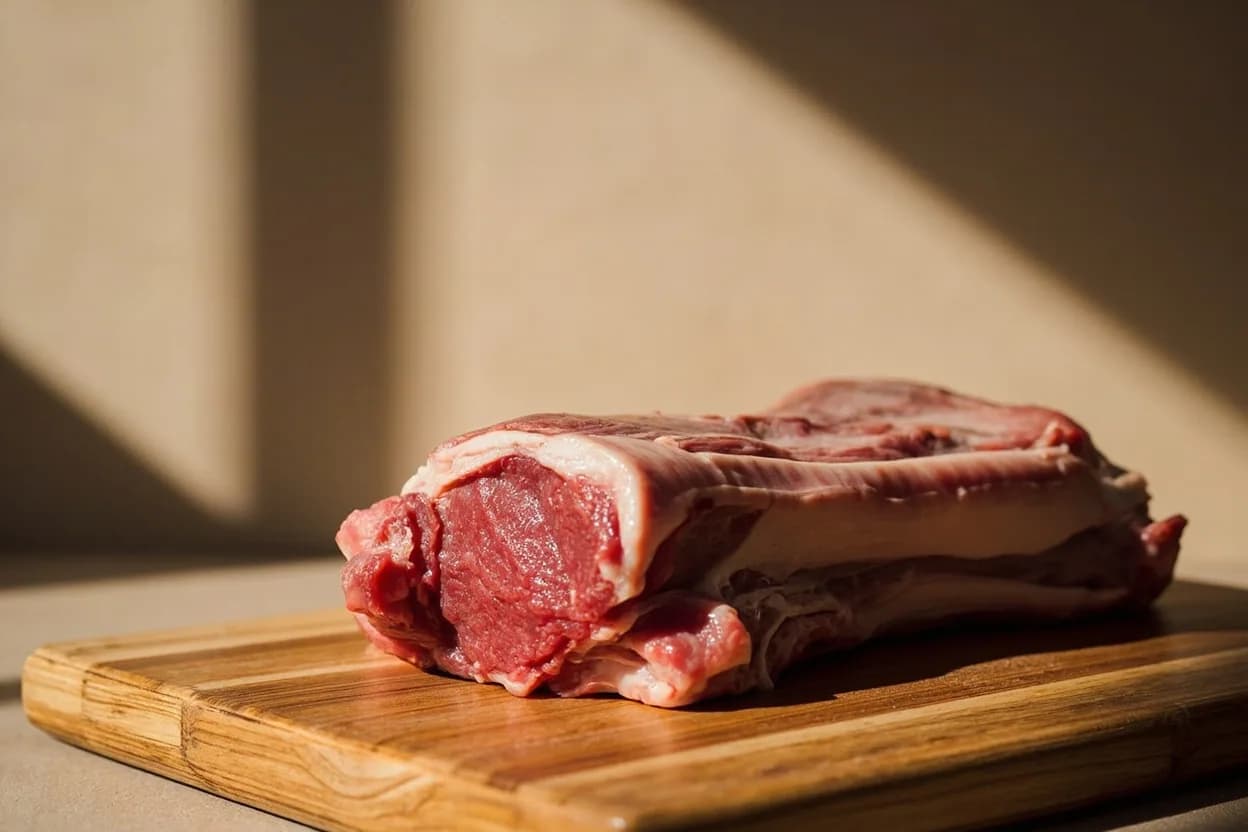
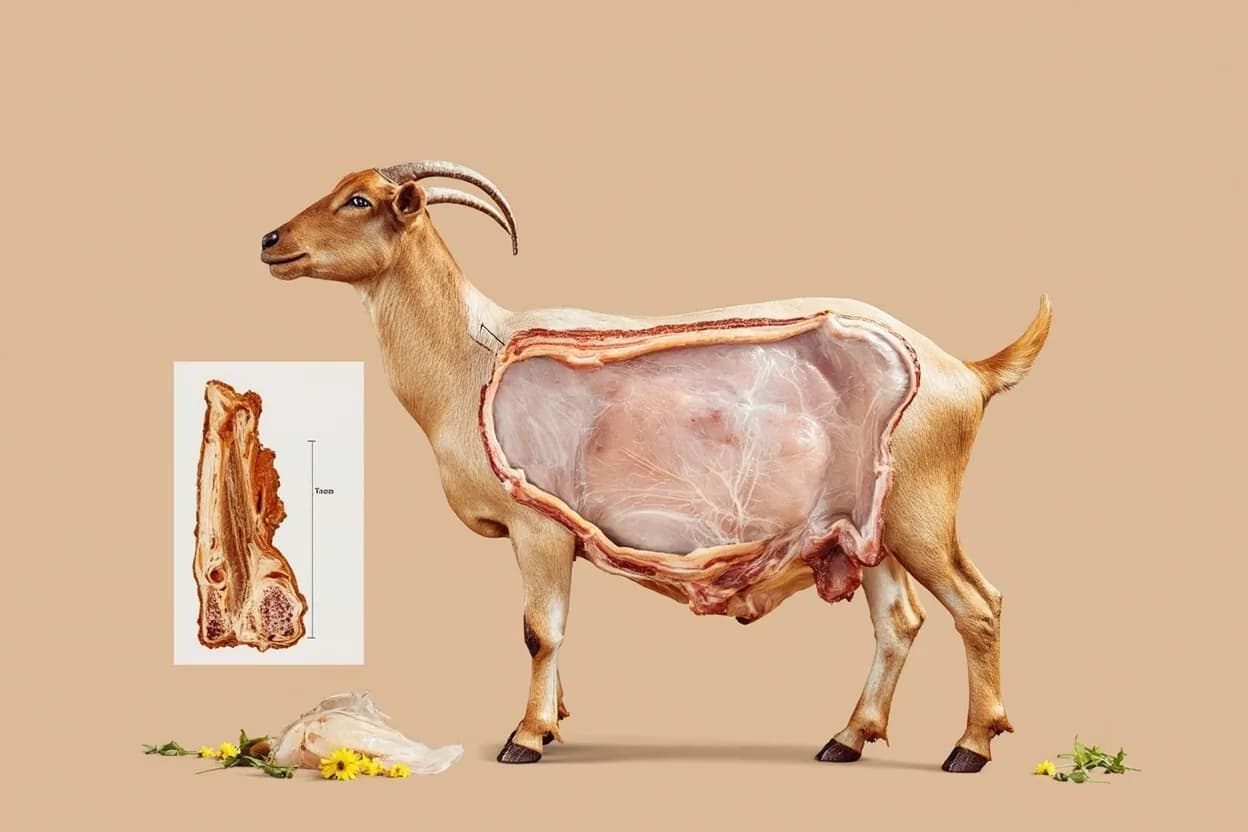
This entry covers three distinct but related goat cuts that share a common cooking logic — bone-in, braised or slow-cooked, with the bone as a structural and flavour contributor. The whole leg (raan in South Asian cooking, gigot in French) is the hind limb from hip to hock, weighing 1.5–2.5 kg on a typical mature goat. The shoulder chop is a cross-cut slice through the blade and arm of the shoulder, typically 2–3 cm thick, taken perpendicular to the scapula. The curry cut refers to the practice of cross-cutting multiple primals — leg, shoulder, rib, neck — into small 4–6 cm bone-in pieces with a cleaver or band saw, uniformly portioned for stewing.
In photos
Where it comes from
Whole leg: the hind quarter of the goat, encompassing the femur (thigh bone), tibia/fibula (lower leg), and the major muscle groups — topside (adductor), silverside (biceps femoris), knuckle (quadriceps), and eye of round (semimembranosus). Shoulder chop: the forelimb primal above the shank, containing the flat blade (scapula) and arm bones. Curry cut: assembled from across the carcass — any primal can be curry-cut, though neck, shoulder, and rib are the most common sources.
Best for
How to cook it
- 1Whole leg for raan or Eid roast: marinate overnight in yogurt, ginger-garlic paste, raw papaya, whole spices, and chilli. Roast covered at 150 °C for 3.5–4 hours until the meat pulls cleanly from the femur, then uncover and blast at 220 °C for 15 minutes to char the exterior.
- 2Shoulder chop braise: brown deeply in ghee or groundnut oil in batches. Remove, fry whole onions until dark brown (karamelised, not burnt), add spice paste, return chops, add water or stock to just cover. Simmer covered 1.5–2 hours until the meat nearly falls from the bone.
- 3West African pepper soup (curry-cut goat): blanch pieces briefly to remove surface impurities. Simmer with crayfish, uziza leaves, ehuru (African nutmeg), and Scotch bonnet for 1–2 hours. The broth should be dark, aromatic, and intensely peppery.
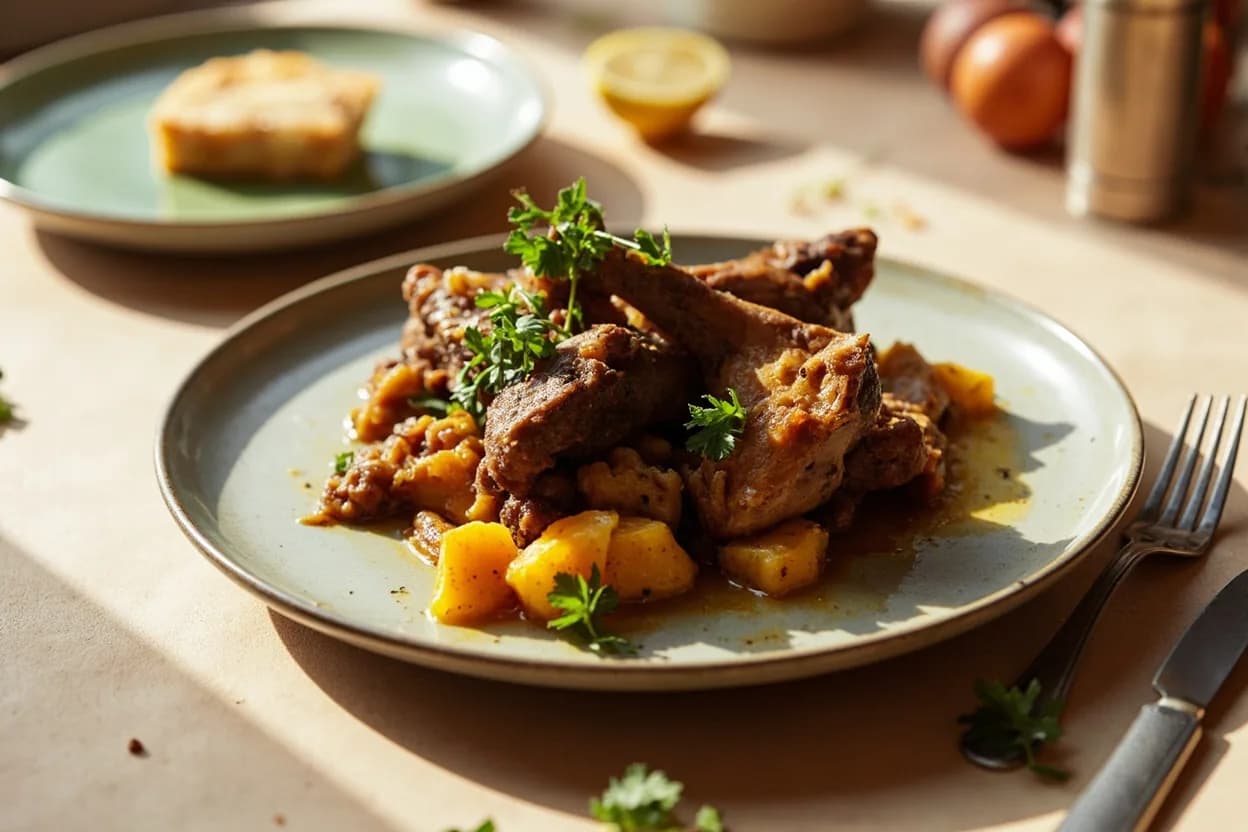
- 4Jamaican curry goat: brown pieces in a dry pot to render surface fat; add curry powder and habanero; braise in coconut milk and water 1.5 hours. The starch from the curry powder naturally thickens the sauce.
- 5Pressure cooker curry cut: after initial browning and spice frying, add pieces and liquid to pressure cooker; cook at high pressure for 20–25 minutes, then reduce the sauce on the open flame.
Prep & butchery
- For the whole leg: tunnel-bone the femur if roasting butterflied (ideal for marinades to penetrate the centre), or leave bone-in for whole roasting to maintain structural integrity and add flavour.
- For shoulder chops: remove excess exterior fat with a knife before browning — goat fat can taste strongly gamey if not rendered and drained. Leave the bone fully intact.
- For curry cut: have the butcher use a band saw for clean, uniform cuts — a cleaver leaves bone splinters; the saw produces smooth bone edges. Request pieces of consistent size (4–5 cm) for even cooking.
- Soak curry-cut pieces in cold salted water for 30 minutes before cooking to draw out blood and reduce gamey aroma — especially important for neck and shoulder sections.
- Remove any silverskin from exposed muscle surfaces of the leg before marinating; it will not break down during roasting.
Substitutes
- Lamb shoulder chop
More tender and fattier; reduce cooking time by 20–30%.
- Lamb leg
More tender, more forgiving; suitable replacement in any slow-roast application.
- Mutton (older sheep)
Closer to goat in density and flavour than lamb; requires similar long cooking.
- Kid goat
Younger, smaller, more tender — cook as lamb rather than mature goat.
Related cuts
The leg bones from the same animal cross-cut specifically to expose marrow.
- Boti (boneless cubed meat)
Boneless counterpart cut from shoulder or leg for skewering.
- Champ (rib cutlets)
From the rack primal; tender contrast to the working-muscle cuts covered here.
- Paya (goat trotters)
The foot attached to the lower end of the hind leg; removed at the hock during breakdown.
- Goat neck
Richest in collagen; often included in curry-cut mix for body in the sauce.
Appears in
References
- 1.The Complete Meat Cookbook — Bruce Aidells & Denis Kelly
- 2.Zaitoun: Recipes from the Palestinian Kitchen — Yasmin Khan
- 3.The Nigerian Cookbook — Dora Obi Chizea
- 4.Prashad: Cooking with Indian Masters — J. Inder Singh Kalra
- 5.Meat Science — R.A. Lawrie & D.A. Ledward
Confidence: high
Notes
The curry-cut logic
The curry cut is not a sloppy afterthought — it is a precisely calibrated culinary decision. By cross-cutting through bone, the butcher maximises the ratio of bone surface area to meat volume, which means more collagen, more marrow, and more gelatin enter the cooking liquid per kilogram of meat. The result is a sauce that thickens naturally and a depth of flavour impossible to achieve with boneless pieces. West African and South Asian cooks universally prefer this format for braised dishes; boneless meat is seen as the inferior option for long-cooked preparations.
Goat vs lamb in the diaspora kitchen
In many South Asian and West African diaspora communities, 'mutton' is colloquially used to mean goat, not sheep — a source of persistent confusion in English-language recipes. A British Pakistani recipe calling for 'mutton curry' almost certainly means adult goat, not hogget or older sheep. When sourcing, confirm with the butcher: Pakistani/Bangladeshi halal shops typically stock mature male goat (bakra) as their default 'mutton,' while African shops may use female goat or kid depending on availability.