Lamb & Goat — Primal & Subprimal
Nalli (Marrow Bone Cross-Cut)
Also: nali, nalli nihari bone, marrow bone, lamb osso buco, cross-cut shank
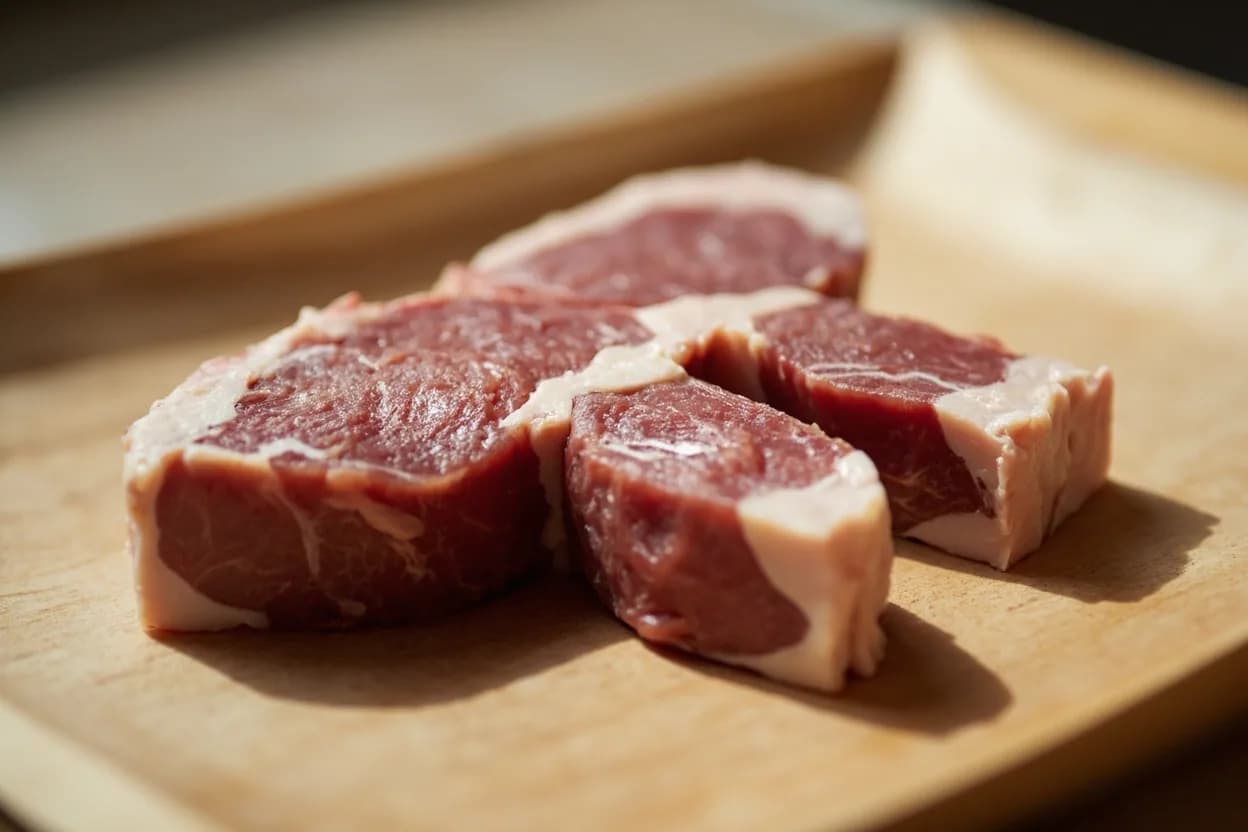
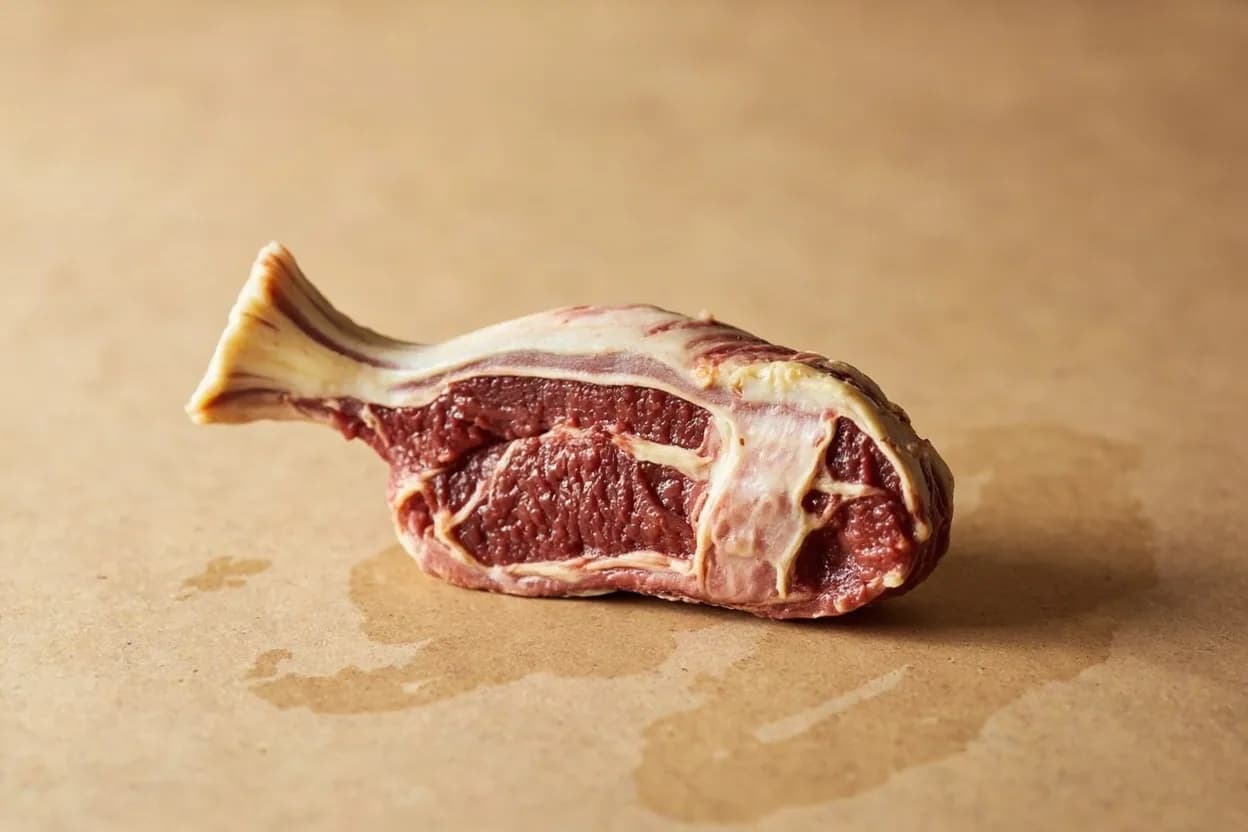
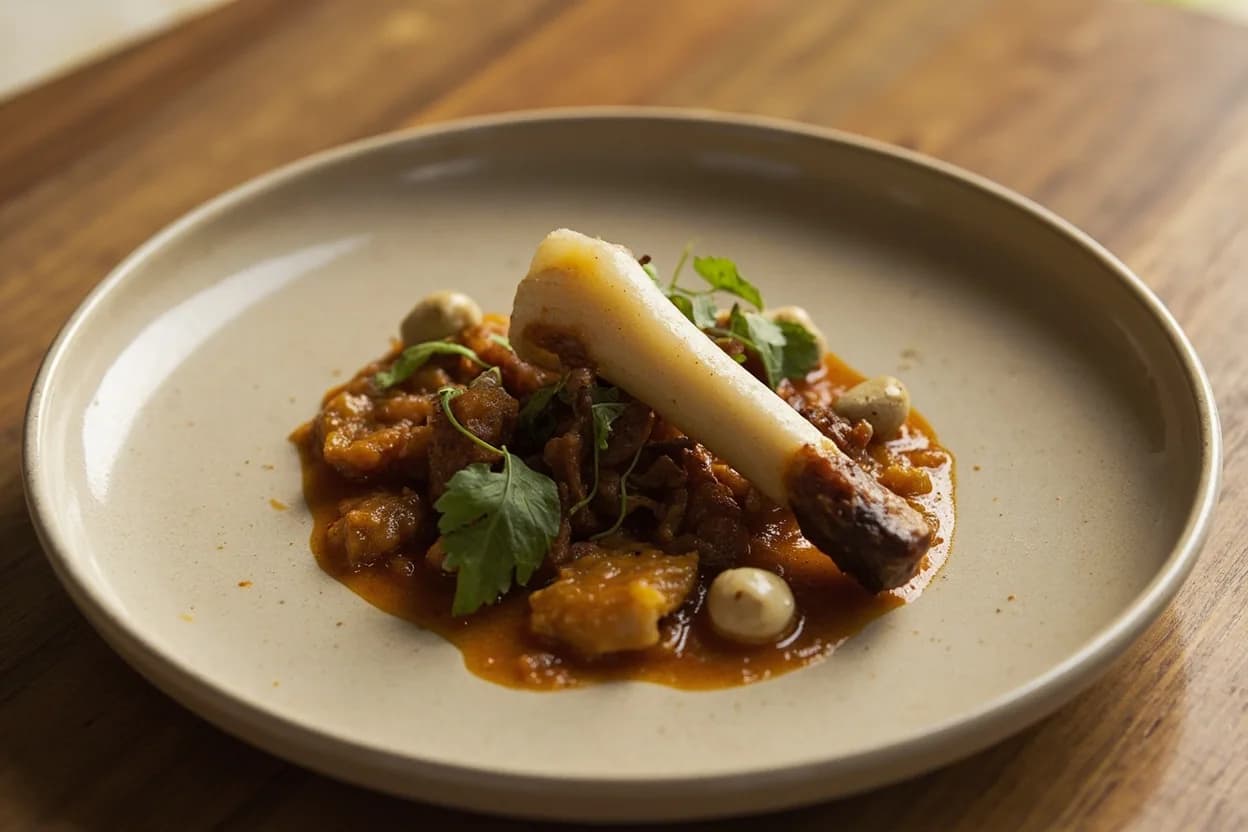
Cross-cut sections of lamb or goat leg bone exposing the marrow cavity — the defining ingredient of South Asian nihari and slow bone broths.
Nalli (Urdu/Hindi: نلی, from the root meaning 'tube' or 'pipe') refers specifically to the cross-cut sections of the femur and tibia/fibula of lamb or goat, cut perpendicular to the bone's long axis to expose the central marrow cavity. Each section typically measures 4–6 cm in length and 3–4 cm in diameter, yielding a clear view of the red or yellow marrow channel at the centre, surrounded by the compact cortical bone ring, with a disc of muscle and connective tissue at each end. The sawing technique (not cleaving, which shatters bone) is essential to preserve the marrow intact.
In photos
Where it comes from
The leg bones of lamb or goat — primarily the femur (thigh bone) and tibia (lower leg bone). The femur contains the most abundant marrow cavity and is the most prized section. The tibia has a smaller marrow channel but contributes significant collagen from the periosteum and cartilage at the stifle joint. In some preparations, the cannon bone (metatarsus) is also cross-cut for smaller marrow bones, though the yield is modest.
Best for
How to cook it
- 1Soak nalli sections in cold salted water for 2–3 hours, changing the water twice, to draw out blood and reduce funky aroma — this step is essential for nihari.
- 2For nihari: in a large heavy pot (deg or Dutch oven), fry a large quantity of onions in ghee until deep brown and caramelised. Add spice pastes (ginger-garlic, whole spices, nihari masala). Add the soaked nalli sections, then enough cold water to completely submerge. Bring to a boil, skim the scum, then reduce to the lowest possible simmer. Cook 6–8 hours, partially covered, until the marrow flows freely when a skewer is inserted into the bone end.
- 3For roasted nalli: set sections upright in a roasting dish, season the exposed marrow with flaky salt and cracked black pepper. Roast at 220 °C for 15–20 minutes until the marrow has melted and begun to bubble. Serve with toasted sourdough and a gremolata (parsley, lemon zest, garlic).
- 4To thicken nihari broth: whisk atta (whole wheat flour) into warm water to form a slurry, add to the simmering broth in the last 30 minutes. The starch suspends the fat and creates the characteristic velvety body of nihari.
- 5Test marrow doneness: insert a thin skewer into the bone cavity end-on — it should slide through with no resistance when the marrow has fully liquefied.
- 6Serve nalli intact in the broth — guests extract the marrow themselves at the table, which is an integral part of the nihari experience.
Prep & butchery
- Always use a band saw for cutting nalli — the blade produces a clean, flat cross-section without bone fragmentation. A cleaver shatters cortical bone into dangerous shards.
- Request the butcher to cut sections 4–5 cm thick — too thin and the marrow dries out during roasting; too thick and the marrow doesn't liquify fully during normal roasting times.
- Soak in cold salted water 2 hours minimum before any preparation to remove blood (myoglobin) from the marrow, which can produce a bitter flavour and dark colour in the finished broth.
- For upright roasting, use a ramekin or aluminium foil collar to prevent sections from tipping and spilling the marrow.
- If making nihari, ask the butcher for both femur sections (the large 'tulip' marrow cavities) and some tibia sections (smaller but rich in periosteal collagen).
Substitutes
- Beef marrow bones (cross-cut shin)
Larger diameter, richer yield; equivalent preparation — used when lamb/goat unavailable.
- Lamb shank (whole)
Contains the same bones unsawn; slower marrow release but acceptable in stews.
- Veal osso buco
Cross-cut veal tibia — Western equivalent; much thicker cut, shorter cooking time.
- Paya (goat/lamb trotters)
High in collagen and gelatin from the joint cartilage; different fat profile but similar long-cook applications.
Related cuts
- Lamb shank (whole)
The same bone unsawn — the shank produces nalli when cross-cut.
- Paya (trotters)
The foot end of the same leg; collagen-rich counterpart to the marrow-rich nalli.
- Curry cut
The broader category of bone-in cross-cut goat/lamb pieces for stewing; nalli is a specific subset.
- Osso buco (veal shin cross-cut)
Western parallel cut — same anatomical cross-section principle applied to veal.
- Beef marrow bone
Larger equivalent from bovine femur or tibia.
Appears in
References
- 1.Prashad: Cooking with Indian Masters — J. Inder Singh Kalra
- 2.Lahore: The Undiscovered Cookbook — Mohammed Tariq
- 3.On Food and Cooking — Harold McGee
- 4.The Whole Beast: Nose to Tail Eating — Fergus Henderson
- 5.Meat Science — R.A. Lawrie & D.A. Ledward
Confidence: high
Notes
Nihari: the dish that defines nalli
Nihari (from Arabic 'nahar' meaning 'day') was originally a pre-Fajr prayer breakfast in Mughal Delhi, cooked overnight in sealed earthen degs buried in the residual heat of bread ovens. The dish is inseparable from nalli — the bones are not just flavouring but structural: the collagen from the periosteum, the fat from the marrow, and the gelatin from the cartilage at the joint ends conspire to produce a broth of extraordinary body and depth. A nihari without nalli is considered incomplete by purists; the bones are served in the bowl, and the extraction of marrow with a narrow spoon or a piece of naan is a specific pleasure of the meal.
Yellow vs red marrow
In young animals (lamb under 1 year), most long-bone marrow is red marrow — actively producing blood cells and appearing dark red, rich in iron. As the animal ages, red marrow converts to yellow marrow (predominantly fat cells — adipocytes) in the peripheral bones first, then centrally. Yellow marrow is richer, more neutral in flavour, and produces a cleaner fat in cooking. For nihari, older animals (hogget or adult goat) produce bones with more yellow marrow, which is generally preferred; the younger lamb's red marrow has a more pronounced mineral and iron flavour that some find aggressive.