Knife Cuts — Regional & Global
Mushroom Tear-Cut for Banchan
Also: hand-torn mushroom, ssot-gi (뜯기), mushroom tearing, torn oyster mushroom
Hand-tearing oyster or shiitake mushrooms along their natural grain, a Korean technique that produces irregular, sauce-holding surfaces superior to knife cuts for banchan.
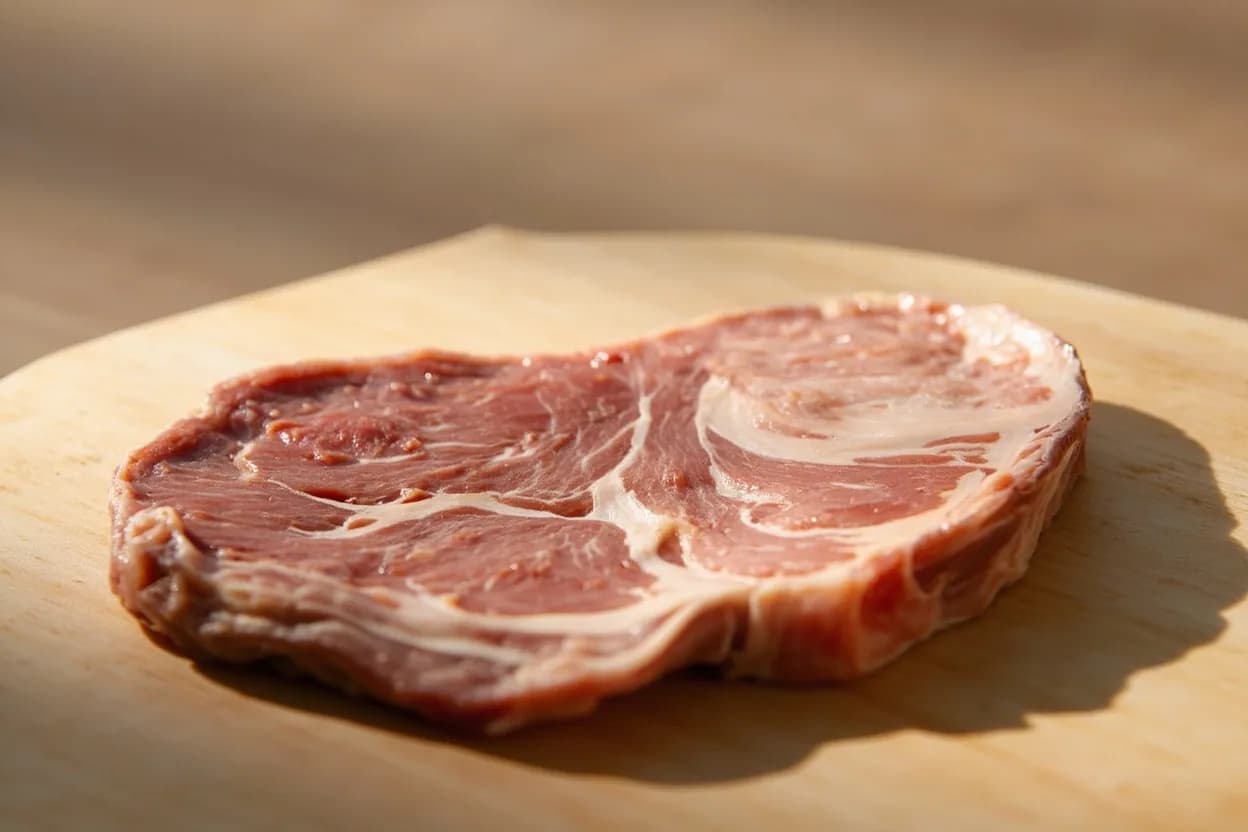
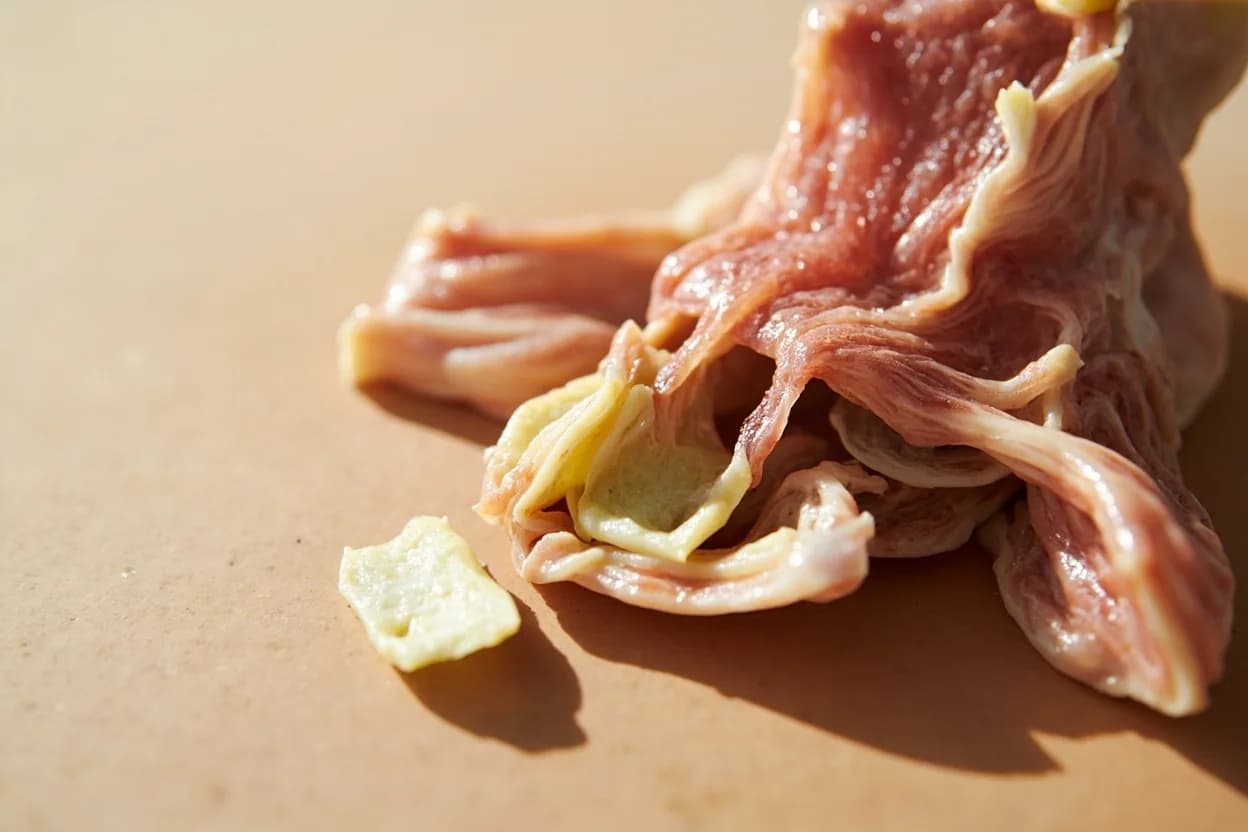
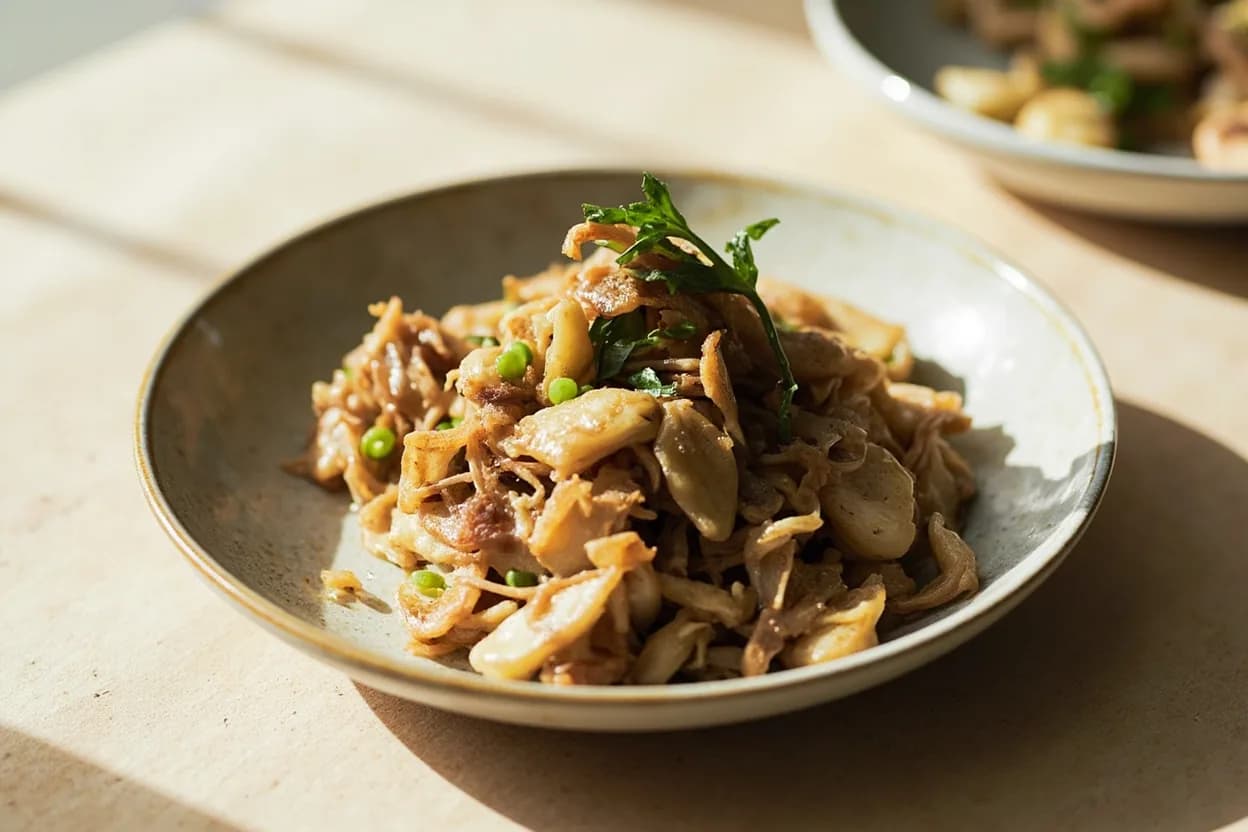
Rather than slicing mushrooms with a blade, the tear-cut follows the mushroom's internal fiber structure — pulling caps and stems apart along the grain into strips of irregular width and ragged edges. These rough surfaces cling to seasoning pastes and sauces far more effectively than the smooth, compressed faces left by a knife, and the natural cleavage planes produce a more open, spongy texture when cooked.
In photos
Where it comes from
Applied primarily to oyster mushrooms (neutari beoseot, 느타리버섯) and shiitake (pyogo beoseot, 표고버섯). Oyster mushrooms tear in long, clean ribbons following fan-shaped gills; shiitake caps are scored then split, or pulled apart from thick-sliced sections. King oyster (Pleurotus eryngii) mushrooms with dense stems can also be torn after blanching to soften fibers.
Best for
How to cook it
- 1Wipe mushrooms clean with a damp cloth; avoid rinsing, which saturates the caps and makes tearing slipper.
- 2For oyster mushrooms: hold the base cluster in one hand, grip a section of cap in the other, and pull steadily along the grain from base to cap edge in strips 1–2 cm wide.
- 3For shiitake: remove the tough stem (reserve for stock). Score the cap's underside in a grid if very thick, then pull apart into quarters or sixths following the radial score lines.
- 4Torn pieces cook in a dry skillet over high heat first (1–2 minutes) to drive off moisture before adding oil and seasoning — prevents steaming and encourages caramelization.
- 5Season with soy sauce, sesame oil, garlic, and gochugaru while mushrooms are hot so the sauce penetrates the open fibers.
Prep & butchery
- Freshness matters: only firm, dry mushrooms tear cleanly along grain lines. Older, wet mushrooms shred unpredictably.
- For thick oyster mushroom clusters, separate individual fronds from the base before tearing each one into strips.
- Torn shiitake benefit from a brief (30-second) blanch in salted water if very dense, then a pat-dry before the sauté.
- Do not pre-salt before cooking — salt draws moisture out and creates wet, steamed rather than seared texture.
Substitutes
- Knife-sliced mushroom (5 mm)
Smooth faces absorb less seasoning; use when a cleaner, more modern presentation is needed
- Whole small button mushrooms
Not a functional substitute for texture but work in stir-fries where tearing is impractical
- Knife-planked king oyster mushroom
Dense texture that suits grilling better than sauce-based banchan
Related cuts
Thick knife-cut slabs for grilling; opposite philosophy — smooth surface, controlled thickness
Knife equivalent producing fine ribbons of leafy vegetables; achieves similar textural layering by different means
- Hand-torn bread (panzanella prep)
Same rationale applied in Italian cuisine — rough surfaces absorb dressing better than cut faces
Appears in
References
- 1.The Art of Korean Cooking — Soon Young Hong
- 2.Korea: The Cookbook — Junghyun Park & Jungyoon Choi
- 3.My Korean Kitchen — Sue Pressey
- 4.Maangchi's Real Korean Cooking — Maangchi
Confidence: high
Notes
Why tearing beats slicing for sauce adhesion
A knife compresses and slightly smears the cell walls it passes through, creating a sealed surface. Tearing along the grain fractures the cells open, leaving the spongy mycelial structure exposed. When seasoning paste or soy-based sauce contacts these open fibers, capillary action pulls it inward rather than allowing it to bead and slide off. The result is a fully seasoned piece rather than one with sauce only on the exterior.
Regional variation
While tearing is the dominant method in Korean home and restaurant kitchens for banchan, some regions — particularly in Jeolla-do temple food traditions — use a finer hand-shredding that produces almost thread-like pieces, mixed directly into gosari (bracken fern) and other namul for a more complex textured salad. The technique's root in Korean culinary philosophy is the respect for natural forms (자연 그대로) over geometric uniformity.